
Game review
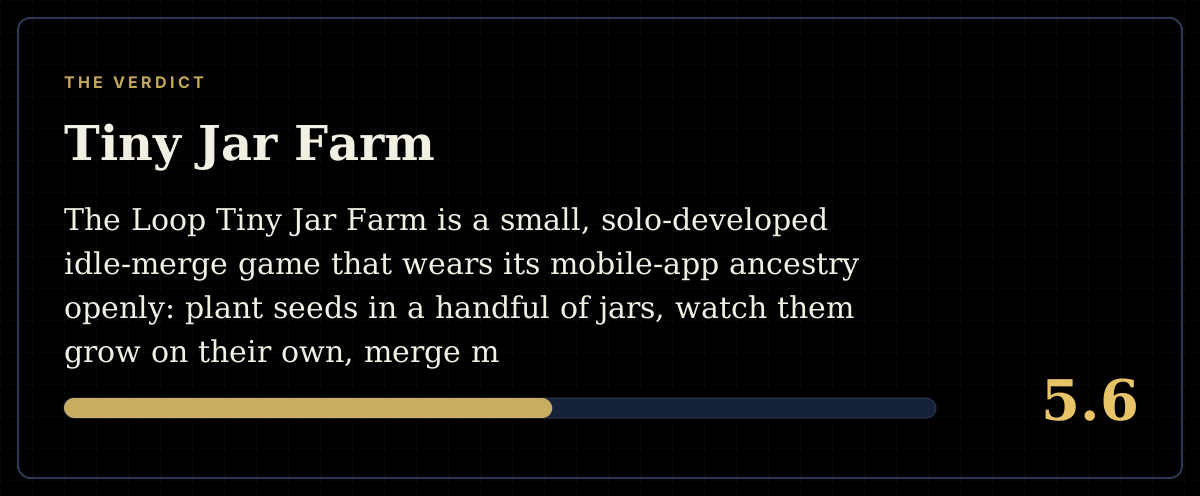
Tiny Jar Farm
5.6 / 10
- Developer
- Istikan Studio
- Publisher
- Istikan Studio
The short version
Biggest strengths
- Genuinely cute, hand-drawn chibi crop and character art that reviewers single out unprompted
- Merge-to-upgrade loop lands the basic "simple but satisfying" feeling the genre promises
- Offline earnings mean the idle half of the pitch actually works as advertised
Biggest weaknesses
- Ported-from-mobile UI friction: fixed low resolution crops off-screen at anything but full screen, and panel navigation relies on swipe-style dragging that feels foreign with a mouse
- No stated end goal beyond unlocking more seasons and higher merge tiers - several reviewers reported hitting a wall of "now what"
- No Chinese localisation despite a large, vocal Chinese-speaking review contingent actively requesting it
5.6 / 10
The Loop
Tiny Jar Farm is a small, solo-developed idle-merge game that wears its mobile-app ancestry openly: plant seeds in a handful of jars, watch them grow on their own, merge matching crops to push them up a level, harvest what they produce, and feed the harvest into a simple two-slot kitchen that turns raw crops into jam, bread, and other saleable goods. Sell the results for flower currency, spend the currency on upgrades, unlock a new season with new crop types, and repeat. It released 11 March 2026 from Istikan Studio at NZ$6.39, sitting at "Positive" across a tiny sample of fifteen Steam reviews - fourteen recommending it, one not - which is a small enough pool that almost every review in it can be read individually rather than aggregated into vague sentiment.
A Fragile Review Pool
That smallness is worth dwelling on before getting into the mechanics, because the review pool itself tells an unusually specific story for a game this size. One of the positive reviews is signed openly by a member of the small team that made the game ("I'm part of the small team that made Tiny Jar Farm, so I'm obviously a bit biased"), which is a level of candour worth crediting even as it complicates the "Positive" tally sitting above it. The single negative review goes further, characterising the rest of the positive reviews as coming from the developer's friends and pointing at their public friends-list overlap as evidence. That's a claim from one reviewer, not something independently verifiable here, and it sits alongside a run of unrelated, differently-worded positive reviews from players with widely varying playtime (40 minutes up to nearly 1,800), which argues against the harshest reading of "it's all sockpuppets." The honest position is that both things are true at once: a review base this size is genuinely fragile to a handful of friendly reviews, and most of the positive reviews still read as plausible, specific reactions to the actual game rather than boilerplate praise.
Cute Art, Real Mechanics
What they're reacting to, when specific, is mostly the art and the core merge feeling. Multiple reviewers call out the chibi crop designs, the little dancing animations on seed packets, and the "cute" tone by name without prompting, and the June/July 2026 patch notes back that up with a stated pass on animations and visual polish months after launch - a genuine sign of ongoing, if slow, support rather than a launch-and-abandon release. The merge mechanic itself gets the review most players reach for in this genre: "simple but stupidly satisfying." Planting a jar, watching it tick up through leaf and fruit stages, and combining two matured plants into a stronger one is the entire appeal of the format, and Tiny Jar Farm executes that specific loop competently. The offline-earnings promise - close the game, come back later, collect what accumulated - also appears to function as advertised across the reviews that mention it, which matters more than it sounds for a game whose entire premise depends on rewarding absence.
Mobile Roots, PC Friction
Where the reviews turn is on everything surrounding that loop. The most detailed critical account, written in Traditional Chinese, reads less like a review of a bad game and more like a list of specific mobile-port scars: the fixed internal resolution means anything less than full screen crops the bottom of the interface off entirely; moving between farm plots and the kitchen means dragging/swiping the view rather than clicking a tab, which the reviewer notes feels unintuitive on a PC; and getting from the kitchen back to the harvest screen has no direct shortcut. Its own screenshots corroborate the shape of that complaint even without taking the reviewer's word for it: several show the game running in a small, fixed-size portrait window floating over an otherwise empty desktop, rather than filling the screen the way a PC release normally would. A separate, more measured English review raises an adjacent but distinct complaint: there's no clearly stated goal beyond continuing to unlock gardens and seed tiers, no achievement hooks to structure that progress around, and several shop upgrades whose actual effect on play is unclear even after buying them. Steam's own achievement data is a useful cross-check here rather than just another opinion: the game does carry a full achievement schema (season unlocks, crop-level milestones, crafting-count milestones), and the global completion curve drops steeply and fast - over a quarter of trackable players clear the very first spring-related unlock, but that collapses to roughly 5% reaching a level-50 crop and barely 4% reaching level 100. Whether or not any individual reviewer had achievements visible when they wrote that critique, the underlying pattern they're describing - most players stall out well short of the game's own longer-term content - is exactly what the numbers show.
The Localisation Gap
The localisation gap compounds the same problem from a different angle. A Simplified Chinese reviewer writes a genuinely thorough, mechanically accurate walkthrough of the systems (leaf currency, jam production times, click-upgrades versus building-tier upgrades, the point at which merging becomes more efficient than buying) and closes by noting the developer has said Chinese localisation and an achievement system are both planned. The Traditional Chinese reviewer, writing separately, repeats "no Chinese localisation" as a closing complaint. Between them, and set against the game's own review-language mix, there's clearly a real Chinese-speaking audience already engaged enough to write detailed reviews in a language the game doesn't yet support - a specific, addressable gap rather than a vague "more languages would be nice" wish.
Verdict
None of this describes a broken game. It describes a small, sincere, competently-drawn merge-idler that was built mobile-first and hasn't yet finished the work of feeling native on a desktop store, paired with a content ceiling that the achievement data suggests most players find quickly. The core loop is pleasant for the hour or two it takes to see the first couple of unlocks; whether it holds up past that is the exact question its own numbers answer less generously than its warmest reviews suggest.
Steam's community tagging places this squarely as Incremental/Idler first, with Farming Sim, Crafting, and Economy close behind - no RPG framing anywhere, and rightly so: there's no combat, no character build, just plant-merge-harvest-sell on a timer.
Pros and cons
Pros
- Genuinely cute, hand-drawn chibi crop and character art that reviewers single out unprompted
- Merge-to-upgrade loop lands the basic "simple but satisfying" feeling the genre promises
- Offline earnings mean the idle half of the pitch actually works as advertised
Cons
- Ported-from-mobile UI friction: fixed low resolution crops off-screen at anything but full screen, and panel navigation relies on swipe-style dragging that feels foreign with a mouse
- No stated end goal beyond unlocking more seasons and higher merge tiers - several reviewers reported hitting a wall of "now what"
- No Chinese localisation despite a large, vocal Chinese-speaking review contingent actively requesting it
- Achievement completion curve shows the overwhelming majority of players stop engaging within the first season
Screenshots
-
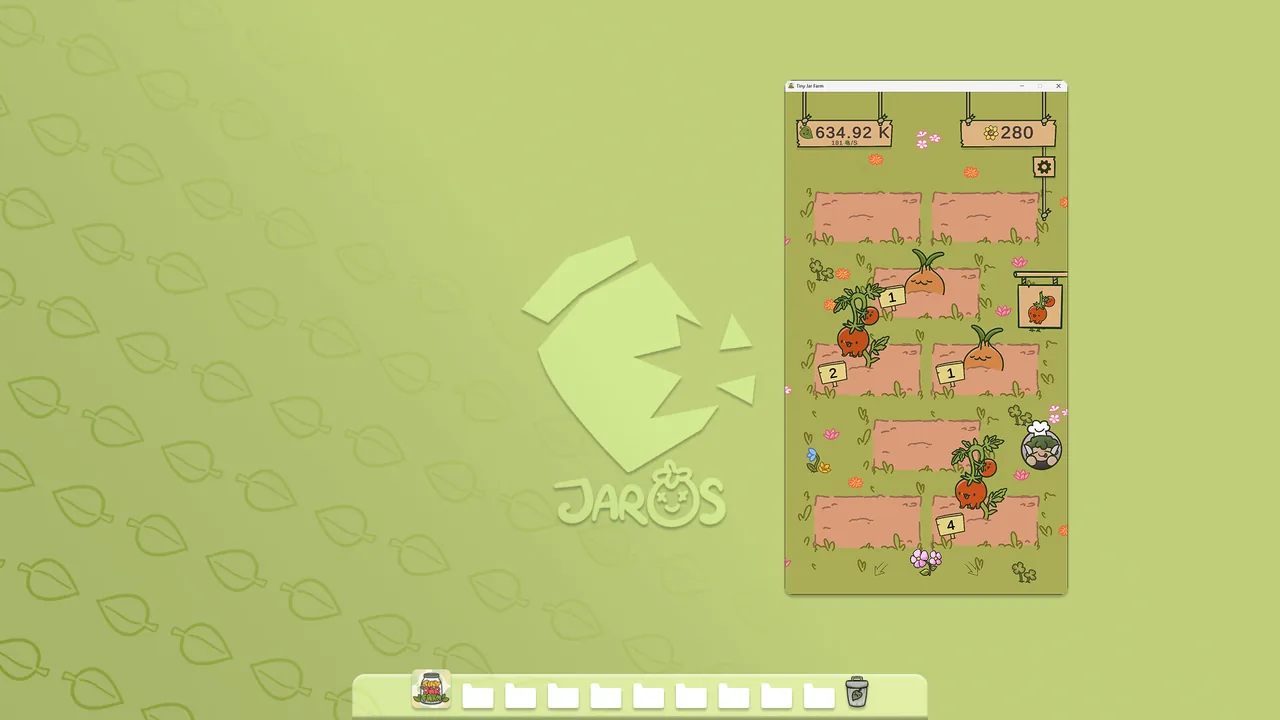
The game's fixed, portrait-shaped window sitting over the desktopImage: Istikan Studio via Steam -
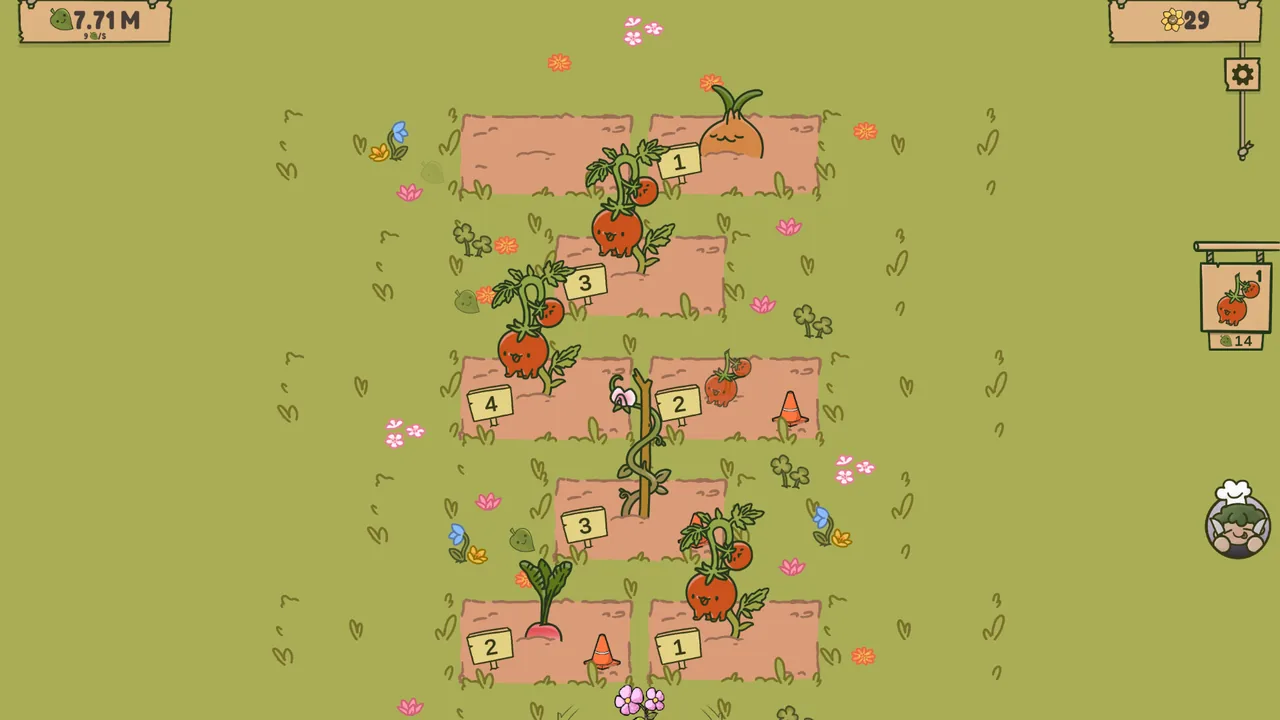
Planting and merging crops on the farm gridImage: Istikan Studio via Steam -
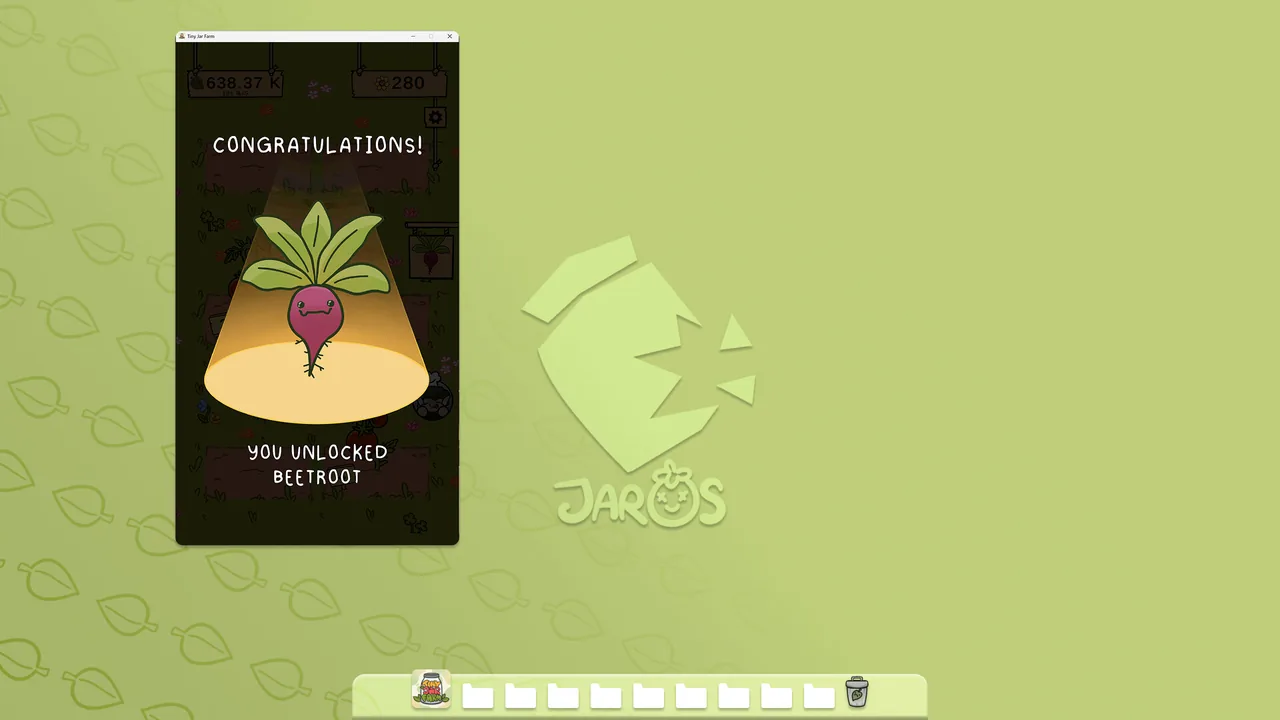
An unlock notification, shown at the game's native small window sizeImage: Istikan Studio via Steam -
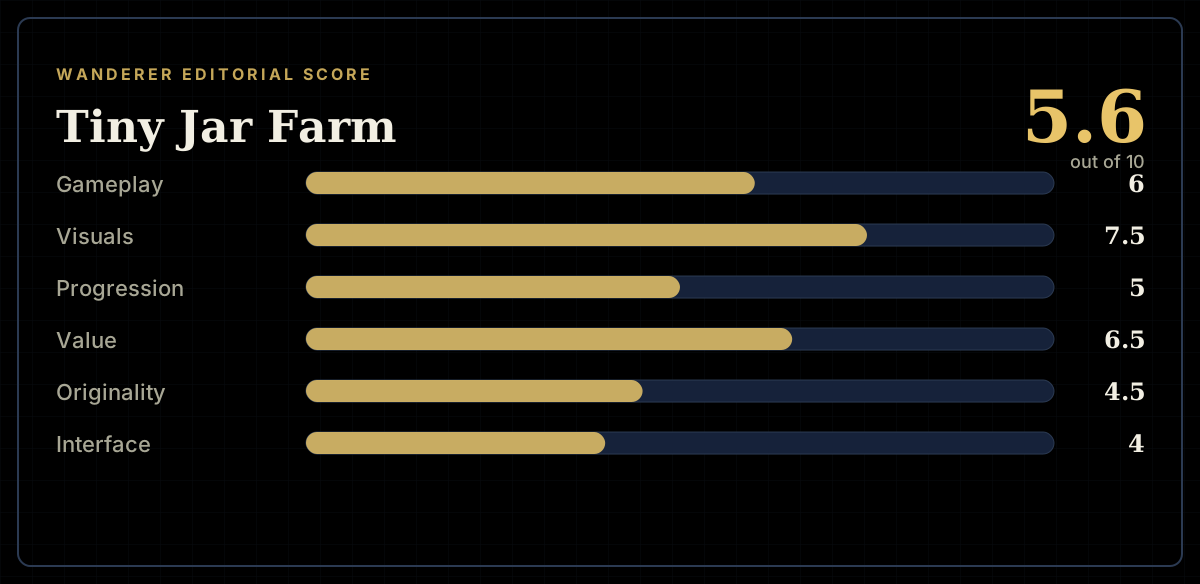
How the review scores each part of the gameWanderer Editorial -

Release details and category scores at a glanceWanderer Editorial -
The short versionWanderer Editorial