Game review
The Short Trip
6.2 / 10
- Developer
- OcarinaGames
- Publisher
- OcarinaGames
The short version
Biggest strengths
- A chill, focused driving-survival loop that reviewers describe as exactly what it advertises, a short, relaxing trip down a desert road with a working in-car radio playing public-domain music
- Inventory management that punishes hoarding rather than rewarding it, since overloaded vehicles slow down, gives resource decisions real weight despite the game's simple scope
- A permadeath structure paired with genuinely distinct vehicles, each with its own upsides and downsides, gives even a short playtime a surprising amount of replay variety
Biggest weaknesses
- Controller support is broken for a meaningful chunk of players, with several buttons unbound or non-functional and no way to navigate the inventory menu with a gamepad at all
- The settings menu doesn't scale properly on wide or ultrawide monitors, with at least one reviewer reporting it renders mostly off-screen and unusable at their resolution
- Controls are described as functional but slightly mechanical and unintuitive at first, with no in-game tooltips or hover explanations for unfamiliar icons and mechanics
6.2 / 10
Overview
The Short Trip is a driving-survival game developed and self-published by the small indie studio OcarinaGames, built in Godot with a deliberate PICO-8-inspired pixel art style. Players pick a vehicle and drive down a desert road until they reach the end, managing food, thirst, fuel, and vehicle condition along the way, with death treated as permanent rather than a setback to reload past. It released on Steam on January 22, 2025, and holds a Positive rating across 10 reviews, with nine recommending it.
That's a small review pool, but a consistent one: reviewers describe a short, focused homage to games like Desert Bus and The Long Drive that mostly delivers on a simple promise, tempered by real acknowledgment that it's still an early, somewhat rough release.
Concept and Setting
The premise is intentionally minimal: you're driving, the road stretches ahead, and the point is the journey rather than any surrounding plot or narrative dressing. The game wears its inspirations openly, reviewers repeatedly compare it to Desert Bus's deadpan endurance-driving concept and The Long Drive's open-road survival structure, and it embraces that lineage rather than trying to disguise it. One reviewer described the experience in unexpectedly personal terms, framing the quiet, meditative drive as a genuinely calming escape rather than just a gameplay gimmick, which speaks to how effectively the stripped-down concept can land for the right kind of player.
There's no larger story to speak of, and reviewers don't seem to want one; the appeal here is squarely about the mood of the drive itself; sparse roadside details, a working radio playing public-domain music, and the slow tension of watching your supplies dwindle, rather than any scripted destination.
Gameplay and Mechanics
The core loop revolves around keeping your vehicle moving while balancing food, thirst, fuel, and vehicle condition, all of which deplete or degrade as you drive, with crashes accelerating vehicle wear until it eventually becomes inoperable. Items are deliberately scarce, and inventory management is a genuine constraint rather than a formality: taking on too much cargo weighs the vehicle down and slows your progress, so reviewers describe real tension in deciding what to keep versus what to leave behind, a rare case of a survival game's hoarding instinct actually working against the player in an interesting way. Permadeath raises the stakes further, and the roster of vehicles, each with distinct strengths and weaknesses, gives repeat attempts enough variety that reviewers who died early were generally willing to start over rather than feel like they'd hit a wall.
The rougher edges show up mostly in how the game communicates its own systems. Reviewers describe the driving controls as functional but a little mechanical and stiff at first, without in-game tooltips or hover explanations to clarify what unfamiliar icons and resources actually do, leaving some early trial and error before things click. Controller support is a more serious complaint: multiple reviewers report unbound or non-functional buttons and no way to navigate the inventory menu at all with a gamepad, effectively pushing controller players toward keyboard and mouse regardless of preference.
Progression and Replayability
There isn't a deep meta-progression system layered on top of individual runs, the appeal instead comes from trying different vehicles and routes and seeing how far your resource management and reflexes can carry you before the road, or your own poor planning, catches up with you. Reviewers who put several hours in describe the format as well suited to short, replayable sessions rather than one long continuous playthrough, with permadeath encouraging quick restarts instead of long-term save-scumming.
A recurring theme across the more critical feedback is that reviewers are rating the game partly on trust in its future rather than purely on its current state. Several explicitly frame their score as generous given how early and unpolished the release still feels, citing the settings menu's poor scaling on wide and ultrawide monitors, where it can render mostly off-screen and become effectively unusable, as one clear example of rough edges that still need attention.
Visual Style and Sound Design
The PICO-8-inspired pixel art gives The Short Trip a clean, low-fidelity look that reviewers describe as a good fit for its stripped-down desert-driving concept, favoring atmosphere and simplicity over technical spectacle. The in-car radio, stocked entirely with public-domain music, draws specific praise as a small but effective touch that reinforces the game's relaxed, meditative pacing rather than feeling like a licensing afterthought.
Nothing about the presentation aims to impress on technical merits alone, but reviewers consistently describe the overall package, art style, sound, and pacing together, as coherent and well matched to what the game is trying to be: a brief, chill escape rather than a showcase title. Even the smaller environmental touches, roadside debris, distant desert scenery scrolling past at a steady, unhurried pace, do real work reinforcing that meditative tone without asking the modest pixel art to carry more spectacle than it was ever built for.
Verdict
The Short Trip is a small, focused homage to Desert Bus and The Long Drive that mostly succeeds at delivering a short, meditative desert-driving survival loop, even if its current state shows the rough edges of an early release, particularly around controller support and interface scaling. Reviewers who tried it are largely charmed by its simple pleasures: real resource tension, distinct vehicles worth experimenting with, and a genuinely calming atmosphere backed by a public-domain radio soundtrack. At its low price, it's an easy recommendation for anyone drawn to short, atmospheric driving games who can tolerate some current jank while waiting to see where the developer takes it next.
Pros and cons
Pros
- A chill, focused driving-survival loop that reviewers describe as exactly what it advertises, a short, relaxing trip down a desert road with a working in-car radio playing public-domain music
- Inventory management that punishes hoarding rather than rewarding it, since overloaded vehicles slow down, gives resource decisions real weight despite the game's simple scope
- A permadeath structure paired with genuinely distinct vehicles, each with its own upsides and downsides, gives even a short playtime a surprising amount of replay variety
- The low asking price and PICO-8-inspired pixel art land well with reviewers looking for a brief, atmospheric homage to Desert Bus and The Long Drive rather than a long-form survival game
Cons
- Controller support is broken for a meaningful chunk of players, with several buttons unbound or non-functional and no way to navigate the inventory menu with a gamepad at all
- The settings menu doesn't scale properly on wide or ultrawide monitors, with at least one reviewer reporting it renders mostly off-screen and unusable at their resolution
- Controls are described as functional but slightly mechanical and unintuitive at first, with no in-game tooltips or hover explanations for unfamiliar icons and mechanics
- Reviewers are candid that the game is still an early, unpolished release, several rate it generously in anticipation of planned fixes rather than for its current out-of-the-box state
Screenshots
-
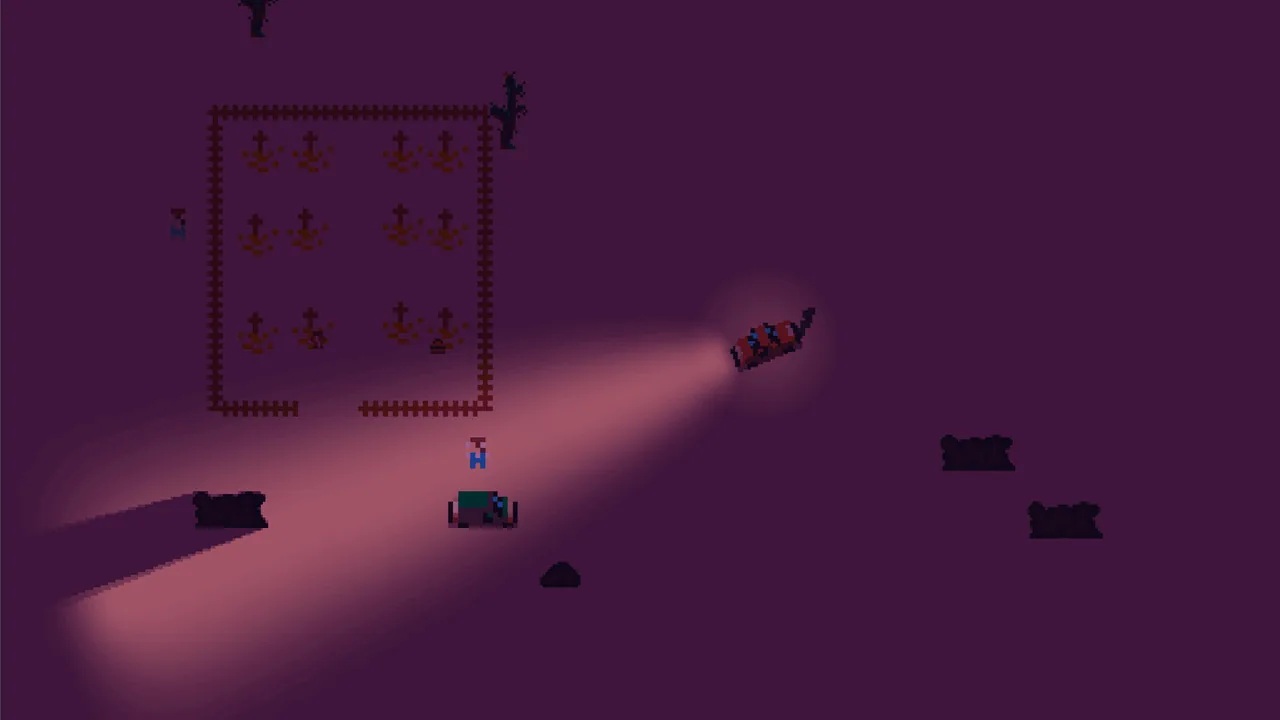
Driving past a roadside cemetery at night, headlights carving a narrow beam through the dark desertImage: OcarinaGames via Steam -
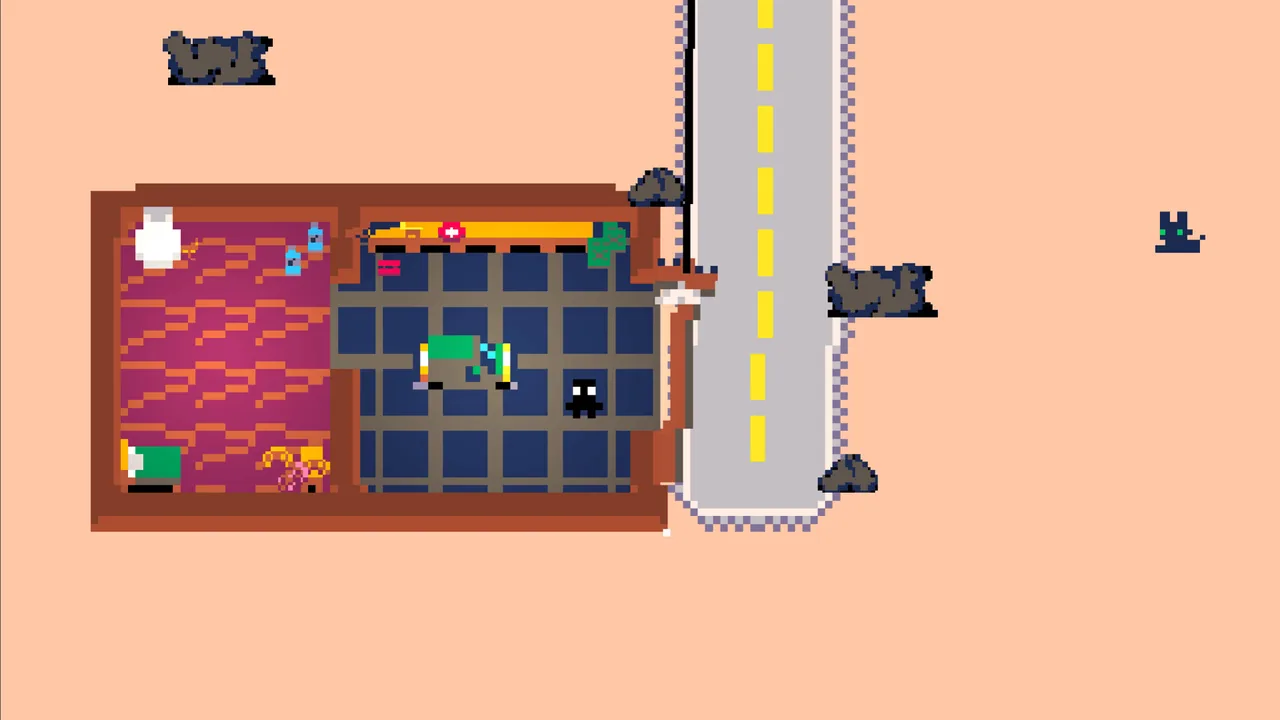
Stocking up at a roadside stop, one of the sparse waypoints along the desert highwayImage: OcarinaGames via Steam -
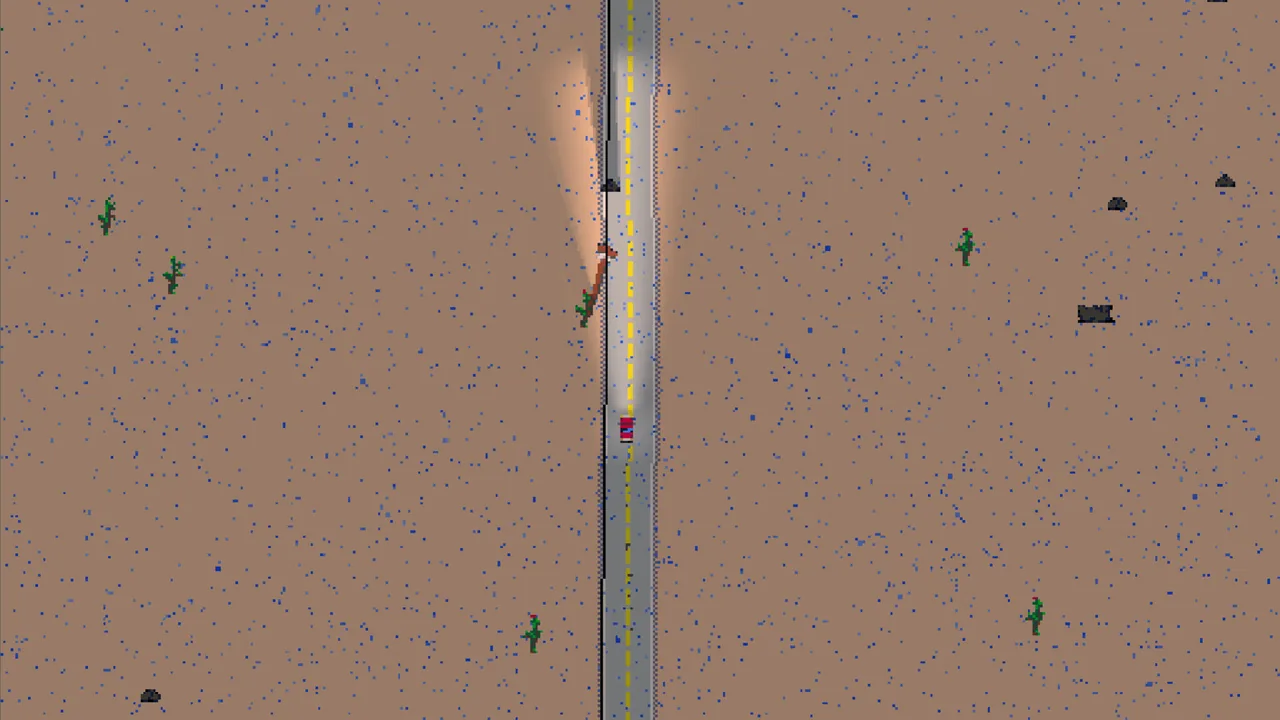
The open road stretching ahead, the game's central image of solitary desert drivingImage: OcarinaGames via Steam -

Wanderer Game ReviewsWanderer Game Reviews