Game review
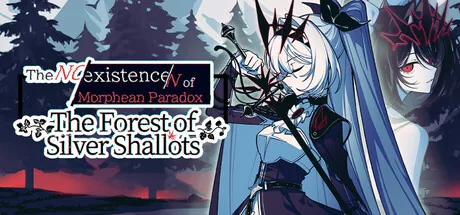
The NOexistenceN of Morphean Paradox: The Forest of Silver Shallots
5.9 / 10
- Developer
- 0x0Real Studio
- Publisher
- Nino Games
The short version
Biggest strengths
- Ambitious, decision-driven narrative with a large returning and new character roster, including fan-favorite Lilith from the developer's earlier title
- Genuine depth to the guild-management and character-building layer, with six core attributes and branching skill paths per character
- Strong art direction and an original score that reviewers consistently praised as standout elements
Biggest weaknesses
- Rough, frequently uncapitalized or ungrammatical English translation that undermines a story-heavy game's biggest selling point
- Persistent Early Access bugs including save-breaking errors, freezes, and quest-progression stalls on dialogue choices
- An unusually long stretch, around five hours by some accounts, before the game allows its first manual save
5.9 / 10
Overview
The NOexistenceN of Morphean Paradox: The Forest of Silver Shallots is an Early Access narrative RPG from developer 0x0Real Studio, published by Nino Games and released in January 2026 as a sequel to the studio's earlier visual-novel-adjacent title. It lands in a genuinely awkward position: a Mostly Positive score built on the strength of ambitious writing, returning characters, and a distinctive guild-management structure, weighed down by rough translation, persistent Early Access bugs, and a wave of community frustration over changes to the writing team between games. The result is a title reviewers describe with real affection but rarely without a substantial list of caveats.
Story and Setting
Players awaken in the Forest of Silver Shallots and take on the role of a guild leader tasked with uncovering the secret of the "Morphean Paradox," a mystery entangled with the schemes of rival factions and a spreading black mist beneath the surface. The cast leans heavily on returning fan-favorite Lilith, a magic swordswoman from the developer's prior game, alongside a roster of new companions each carrying their own dense backstory, from a vengeance-driven scythe-wielder to a disgraced former Demon Lord seeking redemption. Reviewers who engaged with the writing consistently praised its scope and metanarrative ambitions, with one describing a first chapter that took over 13 hours to complete, considerably longer than the developer's entire previous game, built around a slow-burning exploration of identity and memory. That ambition comes wrapped in a genuinely rough translation, however: multiple reviewers flagged text boxes left partially or wholly untranslated, inconsistent capitalization, and grammar errors substantial enough to actively undercut comprehension in a story this dialogue-dependent. The game's release also arrived under a cloud of real controversy, several reviewers noted that a number of the original title's writing staff, including its lead writer, had departed the project before this release, and that departure visibly colored how a portion of the review pool approached the new story, with some longtime fans of the studio's earlier work explicitly stating they could no longer recommend the sequel on that basis alone.
Gameplay and Mechanics
Structurally, the game splits between guild-leader schedule management, deciding each day whether to train companions, delve into the labyrinth beneath the forest, or pursue side requests from a black-market merchant, and turn-based combat against a wide bestiary of enemies. Each companion is built around six core attributes plus a branching skill set that the player shapes over time, and reviewers who got deep into the systems described real strategic texture once the pieces click into place, even while acknowledging the game does a poor job explaining what any given stat, buff, or debuff actually does at the outset. Combat itself was described by one reviewer as feeling like an early, still-settling take on stat-driven tactical battles, functional but clearly unfinished in its current balance and pacing. The Early Access rough edges extend well beyond tutorializing: reviewers reported save files breaking outright, dialogue choices that stall quest progression entirely, and an unusually punishing early structure where the game reportedly doesn't allow a manual save for roughly the first five hours, a serious risk for anyone who can't commit to a long uninterrupted first session. On the accessibility side, the game is listed as playable without timed input, meaning the combat and exploration systems don't demand reflex-based execution, a small mercy given how much of the current player friction already comes from translation and stability issues rather than difficulty.
Visual Style and Sound Design
Where the game draws its most consistent praise is presentation: reviewers repeatedly singled out the art direction and character illustrations as beautiful, and the original score came in for specific compliments as outstanding and effective at building the game's mysterious, melancholy tone. That polish sits somewhat uneasily alongside the technical instability elsewhere, several reviewers explicitly contrasted the game's visual and musical strengths with the frequency of freezes and other bugs that interrupted otherwise atmospheric moments, a gap in overall polish that several reviewers attributed to the game being genuinely early in its Early Access cycle rather than a fundamental design failure.
Progression and Replayability
Beyond the day-to-day guild management loop, character growth runs through equipping and leveling each companion's individual attribute spread and skill branches, giving the roster meaningful build variety once a player understands the underlying systems. The decision-driven narrative structure promises consequences that reshape the story's direction, though with the game still in an early Early Access state and only the first chapter substantially playable, how deep that branching actually runs remains largely unproven. Several reviewers who backed the project on Kickstarter framed their current engagement as a long-term wait-and-see proposition, expecting the studio's promised frequent updates to gradually resolve the translation and stability issues, while others suggested prospective buyers hold off entirely until the game reaches a more finished state. The developer has also been vocal about posting update roadmaps directly to the community, though a handful of reviewers were skeptical of how detailed or reliable those roadmaps actually were, underscoring how much of this game's near-term trajectory still depends on trust the studio is actively working to rebuild.
Verdict
The NOexistenceN of Morphean Paradox: The Forest of Silver Shallots is a story-first RPG with real ambition and a devoted, if divided, fanbase, but it asks a lot of patience from anyone who buys in during this Early Access window. Its translation and stability problems are serious enough to genuinely undercut the dialogue-heavy experience it's built around, and the community fallout over its writing team's departure has left a visible mark on how it's being received. Worth watching for fans of narrative-driven RPGs and returning players of the developer's earlier work, but best approached cautiously and ideally after a few more rounds of translation and bug-fixing updates rather than on day one.
Pros and cons
Pros
- Ambitious, decision-driven narrative with a large returning and new character roster, including fan-favorite Lilith from the developer's earlier title
- Genuine depth to the guild-management and character-building layer, with six core attributes and branching skill paths per character
- Strong art direction and an original score that reviewers consistently praised as standout elements
- A substantial amount of content for Early Access, with some reviewers reporting 13-plus hours to finish just the first chapter
Cons
- Rough, frequently uncapitalized or ungrammatical English translation that undermines a story-heavy game's biggest selling point
- Persistent Early Access bugs including save-breaking errors, freezes, and quest-progression stalls on dialogue choices
- An unusually long stretch, around five hours by some accounts, before the game allows its first manual save
- Community trust damaged by the departure of several original writing staff between this game and the developer's prior title, a decision that drew sustained criticism in the review pool
Screenshots
-

The schedule-management layer has players choosing daily activities for their guild of companionsImage: 0x0Real Studio via Steam -
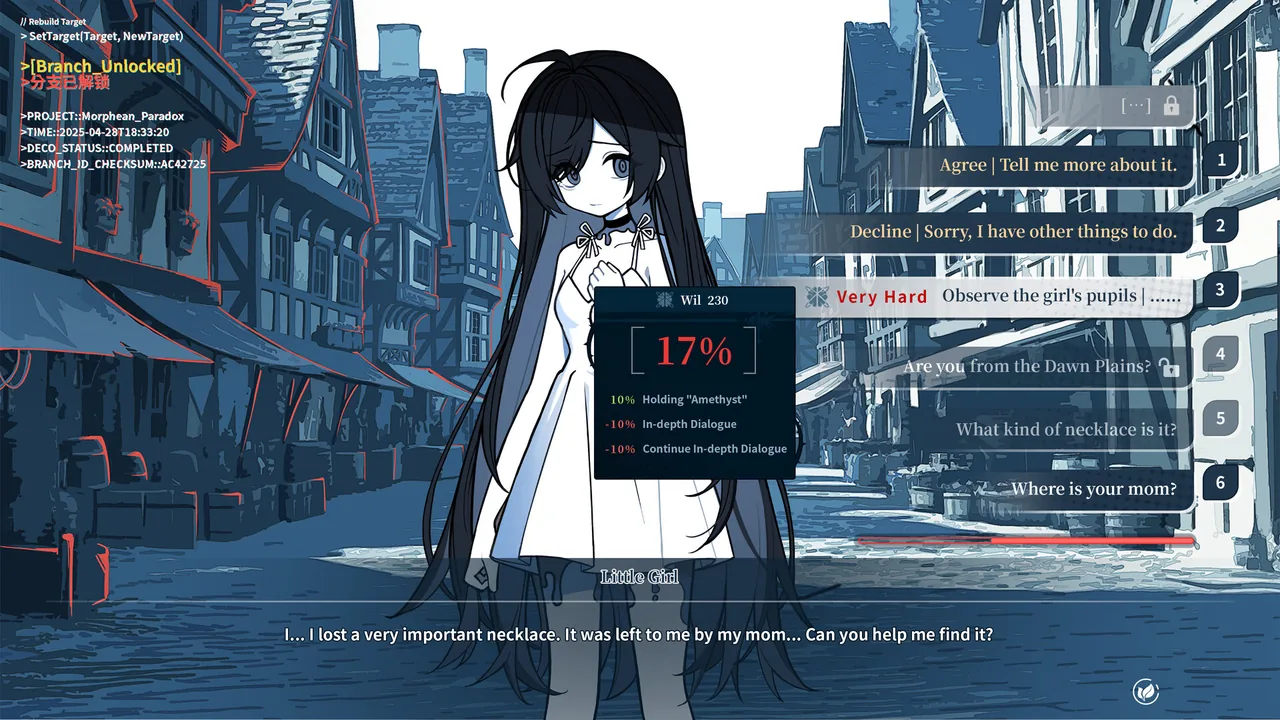
Decision-driven conversations track persuasion odds and offer branching dialogue choicesImage: 0x0Real Studio via Steam -
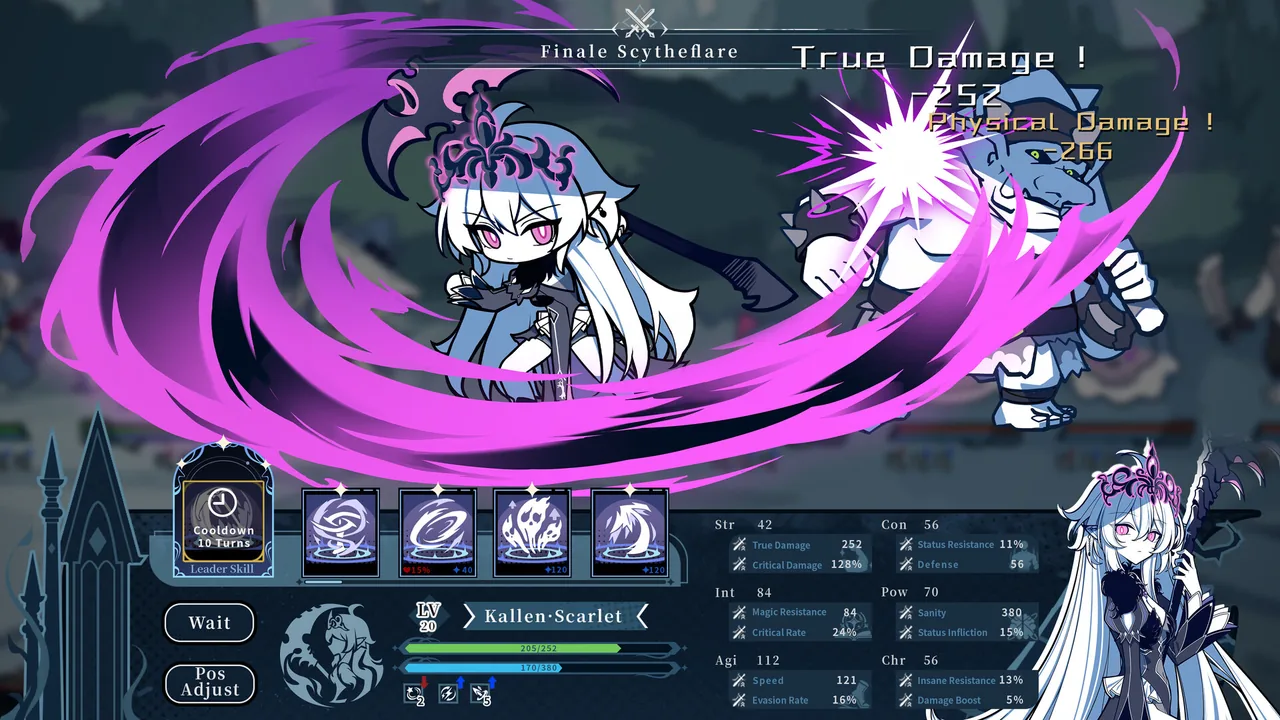
Combat displays detailed stat breakdowns alongside flashy skill animations like this Finale ScytheflareImage: 0x0Real Studio via Steam -
Technical specificationsWanderer Game Reviews