
Game review
The Dream Within
6.3 / 10
- Developer
- Roaming of Little Hammer
- Publisher
- Roaming of Little Hammer
The short version
Biggest strengths
- The harvest-craft-upgrade-repeat loop is consistently described as solid and satisfying, backed by lovely pixel art and stunning atmospheric environments
- A food-based stat-leveling system draws particular praise as an engaging, unusual twist on typical survival-crafting progression
- The solo developer is repeatedly singled out as exceptionally responsive, with reviewers describing specific bugs and balance complaints getting fixed within a day or two of being raised
Biggest weaknesses
- Combat is a recurring weak point, described as clunky and underwhelming, with limited four-directional attacks and an awkward separation between gathering mode and combat mode
- Onboarding is thin: several reviewers report unclear tooltips and missing explanations for basic mechanics, with one describing spending dozens of in-game days before understanding how a core system worked
- At least one reviewer reports a post-launch update that broke core controls entirely, freezing input during dialogue and making the game briefly unplayable for them
6.3 / 10
Overview
The Dream Within is a pixel-art open-world survival-crafting action RPG developed and self-published by the solo studio Roaming of Little Hammer. Players build and expand a home base, farm and craft supplies, and venture out into a fixed, hand-authored world to gather resources and treasure, all while preparing to defend against recurring "Nightmare" events that send dark monsters against the base at regular intervals. It released on Steam on January 13, 2025, and holds a Positive rating across 18 reviews, with 15 recommending it.
That's a small sample by the standards of a big-budget release, but the reviews themselves are unusually detailed and consistent, painting a clear picture of a promising, actively-developed small-team project whose strengths in atmosphere, crafting depth, and developer responsiveness outweigh some real rough edges in combat and onboarding.
Story and Setting
The game frames itself less around a driving plot and more around mood and discovery, dropping players into a dreamlike, fixed world to explore at their own pace between bouts of base management. One reviewer describes it explicitly as "a deliberately abstract, atmosphere-driven experience that positions itself closer to interactive art than to a traditional game," built around evoking a mood that shifts between calm introspection and subtle unease rather than delivering a tightly scripted narrative. The recurring Nightmare cycle, in which dark creatures periodically assault the player's base, gives the otherwise contemplative loop a clear source of tension and urgency.
Reviewers who came in expecting a straightforward survival game generally come away pleasantly surprised by the atmosphere and pixel-art presentation, describing the fixed world as rewarding to explore precisely because it was hand-built rather than procedurally generated, giving it a sense of place that more randomized survival games often lack.
Gameplay and Mechanics
The core gameplay loop combines building and expanding a home base, farming crops, and crafting gear and structures, with expeditions out into the wider world to gather resources, hunt wildlife, and uncover treasure. Reviewers broadly praise how well these systems mesh together, describing the harvest-craft-upgrade cycle as solid and well-tuned for a small team, and several specifically highlight the food-based stat-leveling system as an inventive twist that makes eating and cooking meaningfully tied to character growth rather than a purely cosmetic survival stat.
Combat is the clearest weak spot. Multiple reviewers describe it as clunky and underwhelming, citing a limited four-directional attack system, an awkward toggle between a dedicated gathering mode and a separate combat mode, and enemy status effects like bleed that can stack in ways that feel more frustrating than tactical. A recurring complaint about thin tutorials compounds this: one reviewer specifically notes it took roughly sixty in-game days before they understood how to catch birds, having assumed the mechanic worked differently than it actually did, a sign the game doesn't always explain its own systems clearly.
Progression and Replayability
Progression follows a satisfying arc from a small, fragile starting base to an expanded homestead with additional storage, defenses, and crafting stations, gated behind the resources gathered during exploration runs and successfully surviving Nightmare events. Reviewers who invested significant time, several logging 25 to over 50 hours, describe genuine long-term engagement with the loop, and the food-based leveling system draws specific praise for making stat growth feel like a natural extension of the crafting and cooking systems rather than a bolted-on RPG layer.
The developer's active post-launch support is a recurring theme reviewers credit as extending the game's staying power: several describe specific balance and bug complaints, like an overly harsh early Nightmare difficulty curve or an unhideable menu blocking too much of the screen, being addressed within a day or two of being raised. That said, at least one reviewer reports a later update that broke core input entirely, freezing controls during in-game dialogue and rendering the game briefly unplayable, a reminder that a small, fast-moving solo project can introduce new problems as quickly as it fixes old ones.
Visual Style and Sound Design
Presentation draws some of the most consistent praise in the review pool. Reviewers repeatedly describe the pixel art as lovely and the environments as stunning and atmospheric, crediting the visual design with doing much of the work in establishing the game's dreamlike, slightly unsettling mood. Several specifically call out how well the different art assets work together despite the game's small-team origins, giving it a more cohesive look than its modest scope might suggest.
A minor recurring gripe is legibility rather than quality: a few reviewers note that some plants and resources look similar enough that identifying the correct item for a given recipe, like locating specific healing herbs, requires trial and error rather than being visually obvious at a glance. It's a small complaint set against otherwise strongly positive impressions of the game's overall visual identity.
Verdict
The Dream Within is a modest but genuinely absorbing survival-crafting ARPG that punches above its solo-developer origins on atmosphere, crafting depth, and an inventive food-leveling system, even as clunky combat and thin onboarding hold it back from being an easy universal recommendation. What consistently pushes reviewers toward a thumbs-up despite those rough edges is the developer's visible, rapid responsiveness to feedback, turning real complaints into fixed issues within days rather than months. At its low asking price, reviewers describe it as an easy value proposition for anyone drawn to atmospheric, base-building survival games who can tolerate combat that doesn't quite match the polish of its crafting and exploration systems.
Pros and cons
Pros
- The harvest-craft-upgrade-repeat loop is consistently described as solid and satisfying, backed by lovely pixel art and stunning atmospheric environments
- A food-based stat-leveling system draws particular praise as an engaging, unusual twist on typical survival-crafting progression
- The solo developer is repeatedly singled out as exceptionally responsive, with reviewers describing specific bugs and balance complaints getting fixed within a day or two of being raised
- Reviewers consistently call out the low asking price as excellent value given the amount of content and the quality of the crafting/base-building systems on offer
Cons
- Combat is a recurring weak point, described as clunky and underwhelming, with limited four-directional attacks and an awkward separation between gathering mode and combat mode
- Onboarding is thin: several reviewers report unclear tooltips and missing explanations for basic mechanics, with one describing spending dozens of in-game days before understanding how a core system worked
- At least one reviewer reports a post-launch update that broke core controls entirely, freezing input during dialogue and making the game briefly unplayable for them
- A few reviewers flag repetitive, click-heavy farming and stacking status effects from enemies as friction points that could use quality-of-life attention
Screenshots
-
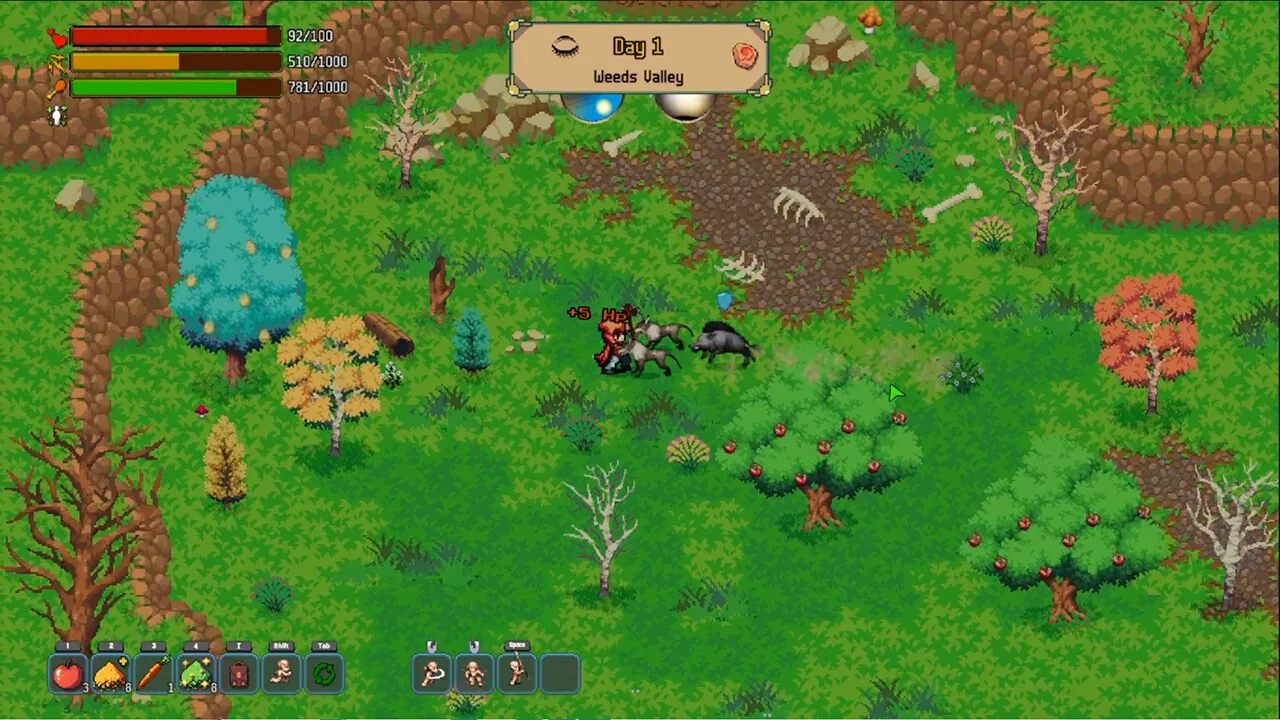
Foraging and fighting wildlife in Weeds Valley, one of the fixed world's hand-authored regionsImage: Roaming of Little Hammer via Steam -
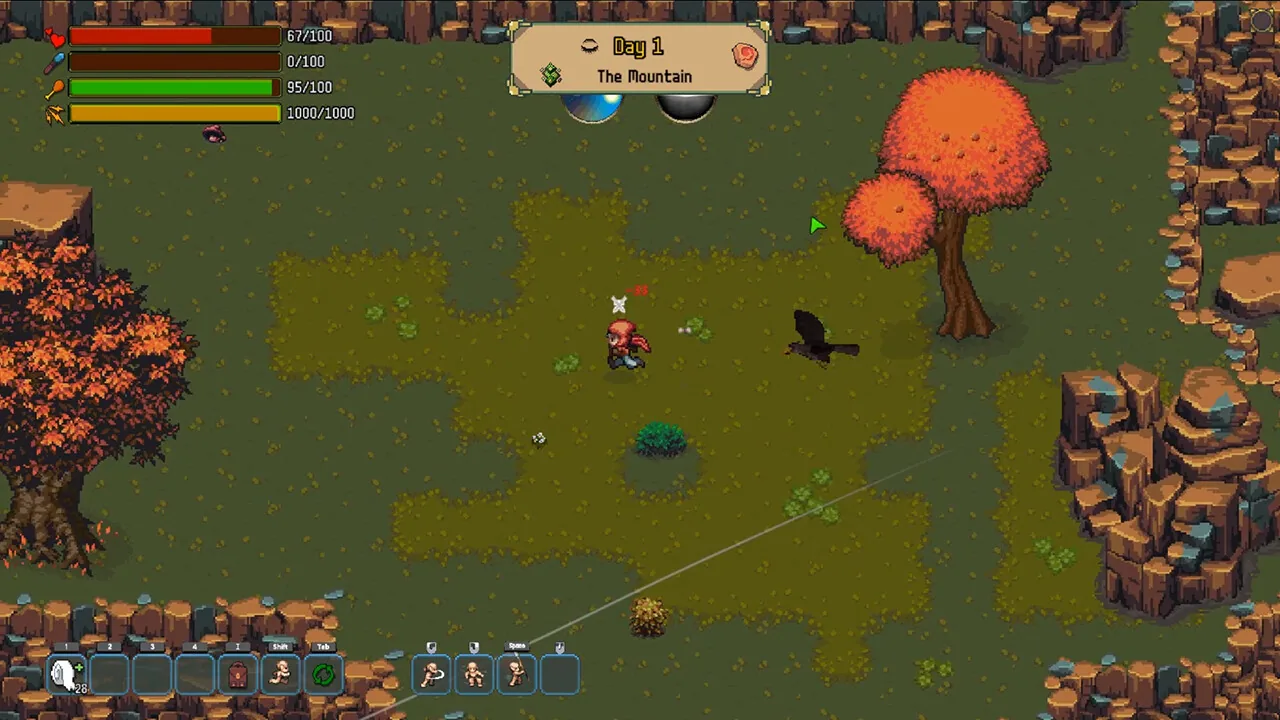
A tense encounter with a crow on The Mountain, showcasing the game's autumnal pixel-art paletteImage: Roaming of Little Hammer via Steam -
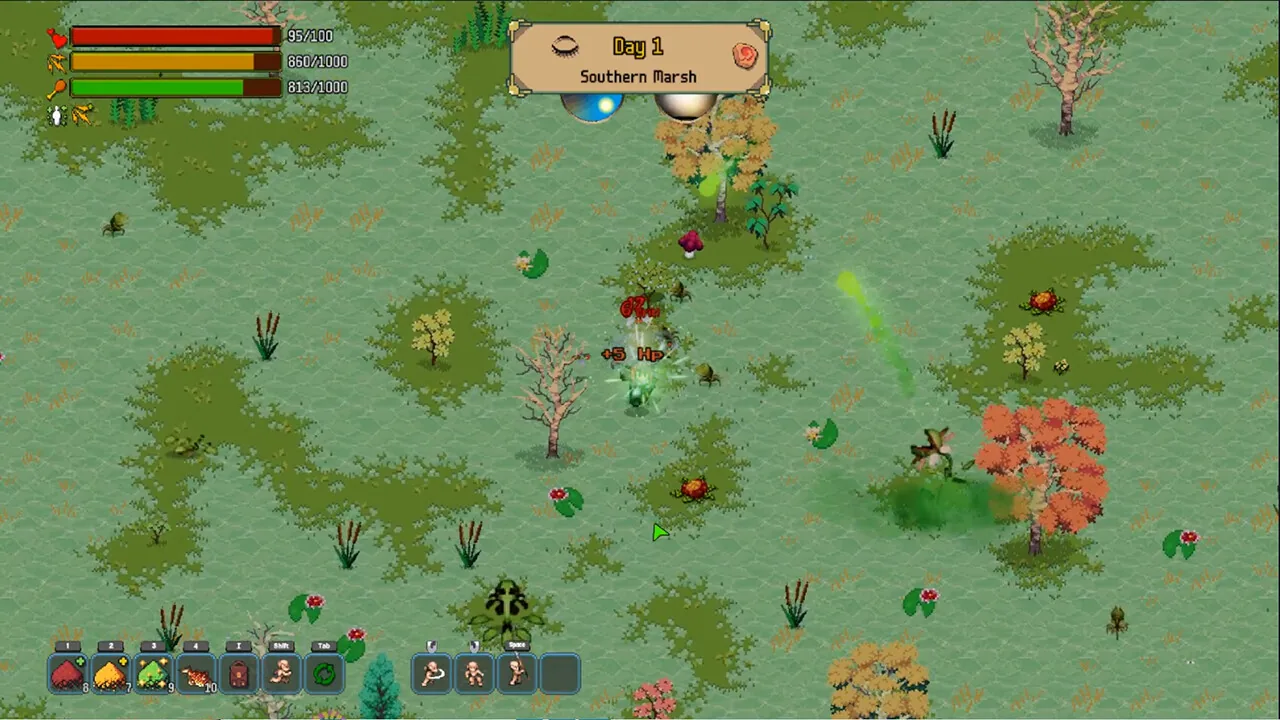
Exploring the Southern Marsh, with glowing status effects visible mid-encounterImage: Roaming of Little Hammer via Steam -
Wanderer Game ReviewsWanderer Game Reviews