Game review
THE DARK SIDE OF CECLON
6 / 10
- Developer
- SOLIDS Studio
- Publisher
- SOLIDS Studio
The short version
Biggest strengths
- The day-night cycle is a genuine standout, turning peaceful daytime planet exploration into tense, high-stakes survival once the recurring 'dark nights' bring out hostile creatures
- The dual combat system, controlling both Jensen directly and a separately upgradeable combat drone, draws consistent praise as original and satisfying, with two distinct skill trees to build around
- Reviewers repeatedly express disbelief that the game's huge, atmospheric open world and varied systems were built by a single developer
Biggest weaknesses
- Dialogue and localization quality are the most consistent complaint, with reviewers describing stiff, oddly-phrased writing, rough voice work, and inconsistent terminology that undercuts the story's emotional beats
- The opening hour is described as overwhelming, dumping a large amount of survival-mechanic information on new players before the game's systems click
- A vocal concern among more critical reviewers is the pace of post-launch support, with one citing an eight-month gap since the last update and no clear communication from the small team
6 / 10
Overview
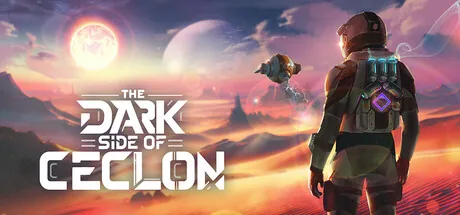
THE DARK SIDE OF CECLON is a third-person, open-world survival adventure developed and self-published by the solo studio SOLIDS Studio. Players take the role of Jensen, the sole survivor of a rescue mission crash-landed on the alien planet Ceclon, tasked with surviving its harsh environment, uncovering what happened to the crew that vanished before them, and recovering a rare energy source Earth desperately needs. It released on Steam on January 20, 2025, and holds a Positive rating across 15 reviews, with 13 recommending it.
For a solo-developer project, the reception is striking in how consistently reviewers frame it as more ambitious and complete than they expected, praising its combat and exploration systems even as they flag rough edges in writing and technical polish that are common growing pains for a one-person team.
Story and Setting
The premise sends a rescue expedition, the Z-Two team, to planet Ceclon in the year 2452 to find the missing Z-One crew and recover Veka energy, a resource humanity needs to sustain itself as Earth's own supplies dwindle. A shuttle crash during an asteroid shower leaves Jensen the only survivor, alone on an alien world he must now explore, understand, and ultimately escape. It's a lean, functional sci-fi premise that mostly exists to justify the exploration and survival loop built on top of it.
Reception to the actual writing is the most consistently criticized element in the review pool. Multiple reviewers describe the dialogue as stiff and oddly phrased, with awkward voice delivery and inconsistent terminology, one specifically noting a tonally jarring line during what was meant to be an emotional moment. Several reviewers explicitly gave up on following the dialogue and skipped through it rather than engaging with the story, treating the narrative as a backdrop for the systems-driven gameplay rather than a reason to play in its own right.
Gameplay and Mechanics
The core hook is the day-night cycle: daytime on Ceclon is comparatively peaceful, giving players room to explore, gather resources, and solve environmental puzzles across a large open planet, while recurring "dark nights" plunge the world into genuine survival-horror tension as hostile creatures emerge to hunt. Reviewers consistently single this system out as the game's best idea, describing the first dark night in particular as a shock that forces players to adapt quickly or retreat.
Combat runs on an unusually structured dual system: Jensen himself moves with smooth dodges and light utility, while most actual damage output comes from a separately controlled and upgradeable combat drone. Reviewers describe this drone-and-character partnership as original and well designed, offering two parallel skill trees worth of build variety and making boss encounters feel deliberately engineered rather than generic. The tradeoff is a genuinely steep learning curve; several reviewers describe the opening hour as overwhelming, with a dense wall of survival systems and UI information thrown at players before the loop starts to click, and recommend starting on an easier difficulty setting to ease into it.
Progression and Replayability
Progression is built around upgrading both Jensen and his combat drone along separate skill trees, unlocking new abilities, tools, and combat options as players gather resources during daylight runs. Reviewers who pushed past the rough opening hours describe real depth here, with meaningful choices about how to specialize and a rewarding sense of growing more capable against the escalating threats of the dark nights. A drivable vehicle for covering the planet's large open spaces draws specific praise as both fun to use and a smart pacing tool for a game built around a big map.
The clearest shadow over long-term replayability isn't a design flaw but a support concern: a more critical reviewer flags roughly eight months between the game's last content update and their review, with no clear communication from the small team about ongoing plans, a legitimate worry for a survival game whose appeal depends partly on continued balance and content support from a single developer.
Visual Style and Sound Design
Presentation earns a mixed but generally positive response. Reviewers describe the planet's environments, particularly the sand dunes at dusk and the oppressive atmosphere of the dark nights, as genuinely beautiful and immersive, giving the world a distinct science-fiction identity despite its solo-developer budget. The contrast between calm, sunlit daytime exploration and pitch-black nighttime dread is repeatedly cited as effective atmospheric design.
Technical execution is where the seams show most. Reviewers describe font and text legibility issues in certain menus, graphics and sound effects that read as functional rather than polished, and settings that don't support several common display resolutions. None of these are described as game-breaking, but they're consistently mentioned as the clearest signs of a small team working within real constraints.
Sound design leans functional over memorable, with reviewers describing effects as serviceable rather than standout, though nobody in the review pool singles out audio as an actual problem the way they do the dialogue delivery. The overall audiovisual package reads as a case of ambition slightly outrunning available resources: the environmental art direction and lighting during transitions between day and dark night carry real atmosphere, while the supporting technical layer, menus, settings, and sound mixing, hasn't caught up to the same standard yet.
Verdict
THE DARK SIDE OF CECLON pairs a genuinely inventive day-night survival hook and an original dual character-and-drone combat system with the rough writing, technical polish, and support-pace concerns typical of an ambitious one-person project. Reviewers are largely willing to forgive those shortcomings given how much the exploration, combat, and atmosphere deliver once the steep opening hour is past, and the fair asking price sweetens the deal further. Players drawn to solo-developer sci-fi survival games who can tolerate stiff dialogue and some technical rough edges in exchange for a genuinely original combat system and a tense day-night structure should find plenty to like here.
Pros and cons
Pros
- The day-night cycle is a genuine standout, turning peaceful daytime planet exploration into tense, high-stakes survival once the recurring 'dark nights' bring out hostile creatures
- The dual combat system, controlling both Jensen directly and a separately upgradeable combat drone, draws consistent praise as original and satisfying, with two distinct skill trees to build around
- Reviewers repeatedly express disbelief that the game's huge, atmospheric open world and varied systems were built by a single developer
- A survivable difficulty curve that can be tuned down for players less accustomed to the survival genre, alongside a genuinely rewarding vehicle for getting around the planet, are both singled out as smart design choices
Cons
- Dialogue and localization quality are the most consistent complaint, with reviewers describing stiff, oddly-phrased writing, rough voice work, and inconsistent terminology that undercuts the story's emotional beats
- The opening hour is described as overwhelming, dumping a large amount of survival-mechanic information on new players before the game's systems click
- A vocal concern among more critical reviewers is the pace of post-launch support, with one citing an eight-month gap since the last update and no clear communication from the small team
- General technical polish, including limited resolution/settings support, mid-tier graphics, and canned sound effects, is described as an area that still needs work
Screenshots
-
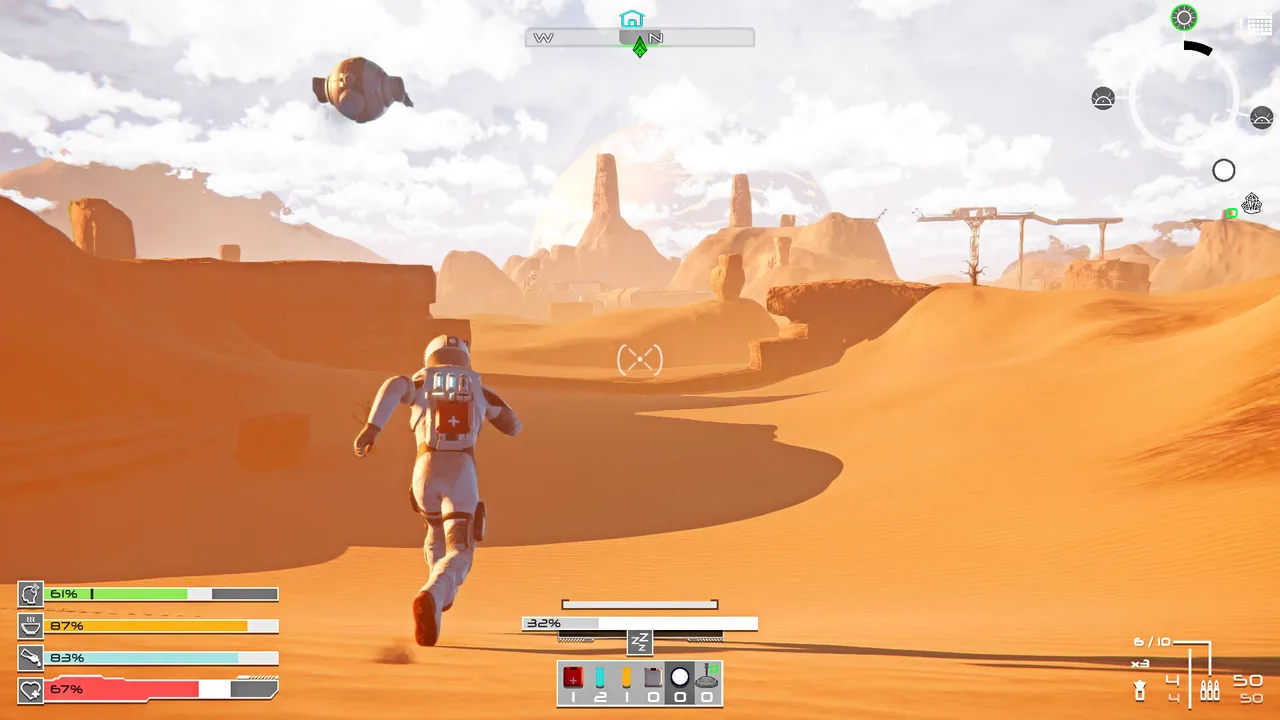
Daytime exploration across Ceclon's dune-covered surface, with survival stats tracked along the bottom of the screenImage: SOLIDS Studio via Steam -
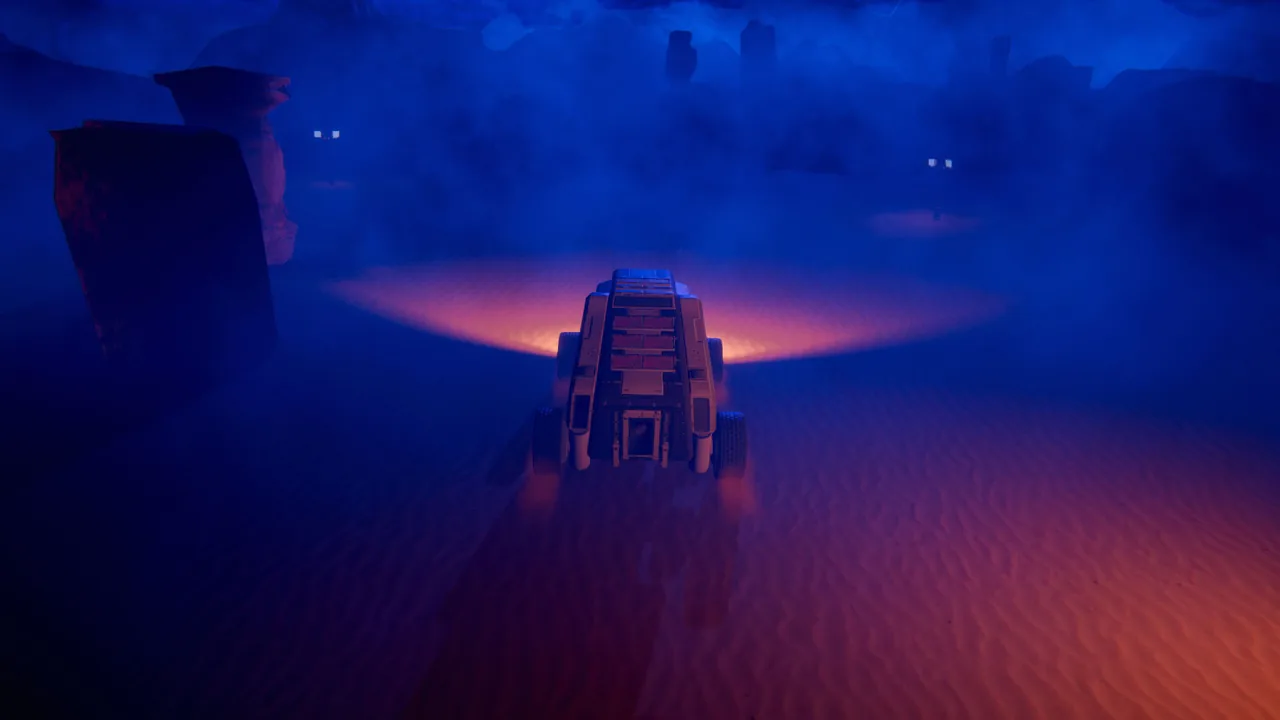
A dark night descends, with the drone's spotlight the only defense against the fog and the eyes watching from itImage: SOLIDS Studio via Steam -
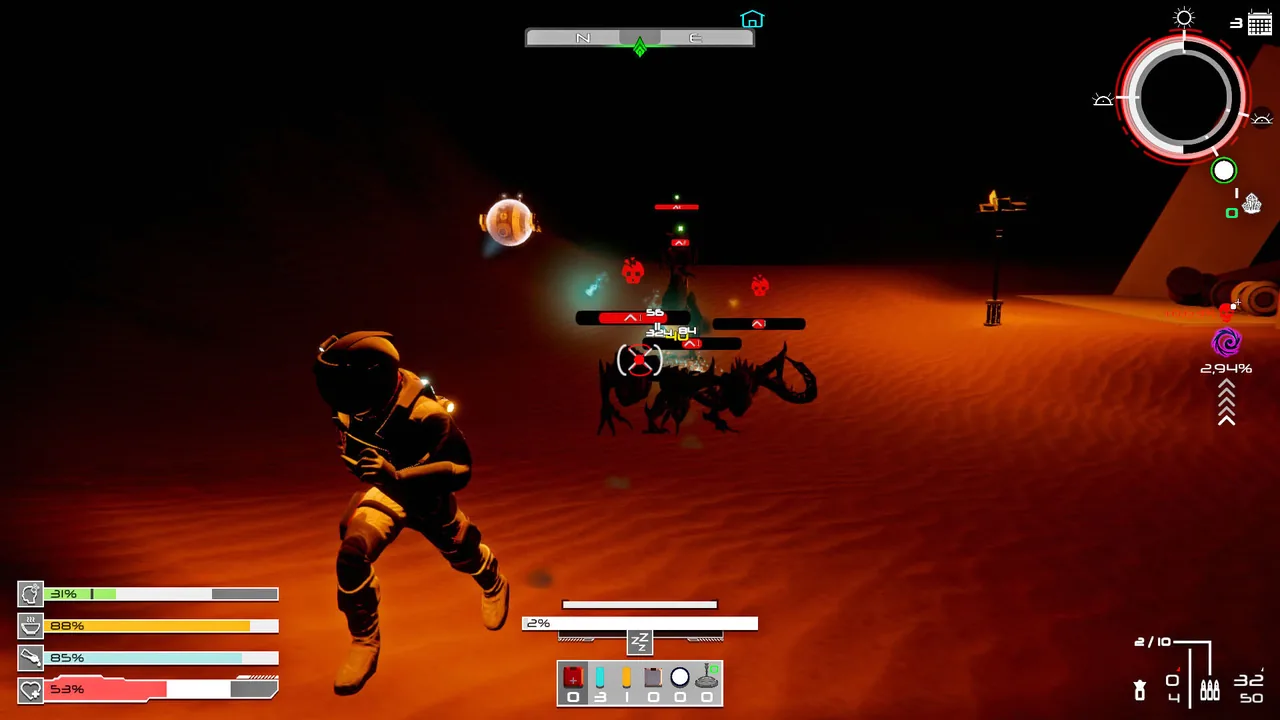
A tense nighttime skirmish against a pack of hostile creatures, drone support hovering just above the fightImage: SOLIDS Studio via Steam -
Wanderer Game ReviewsWanderer Game Reviews