Game review
SYNDUALITY Echo of Ada
5.3 / 10
- Developer
- Game Studio Inc.
- Publisher
- Bandai Namco Entertainment
The short version
Biggest strengths
- Piloting the CRADLECOFFIN mechs feels weighty and satisfying, and the resource-scanning, mining, and looting loop out on the surface is genuinely enjoyable to reviewers who click with it
- Strong art direction and mech design, paired with the customizable Magus AI companion system, give the game a distinctive anime-mecha identity that fans of the source IP respond to
- Several reviewers describe the PvPvE community as surprisingly friendly and cooperative in the field, despite the game's built-in incentives toward hostility
Biggest weaknesses
- Monetization is the single most common complaint across the review pool: a $40+ up-front price paired with a premium battle pass and cash shop is widely described as predatory for what is not a free-to-play game
- The PvPvE structure is repeatedly criticized as structurally unfair, with higher-ranked bounty hunters able to prey on lower-ranked players who have few reliable ways to escape or fight back
- The storefront's 'Singleplayer' tag is called out as misleading, since the actual single-player story mode is locked behind hours of multiplayer play and offers few of the game's core rewards
5.3 / 10
Overview
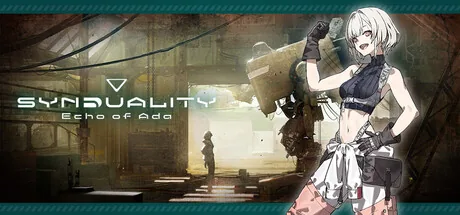
SYNDUALITY Echo of Ada is a mecha-flavored PvPvE extraction shooter from Game Studio Inc., published by Bandai Namco Entertainment and tied to the wider Synduality anime and games franchise. Players take the role of a Drifter, piloting a CRADLECOFFIN mech out from an underground haven onto a poisoned, monster-infested surface world to scavenge rare AO Crystals, accompanied by a customizable humanoid AI partner called a Magus. It released on Steam on January 23, 2025, and currently sits at a Mixed rating across 982 reviews, with 502 recommending it against 480 who don't.
That near-even split is not an accident of a small or noisy sample; it reflects a genuinely divided playerbase who broadly agree the moment-to-moment mech combat and exploration loop have real appeal, but who diverge sharply on whether the game's monetization, PvP structure, and post-launch health make it worth recommending to anyone outside its built-in fanbase.
Story and Setting
The setting takes place in 2222, generations after a mysterious poisonous rain called the Tears of the New Moon devastated humanity and spawned hostile, mutated creatures known as Enders. Survivors retreated underground, and Drifters like the player character venture back to the surface to gather AO Crystals needed to keep their communities alive, aided by a Magus partner who provides tactical support, scavenging assistance, and its own distinct personality. The premise draws directly on the broader Synduality multimedia project, and reviewers who came in as existing fans of the anime or its predecessor game describe real affection for the IP's lore and character writing.
The catch, repeatedly flagged in the review pool, is that the bulk of this narrative content sits behind a single-player "campaign" mode that only unlocks after a meaningful amount of multiplayer progress, and that mode offers comparatively few of the game's actual rewards once reached. Reviewers who bought the game expecting a story-first mecha adventure based on its own Steam "Singleplayer" tag describe that framing as actively misleading, since the moment-to-moment game is built around online PvPvE runs rather than a scripted single-player campaign.
Gameplay and Mechanics
The core loop sends players out in their CRADLECOFFIN mech to scan, mine, and loot resources from a hazardous open map shared with both AI-controlled Enders and other human Drifters, then extract before losing everything to death or an ambush. Reviewers consistently praise how the mechs themselves feel to pilot, describing a satisfying sense of weight and impact that lives up to the "Cradle Coffin" name, and many single out the scanning-and-mining loop itself as a relaxing, absorbing activity independent of the combat layered on top of it.
Where opinion splits hardest is the PvPvE design. A meaningful share of reviewers describe the community as unexpectedly warm for a game built around player conflict, citing small cooperative gestures between strangers out in the field. But an equally large, often more detailed, group describes the bounty and ranking systems as structurally lopsided, letting experienced, well-equipped hunters prey on newer or lower-ranked players who have few reliable tools to escape or fight back, turning runs into one-sided losses rather than tense risk-reward gambles. Technical complaints compound this: reviewers report laggy hit registration and connection issues that cost them fights and, by extension, the gear on the line in them.
Progression and Replayability
Progression is built around earning credits and gear to outfit stronger mechs and unlock upgrades, with an insurance-style system meant to soften the blow of losing equipment on death. Reviewers who enjoy the loop describe genuine long-term investment, with several logging hundreds of hours and citing the extraction-shooter tension of risking hard-earned gear as the game's biggest hook once its systems click. Others describe the grind as steep and the rewards from the eventual single-player content as thin enough not to justify the hours required to reach it.
The most damaging recurring theme here, though, is monetization layered on top of an already-paid $40-plus base game: a premium battle pass and cash shop selling cosmetics and conveniences draw consistent criticism as predatory for a title that isn't free-to-play, and one widely-cited incident where an anti-cheat economy fix wrongly stripped tens of millions of credits from innocent players, compounded by a slow and unhelpful support response, is cited by multiple reviewers as a breaking point. A number of reviewers also describe a declining, unevenly distributed population between regional servers as a serious long-term replayability concern, warning that matches on the less-populated servers increasingly draw a rougher, less welcoming crowd than the cooperative community others describe.
Visual Style and Sound Design
Presentation earns some of the more consistent praise in the review pool. Reviewers repeatedly single out the mech and character designs, the Magus companions' customization options, and the surface world's environmental art as standout strengths, describing the underground haven and toxic surface as visually distinct and atmospheric in a way that reinforces the setting's stakes. The game's own developer disclosure notes that some ambient in-game audio, specifically garage radio chatter, uses AI-generated text-to-speech, a detail worth flagging for transparency though not one reviewers treat as a significant issue in practice.
Technical presentation is more mixed. Several reviewers describe bare-bones graphics settings and inconsistent performance, calling the overall polish a step behind what they'd expect from a Bandai Namco-published release, even as they credit the core art direction itself as a genuine strength that the rest of the package doesn't always live up to.
Verdict
SYNDUALITY Echo of Ada pairs a genuinely satisfying mech-piloting loop and a distinctive anime aesthetic with a monetization model and PvP structure that a huge share of its own playerbase actively resents, leaving it Mixed for reasons that go well beyond simple launch jank. Players drawn specifically to its mecha-waifu premise and willing to tolerate a grindy, PvP-skewed extraction loop and a paid game's worth of additional cash-shop pressure will likely find real hours of enjoyment in it, especially if picked up on a deep sale as several reviewers now recommend. Anyone hoping for the story-driven single-player mecha adventure its own storefront tags imply should look elsewhere, and anyone sensitive to predatory monetization in a full-price release has ample reason, backed by a near-even split of its own reviewers, to stay away.
Pros and cons
Pros
- Piloting the CRADLECOFFIN mechs feels weighty and satisfying, and the resource-scanning, mining, and looting loop out on the surface is genuinely enjoyable to reviewers who click with it
- Strong art direction and mech design, paired with the customizable Magus AI companion system, give the game a distinctive anime-mecha identity that fans of the source IP respond to
- Several reviewers describe the PvPvE community as surprisingly friendly and cooperative in the field, despite the game's built-in incentives toward hostility
- Reviewers who stuck around note genuine post-launch improvement across content updates, even if they stop short of an unqualified recommendation
Cons
- Monetization is the single most common complaint across the review pool: a $40+ up-front price paired with a premium battle pass and cash shop is widely described as predatory for what is not a free-to-play game
- The PvPvE structure is repeatedly criticized as structurally unfair, with higher-ranked bounty hunters able to prey on lower-ranked players who have few reliable ways to escape or fight back
- The storefront's 'Singleplayer' tag is called out as misleading, since the actual single-player story mode is locked behind hours of multiplayer play and offers few of the game's core rewards
- Reviewers report persistent technical issues, from laggy hit registration to a widely-cited incident where an anti-cheat economy penalty wrongly stripped millions of credits from innocent players with a slow, unhelpful support response
Screenshots
-

A close-up dialogue exchange with a Magus companion, highlighting the game's anime-driven character presentationImage: Bandai Namco Entertainment via Steam -
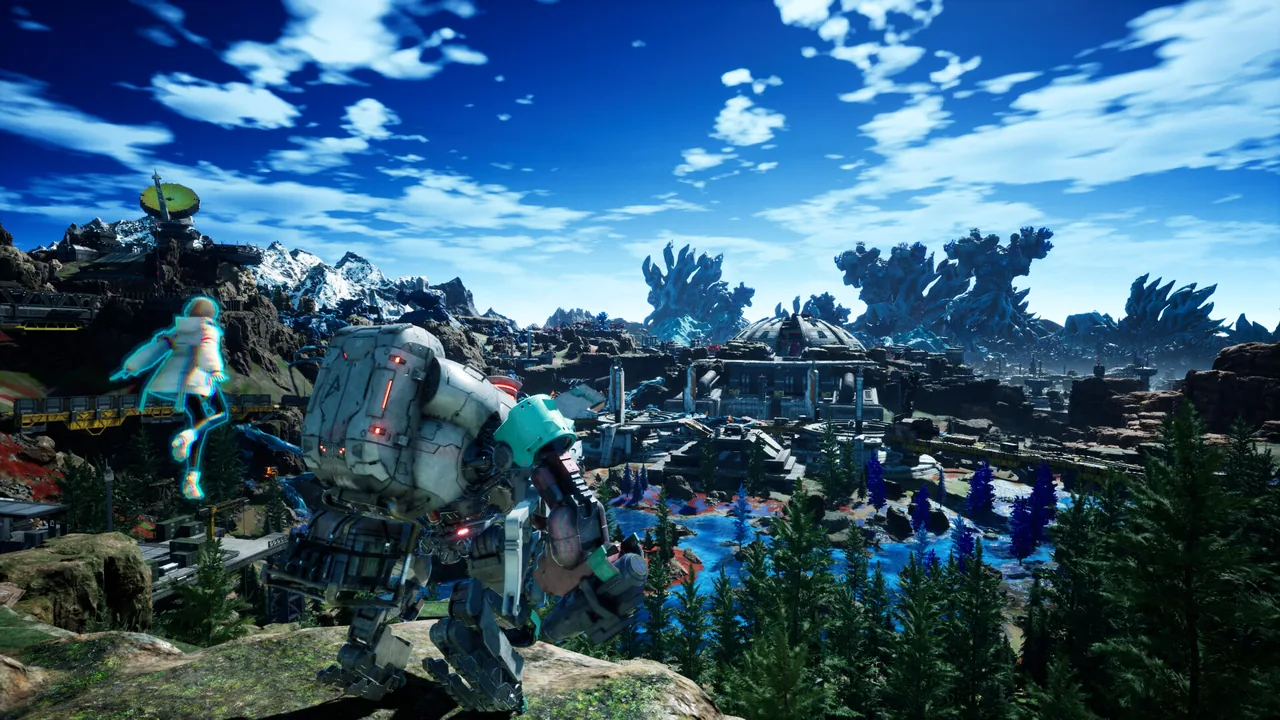
A CRADLECOFFIN mech surveys the surface world's ruins and alien growths, exemplifying the game's praised art directionImage: Bandai Namco Entertainment via Steam -
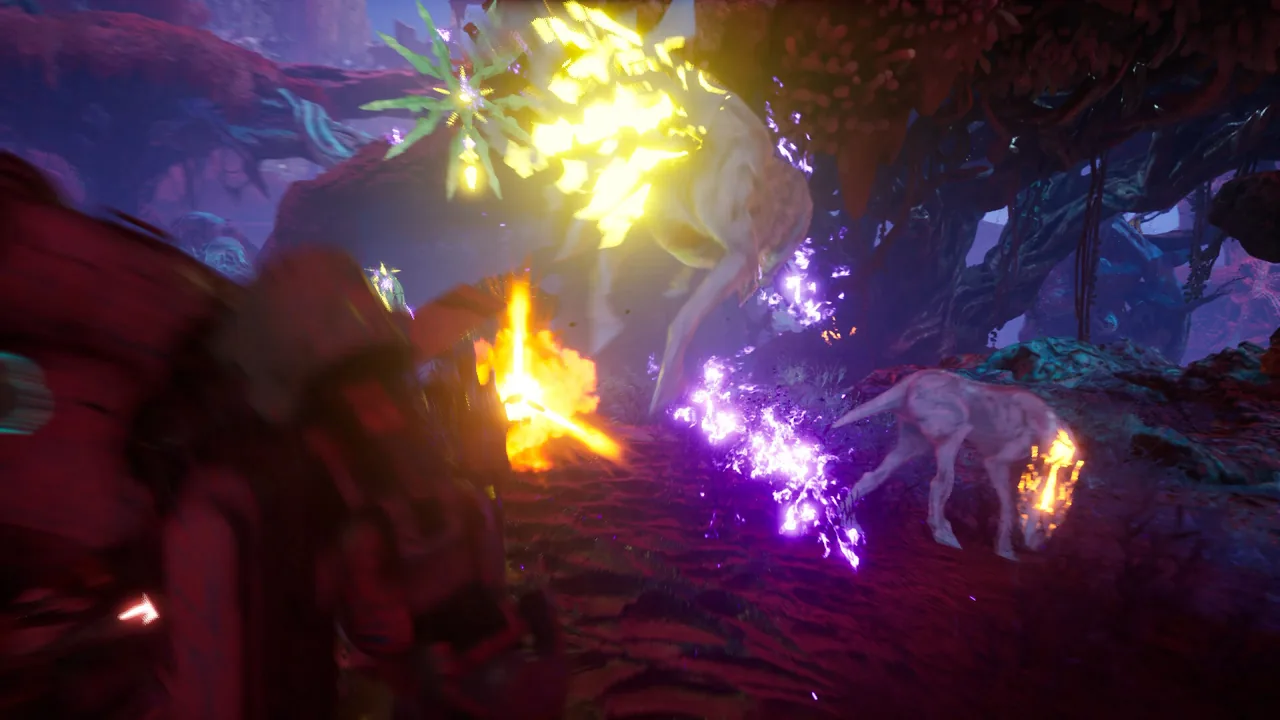
A Drifter clashes with a luminous Ender creature during a surface expeditionImage: Bandai Namco Entertainment via Steam -
Wanderer Game ReviewsWanderer Game Reviews