Game review
Strigoi: The Vampire Legend
4.8 / 10
- Developer
- SP GAMES
- Publisher
- SP GAMES
The short version
Biggest strengths
- The Carpathian vampire-folklore setting and gothic atmosphere, mist-soaked forests, abandoned villages, and ancient graveyards, land well with reviewers who came in for horror mood over polish
- A Resident Evil 4-style inventory and item-management system gives the survival-horror loop some real structure, and the enemy variety adds welcome texture as the story progresses
- Several reviewers describe it as a surprisingly complete two-hour experience for its very low asking price, with one long-time player calling the settings menu and quality-of-life options better than expected
Biggest weaknesses
- Bugs are the single most common complaint: reviewers report black screens on loading a save, lost inventory items between chapters, and progress-blocking glitches that force restarts from the first chapter
- A vocal minority of reviewers allege the game reuses purchased or unlicensed Unity marketplace assets without proper credit, and separately accuse some of the positive reviews of coming from the developer's associates rather than genuine players
- Combat is frequently described as unbalanced, with enemies hitting far harder than the player can withstand and melee weapons suffering from unreasonably short effective range
4.8 / 10
Overview
Strigoi: The Vampire Legend is a first-person survival-horror shooter developed and self-published by the small studio SP GAMES. Players follow a protagonist searching the Carpathian Mountains for a missing sister, exploring a semi-open world of mountains, dungeons, an abandoned village, graveyards, and a ruined castle while fending off vampires and other Strigoi with scavenged weapons and items. It released on Steam on January 15, 2025, and holds a Mixed rating across 18 reviews, split almost exactly down the middle at nine positive and nine negative.
That even split is an accurate summary of the experience: reviewers who connect with its gothic atmosphere and cheap-and-cheerful horror premise describe a rough but enjoyable two-hour ride, while an equally sized group ran into bugs, balance problems, and a genuinely contentious asset-flip accusation that colors the negative side of the review pool.
Story and Setting
The setup is simple but effective: the protagonist's sister travels to a party in the Carpathians and vanishes, and a frightening message sends the player after her into a region steeped in vampire folklore. From there, the game leans hard into gothic horror trappings, mist-choked forests, an abandoned village, dungeons, graveyards, and a decrepit castle, giving the story enough atmosphere to carry players through even when the writing itself stays fairly thin. Reviewers who responded to the setting single out the folklore references and moody environmental storytelling as the game's clearest asset, with one describing the overall mood and gothic detail as genuinely well realized despite the small scale of the production.
The mystery of the missing sister mostly functions as a structural excuse to keep moving from one gothic location to the next rather than as a deeply developed narrative, but for a short horror shooter built by a small team, reviewers generally treat that as an acceptable tradeoff rather than a serious flaw.
Gameplay and Mechanics
The core loop blends first-person combat against vampires and other supernatural enemies with scavenging, inventory management, and light puzzle-solving to progress through each gothic location. Several reviewers compare the item-management system favorably to Resident Evil 4, appreciating the structure it gives to an otherwise straightforward shooter, and enemy variety is called out as a pleasant surprise that keeps encounters from feeling repetitive across the game's short runtime.
The most consistent gameplay complaint is balance: reviewers describe enemies as considerably more powerful than the player's own combat options, with melee weapons suffering from an effective range that feels far shorter than their animations suggest, and at least one reviewer reports being unable to pick up a firearm they found, leaving them stuck relying on underpowered melee tools. Onboarding compounds these problems; several reviewers describe spawning into the world with no tutorial, no clear objective markers, and inventory or objective information tucked away in menus they had to discover through trial and error rather than any in-game guidance.
Technical State and Reception
Bugs dominate the negative side of the review pool more than any single design complaint. Reviewers report black screens when loading a continued save, inventory items vanishing between chapters after death, and progress-blocking glitches severe enough to force a restart from the very first chapter. One long-time reviewer who logged over twelve hours reported the opposite experience, zero bugs and a genuinely surprising level of polish and quality-of-life options, suggesting the technical state may have improved somewhat after launch even if the review pool as a whole still skews toward frustration.
A separate and more serious strand of criticism concerns the game's legitimacy rather than its bugs: one detailed negative review alleges the game reuses Unity marketplace assets without proper credit and characterizes it as an asset flip rather than an original production, while another accuses some of the positive reviews of coming from people connected to the developer rather than genuine players. These are documented allegations within the review pool rather than independently verified facts, but they're prominent enough in the negative reviews that they meaningfully shape how skeptical a buyer should be going in, and they sit alongside the more conventional bug and balance complaints as reasons the reception lands as Mixed rather than clearly positive.
Value and Presentation
Where the game earns real goodwill is price. Multiple reviewers explicitly frame their positive impression around how much game they got for a very small outlay, with more than one describing a roughly two-hour completion that felt appropriately scoped for what they paid, and calling it a reasonable pickup at that price even while acknowledging its rough edges elsewhere. Presentation draws some specific praise too, reviewers describe the graphics, character models, and creepy musical score as solid for a small studio's first-person horror project, and the semi-open Carpathian setting gives the game a visual identity that stands out from generic dungeon-crawl horror even when the technical execution around it falters.
Verdict
Strigoi: The Vampire Legend is a genuinely divisive small-studio horror shooter, its gothic Carpathian atmosphere, RE4-inspired inventory system, and low asking price win over one half of its review pool, while bugs, combat balance problems, thin onboarding, and a contentious asset-flip accusation sour the other half. Neither side is wrong: for a couple of dollars, buyers who value mood and folklore over technical polish can find a short, atmospheric horror romp here, but anyone expecting a stable, well-tutorialized experience, or who's put off by the legitimacy questions raised in its negative reviews, has good reason for caution. It's a rough, cheap curiosity best suited to horror fans specifically chasing vampire folklore atmosphere who can tolerate real technical rough edges along the way.
Pros and cons
Pros
- The Carpathian vampire-folklore setting and gothic atmosphere, mist-soaked forests, abandoned villages, and ancient graveyards, land well with reviewers who came in for horror mood over polish
- A Resident Evil 4-style inventory and item-management system gives the survival-horror loop some real structure, and the enemy variety adds welcome texture as the story progresses
- Several reviewers describe it as a surprisingly complete two-hour experience for its very low asking price, with one long-time player calling the settings menu and quality-of-life options better than expected
- The premise, tracking a missing sister's trail into a supernatural wilderness, gives an otherwise simple horror shooter a personal hook that keeps players moving forward
Cons
- Bugs are the single most common complaint: reviewers report black screens on loading a save, lost inventory items between chapters, and progress-blocking glitches that force restarts from the first chapter
- A vocal minority of reviewers allege the game reuses purchased or unlicensed Unity marketplace assets without proper credit, and separately accuse some of the positive reviews of coming from the developer's associates rather than genuine players
- Combat is frequently described as unbalanced, with enemies hitting far harder than the player can withstand and melee weapons suffering from unreasonably short effective range
- Onboarding is thin to nonexistent: several reviewers report spawning with no tutorial, no clear objective markers, and confusing keybind/inventory menus that take real trial and error to parse
Screenshots
-
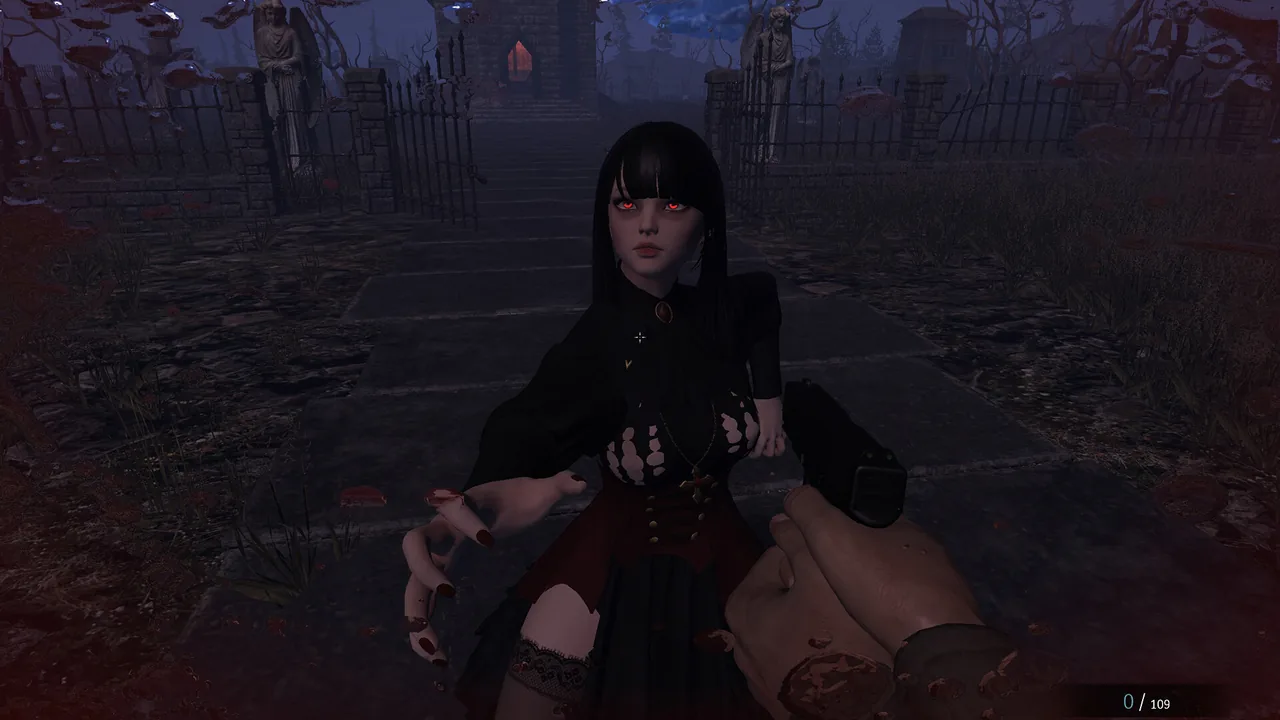
A vampire confrontation at the graveyard gate, one of the game's gothic Carpathian set piecesImage: SP GAMES via Steam -
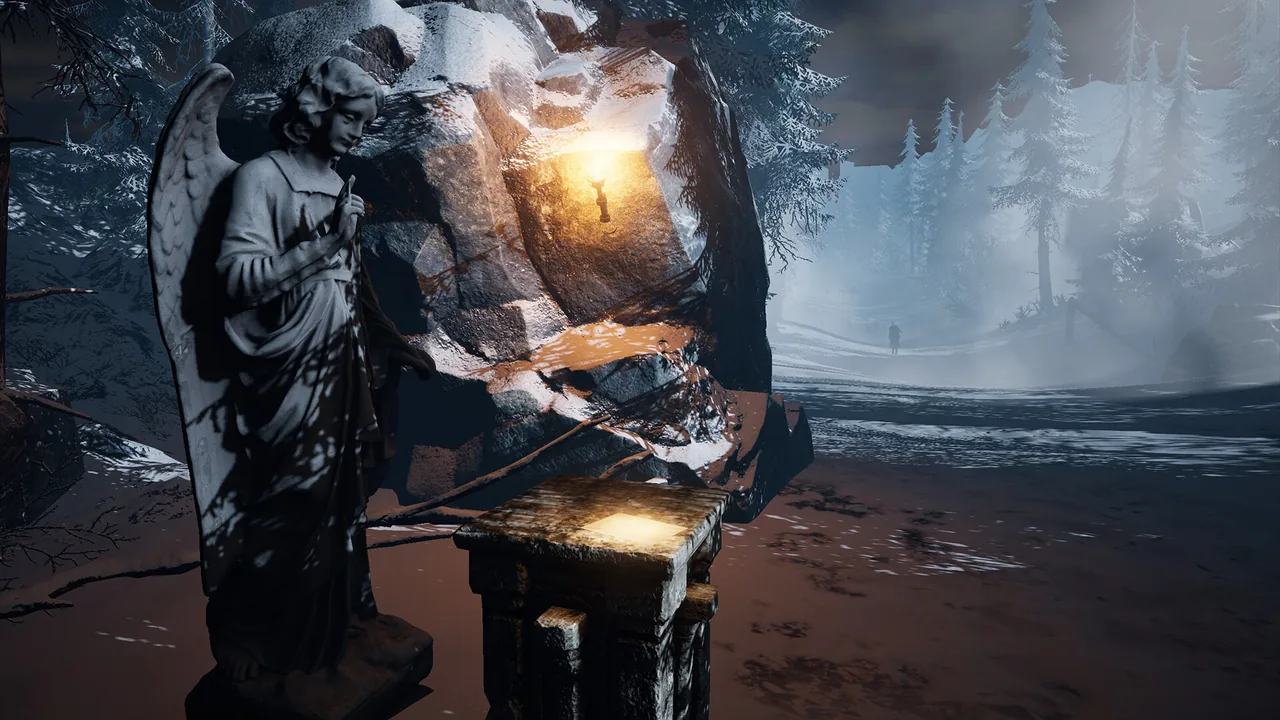
A snowbound graveyard shrine, part of the game's mist-soaked Carpathian Mountains settingImage: SP GAMES via Steam -
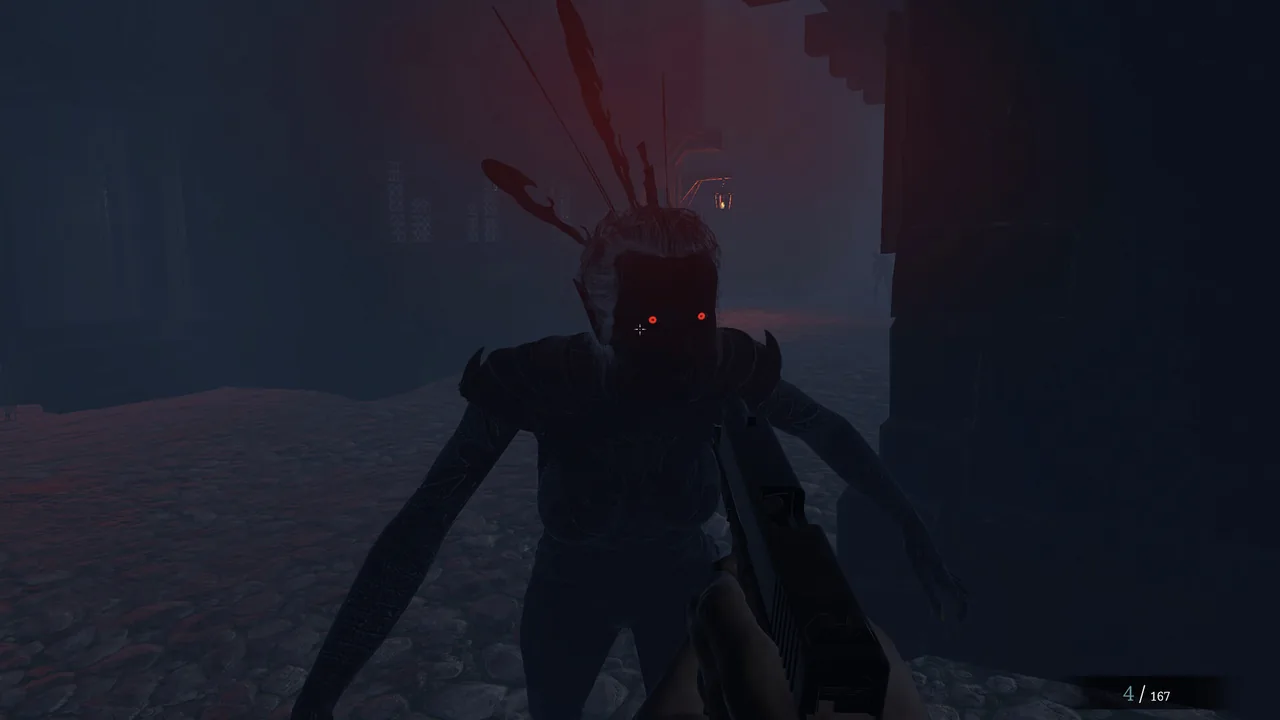
A close-range encounter with a Strigoi enemy in one of the game's dark interior corridorsImage: SP GAMES via Steam -
Wanderer Game ReviewsWanderer Game Reviews