
Game review
Starling
5.8 / 10
- Developer
- Cozymos
- Publisher
- Montreal Video Game School
The short version
Biggest strengths
- A genuinely charming, low-pressure exploration loop built around a jetpack, cute alien companion creatures, and a rebuilding-your-base premise, described by reviewers as cozy rather than punishing
- Completely free to play, and reviewers repeatedly note how impressive the scope feels for what is explicitly a student-developed project out of Montreal Video Game School
- The developers are described as actively responsive to community feedback, with several reviewers citing that engagement as a reason to be optimistic about future updates
Biggest weaknesses
- The fishing minigame is the single most consistently cited complaint, with reviewers describing its reaction-time requirements as unreasonably fast and frustrating enough to actively drive away otherwise positive players
- Content is thin: reviewers report only two explorable planets, a limited crafting tree, and reaching what feels like the current end of available content within a few hours
- The game is unusually demanding on GPU hardware for its visual scope, and Steam Deck players specifically report a locked high minimum resolution that makes it difficult to run well on handheld hardware
5.8 / 10
Overview
Starling is a free-to-play, third-person exploration and base-building game developed by Cozymos, a student team out of Montreal Video Game School, and published under the school's own label. Players take the role of an employee of the fictional Starling Corp., tasked with gathering resources from across a small cluster of worlds after a catastrophic accident leaves their space station in ruins, rebuilding it piece by piece with the help of small, adorable alien companion creatures. It released on Steam on January 25, 2025, and holds a Positive rating across 35 reviews, with 31 recommending it.
For a free student project, that reception is a genuine achievement, and the review pool consistently frames the game with a mix of real fondness and understanding of its limitations: this is a charming, cozy first outing rather than a fully realized commercial release, and reviewers largely grade it on that basis.
Story and Setting
The premise is lightweight by design: a space station disaster scatters the player's home base across a small handful of planets, and the job is simply to rebuild it by gathering resources and repairing key stations one at a time. There's no combat, no real antagonist, and no heavy narrative machinery, just a gentle framing device that gives structure to the exploration and gathering loop underneath it. Reviewers consistently describe the tone as warm and unhurried, with several specifically praising how the game never pressures players to rush or optimize, letting them explore and fish and mine at whatever pace they like.
The alien companion creatures that accompany the player throughout their journey draw some of the most affectionate comments in the review pool, described as cute, expressive, and a meaningful part of what makes the low-key setting feel inviting rather than empty. Reviewers also note small environmental storytelling touches, like a companion's apparent sadness after certain crafting moments, that suggest more care went into the presentation than the game's short length and thin plot might initially suggest.
Gameplay and Mechanics
The core loop combines jetpack-powered exploration, mining, woodcutting, and fishing to gather resources, which then feed into repairing and upgrading the player's ruined space station. Reviewers broadly enjoy the exploration and gathering side of things, describing the jetpack traversal as satisfying and the overall pace as relaxing rather than grindy, with base-building offering a clear, legible sense of progress as stations come back online one by one.
The fishing minigame is a persistent sore point. Multiple reviewers, including some who otherwise rate the game highly, single it out as having reaction-time windows that feel unreasonably tight, to the point that a few describe giving up on it entirely and one explicitly says the fishing alone is the reason they can't recommend the game despite enjoying everything else. A smaller cluster of complaints covers general control and UI friction: menus that don't close with the Escape key, some clunky movement, and drop rates on materials that a few reviewers feel need tuning.
Progression and Replayability
Progression is built around unlocking new tools, repairing additional station modules, and gradually accessing new planets and resource types, all gated behind straightforward gathering and crafting requirements. Reviewers who spent a few hours with the game describe reaching what feels like a natural stopping point relatively quickly, citing only two available planets, a shallow crafting tree, and a lack of late-game content to chase once the immediate goals are met. One reviewer explicitly notes reaching the current "end" of the game within a few hours despite wanting more.
This thinness is consistently framed with sympathy rather than frustration, since reviewers are well aware they're playing a free student project rather than a funded commercial release, and many explicitly hope for continued updates and additional content down the line. Several suggest specific directions, like co-op multiplayer and expanded fishing or mining variety, as the features they'd most want to see if development continues.
Visual Style and Sound Design
The presentation draws a warm, consistent response: reviewers describe the art style as cute and inviting, the music as relaxing, and the overall atmosphere as well-suited to the game's cozy, low-stakes premise. Several specifically note that the visual scope, environments, lighting, and creature designs feel more ambitious than they expected from a student production, and credit that polish with making the short experience feel worthwhile.
Technical performance is the clearest weak point in an otherwise well-received presentation. Reviewers report the game being surprisingly demanding on GPU hardware given its scale, with framerate drops in some areas, and Steam Deck players specifically flag a resolution floor that the game won't go below, making it difficult to run comfortably on handheld hardware. These issues read as the rough edges of a small, inexperienced team rather than fundamental design failures, but they're consistently mentioned as needing attention.
Verdict
Starling is a modest, sincerely charming exploration and base-building game whose greatest asset is the goodwill it earns simply by being a free, ambitious, and surprisingly polished student project, and whose clearest weaknesses, a frustrating fishing minigame, thin content, and GPU demands that outstrip its visual scope, read like the understandable rough edges of exactly that. Reviewers consistently grade it with real affection rather than harsh commercial standards, and that affection feels earned by the cozy tone, likable companion creatures, and a development team that's actively listening. Anyone looking for a free, low-stakes couple of hours of relaxed cosmic gathering, and willing to forgive an unpolished fishing minigame and a short current content ceiling, will likely come away as charmed as most of its existing reviewers.
Pros and cons
Pros
- A genuinely charming, low-pressure exploration loop built around a jetpack, cute alien companion creatures, and a rebuilding-your-base premise, described by reviewers as cozy rather than punishing
- Completely free to play, and reviewers repeatedly note how impressive the scope feels for what is explicitly a student-developed project out of Montreal Video Game School
- The developers are described as actively responsive to community feedback, with several reviewers citing that engagement as a reason to be optimistic about future updates
- Thoughtful small touches, like an unstuck button and a deliberately non-punishing pace, earn specific praise as considerate design choices for a relaxed audience
Cons
- The fishing minigame is the single most consistently cited complaint, with reviewers describing its reaction-time requirements as unreasonably fast and frustrating enough to actively drive away otherwise positive players
- Content is thin: reviewers report only two explorable planets, a limited crafting tree, and reaching what feels like the current end of available content within a few hours
- The game is unusually demanding on GPU hardware for its visual scope, and Steam Deck players specifically report a locked high minimum resolution that makes it difficult to run well on handheld hardware
- There is no in-game tutorial or manual, leaving several reviewers unsure what to do next, and a handful of UI conveniences, like closing menus with the Escape key, are notably absent
Screenshots
-
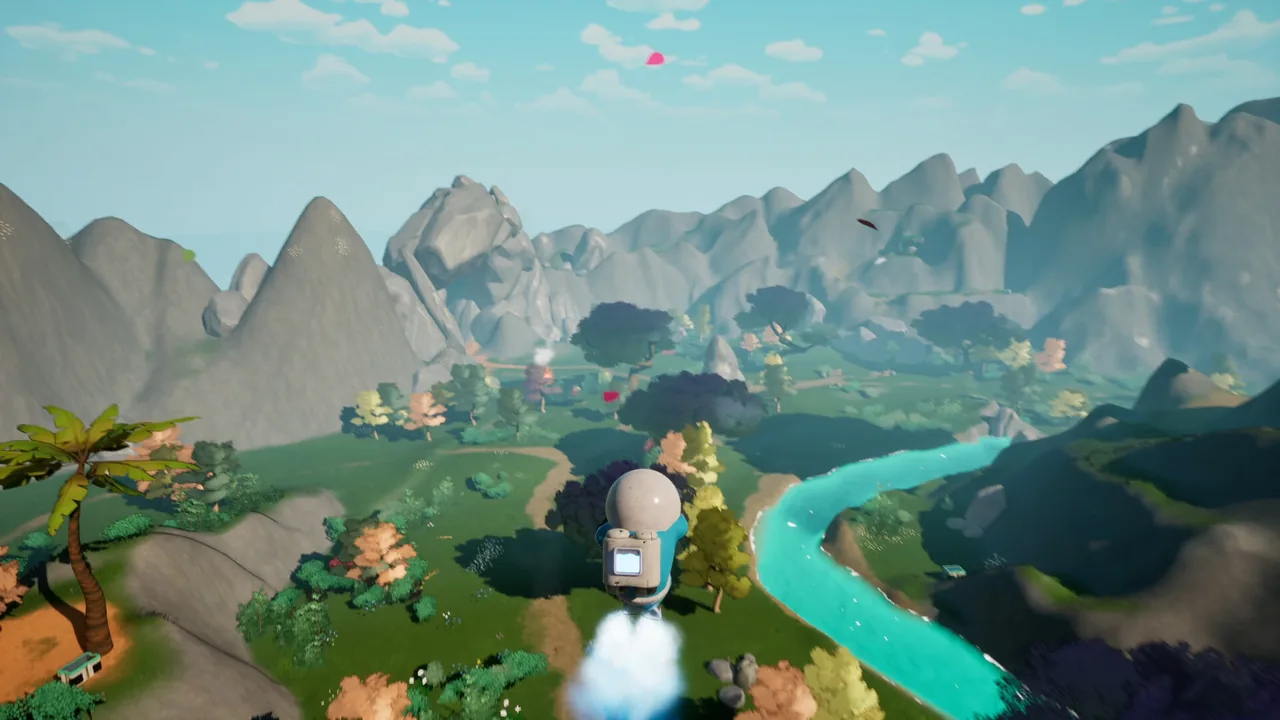
Jetpack traversal over a colorful, cel-shaded valley, one of the exploration game's stronger visual momentsImage: Cozymos via Steam -
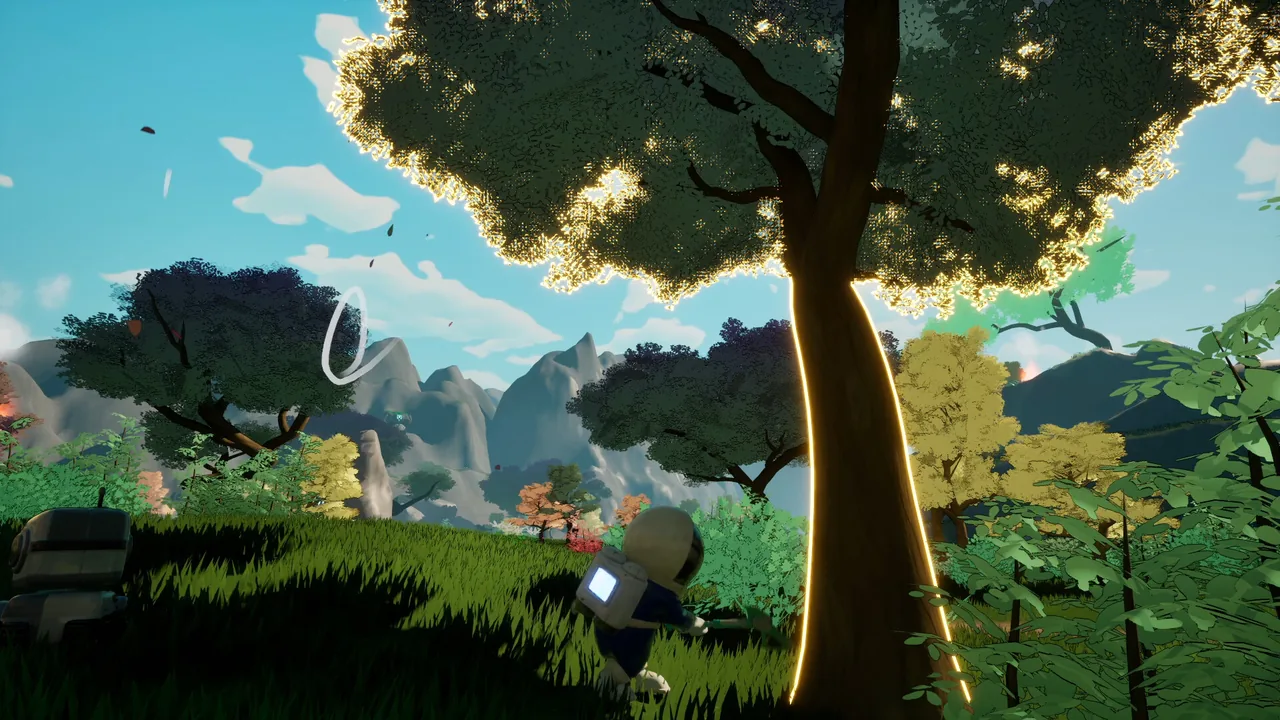
Exploring a stylized forest clearing, with a small robotic companion parked nearbyImage: Cozymos via Steam -
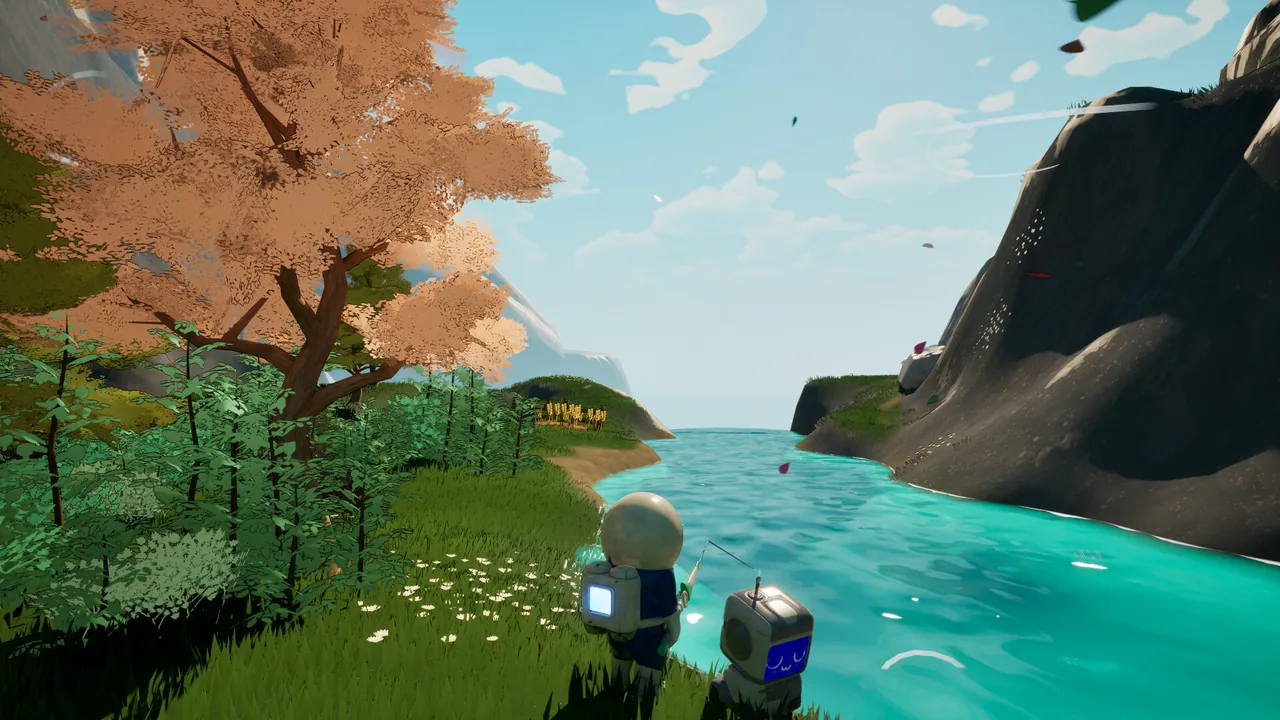
Fishing beside a river with an alien companion creature, part of a minigame reviewers found frustratingly fast-pacedImage: Cozymos via Steam -

Wanderer Game ReviewsWanderer Game Reviews