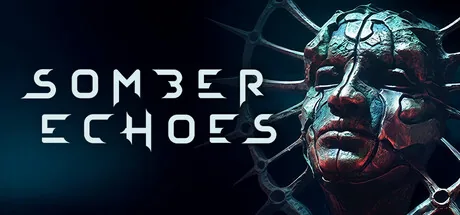
Game review
Somber Echoes
6.7 / 10
- Developer
- Rock Pocket Games
- Publisher
- Bonus Stage Publishing
The short version
Biggest strengths
- The Greco-Roman sci-fi setting and Greek-tragedy-styled narration, complete with accurately pronounced mythological names, is repeatedly praised as genuinely fresh for the metroidvania genre
- The Aether Lanterns traversal system, letting Adrestia shapeshift into a star and chain aerial dashes, draws consistent praise as some of the best movement tech in a recent metroidvania
- Combat built around generous parry and projectile-deflection timing windows is widely called satisfying and accessible even for players who struggle with tight reflexes
Biggest weaknesses
- A significant portion of reviewers report the game's second half and ending noticeably drop in quality, citing a frustrating late-game fast travel system and poorly scripted final boss fights
- Several reviewers describe the core combat as shallow once mastered, often reducible to repeating a single attack pattern
- Precise platforming sections requiring pixel-perfect ledge grabs frustrate multiple reviewers, who call the traversal tuning inconsistent
6.7 / 10
Overview
Somber Echoes is a metroidvania from Rock Pocket Games and Lav Games, published by Bonus Stage Publishing, set aboard the ruined Greco-Roman space vessel Atromitos. Players take on the role of Adrestia, a tribune resurrected from rubble and ashes to stop her twin sister Harmonia from unraveling the universe, exploring a vast, infested wreck while gaining powers that reshape both her combat and traversal abilities. It released on Steam on January 21, 2025, and has built a Very Positive rating across 210 reviews, with 175 recommending it.
Reviewers consistently single out the game's unusual premise, blending Greek mythology and tragedy with hard science fiction, as its most distinctive strength, while a substantial cluster of critical reviews argues the experience loses momentum in its back half, undercutting an otherwise strong first impression.
Story and Setting
The premise fuses ancient Greek tragedy with a derelict-spaceship setting: the Atromitos, once a proud Greco-Roman vessel, has become a breeding ground for horrors from another dimension, and Adrestia must piece together what happened to her, her sister, and the ship itself as she explores. Reviewers repeatedly praise the narration style, which several describe as reading like an actual Greek tragedy delivered in something close to iambic trimeter, complete with correctly pronounced Greek names and an in-fiction narrator who comments on Adrestia's journey throughout.
Not every reviewer connects with the storytelling, though. A handful describe the plot as thin in practice, saying much of the game amounts to walking through ruins and admiring statues without a clear throughline connecting story beats to what players are actually doing moment to moment. The game also supports multiple endings depending on how it's played, which several reviewers cite as an incentive to revisit it, even if the majority only see it through once given its relatively contained length.
The relationship between Adrestia and Harmonia gives the story an intimate core that reviewers say sets it apart from the more impersonal, lore-dump style of narration common in the genre. Several specifically appreciate that the mystery unfolds gradually through environmental storytelling and item descriptions rather than lengthy cutscenes, letting players piece together the sisters' history at their own pace while still exploring at full speed.
Gameplay and Mechanics
Combat centers on a spear and bow, with generous parry and projectile-deflection windows that reviewers repeatedly call one of the game's most rewarding systems, forgiving enough that even players who describe themselves as having weak reflexes report succeeding against tough bosses. Movement is built around Aether Lanterns, Adrestia's signature ability to shapeshift into a brilliant, sun-like star and dash through the air, with additional lanterns allowing dashes to be chained together for extended aerial traversal in place of a traditional double jump. Reviewers describe this movement system as a genuine highlight, distinct from typical metroidvania traversal kits and consistently satisfying to master.
That said, a meaningful share of critical reviewers argue the combat doesn't hold up to close scrutiny once its patterns are learned, describing encounters as reducible to repeating a single effective attack rather than meaningfully engaging with the full kit. Platforming draws similar mixed reactions: while the Aether Lantern dashes are broadly praised, several reviewers specifically call out sections requiring pixel-precise ledge grabs as frustrating rather than challenging, arguing the traversal tuning doesn't always match the difficulty the level design demands.
Progression and Replayability
Reviewers describe a linear main story with branching paths for loot and optional side content, and progression that layers new lantern charges, weapon options, and traversal upgrades steadily across a roughly 9-to-14-hour campaign, a length several reviewers explicitly welcome as a relief from longer, more bloated genre entries. Multiple reviewers note secrets and backtracking rewards scattered generously throughout the map, giving completionists reason to fully explore each district rather than beelining the critical path.
The most consistent progression complaint centers on the game's second half, where several reviewers report the pacing and quality noticeably dip: one detailed review describes an otherwise strong first three-quarters undercut by an ending that soured their overall impression, while others specifically flag a frustrating fast-travel system introduced late in the game as actively working against the exploration the earlier hours encouraged. A few reviewers also felt underpowered late in the run, describing upgrades that don't meaningfully change how encounters play out even as the difficulty ramps up.
Visual Style and Sound Design
Presentation draws some of the review pool's most unreserved praise, with reviewers repeatedly describing the environment art as gorgeous and each of the game's districts as carrying its own distinct visual identity. Several reviewers specifically call out the atmosphere as a standout, crediting the unusual Greco-Roman sci-fi aesthetic with making familiar metroidvania exploration feel fresh, and multiple reviewers praise the voice narration's Greek-accented delivery as reinforcing that identity rather than feeling like a bolted-on gimmick.
Audio polish is less consistent. While the soundtrack and narration draw broad praise, a handful of reviewers report rough edges elsewhere in the sound design, including sound effects they describe as too quiet, mismatched to the action on screen, or simply missing in places, alongside criticism that some boss encounters lean on repetitive add-spawning that several reviewers found more annoying than genuinely challenging.
Steam Deck support gets an explicit mention from at least one reviewer, who calls out built-in Steam Deck settings options as a pleasant surprise that signaled a level of polish before they'd even started playing. Combined with accessible menus that reviewers describe as comprehensive without being overwhelming, the overall production values read as ambitious for a smaller studio, even where individual technical elements don't quite match the strength of the core art direction.
Verdict
Somber Echoes stakes out real distinctiveness with its Greco-Roman space-tragedy premise, striking district-by-district art direction, and an Aether Lantern traversal system that reviewers consistently rank among its best features, backed by a forgiving and satisfying parry-based combat system. A noticeable drop-off in quality through its back half, thinner combat depth than its toolkit suggests, and some rough audio edges keep it from being an unreserved recommendation, but for metroidvania fans drawn to a genuinely different setting and confident movement tech, it's a worthwhile, appropriately-sized addition to the genre.
Pros and cons
Pros
- The Greco-Roman sci-fi setting and Greek-tragedy-styled narration, complete with accurately pronounced mythological names, is repeatedly praised as genuinely fresh for the metroidvania genre
- The Aether Lanterns traversal system, letting Adrestia shapeshift into a star and chain aerial dashes, draws consistent praise as some of the best movement tech in a recent metroidvania
- Combat built around generous parry and projectile-deflection timing windows is widely called satisfying and accessible even for players who struggle with tight reflexes
- Distinct, atmospheric environment art across the game's different districts earns near-universal praise alongside strong overall visual presentation
Cons
- A significant portion of reviewers report the game's second half and ending noticeably drop in quality, citing a frustrating late-game fast travel system and poorly scripted final boss fights
- Several reviewers describe the core combat as shallow once mastered, often reducible to repeating a single attack pattern
- Precise platforming sections requiring pixel-perfect ledge grabs frustrate multiple reviewers, who call the traversal tuning inconsistent
- A handful of reviewers report rough audio polish, including missing or mismatched sound effects
Screenshots
-
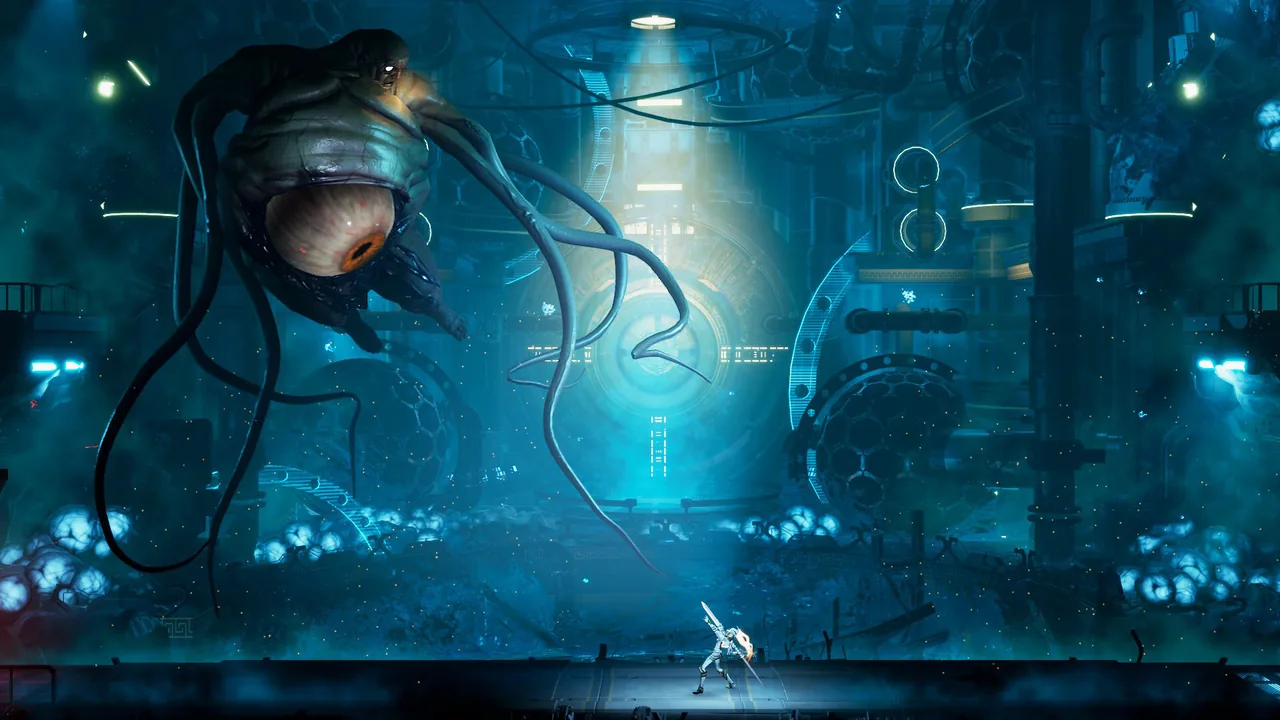
A boss encounter against a colossal tentacled horror inside the Atromitos's derelict, glowing machineryImage: Bonus Stage Publishing via Steam -
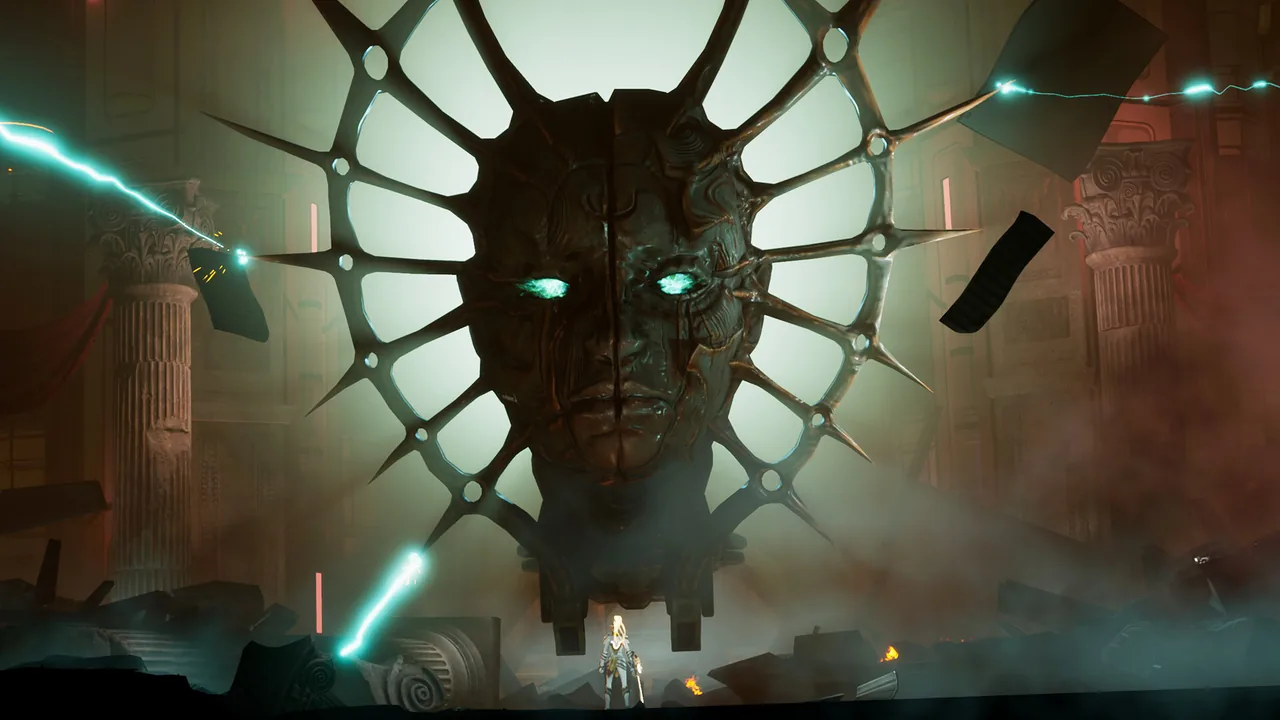
A towering, mask-like boss looms between classical Corinthian columns, blending the game's Greco-Roman and sci-fi horror influencesImage: Bonus Stage Publishing via Steam -
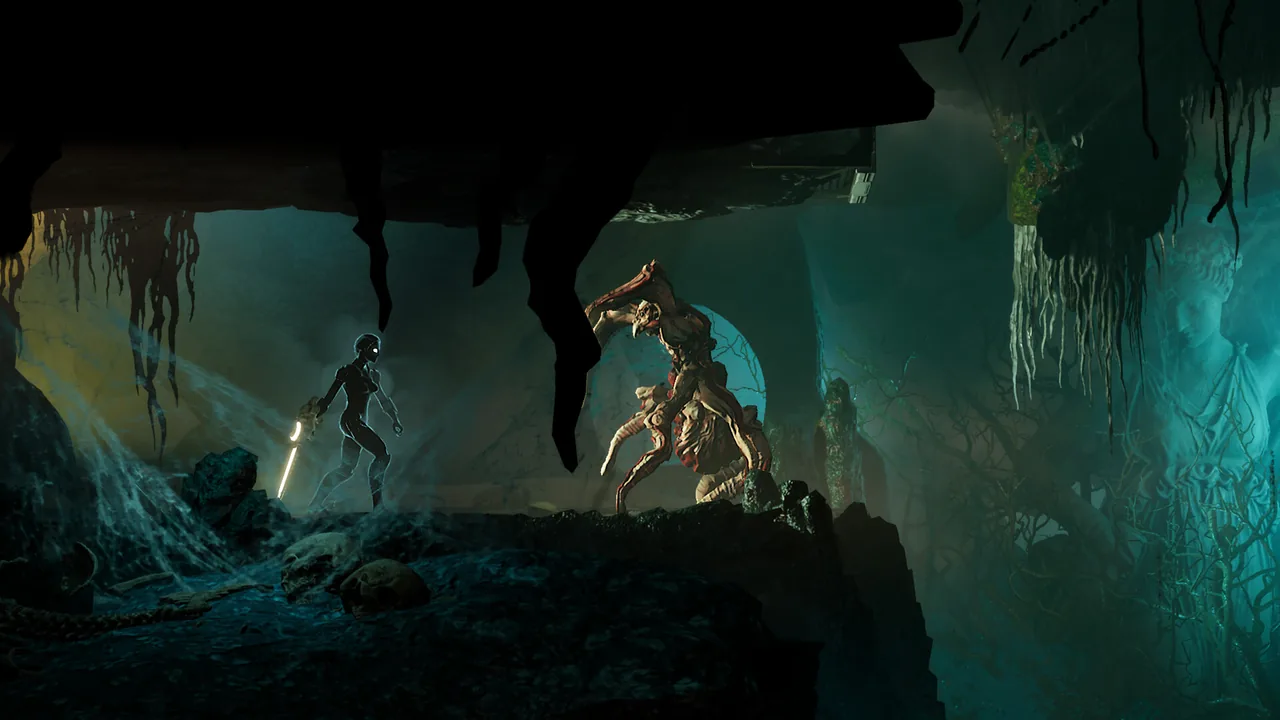
A tense combat encounter in a dripping cavern, with a classical statue visible amid the ruinImage: Bonus Stage Publishing via Steam -
Wanderer Game ReviewsWanderer Game Reviews