
Game review
Robot girl's dream -RobotBattleChampionship-
7.3 / 10
- Developer
- DeskClub Games
- Publisher
- DeskClub Games
The short version
Biggest strengths
- Reviewers consistently describe the writing as earnest, funny, and genuinely heartfelt, with a large cast of interconnected character arcs that reward multiple playthroughs
- The turn-based positional combat and deep part-swapping equipment system, likened by several reviewers to Armored Core or Medabots, offer real build variety across weapon, body-part, and accessory slots
- The time-management structure, spending each week choosing between work, exploration, and socializing, is praised for creating meaningful choices between story progress, resources, and combat preparation
Biggest weaknesses
- Reviewers repeatedly cite unclear tutorials and missing information, such as shop quantities or item effects, that can waste an entire in-game cycle just to check something the interface should show upfront
- The early game draws frequent complaints for trial-and-error difficulty, since certain bosses require specific items or preparation that aren't clearly signposted before the fight
- The lack of a manual save system, requiring players to restart from the beginning of a run if they hit a soft-lock or want to try a different path, frustrates some reviewers despite being a deliberate design choice
7.3 / 10
Overview
Robot girl's dream -RobotBattleChampionship- is a time-management raising-sim RPG from solo-flavored indie studio DeskClub Games, blending visual-novel storytelling with turn-based positional combat. Players guide an amnesiac robot girl through the near-future city of Astromere as she trains to enter the Robot Battle Championship and challenge its reigning champion, Scarlet. It released on Steam on January 16, 2025, and holds a Very Positive rating across 203 reviews.
Reviewers describe it as an underrated gem, praising its earnest writing and surprising depth far beyond what its modest presentation suggests, while also flagging real friction in its unforgiving early hours and occasionally unclear interface.
Story and Setting
The premise is simple but effective: a robot girl wakes with no memory in a junkyard in Astromere, a city where advancing AI has let robots develop something close to human consciousness, and is drawn toward the spectacle of the city's robot battle tournaments. Reviewers describe the tone as lighthearted and often very funny, comparing its energy to a morning cartoon, while still finding room for genuine emotional weight in its character arcs.
What draws the most consistent praise is the sheer scope of the supporting cast. Reviewers describe dozens of interconnected character storylines that weave in and out of the main plot, with side characters reappearing across other arcs in ways that make Astromere feel lived-in rather than like a series of disconnected vignettes. Several reviewers explicitly compare the structure to Persona's social-link system, where spending time with a character raises stats and affinity while unlocking further story content. A few reviewers also note subtle yuri undertones in some of the relationship writing, treated as one thread among the game's broader web of friendships rather than the story's central focus.
Gameplay and Mechanics
Each in-game week, players choose between working for money, exploring Astromere to uncover new locations and events, or building relationships with the city's residents, all in preparation for periodic tournament battles that test their robot's build. Combat plays out on a turn-based 2D plane where positioning relative to enemies determines what attacks, buffs, and heals are available, and reviewers describe the system as more tactically involved than its cute presentation suggests, with several specifically praising how build choices meaningfully change how fights play out.
The equipment system draws some of the strongest praise in the entire review pool, with six weapon slots and three miscellaneous slots letting players mix and match parts, likened by multiple reviewers to Armored Core's customization depth or Medabots' part-swapping. That depth comes with real difficulty, though: reviewers consistently describe the early game as punishing, with certain bosses requiring specific items or preparation that the game doesn't clearly telegraph in advance, leading several reviewers to recommend starting on easy mode or keeping notes on what worked in a prior run.
Several reviewers describe an inverted difficulty curve once the opening weeks are cleared, where the game shifts from trial-and-error survival toward a more comfortable position of being spoiled for choice among characters to befriend, items to buy, and jobs to work, each offering its own combination of stat boosts and permanent upgrades. That shift, more than one reviewer notes, is where the game's systems finally click into place, rewarding players who pushed through the rough opening with a much more forgiving and strategically rich back half.
Progression and Replayability
Runs are capped at a few in-game months, and reviewers describe a real tension in deciding how to spend that limited time between earning resources, building relationships, and preparing for the next tournament, since there generally isn't enough to max out every stat or upgrade in a single playthrough. That scarcity, several reviewers note, is precisely what gives repeat playthroughs their appeal, since different priorities and different characters pursued lead to meaningfully different runs and different endings.
Reviewers who pursued full completion report anywhere from 6 hours for a first playthrough down to 2 to 3 hours for subsequent, more efficient runs, with total playtime climbing past 20 hours for players chasing every major ending and character arc. A few reviewers note that once the game's major branches are exhausted, the experience runs its course relatively quickly for a title with this much replay incentive, wishing for either more content or a longer core campaign to match the depth of its systems.
Visual Style and Sound Design
The art style earns consistent praise despite reviewers acknowledging it isn't technically flashy, with several calling out thoughtful presentation touches, like character talk sprites adjusting for asymmetrical designs, and a genuinely large, distinct cast of character designs that helps the game's considerable content feel varied rather than repetitive. The soundtrack fares less well in reviewer opinion, with at least one reviewer specifically calling the music the weakest part of the overall presentation, describing limited variation across its tracks even as the rest of the presentation holds up.
Translation quality draws some mixed feedback as well; reviewers who played after the English localization generally found the story text solid, though several note rough patches around skill and item names that weren't translated as carefully as the main narrative. A few reviewers who played the original Japanese-only demo before localization still praised the game highly on its systems and art direction alone, suggesting the core experience holds up even without perfect text.
Verdict
Robot girl's dream -RobotBattleChampionship- is a genuinely distinctive raising-sim RPG that earns its reviewers' affection through earnest writing, a sprawling and well-connected cast, and a deeper-than-expected combat and customization system. Its unclear early tutorials, occasionally punishing difficulty spikes, and lack of manual saves will test the patience of players expecting a gentler on-ramp, but those willing to push through consistently describe a rewarding, replayable experience with real heart behind it. Fans of time-management RPGs, character-driven visual novels, or Armored Core-style build tinkering should take a serious look.
Pros and cons
Pros
- Reviewers consistently describe the writing as earnest, funny, and genuinely heartfelt, with a large cast of interconnected character arcs that reward multiple playthroughs
- The turn-based positional combat and deep part-swapping equipment system, likened by several reviewers to Armored Core or Medabots, offer real build variety across weapon, body-part, and accessory slots
- The time-management structure, spending each week choosing between work, exploration, and socializing, is praised for creating meaningful choices between story progress, resources, and combat preparation
- Multiple distinct endings and a large web of character storylines give the roughly six-hour campaign strong replay incentive, with several reviewers reporting 20-plus hours spent chasing full completion
Cons
- Reviewers repeatedly cite unclear tutorials and missing information, such as shop quantities or item effects, that can waste an entire in-game cycle just to check something the interface should show upfront
- The early game draws frequent complaints for trial-and-error difficulty, since certain bosses require specific items or preparation that aren't clearly signposted before the fight
- The lack of a manual save system, requiring players to restart from the beginning of a run if they hit a soft-lock or want to try a different path, frustrates some reviewers despite being a deliberate design choice
- A handful of reviewers note that some equipment options are noticeably weaker or stronger than others, and that the game's short overall length leaves them wanting more once its major story branches are exhausted
Screenshots
-
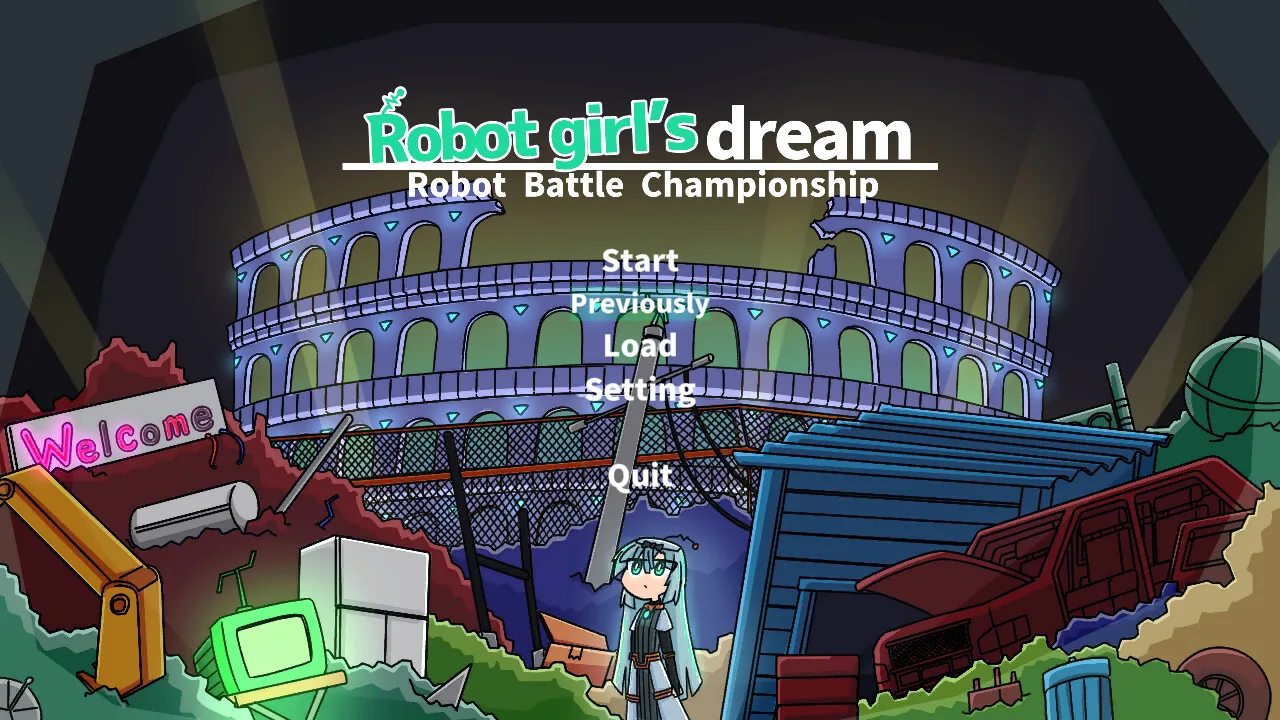
The title screen, framing the junkyard origins and colosseum ambitions at the heart of the storyImage: DeskClub Games via Steam -
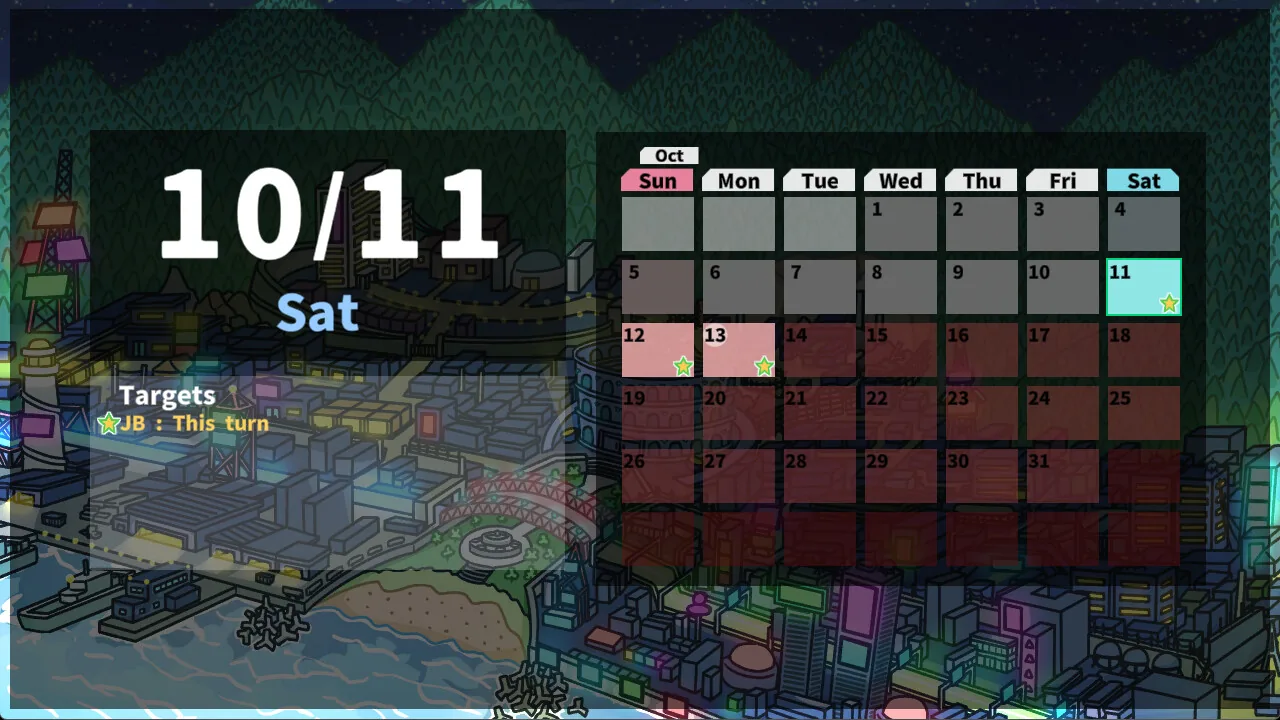
The calendar view used to plan out weekly activities and track upcoming scheduled eventsImage: DeskClub Games via Steam -
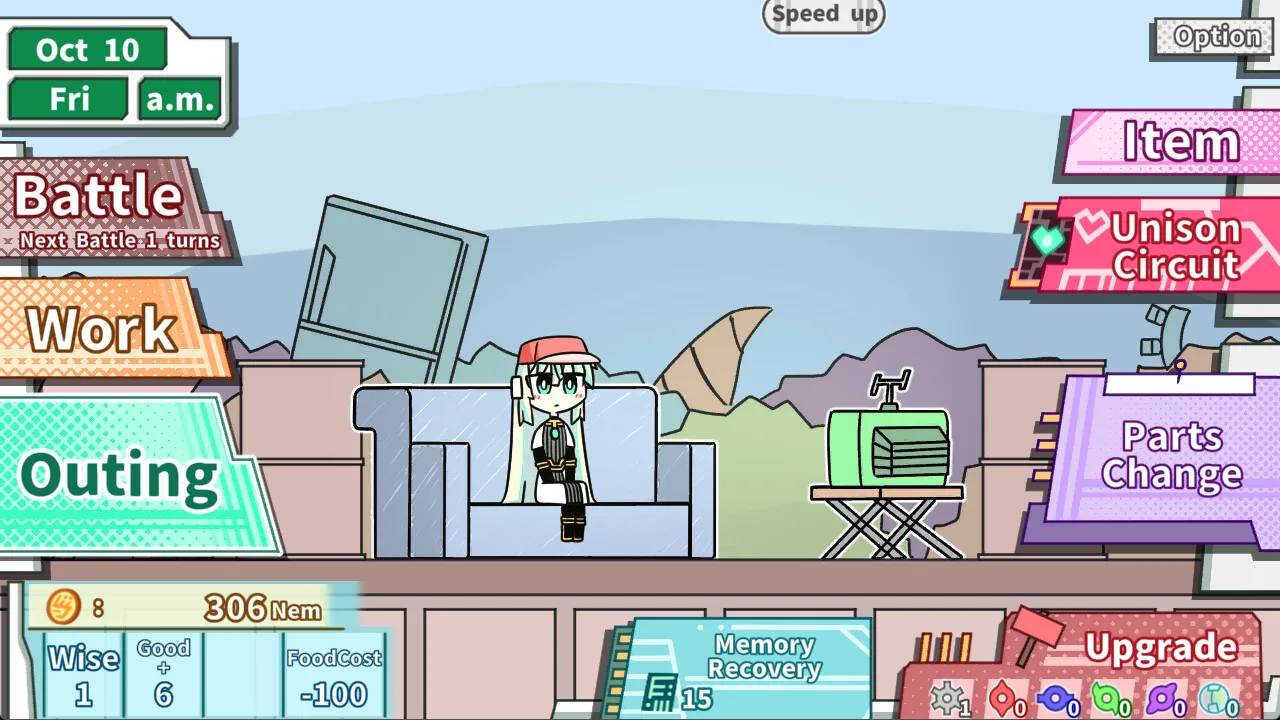
The home base hub, where players choose between working, exploring, upgrading parts, or preparing for the next battleImage: DeskClub Games via Steam -

Wanderer Game ReviewsWanderer Game Reviews