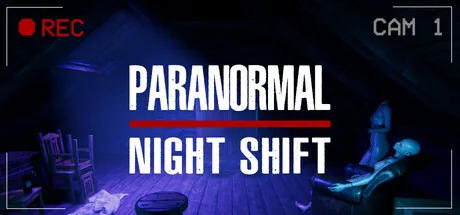
Game review
Paranormal Night Shift
8.2 / 10
- Developer
- Wheeler Whale Games
- Publisher
- Wheeler Whale Games
The short version
Biggest strengths
- A genuinely effective spot-the-anomaly formula elevated by an actual three-night storyline, rather than the plotless anomaly-counting loop most genre entries settle for
- Consistent, well-received voice acting and story cutscenes that give the house's haunting a sense of escalating mystery rather than repetitive busywork
- Runs smoothly with no reported stutters or crashes, and reviewers across very different hardware report a stable, polished technical experience
Biggest weaknesses
- Several reviewers flag the AI-generated voice work as stiff and poorly delivered, undermining otherwise solid production values and drawing unfavorable comparisons to human-recorded genre peers
- Anomaly difficulty is inconsistent, some changes are near-invisible single-pixel shifts while others are telegraphed with audio cues, leaving detection feeling more luck-based than skill-based at times
- No difficulty settings or hint system, so reviewers who find a run too easy or too obtuse have no way to adjust the experience to their preference
8.2 / 10
Overview
Paranormal Night Shift is a first-person spot-the-anomaly horror game developed and published by Wheeler Whale Games, released on Steam on January 13, 2025. Players take on the role of a ghost hunter partnered with a colleague named Gary, called to a haunted house in North London where a family reports strange phenomena disrupting their lives. The job is simple to state and hard to execute: watch a bank of security cameras, spot anything that has changed between glances, and report it before the house's presence, a spirit named Judith, punishes too many missed changes. It's built around three nights of play, roughly three to five hours total, and it has landed a Very Positive reception across 120 reviews, with 117 recommending it.
That reception is notably lopsided even by the standards of a well-liked indie title, and the reviews are consistent about why: the genre's core anomaly-hunting loop is intact and well executed, but the game distinguishes itself with an actual unfolding story tying the three nights together, something most of its direct competitors skip entirely.
Story and Presentation
The narrative frames each night as a fragment of a larger mystery around Judith and the house's history, delivered through voiced cutscenes between shifts. Reviewers repeatedly single this structure out as the game's most meaningful differentiator from the wave of similar anomaly-hunting titles it's compared against, most often "I'm on Observation Duty," since most of those games treat the premise as a flat, repeating mechanic with no throughline. Here, some anomalies themselves are tied directly to plot beats rather than being purely cosmetic changes, which reviewers say gives the hunting itself an added layer of narrative stakes.
The voice acting draws a genuinely split response. Many reviewers praise the multi-language voicing and the rapport between the player character and Gary as adding charm and tension to what could otherwise be a dry observation exercise. But a recurring subset of reviewers describe the delivery as stiff, oddly paced, or likely AI-generated, and at least one reviewer says they would have valued being told about that going in. A separate, more universally shared complaint is a mixing issue: dialogue is sometimes drowned out by the music, with reviewers noting that subtitles end up doing more work than the audio mix should require.
Gameplay and Mechanics
The core loop is classic anomaly-hunting: cycle through camera feeds, memorize the state of each room, and catch whatever has shifted, an object moved a few inches, a color changed, an item that wasn't there before. Reviewers describe the detection difficulty as a genuine strength when it's calibrated well, some changes are large and given away by audio stingers, while others require close, deliberate attention to easily overlooked details like the color of items in a cup or a card deck's exact position. That range keeps players engaged rather than coasting, and several reviewers explicitly praise the tension of not knowing whether the next glance will reveal something obvious or nearly invisible.
The same range is also the game's most consistent point of friction. Reviewers who found individual anomalies frustratingly subtle describe the experience as closer to a memory-testing chore than a horror game, with a few going as far as comparing it to hunting for a barely-shifted object in a crowded scene. Because there's no hint system and no adjustable difficulty, players who find a given night too obtuse, or conversely too easy, have no way to tune the challenge to their preference, and the negative reviews in particular cite this rigidity as a core complaint alongside a general sense that the anomaly detection can feel more like luck than observation skill.
Progression and Replayability
Progression across the three nights is tied to survival rather than unlocks: missing too many anomalies in a night ends the run, but reviewers confirm that failure only restarts the current night rather than the whole game, a design choice several call out favorably compared to harsher genre peers. Completing all three nights closes out the story, and reviewers who finished it describe a satisfying, if compact, sense of resolution to Judith's mystery.
Where the game runs thinner is in what's left to do afterward. With only three nights and no difficulty modes or alternate scenarios, reviewers describe it as a strong single playthrough rather than something built for repeat visits, and a handful explicitly wish for an extended or harder story mode. A more concrete complaint several reviewers raise is an achievement bug tied to completing Night 3, which multiple players report failing to trigger correctly even after a clean finish, an unresolved rough edge on an otherwise tightly built experience.
Technical Performance and Value
Performance draws some of the most unreserved praise in the review pool. Reviewers across a range of hardware report no stutters, no crashes, and consistently smooth camera-switching, which matters directly for a game whose entire premise depends on players trusting what they're seeing on screen. Sound design and music are likewise called out as effective at building tension, aside from the specific complaint about dialogue being mixed too quietly against the score.
On value, the consensus is essentially unanimous: at its low price point and two-to-five-hour runtime, reviewers describe Paranormal Night Shift as an easy, low-risk recommendation, several explicitly framing it as a satisfying single evening's entertainment rather than something they regret buying even with its rough edges around voice delivery and the missing achievement fix.
Verdict
Paranormal Night Shift takes a familiar, well-worn horror formula and earns its unusually strong reception by actually building a story around it, something most of its genre peers never bother attempting. The anomaly hunting itself is well tuned more often than not, the production is technically solid, and the price-to-length ratio is generous enough that even reviewers with real complaints about voice acting or difficulty rigidity still come away recommending it. It won't convert players who are tired of the spot-the-difference format outright, and the lack of difficulty options or a hint system will frustrate anyone who wants the challenge tuned to their own skill level, but for genre fans it's a tight, well-crafted three-night haunting worth the handful of hours it asks for.
Pros and cons
Pros
- A genuinely effective spot-the-anomaly formula elevated by an actual three-night storyline, rather than the plotless anomaly-counting loop most genre entries settle for
- Consistent, well-received voice acting and story cutscenes that give the house's haunting a sense of escalating mystery rather than repetitive busywork
- Runs smoothly with no reported stutters or crashes, and reviewers across very different hardware report a stable, polished technical experience
- Short, tight two-to-five-hour length that reviewers consistently call good value at its low asking price, with restarts limited to the failed night rather than the whole game
Cons
- Several reviewers flag the AI-generated voice work as stiff and poorly delivered, undermining otherwise solid production values and drawing unfavorable comparisons to human-recorded genre peers
- Anomaly difficulty is inconsistent, some changes are near-invisible single-pixel shifts while others are telegraphed with audio cues, leaving detection feeling more luck-based than skill-based at times
- No difficulty settings or hint system, so reviewers who find a run too easy or too obtuse have no way to adjust the experience to their preference
- A minor but persistent achievement bug around completing Night 3 goes unresolved for multiple reviewers, souring an otherwise clean completion experience
Screenshots
-
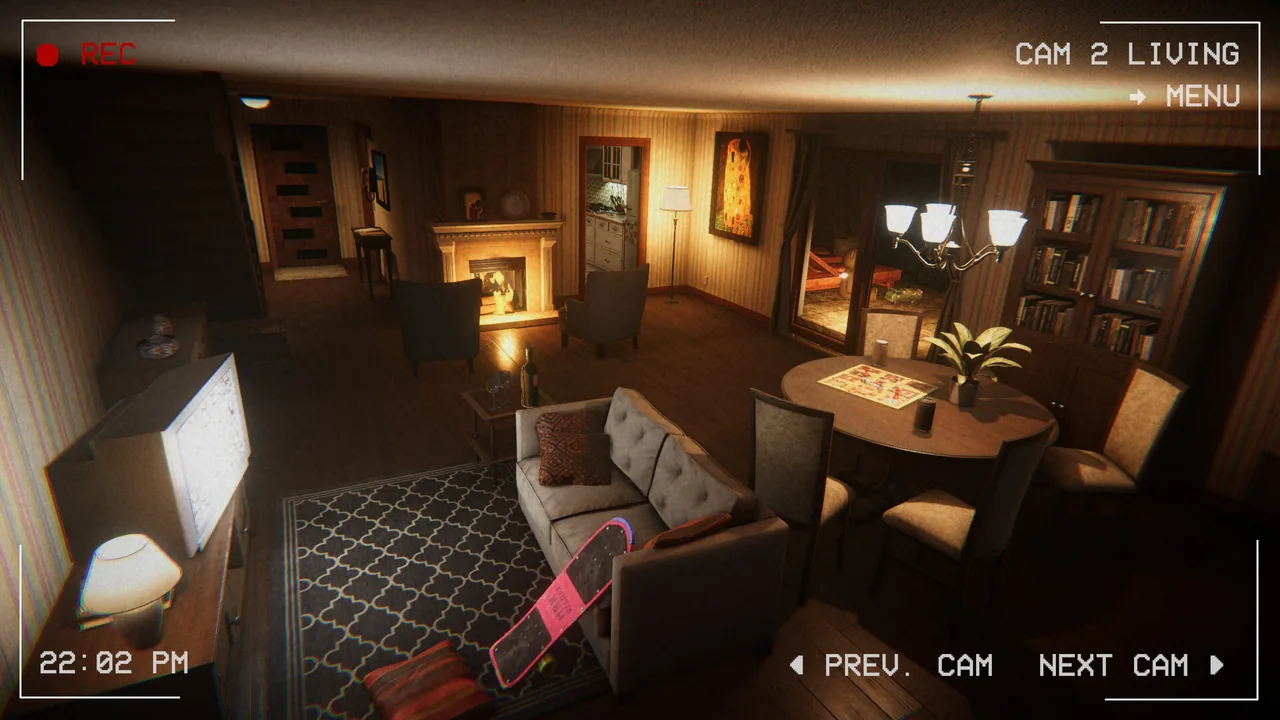
One of the house's monitored camera feeds, watched for anomalies like objects that shouldn't be thereImage: Wheeler Whale Games via Steam -
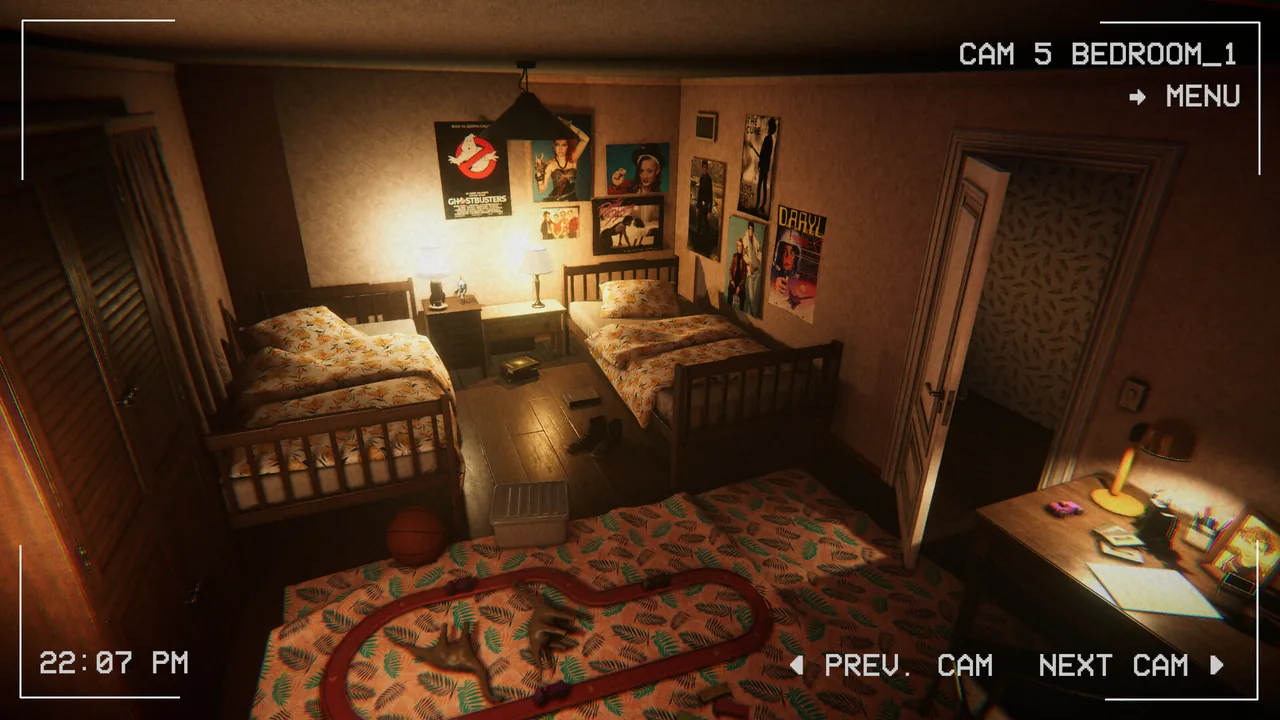
A children's bedroom feed, the kind of cluttered, detail-heavy room where small changes are easiest to missImage: Wheeler Whale Games via Steam -
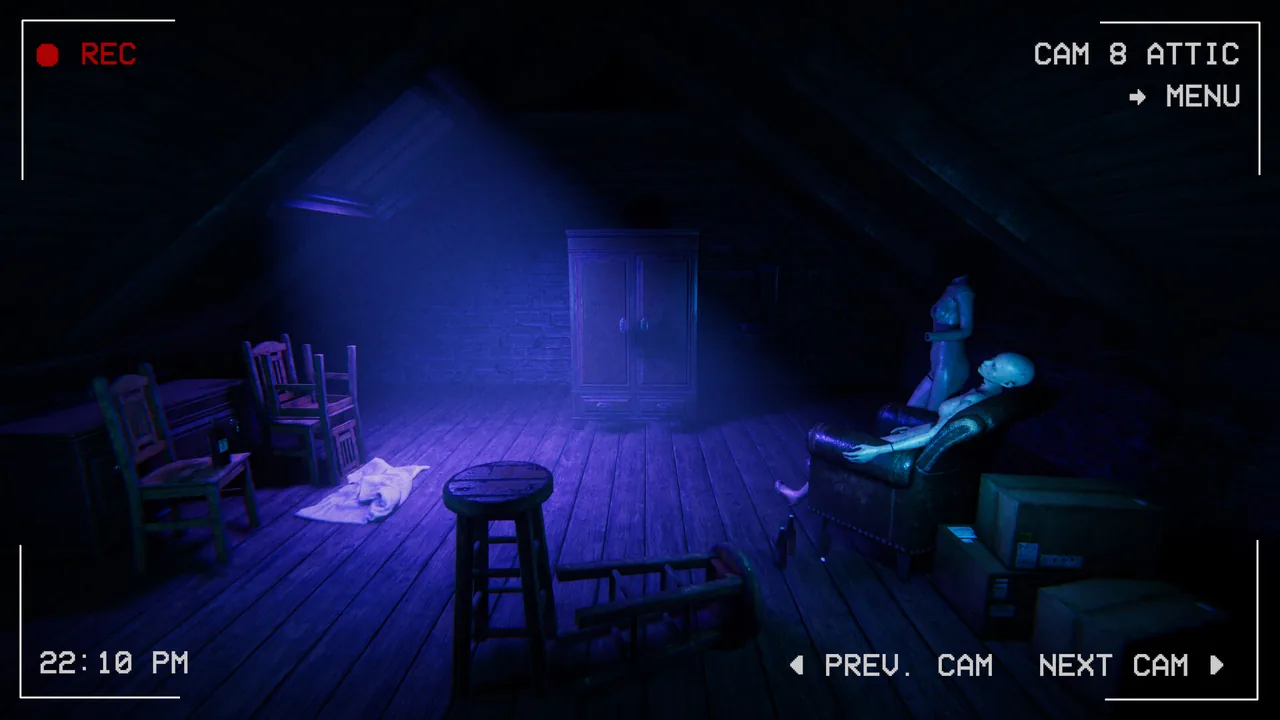
The attic camera feed, where the house's more overtly unsettling anomalies tend to appearImage: Wheeler Whale Games via Steam -
Wanderer Game ReviewsWanderer Game Reviews