Game review
Leyline Chronicles
6.8 / 10
- Developer
- Dekaytainment
- Publisher
- Psychronic Games
The short version
Biggest strengths
- Reviewers repeatedly single out the combo-based turn-based combat, comparing it favorably to Legend of Legaia and describing it as the game's clear standout feature
- The voice acting and character portraits draw consistent praise as unusually accomplished for a small, largely solo-developed project
- A vibrant, colorful art style with dynamic environmental effects like snow, wind, and falling leaves is called consistently appealing across the review pool
Biggest weaknesses
- Several reviewers note that lighting in some environments is overexposed to the point of obscuring visibility
- At least one detailed reviewer criticizes the multiverse plot as feeling like an incomplete outline despite genuine potential
- The directional combo system carries a real learning curve, with multiple reviewers describing early frustration before it clicks
6.8 / 10
Overview
Leyline Chronicles is a retro-inspired JRPG from developer Dekaytainment, published by Psychronic Games, that sets out to channel the SNES-era RPGs of the 1990s while layering in a distinctive combo-based combat system. Players follow Lambert, Devan, Jaskya, and five other Ley Sensitives as they uncover the truth behind their supernatural abilities and get pulled into a multiverse conflict threatening the world of Orphania. It released on Steam on January 9, 2025, and has built a Positive rating across 21 reviews, with 20 of them recommending the game.
The review pool is dominated by a specific kind of nostalgia: players who grew up on Super Nintendo RPGs like Secret of Mana, Illusion of Time, and Lufia describe Leyline Chronicles as scratching an itch few modern games attempt, while also crediting it with enough of its own ideas, particularly in combat, to avoid feeling like a pure pastiche.
Story and Setting
The plot follows the Ley Sensitives, a group of eight characters gifted with supernatural powers tied to the world's leylines, as they navigate a conflict rooted in a multiverse of alternate-universe Ley users seeking godhood. One reviewer, who played through much of the story in detail, describes the premise as genuinely interesting on paper, centering on a leader's ex-wife turned antagonist who has thrown in with an outside cult, but argues the execution feels like an incomplete outline at times, with plot beats that don't get the room to breathe that the setup promises.
Other reviewers are considerably warmer on the narrative, praising the eight-character cast and their individual side stories for giving the game an emotional throughline reminiscent of the ensemble JRPGs it's clearly inspired by. Several specifically call out the voice acting as elevating scenes that might otherwise feel generic, adding personality to a cast that reviewers say could easily have blended together without it. The disagreement between reviewers who find the plot thin and those who find the cast compelling suggests a game whose ambition outstrips its polish in places, but whose character work still lands for most players.
Gameplay and Mechanics
Combat is where Leyline Chronicles earns its strongest and most consistent praise. It's built around a turn-based combo system that multiple reviewers compare directly to Legend of Legaia, chaining directional inputs together to build toward powerful finishing moves rather than simply selecting attacks from a static menu. Reviewers describe stringing combos together as genuinely satisfying once it clicks, with different skills triggering different combo effects and rewarding players who plan several turns ahead rather than mashing through encounters.
That satisfaction comes with a learning curve. Multiple reviewers note that the game throws a lot at players early on, and at least one early reviewer admits to bouncing off the mechanics on a first attempt before coming around after further play and direct conversation with the developer about the project's ambitions. Quality-of-life touches get consistent praise too, including resource conversion, quest markers on the compass, and fast travel options that keep the pace brisk between story beats. The Trouble Quad card minigame, an explicit homage to Final Fantasy VIII's Triple Triad, is flagged by several reviewers as a highlight they're eager to dig into further, giving collection-minded players a secondary loop layered on top of the main JRPG structure. A streamlined crafting system for upgrading weapons and armor rounds out the mechanical package, unlocking new skills and combo options as the party grows stronger.
Progression and Replayability
Reviewers describe a tightly paced main story that avoids excessive padding, with one reviewer specifically praising minimal need to grind relative to the amount of exploration on offer, and estimating around 14 or more hours to see the story through. Character growth is tied closely to the combo and crafting systems, with new attacks and finishing moves unlocking as players experiment and upgrade gear, giving reviewers a steady drip of new toys to test in combat rather than a flat power curve.
Multiple reviewers explicitly note that the developer continued patching and refining the game after their own playthroughs, adding new cutscenes and adjusting existing content based on player feedback, which several credit with genuinely improving weaker patches of the story over time. That responsiveness, on a project multiple reviewers describe as a largely solo effort supported by a coder and artists, comes up repeatedly as a point in the game's favor, with reviewers expressing anticipation for a already-planned sequel rather than treating this as a one-and-done release.
Visual Style and Sound Design
The art style draws consistent praise for being colorful and vibrant, with reviewers specifically calling out environmental touches like snow, wind, falling leaves, and shifting weather that make the world feel more alive than a typical budget indie JRPG. Character portraits paired with the aforementioned voice acting are repeatedly cited as punching above the game's apparent budget, helping sell emotional beats that a lower-effort production might fumble.
The presentation isn't without rough edges, though. Several reviewers flag lighting in specific areas as overexposed to the point of making it genuinely difficult to see what's happening, and a few describe the visual effects during combat, layered combo animations, particle effects, and UI elements stacking up simultaneously, as noisy enough that they eventually switched to faster battle animation settings just to cut through the clutter. Even so, the soundtrack and overall audio design earn broad approval, with reviewers repeatedly singling out the music alongside the voice work as a highlight rather than an afterthought, reinforcing the game's retro-JRPG identity rather than working against it.
Verdict
Leyline Chronicles succeeds most clearly where it takes the biggest swing: a directional combo combat system that reviewers consistently rank among the best parts of the experience, backed by surprisingly strong voice acting and a vibrant, nostalgic art style. Its multiverse plot doesn't always live up to its own ambitions, and a handful of visual and pacing rough edges keep it from feeling fully polished, but for players hungry for a genuine throwback to SNES-era RPGs with a combat system that isn't content to just imitate its influences, it's an easy recommendation, especially with a sequel already anticipated by its most enthusiastic fans.
Pros and cons
Pros
- Reviewers repeatedly single out the combo-based turn-based combat, comparing it favorably to Legend of Legaia and describing it as the game's clear standout feature
- The voice acting and character portraits draw consistent praise as unusually accomplished for a small, largely solo-developed project
- A vibrant, colorful art style with dynamic environmental effects like snow, wind, and falling leaves is called consistently appealing across the review pool
- The Triple Triad-inspired Trouble Quad card minigame gives collection-minded players extra depth beyond the main story
Cons
- Several reviewers note that lighting in some environments is overexposed to the point of obscuring visibility
- At least one detailed reviewer criticizes the multiverse plot as feeling like an incomplete outline despite genuine potential
- The directional combo system carries a real learning curve, with multiple reviewers describing early frustration before it clicks
- Combat's visual effects are called noisy or cluttered by some reviewers, who recommend switching to faster battle animations
Screenshots
-
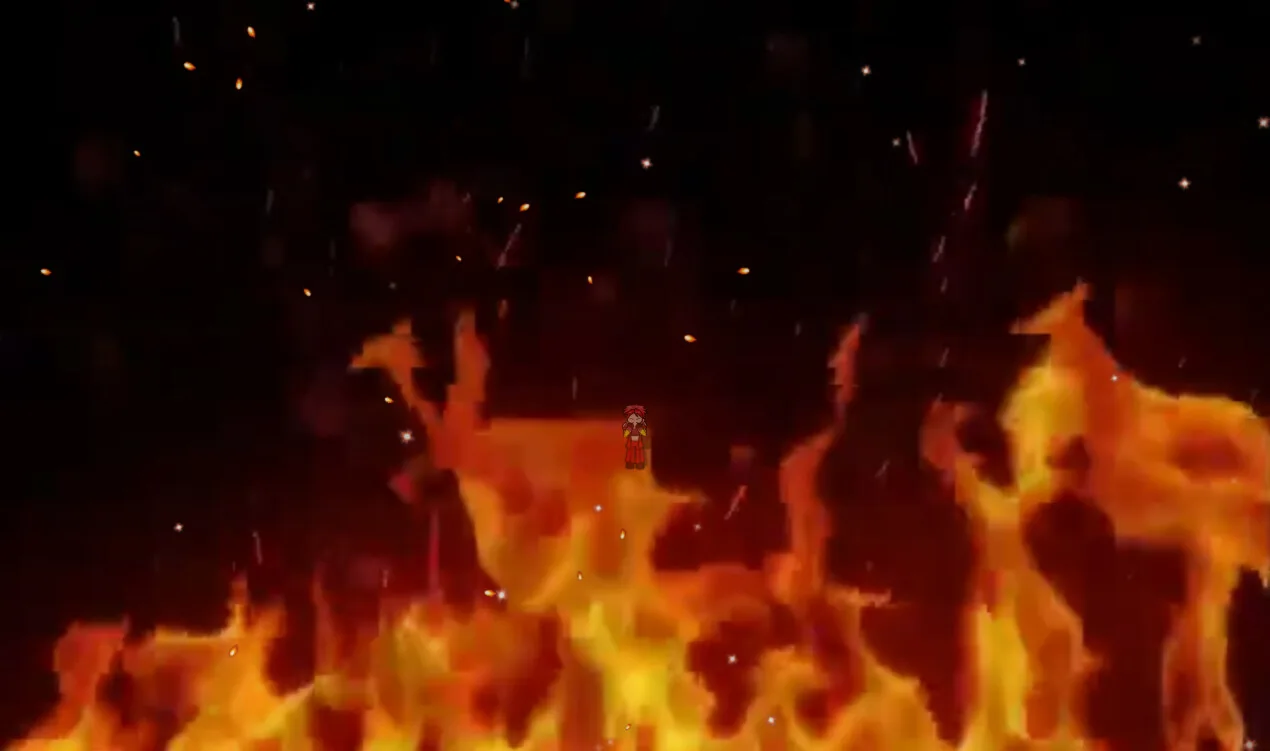
A tense story moment set against a wall of animated fire, one of the game's more dramatic environmental effectsImage: Psychronic Games via Steam -
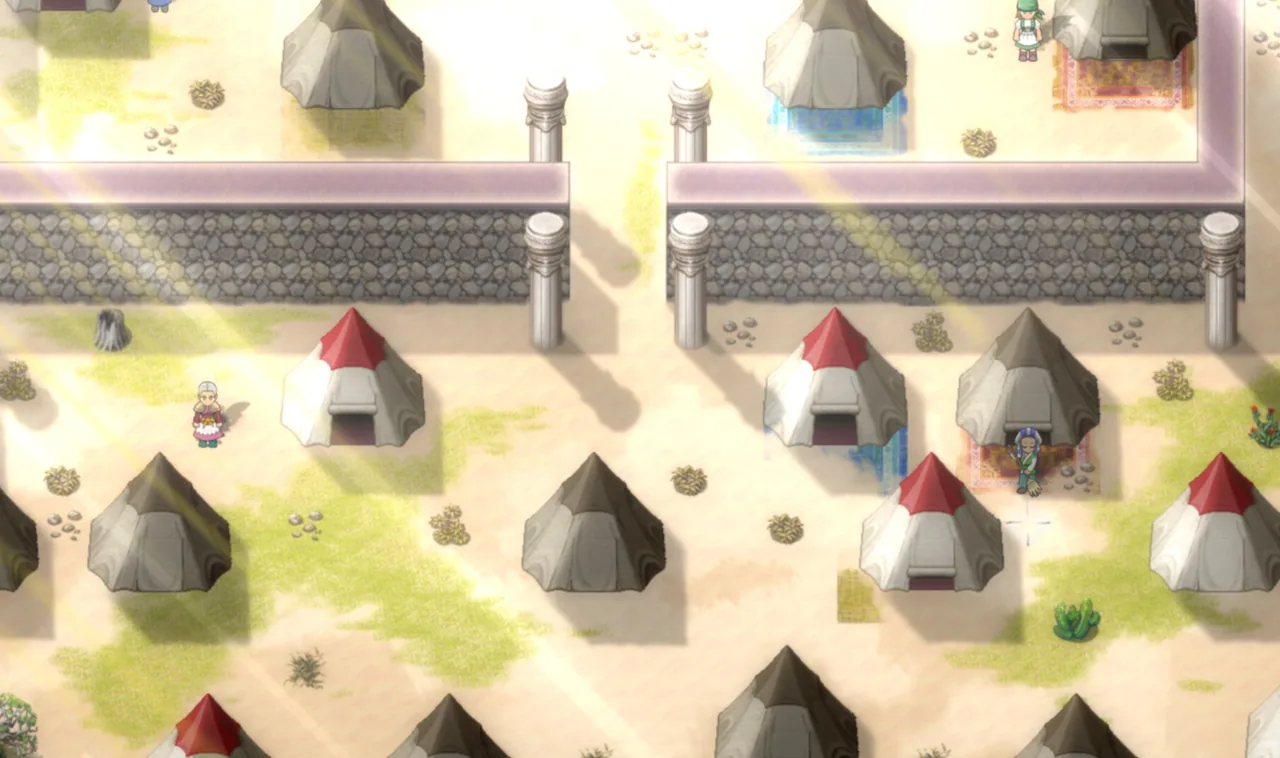
A desert village bathed in strong sunbeams, illustrating the overexposed lighting some reviewers flagged in certain areasImage: Psychronic Games via Steam -
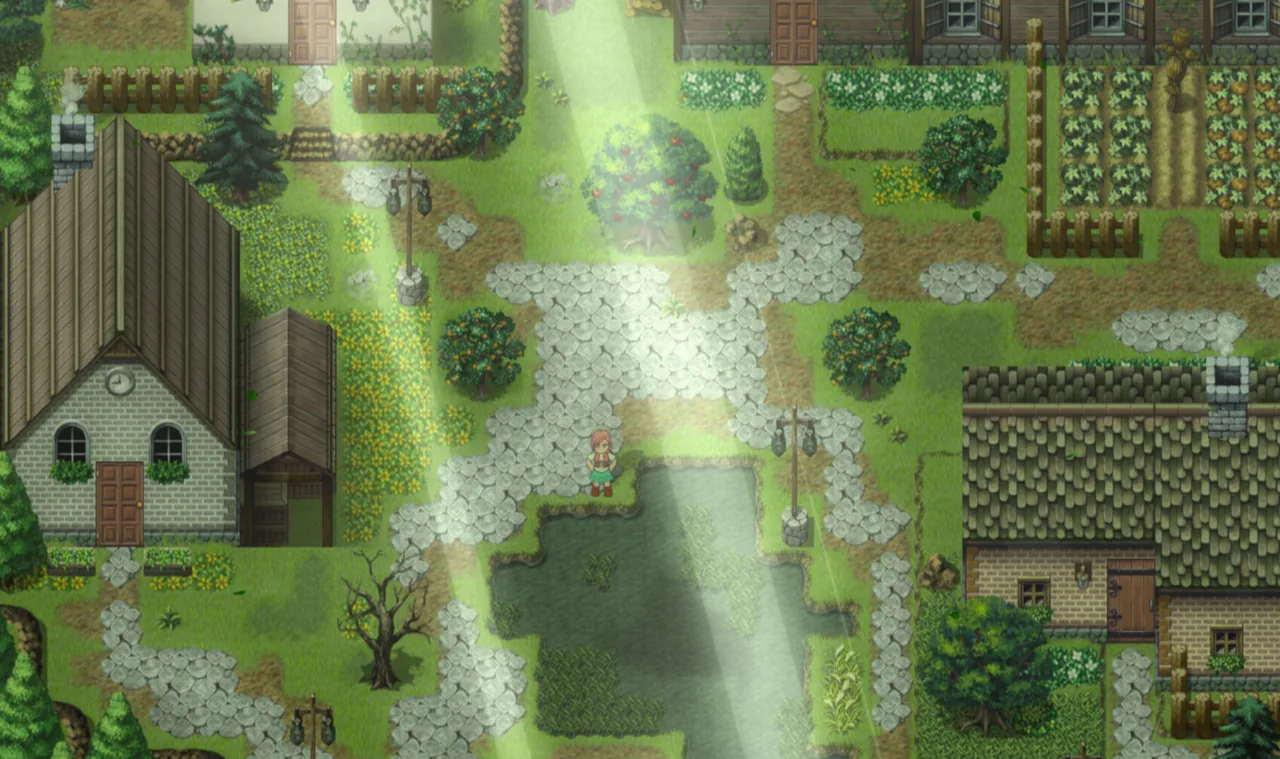
A pastoral village area showcasing the game's colorful, detailed environment artImage: Psychronic Games via Steam -
Wanderer Game ReviewsWanderer Game Reviews