Game review
IDUN - Frontline Survival
6.6 / 10
- Developer
- IDUN Interactive
- Publisher
- Surefire.Games
The short version
Biggest strengths
- A genuinely distinct 'Defense RTS' hybrid where turrets and heroes can be freely repositioned mid-fight rather than locked in place, drawing favorable comparisons to Creeper World and StarCraft II defense missions
- Handles thousands of enemies on screen with consistently strong performance, even reviewers who logged 60-plus hours report no meaningful slowdown during the busiest encounters
- Terrain that deforms and floods with enemy remains, plus interactive orbital abilities players actively aim rather than passively trigger, give combat more moment-to-moment texture than typical tower defense
Biggest weaknesses
- AI-generated voice acting is the single most consistent complaint in the review pool, described as uncanny, emotionless, and repetitive enough that many reviewers mute dialogue entirely
- Meta-progression leans heavily on randomized upgrade drops rather than player choice, which a significant share of reviewers describe as luck-based and frustrating rather than a meaningful strategic layer
- The pool of core mission types is small, roughly five variations, and reviewers who push past 10 to 20 hours consistently describe the loop turning grindy and repetitive
6.6 / 10
Overview
IDUN - Frontline Survival is a defense-focused action-strategy hybrid developed by IDUN Interactive and published by Surefire.Games, blending real-time tower defense with mobile, repositionable units the studio calls a "Defense RTS." Players command turrets, heroes, and orbital abilities against relentless alien swarms across a voiced story campaign and a large optional world map of side missions. It released on Steam on January 20, 2025, and holds a Mostly Positive rating across 330 reviews, with 257 recommending it.
That's a substantial, well-populated review pool for a January release, and it tells a consistent story: reviewers are genuinely impressed by the core combat's mobility and scale, while a specific, recurring set of complaints, AI voice acting, RNG-driven upgrades, and mission repetition, keeps the reception from climbing higher than Mostly Positive.
Story and Presentation
The narrative frames the endless alien swarms as just the beginning of a larger unfolding conflict, delivered through a fully voiced story campaign. That voice work turns out to be the review pool's single loudest complaint: the dialogue is AI-generated, and reviewers overwhelmingly describe it as uncanny, emotionless, and repetitive to the point that many simply mute the characters and rely on text or gameplay cues instead, even at the cost of missing helpful in-game tips. Several reviewers say they would have reconsidered the purchase entirely had they known the voice acting was AI-generated going in, making it as much an ethical sticking point for some as an audio quality complaint.
Beneath the noise around the voice work, reviewers who stuck with the story describe the actual mission structure and pacing of the campaign as some of the most varied and well-designed content the game has to offer, a contrast to the more repetitive optional missions layered on top of it.
Gameplay and Mechanics
The core hook is real mobility: rather than placing static towers and watching them work automatically, players actively reposition turrets and heroes mid-fight, aim interactive orbital abilities as weapons in their own right, and adapt to terrain that deforms and floods with enemy remains as battles progress. Reviewers repeatedly praise how responsive and physically satisfying this makes combat feel, with comparisons to Creeper World's dynamic battlefield tension and StarCraft II's more spectacle-driven defense missions. Individual rounds run short, typically five to fifteen minutes, and the game handles genuinely enormous enemy counts, reviewers describe tens of thousands of enemies on screen at once, without the performance dropping even during hours-long grinding sessions.
The friction shows up once the moment-to-moment combat gives way to strategic decision-making. Several reviewers describe a lack of real skill expression in how upgrades are acquired, since a heavily randomized drop system can hand a winning loadout to one attempt and a useless one to the next, regardless of player execution. That RNG layer extends to negative surprises too: random planet events, especially lightning strikes that can destroy player towers mid-run, are called out as an unwelcome, un-strategic source of failure stacked on top of an already luck-dependent system.
Progression and Replayability
Progression is built around a persistent tech tree and space station upgrades that carry forward across a large story campaign and a sprawling world map offering well over a hundred optional side missions. Reviewers who engage moderately with this structure describe real long-term investment, unlocking new turret types, elite troops, and tactical tools that meaningfully change how later missions play out, and an "extreme" difficulty tier unlocked after the main campaign gives dedicated players a genuine skill ceiling to chase.
The same breadth becomes a liability for reviewers who chase completion too aggressively. Multiple reviewers who logged 25 hours or more describe the side-mission pool, built on only about five underlying mission templates, wearing thin well before they'd exhausted it, turning what starts as a fast, satisfying horde-defense loop into a repetitive grind. The randomized upgrade system compounds this fatigue, since meaningful build choices can feel arbitrarily locked in or out depending on what the game happens to offer rather than what the player wants to build toward.
Technical Performance and Value
Given how much is happening on screen at once, IDUN's technical performance draws some of the most unequivocal praise in the review pool. Reviewers who logged multi-hour marathon sessions, including a two-hour refinery run pursued specifically for an achievement, report no meaningful slowdown even with tens of thousands of enemies and effects rendering simultaneously, a genuinely impressive feat for a game built around that much on-screen chaos. Art direction and music also earn consistent, if less effusive, praise, described as solid and well suited to the game's fast, frenetic combat without drawing much specific criticism either way.
Value is where the game closes strong regardless of how reviewers feel about its repetition or RNG systems. At a price generally cited in the nine-to-fifteen-dollar range, reviewers repeatedly describe getting a large story campaign plus dozens of hours of optional content as a fair, even generous, trade, with several explicitly recommending it at full price despite their other reservations, and others suggesting a sale purchase mainly to offset the missions they expect to eventually find repetitive.
Verdict
IDUN - Frontline Survival is a genuinely inventive Defense RTS whose mobile combat, deforming terrain, and massive-scale battles win over the large majority of its sizable review pool, even as AI-generated voice acting, a luck-driven upgrade system, and a thin pool of underlying mission types keep it from becoming an easy universal recommendation. It's a strong pick for players who want fast, tactically active tower defense in short bursts and can tolerate or simply mute its narrative delivery, but the RNG-heavy progression and repetitive side content are real reasons some reviewers cooled on it after extended play. At its price point, most reviewers still call it a worthwhile purchase, just one best enjoyed in shorter sessions rather than a single long completionist push.
Pros and cons
Pros
- A genuinely distinct 'Defense RTS' hybrid where turrets and heroes can be freely repositioned mid-fight rather than locked in place, drawing favorable comparisons to Creeper World and StarCraft II defense missions
- Handles thousands of enemies on screen with consistently strong performance, even reviewers who logged 60-plus hours report no meaningful slowdown during the busiest encounters
- Terrain that deforms and floods with enemy remains, plus interactive orbital abilities players actively aim rather than passively trigger, give combat more moment-to-moment texture than typical tower defense
- Reviewers widely consider it a strong value at its low asking price, with a large story campaign plus a sprawling optional world map of side missions for players who want more
Cons
- AI-generated voice acting is the single most consistent complaint in the review pool, described as uncanny, emotionless, and repetitive enough that many reviewers mute dialogue entirely
- Meta-progression leans heavily on randomized upgrade drops rather than player choice, which a significant share of reviewers describe as luck-based and frustrating rather than a meaningful strategic layer
- The pool of core mission types is small, roughly five variations, and reviewers who push past 10 to 20 hours consistently describe the loop turning grindy and repetitive
- Random negative planet events, lightning strikes destroying towers in particular, are singled out as an unwelcome source of run-ruining unfairness on top of the existing RNG-driven upgrade system
Screenshots
-
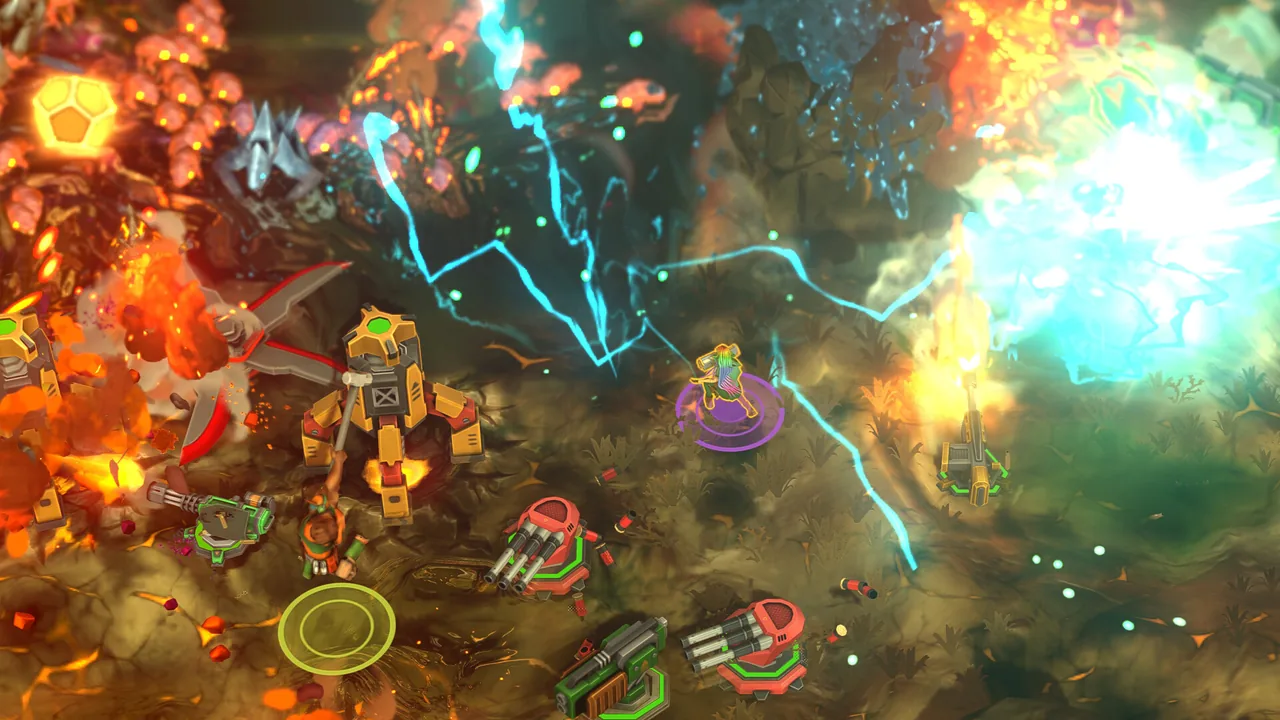
A lightning planet-event strikes mid-battle, one of the random hazards reviewers cite as unfairly punishingImage: IDUN Interactive via Steam -
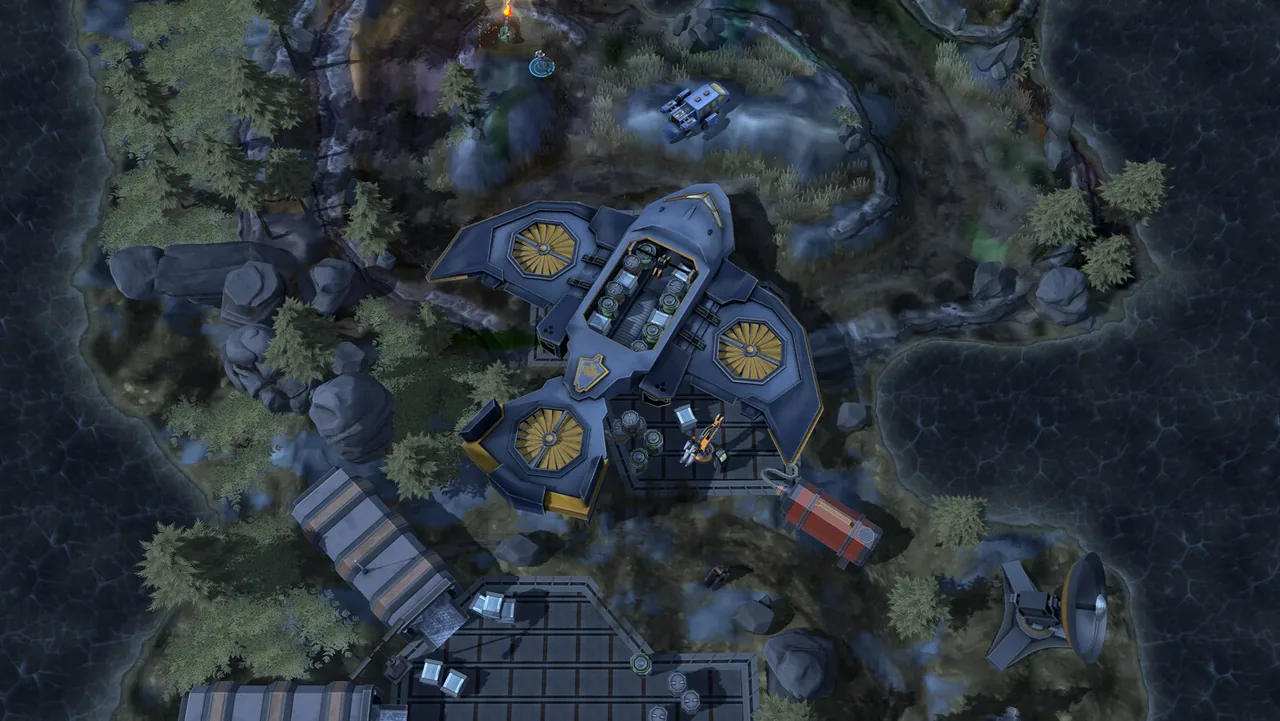
The player's space station base, the hub for the game's persistent tech tree and upgradesImage: IDUN Interactive via Steam -
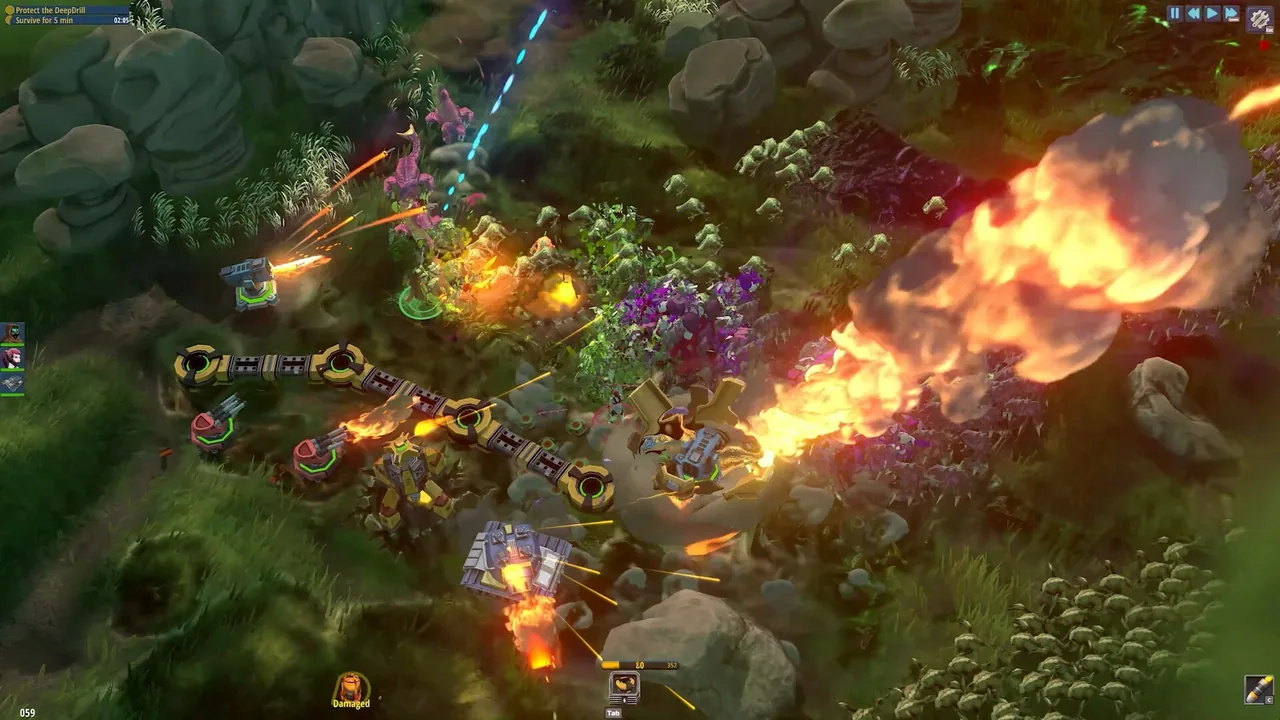
A DeepDrill defense mission in progress, one of the game's several core mission typesImage: IDUN Interactive via Steam -
Wanderer Game ReviewsWanderer Game Reviews