Game review
Escape from the Cursed Convent
6.8 / 10
- Developer
- Ais Kacang Studio
- Publisher
- 迷糊的安安
The short version
Biggest strengths
- Reviewers overwhelmingly praise the pixel art and CG presentation, calling the medieval convent setting immersive and beautifully crafted down to the architecture and religious detail
- The soundtrack draws exceptionally consistent praise, with reviewers describing period-appropriate choral and orchestral music that elevates both tense and quiet story moments
- The central relationship between Adeline and Helena earns strong emotional investment from reviewers, who describe the story's multiple endings and branching side content as genuinely moving
Biggest weaknesses
- Quick Time Events and minigames, including hunting, cooking, and sliding-puzzle sequences, are consistently named the weakest part of the game, with several reviewers finding them tedious or poorly explained
- Long, unskippable cutscenes, particularly early on, frustrate a number of reviewers who otherwise enjoyed the story
- Translation and proofreading issues appear throughout the English text, with several reviewers noting grammar errors and awkward phrasing that occasionally muddy the plot
6.8 / 10
Overview
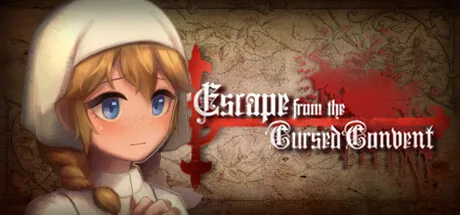
Escape from the Cursed Convent is a free-to-play narrative adventure from Ais Kacang Studio, an unofficial fan work inspired by the manga Hengoku no Schwester. Set in a fictionalized 16th-century Holy Roman Empire, it follows Adeline, a peasant girl sent to the Claustrum Convent for "re-education" after her mother is falsely accused of witchcraft. It released on Steam on January 21, 2025, and holds a Very Positive rating across 210 reviews.
Reviewers, including many who have never read the source manga, consistently describe a standalone story that works entirely on its own terms, praising its atmosphere and presentation while flagging real friction in its pacing, translation, and minigame design.
Story and Setting
The story follows Adeline and her friend Helena as they navigate the convent's brutal re-education system, a "living hell of torment and executions," while forming a bond that becomes the emotional core of the game. Reviewers describe the writing as genuinely affecting, with several specifically calling out the ending sequences as emotionally powerful, and the relationship between the two leads as sweet, layered, and worth investing in. Content descriptors and reviewer commentary both note subtle elements of gore and yuri romance, which multiple reviewers describe as tastefully handled rather than gratuitous.
The game is explicitly framed as a fan derivative work rather than an official adaptation, and reviewers are near-unanimous that no prior familiarity with the source manga is needed. Several who came in cold describe getting fully absorbed in the plot and lore regardless, with references to the source material largely confined to optional flavor text in certain endings. A few reviewers do note a pronounced critical undercurrent toward the Catholic Church woven through the narrative, which colors much of the antagonist and setting design.
Gameplay and Mechanics
Structurally, the game plays like a fairly standard RPGMaker adventure: players walk Adeline through the convent's grounds and forest surroundings, engage in dialogue and choice-driven story beats, and periodically dip into a handful of minigames, including hunting, cooking, and a sliding-block puzzle. Reviewers are consistently positive about the exploration and atmosphere but far more divided on the minigame content, with Quick Time Events singled out repeatedly as the game's weakest link. Several reviewers note the QTEs and puzzles are largely skippable via a Story Mode option, and recommend newcomers use it rather than fight through mechanics most reviewers agree don't add much.
Pacing is the other recurring sticking point. A number of reviewers describe long, unskippable cutscenes, particularly in the opening hours, as a real drag on momentum, even among reviewers who otherwise rate the story highly. A few reviewers also report navigation issues, including getting stuck after walking into the wrong area and needing to reload a save to continue, though these appear to be isolated rather than pervasive.
Progression and Replayability
The main story runs roughly 5 to 8 hours, with reviewers reporting completion times ranging from around 10 hours for a single thorough playthrough up to considerably longer for those chasing every ending. Player choices shape which of several distinct endings and side stories unfold, and reviewers describe genuine reason to replay, both to see how different decisions ripple through Adeline and Helena's relationship and to unlock content tied to specific narrative branches.
That replay incentive comes with a notable pitfall: at least one reviewer warns that the game's save system makes it easy to accidentally overwrite a save file needed to pursue a different ending, costing a full replay to recover lost content. Reviewers generally recommend keeping multiple save slots in reserve for players hoping to see every branch the story has to offer.
Visual Style and Sound Design
The presentation is where the review pool is most united in its praise. Reviewers repeatedly call the pixel art, character sprites, and CG illustrations beautifully crafted, with the convent's medieval religious architecture and the surrounding forest environments singled out for their atmosphere and detail. The soundtrack draws similarly strong and consistent praise, described as period-appropriate choral and orchestral music that meaningfully heightens both the game's tenser sequences and its quieter emotional beats.
A minority of reviewers push back on the presentation, describing the character art as an uneven fit for the story's darker themes and criticizing the soundtrack's limited number of distinct tracks, but this view is a clear outlier against an otherwise strongly positive consensus on the game's audiovisual craft.
Voice acting is limited, and reviewers note the game leans on text, ambient sound design, and music cues rather than full dubbing to carry its emotional beats, a choice several reviewers say works in the game's favor by keeping focus on the CG illustrations and environmental atmosphere during its most pivotal scenes.
English localization draws additional comment across the review pool: several reviewers describe noticeable grammar errors, inconsistent terminology between menus and dialogue, and the occasional line that reads as though machine-translated, all of which can momentarily pull players out of otherwise strong emotional scenes. Most reviewers who raise these issues are quick to add that the core story remains legible and effective despite the rough edges, and a few report the developer has continued patching text issues after launch based on community feedback. Menu and inventory presentation draw similarly mixed marks, with a few reviewers describing item and objective tracking as unclear at points, occasionally leaving players unsure what to do next until they stumble onto the correct trigger.
Verdict
Escape from the Cursed Convent is a striking, emotionally resonant narrative adventure that punches well above its price tag of zero, delivering genuinely accomplished art, music, and character writing in service of a story reviewers describe as both bleak and moving. Its QTEs and minigames add little, its cutscenes could use trims and skip options, and its English localization shows some rough edges, but reviewers overwhelmingly find those flaws easy to forgive given what the game gets right. Fans of story-driven RPGMaker horror or visual novels with real emotional stakes should not let the free price tag lower their expectations.
Pros and cons
Pros
- Reviewers overwhelmingly praise the pixel art and CG presentation, calling the medieval convent setting immersive and beautifully crafted down to the architecture and religious detail
- The soundtrack draws exceptionally consistent praise, with reviewers describing period-appropriate choral and orchestral music that elevates both tense and quiet story moments
- The central relationship between Adeline and Helena earns strong emotional investment from reviewers, who describe the story's multiple endings and branching side content as genuinely moving
- Being completely free to play is repeatedly cited as remarkable given the production quality, with several reviewers saying they'd have gladly paid full price for the experience
Cons
- Quick Time Events and minigames, including hunting, cooking, and sliding-puzzle sequences, are consistently named the weakest part of the game, with several reviewers finding them tedious or poorly explained
- Long, unskippable cutscenes, particularly early on, frustrate a number of reviewers who otherwise enjoyed the story
- Translation and proofreading issues appear throughout the English text, with several reviewers noting grammar errors and awkward phrasing that occasionally muddy the plot
- A handful of reviewers report navigation bugs, including getting stuck in certain areas and needing to reload a save, alongside general menu roughness
Screenshots
-
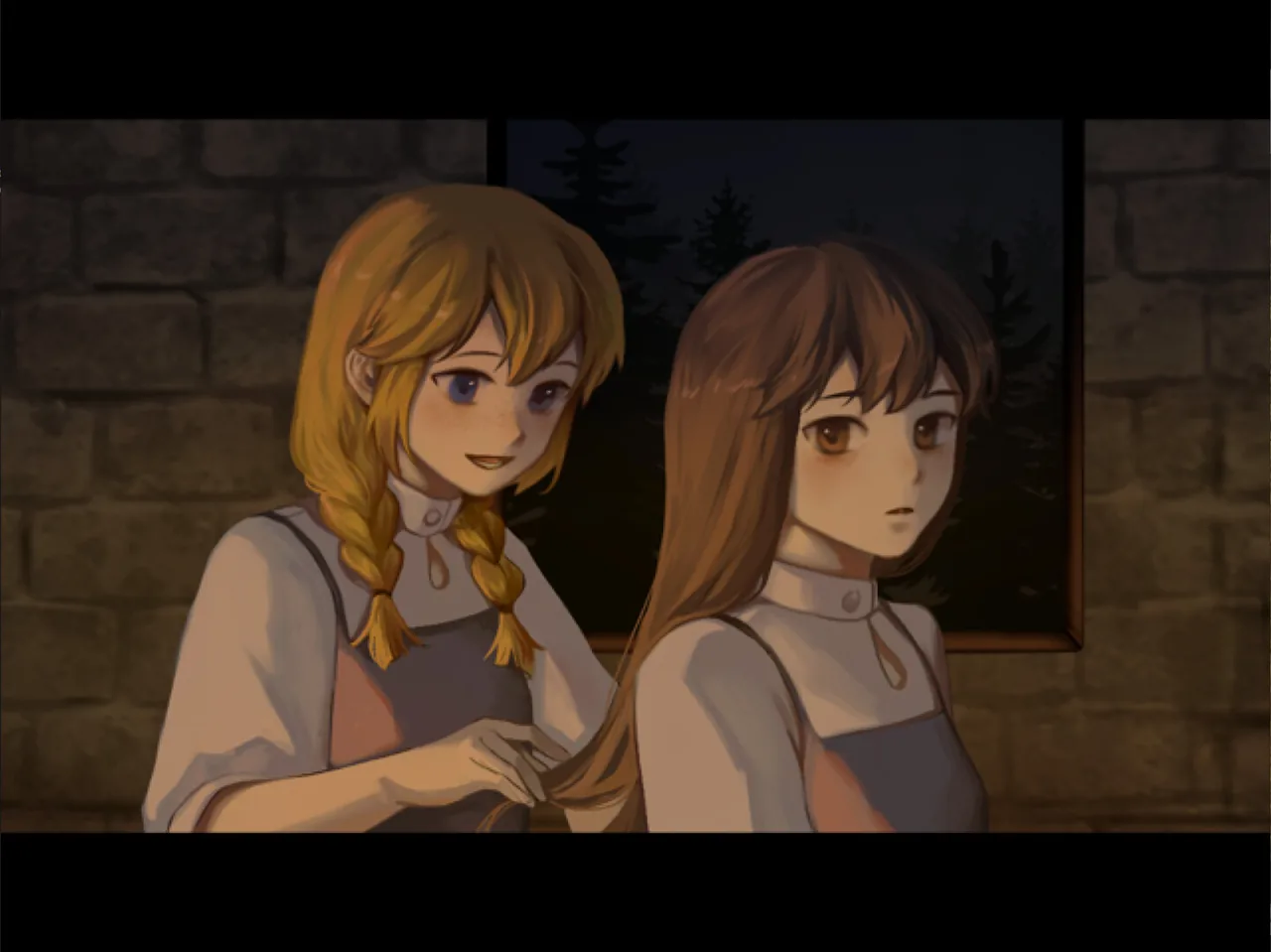
A quiet moment between Adeline and Helena, whose friendship anchors the story's emotional coreImage: Ais Kacang Studio via Steam -
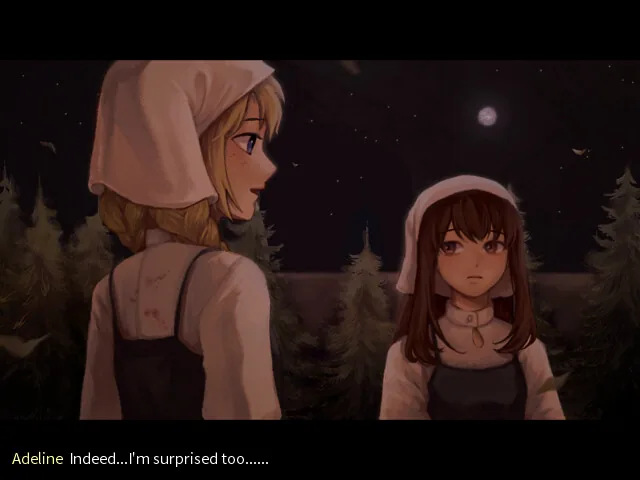
A nighttime dialogue scene set against the convent's surrounding forest, one of many story beats built around the two leadsImage: Ais Kacang Studio via Steam -
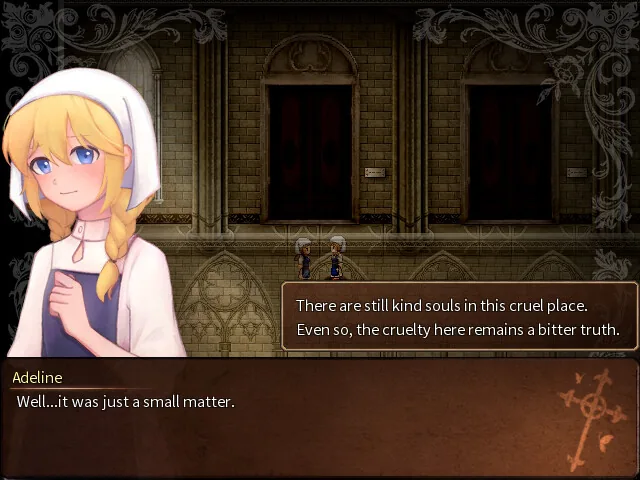
A dialogue scene blending close-up CG portraits with the game's pixel-art overworld explorationImage: Ais Kacang Studio via Steam -
Wanderer Game ReviewsWanderer Game Reviews