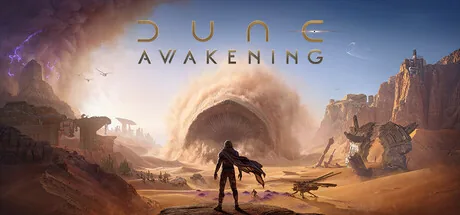
Game review
Dune: Awakening
7.5 / 10
- Developer
- Funcom
- Publisher
- Funcom
- Released
- 5 June 2025
- Platforms
- Windows
- Genre
- Survival MMO
- Monetisation
- Premium, buy-once — no subscription and no microtransactions at launch
- Players
- Online co-op and massively multiplayer servers, plus a single-player option
The short version
Dune: Awakening is one of the rare licensed survival games that treats its source material as a design document rather than a coat of paint. Water discipline, spice addiction, sandworm behaviour and House politics all function as real mechanical systems, and the Deep Desert — reshaped weekly by storms, hundreds of players sharing the same shifting sand — is a genuinely distinctive multiplayer space.
Funcom's own community has spent the months since launch pushing back on one specific problem: meaningful endgame content sits mostly behind PvP zones, which turns a game that spends thirty hours teaching you to survive the desert into one that expects you to fight over it. The developers have been visibly responsive, but the core structure hasn't fully moved.
Biggest strengths
- Water, heat and spice aren't cosmetic survival-genre boilerplate — they're systems the whole game is built around, and they feel like Dune rather than a reskin
- The Deep Desert's weekly storm reshaping gives shared multiplayer space genuine, recurring stakes instead of a static map
- Four Imperium schools (Trooper, Bene Gesserit, Mentat, Swordmaster) give real build variety without locking you into a single playstyle for the whole game
Biggest weaknesses
- Meaningful endgame content sits mostly behind PvP Deep Desert zones, leaving PvE-focused players with comparatively little to do once the campaign ends
- Early base maintenance was punishing enough that Funcom has already had to walk back taxation mechanics and add a pack-up option for players taking breaks
- PvE endgame loot has been criticised for repetitive drops rather than meaningful variety
Who it's for: Survival-game veterans who want their crafting and base-building wrapped in a setting with real mechanical identity, and anyone who can enjoy Arrakis without needing every hour of the endgame to be PvE.
Our recommendation: Worth buying for the first thirty-to-fifty hours alone — the survival loop and the licence are both genuinely well handled. Go in aware that the endgame currently asks more tolerance for PvP than the marketing suggests, and check recent patch notes before committing to a guild-heavy playstyle.
7.5 / 10
Licensed survival games have a bad habit of using their setting as wallpaper — collect wood, build a base, and occasionally a familiar logo reminds you what you paid for. Dune: Awakening doesn't do that. Funcom built its systems around what actually makes Arrakis dangerous, and the result is a survival game where the licence and the mechanics are the same thing rather than two things bolted together.
The desert as a system, not a backdrop
Water management runs through stillsuits and genuinely matters, heat exposure during daylight is a real threat rather than a timer, and spice — the setting's whole reason for existing — doubles as your primary economic driver and an addiction mechanic with actual consequences for chasing it too hard. Sandstorms and quicksand are real hazards rather than set dressing, and sandworms can't be summoned on command; you attract them deliberately with thumpers, knowing they'll permanently consume whatever they catch. Every one of these systems is doing double duty as both survival mechanic and Dune fan service, which is a harder needle to thread than it sounds and Funcom threads it well.
The alternate-timeline story — Paul Atreides never born, his sister Ariste rising as Truthsayer instead, House Atreides surviving where canon says it shouldn't have — gives returning fans of the books and films something to actually be curious about rather than just a familiar setting to walk through.
A desert that changes under you
The Deep Desert is the game's most distinctive idea: a massive, shared zone that gets physically reshaped by weekly Coriolis storms, with hundreds of players occupying the same shifting sand at once. Combined with underground ecology labs offering solo or cooperative dungeon-style content, and four Imperium schools — Trooper, Bene Gesserit, Mentat, Swordmaster — that meaningfully change how you approach both survival and combat, there's a lot of legitimate structural variety here for a genre that often settles for "gather, build, repeat."
Where the endgame still needs work
The consistent complaint, from launch through the months since, is that meaningful endgame content concentrates in the Deep Desert's PvP zones, which means the game that spent your first thirty-plus hours teaching you to survive the desert eventually asks you to go fight over it instead. For players who came to Dune for the environmental survival loop rather than open-world PvP, that's a real structural mismatch between what the early game promises and what the late game delivers.
Funcom deserves credit for how it's responded. Early base-maintenance taxes were punishing enough that losing a base to a busy week in real life was a genuine risk, and the studio has since removed the taxation system and added a one-button option to pack a base away when you're stepping back. PvE zones have also had their material availability rebalanced after complaints that endgame loot repeated the same items too often. The pattern is a development team clearly listening — the question is whether the underlying PvP-gated endgame structure changes to match, or just gets padded around the edges.
What you're paying for
At NZ$79.99 with no subscription and no microtransactions, Dune: Awakening's business model is close to the friendliest a game this ambitious currently offers — you own what you bought, full stop. Reception backs up the strong first impression: Metacritic sits at 78, OpenCritic at a 79% critic recommendation, and the game pulled over a million copies sold and 140,000 concurrent Steam players in its first two weeks. Golden Joystick and BAFTA nominations for its visuals and audio aren't just marketing lines — the presentation genuinely earned that attention.
Final verdict
Dune: Awakening is a survival MMO that respects its source material enough to build real systems out of it, and the Deep Desert is one of the more distinctive shared multiplayer spaces the genre has produced recently. It's held to 7.5 by an endgame that still asks more tolerance for PvP than its own early hours suggest you'll need, even with Funcom's visible, ongoing effort to soften that edge.
Buy it for the desert, the water discipline and the spice — that part of the game is excellent now. Go in with clear eyes about what waits for you once the campaign ends, and check what's changed since launch before you commit to a guild.
Price and platform details checked 29 July 2026.
If a persistent world without a forced PvP endgame is what you're after, Wanderer keeps its whole progression path PvE.
Pros and cons
Pros
- Water, heat and spice aren't cosmetic survival-genre boilerplate — they're systems the whole game is built around, and they feel like Dune rather than a reskin
- The Deep Desert's weekly storm reshaping gives shared multiplayer space genuine, recurring stakes instead of a static map
- Four Imperium schools (Trooper, Bene Gesserit, Mentat, Swordmaster) give real build variety without locking you into a single playstyle for the whole game
- Buy-once pricing with no subscription or microtransactions is an increasingly rare, welcome model for a game this ambitious
- Visual and audio direction earned genuine industry recognition, not just marketing puffery
Cons
- Meaningful endgame content sits mostly behind PvP Deep Desert zones, leaving PvE-focused players with comparatively little to do once the campaign ends
- Early base maintenance was punishing enough that Funcom has already had to walk back taxation mechanics and add a pack-up option for players taking breaks
- PvE endgame loot has been criticised for repetitive drops rather than meaningful variety
- Console versions were announced for 2026 at time of writing, so this is a PC-only experience for now regardless of what you own
Screenshots
-

Dune: AwakeningImage: Funcom via Steam -
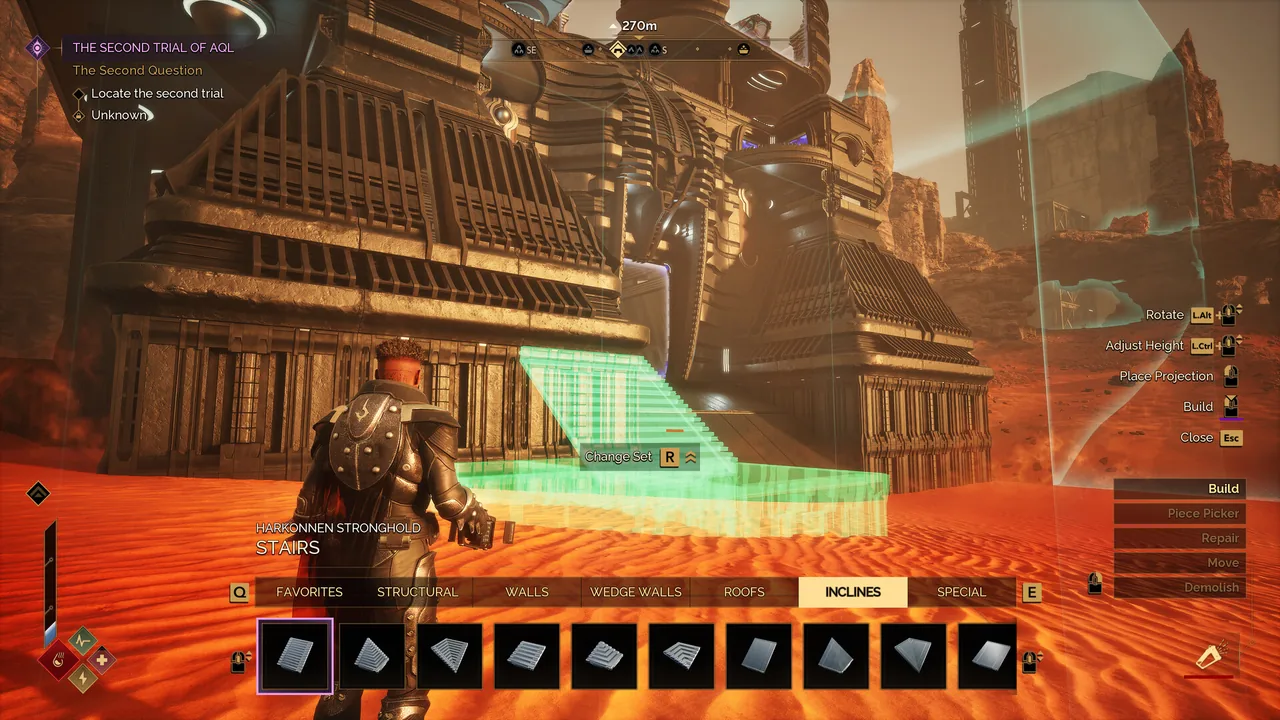
Dune: AwakeningImage: Funcom via Steam -
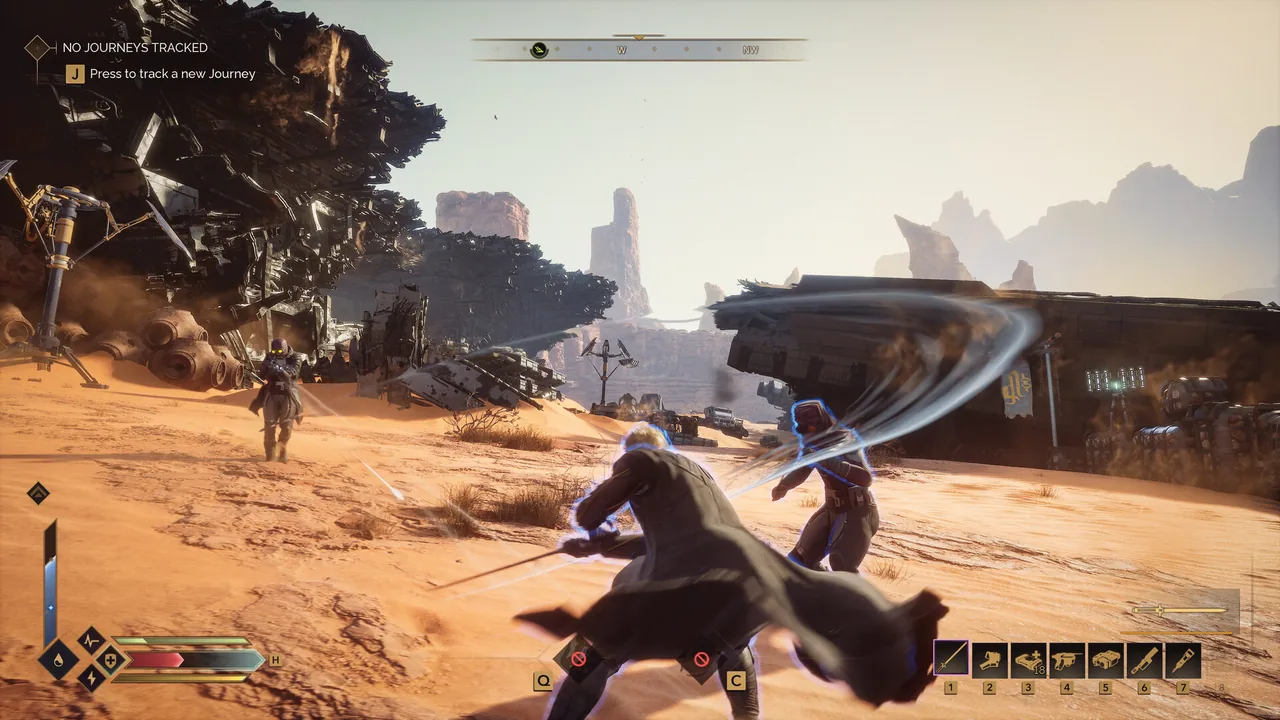
Dune: AwakeningImage: Funcom via Steam -
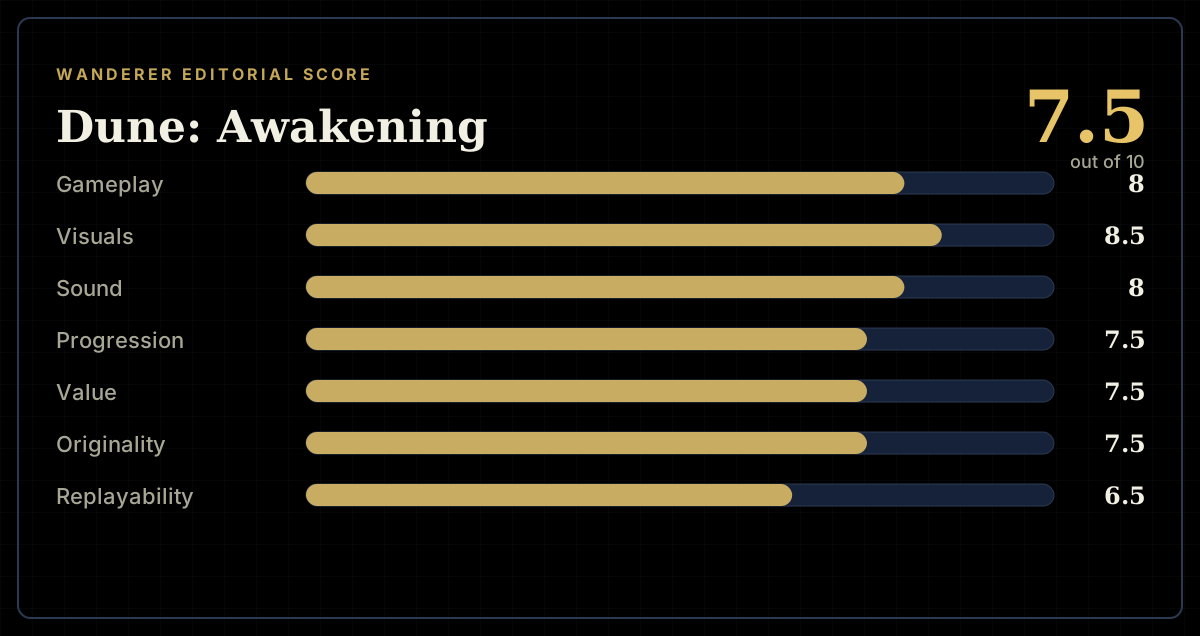
How the review scores each part of the gameWanderer Editorial -
The short versionWanderer Editorial