Game review
Defender's Quest 2: Mists of Ruin
5.4 / 10
- Developer
- Level Up Labs, LLC
- Publisher
- Armor Games Studios
The short version
Biggest strengths
- Reviewers who approach the game on its own terms, rather than as a direct sequel to the beloved original, consistently describe a solid, atmospheric tower-defense RPG with an engaging story and characters with real depth
- Boss battles draw specific praise for their design and spectacle, cited repeatedly as a highlight even among reviewers otherwise disappointed with the sequel
- The soundtrack earns standout praise, with several longtime fans of the original calling it an improvement over the first game's already well-regarded score
Biggest weaknesses
- The overwhelming majority of reviewers, many of them longtime fans and original Kickstarter backers, describe the sequel as a significant step down from Defender's Quest in nearly every system, particularly unit customization and build variety
- Reviewers repeatedly note the absence of features present in the first game, including character creation, a New Game Plus mode, and meaningful endgame content
- Several reviewers describe the completion time as notably short for a long-awaited sequel, with many finishing and unlocking full achievements in 8 to 16 hours against dozens of hours in the original
5.4 / 10
Overview
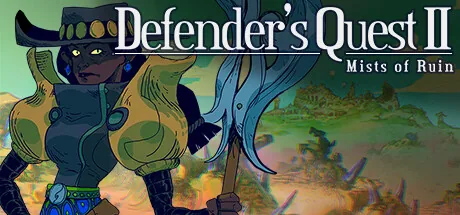
Defender's Quest 2: Mists of Ruin is a tower-defense RPG hybrid from Level Up Labs, the long-awaited sequel to the studio's cult-favorite original, published by Armor Games Studios. Set in the toxic-gas-plagued Shining Lands, it follows Evni Hunt and her crew as they recruit heroes, defend their airship, and push back the encroaching Mirk. It released on Steam on January 30, 2025, more than a decade after it was first funded, and currently sits at a Mixed rating across 278 reviews.
That Mixed score comes almost entirely from one dynamic playing out over and over in the review pool: reviewers who loved the original Defender's Quest arriving with sky-high expectations and finding a sequel that, while functional and occasionally excellent in its own right, strips out much of what made the first game beloved.
Story and Setting
The sequel moves the action to a new setting, the Shining Lands, a once-vibrant region now threatened by a spreading toxic mist called the Mirk. Reviewers have mixed feelings about the narrative shift; some describe the writing as fairly interesting and the characters as having real depth, while others feel the story lacks the emotional hook and lighter charm that made the original's cast memorable, with a few reviewers describing the opening hours as feeling like they'd missed earlier context that was simply never delivered.
The art direction is one of the most divisive points in the entire review pool. Several reviewers praise the new visual style as vibrant and a clear technical step up in animation quality, while a comparable number call the redesigned character art an outright downgrade from the original's more distinctive look, with battlefield enemy and environment art earning more consistent praise than the character portraits used in story scenes.
Gameplay and Mechanics
The core loop will be immediately familiar to tower-defense fans: enemies march along set paths from spawn points toward objectives, and players position recruited heroes to intercept and whittle them down, layering in skills, equipment, and positioning to survive escalating waves. Reviewers broadly agree the fundamentals are sound, and boss encounters in particular draw specific, repeated praise as some of the strongest content in the game, offering spectacle and challenge that several reviewers say rival or exceed the original's best moments.
Where the reception sharply divides is depth. A large majority of reviewers, including many original backers who supported the decade-long development, describe the unit and build systems as significantly simplified compared to the first game, citing the removal of character creation, reduced skill and talent variety, and a general sense that strategic depth was sacrificed in the name of balance. A smaller but vocal group of reviewers pushes back on this framing, arguing that judged on its own merits rather than against inflated expectations, the tower-defense combat remains genuinely solid and enjoyable.
Several reviewers also point to a rebalanced difficulty curve as part of the same trade-off, noting that talent trees now lean heavily toward variants of straightforward damage bonuses rather than the more varied conditional effects some remember from the first game. A few reviewers who stuck with the harder difficulty tiers argue the encounter design still rewards careful positioning and team composition even with the reduced customization, but acknowledge that the ceiling for theorycrafting a truly unique build feels considerably lower than it did in the original.
Progression and Replayability
Progression follows a familiar recruit-and-upgrade structure, with new heroes joining the crew and existing ones gaining skills and equipment as the campaign advances. Reviewers consistently note, however, that the sequel offers noticeably less to chase than its predecessor: no New Game Plus or Plus Mode, no meaningful endgame content, and fewer optional side challenges, leading multiple reviewers to report full completion, including 100% achievements, in as little as 8 to 16 hours, a fraction of the many dozens of hours some reviewers logged in the original across repeat playthroughs.
That shorter runtime isn't universally viewed as a negative. Several reviewers frame it as appropriate for a more focused, less padded experience, and note that difficulty options and a built-in battle speed-up feature, letting fights run at up to 8x speed, make repeat attempts at higher difficulties considerably more approachable than in many genre peers.
A handful of reviewers who completed the campaign on advanced or hero-equivalent difficulty describe a meaningfully tougher back half, with encounter design forcing more deliberate use of the reduced but still functional toolkit, even if they stop short of calling the higher difficulties as replay-worthy as the original's celebrated Hero Mode.
Visual Style and Sound Design
Beyond the divisive character art, reviewers are considerably more united on the game's soundtrack, which draws standout praise across the review pool and is cited by several longtime fans as an improvement over the original's already well-liked score. Battlefield presentation and enemy design also earn consistent compliments, with reviewers describing carefully crafted maps and satisfying visual feedback during combat.
On the technical side, reviewers report the game runs cleanly with few bugs or crashes, aside from an early launch-day issue in which some buyers were briefly served a demo build instead of the full release, an error that was quickly identified and fixed. Beyond that hiccup, performance is one of the less contentious aspects of an otherwise polarizing release.
Verdict
Defender's Quest 2: Mists of Ruin is a competent, sometimes genuinely enjoyable tower-defense RPG that suffers most when measured against the exceptionally high bar its predecessor set over a decade ago. Reviewers who can set those expectations aside find a shorter, more streamlined game with strong boss fights and a great soundtrack; reviewers who came expecting a true successor to Defender's Quest largely describe disappointment at systems that feel gutted rather than refined. New players unfamiliar with the original may find a perfectly solid genre entry here, but longtime fans should temper their expectations considerably before diving in.
Pros and cons
Pros
- Reviewers who approach the game on its own terms, rather than as a direct sequel to the beloved original, consistently describe a solid, atmospheric tower-defense RPG with an engaging story and characters with real depth
- Boss battles draw specific praise for their design and spectacle, cited repeatedly as a highlight even among reviewers otherwise disappointed with the sequel
- The soundtrack earns standout praise, with several longtime fans of the original calling it an improvement over the first game's already well-regarded score
- A built-in speed-up option letting battles run up to 8x speed is singled out as a welcome quality-of-life feature that many tower-defense games still lack
Cons
- The overwhelming majority of reviewers, many of them longtime fans and original Kickstarter backers, describe the sequel as a significant step down from Defender's Quest in nearly every system, particularly unit customization and build variety
- Reviewers repeatedly note the absence of features present in the first game, including character creation, a New Game Plus mode, and meaningful endgame content
- Several reviewers describe the completion time as notably short for a long-awaited sequel, with many finishing and unlocking full achievements in 8 to 16 hours against dozens of hours in the original
- The character art style draws a genuinely divided reaction, with a substantial portion of reviewers calling the new designs a downgrade from the first game's more distinctive look
Screenshots
-
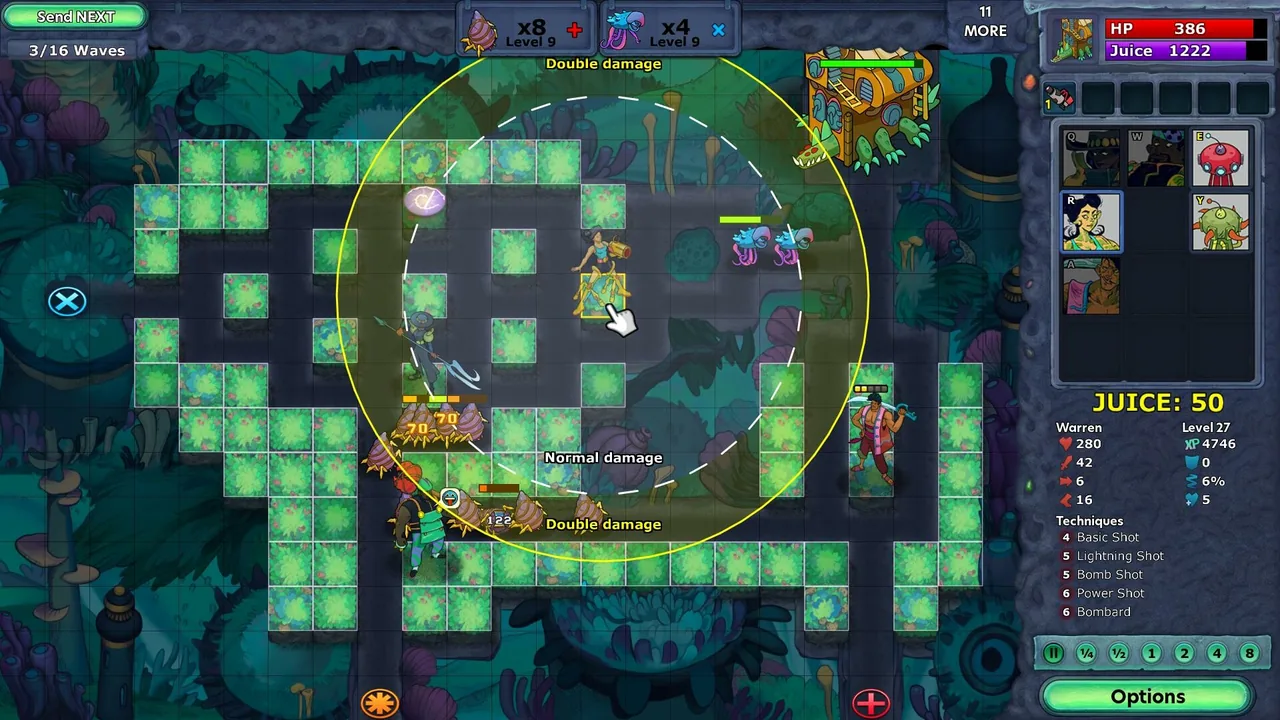
Positioning heroes along the enemy path, with double-damage zones adding a layer of tactical placementImage: Level Up Labs, LLC via Steam -
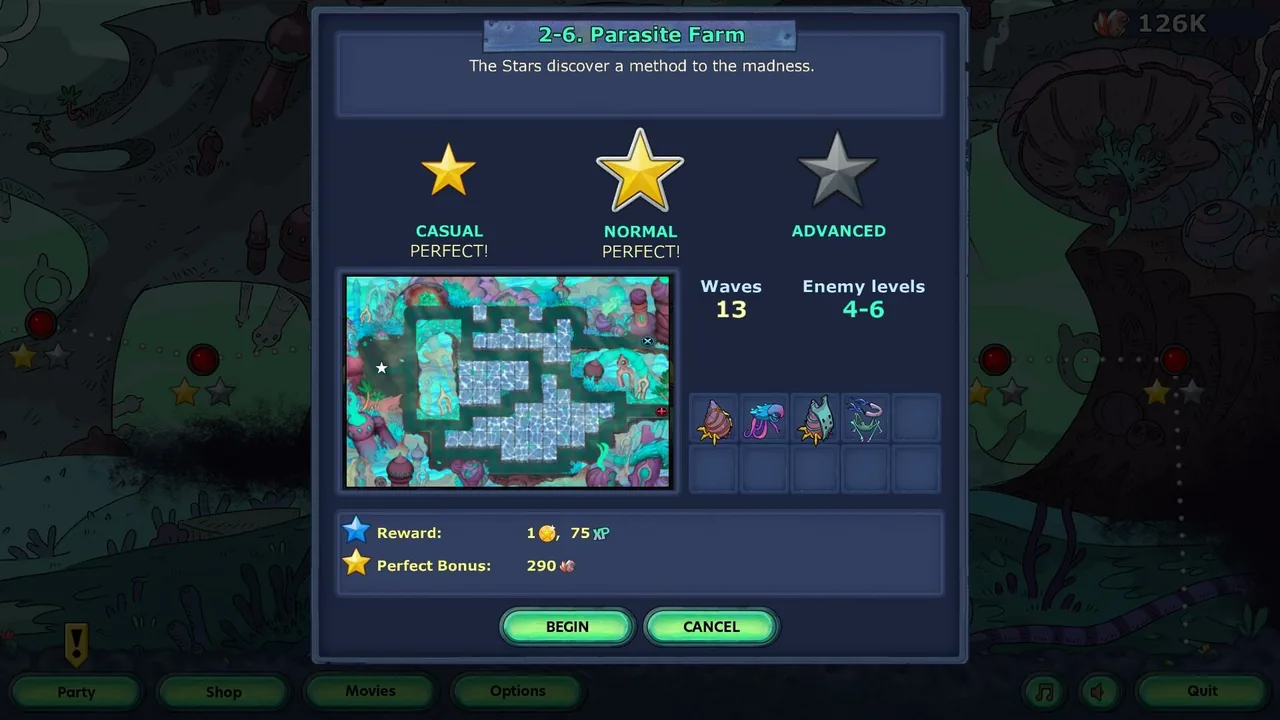
Choosing a difficulty tier before a mission, with rewards scaling for a perfect clearImage: Level Up Labs, LLC via Steam -
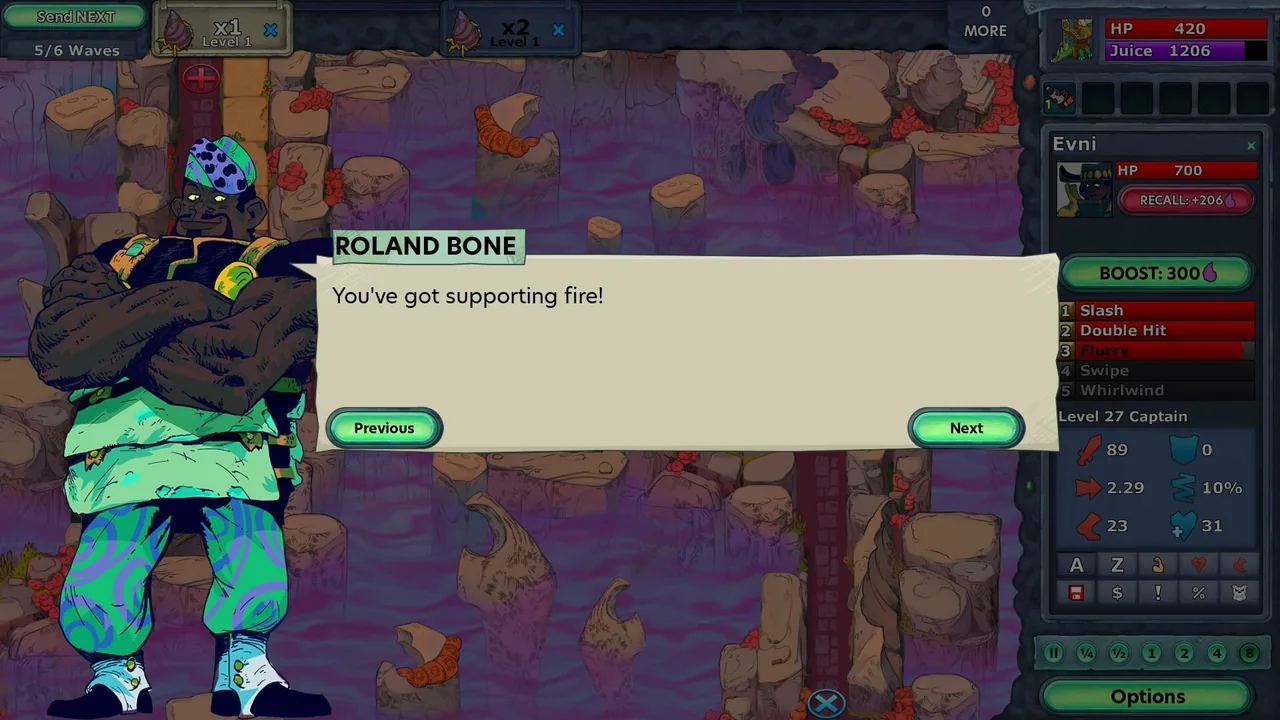
A story beat between waves, with the crew's stats and skill loadout displayed alongside the dialogueImage: Level Up Labs, LLC via Steam -
Wanderer Game ReviewsWanderer Game Reviews