
Game review
DEEP IN THE DREAD
4.6 / 10
- Developer
- Fast X Play
- Publisher
- Fast X Play
The short version
Biggest strengths
- A genuinely atmospheric, photo-realistic mansion-library setting that multiple reviewers single out as the game's strongest asset
- An interesting horror premise, a librarian left alone in a haunted mansion piecing together a lore-rich diary and notes, that reviewers say delivers real jump scares
- Uncommonly broad language support, including native Kurdish alongside English, Arabic, German, Korean, French, and Italian, that reviewers from that community explicitly praise as meaningful
Biggest weaknesses
- Menu and input handling are broken for some players, with the ESC key locking out movement controls entirely and forcing awkward workarounds mid-playthrough
- Multiple reviewers report serious performance problems, constant lag, freezing, and crashes that made completing the game difficult or impossible on their hardware
- The story and its two apparent endings are muddled enough that several reviewers, including ones who otherwise enjoyed it, come away confused about what actually happened
4.6 / 10
Overview
DEEP IN THE DREAD is a first-person horror mystery game developed and published by Fast X Play, released on Steam on January 20, 2025. It follows Stella, a librarian working at the old Hoverfield Mansion who stays behind while her colleagues head to a nearby pub, only to discover the building harbors genuine paranormal activity. Built around exploration, note and diary collection, and puzzle-solving across a photo-realistic mansion setting, it's a small, story-driven horror experience from what the developer describes as a young, first-time team. The reception sits at Mixed across a small pool of 10 reviews, with 6 recommending it.
That's a modest sample even by small-indie standards, but the reviews that exist are detailed and specific enough to paint a fairly clear picture: a genuinely appealing atmosphere and premise undercut by real, reviewer-verified technical problems that range from broken menu input to outright crashes.
Story and Presentation
The setup, a librarian left alone in a haunted mansion, piecing together the building's history through notes and an in-game diary, earns consistent praise for atmosphere. Reviewers repeatedly call the mansion setting beautiful and the photo-realistic visual style a genuine strength for a first-time team, and several specifically credit the jump scares with landing effectively against that backdrop. One reviewer, reviewing in the context of the Kurdish-language community the game's writing draws from, calls it one of the best experiences available in that language on Steam, a detail underscoring how meaningfully the game's unusually broad localization, including native Kurdish support alongside English, Arabic, German, Korean, French, and Italian, resonated with at least part of its audience.
Where the story falters is coherence. Multiple reviewers, including ones who otherwise enjoyed the experience, describe the plot as confusing by the end, uncertain whether there are meant to be two distinct endings and unclear on what the game's ghosts and mansion history actually add up to. It reads as a story with real ideas and lore-building ambition that doesn't always land the delivery.
Gameplay and Mechanics
The core loop centers on exploring the mansion, collecting notes and a diary to piece together the lore, and solving puzzles that occasionally require backtracking through earlier areas. Reviewers who got through it without major issues describe the puzzle-and-explore structure as solid for the genre, calling out the "awesome ghosts" and overall found-horror pacing as effective for a roughly one-to-three-hour playthrough.
The gameplay experience is badly undercut for some players by broken input handling. One detailed negative review describes the ESC key locking out forward and backward movement entirely after opening the pause menu, forcing the player to navigate using only strafing controls for a significant stretch of the game, a fundamental usability failure rather than a minor annoyance. A separate reviewer notes the pause function itself doesn't consistently work, requiring the P key as a workaround. These aren't isolated nitpicks, they're the kind of core interaction failures that can make an otherwise functional game feel broken depending on which build a given player encountered.
Progression and Replayability
Progression is linear, built around advancing through the mansion's story beats by finding items and solving puzzles toward one of what appear to be two possible endings. Reviewers who finished it describe a reasonably satisfying sense of closure on the mystery, even if the specifics of the ending left some confused, and the diary-and-notes collection gives completionists a reason to explore more thoroughly than the main objective strictly requires.
That completionist instinct is undermined for at least one reviewer by an achievement bug: despite collecting both books and all items in the game, their achievements failed to register, souring what should have been a clean 100% completion. With no meaningful replay incentive beyond hunting Easter eggs, and the story already muddled on a single playthrough, there's little pulling players back for a second run.
Technical Performance and Value
Performance is the review pool's most serious and most consistently cited concern. Beyond the broken ESC-key input handling, at least one reviewer describes the game as effectively unplayable on their system, citing constant lag and freezing that prevented sessions longer than ten minutes without a crash. Sound balance is separately flagged as inconsistent by a reviewer who otherwise found the game's cultural framing well-intentioned but poorly executed for an English-speaking audience unfamiliar with its source material.
Set against those problems, value is where the game claws back some goodwill. At a price point around two to three dollars, several reviewers, including ones who hit real bugs, describe it as a fair trade for the couple of hours and the scares it delivers, framing their criticism as constructive rather than a reason to avoid it outright. More than one reviewer explicitly frames their feedback as encouragement for a young, first-time development team rather than a dismissal, suggesting the goodwill toward the studio's effort is carrying some of the positive sentiment even where the execution falls short.
Verdict
DEEP IN THE DREAD is a small, ambitious horror debut with a genuinely appealing haunted-library premise and photo-realistic atmosphere that several reviewers say outpaces what they expected from a first-time team, but it's held back by real, reviewer-documented technical problems, broken menu input, performance crashes, and a muddled ending, that go beyond typical small-studio rough edges. For horror fans curious about an atmospheric, story-driven mansion mystery and willing to tolerate the possibility of hitting a serious bug, the low price makes it a low-risk try; players who need a reliably stable experience should wait to see whether the input and performance issues get patched.
Pros and cons
Pros
- A genuinely atmospheric, photo-realistic mansion-library setting that multiple reviewers single out as the game's strongest asset
- An interesting horror premise, a librarian left alone in a haunted mansion piecing together a lore-rich diary and notes, that reviewers say delivers real jump scares
- Uncommonly broad language support, including native Kurdish alongside English, Arabic, German, Korean, French, and Italian, that reviewers from that community explicitly praise as meaningful
- Cheap enough that even reviewers with real complaints describe it as a fair value for the couple of hours it offers
Cons
- Menu and input handling are broken for some players, with the ESC key locking out movement controls entirely and forcing awkward workarounds mid-playthrough
- Multiple reviewers report serious performance problems, constant lag, freezing, and crashes that made completing the game difficult or impossible on their hardware
- The story and its two apparent endings are muddled enough that several reviewers, including ones who otherwise enjoyed it, come away confused about what actually happened
- Achievements fail to register for at least one reviewer despite completing all in-game collection objectives, undercutting the sense of a clean finish
Screenshots
-
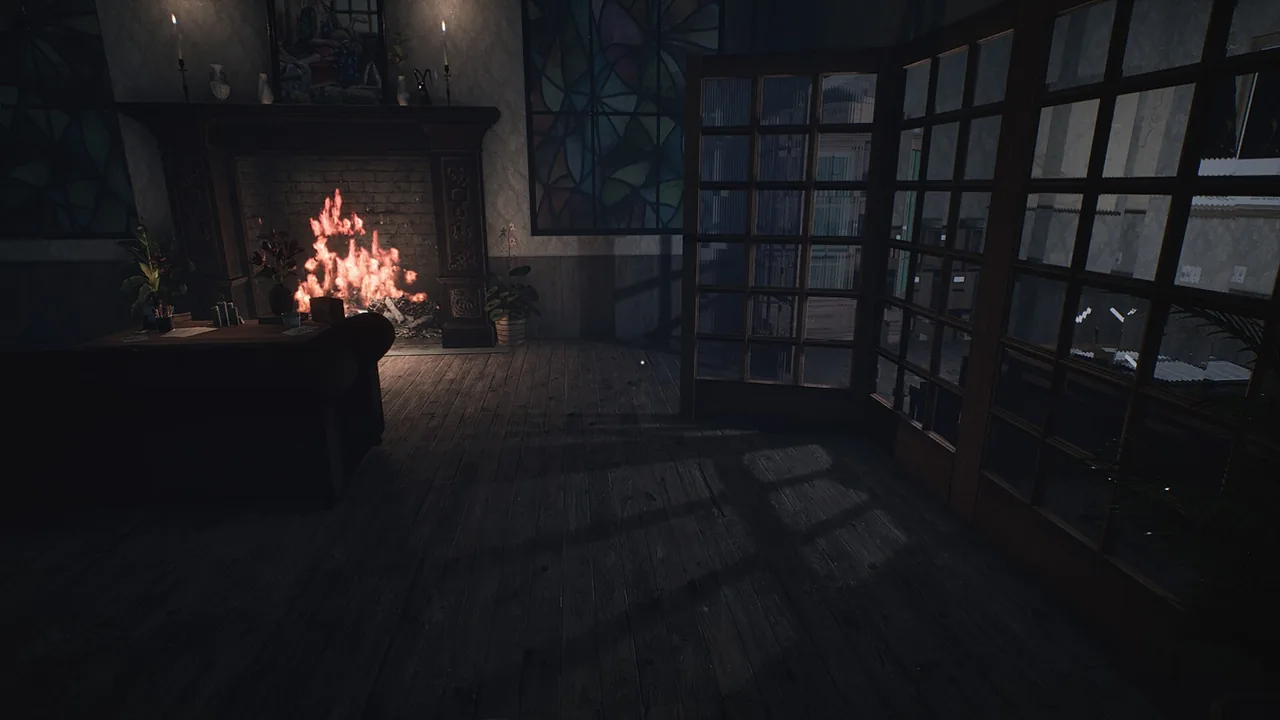
One of the mansion's moodier rooms, a study whose fireplace and stained glass reviewers cite as evidence of the game's atmospheric strengthImage: Fast X Play via Steam -
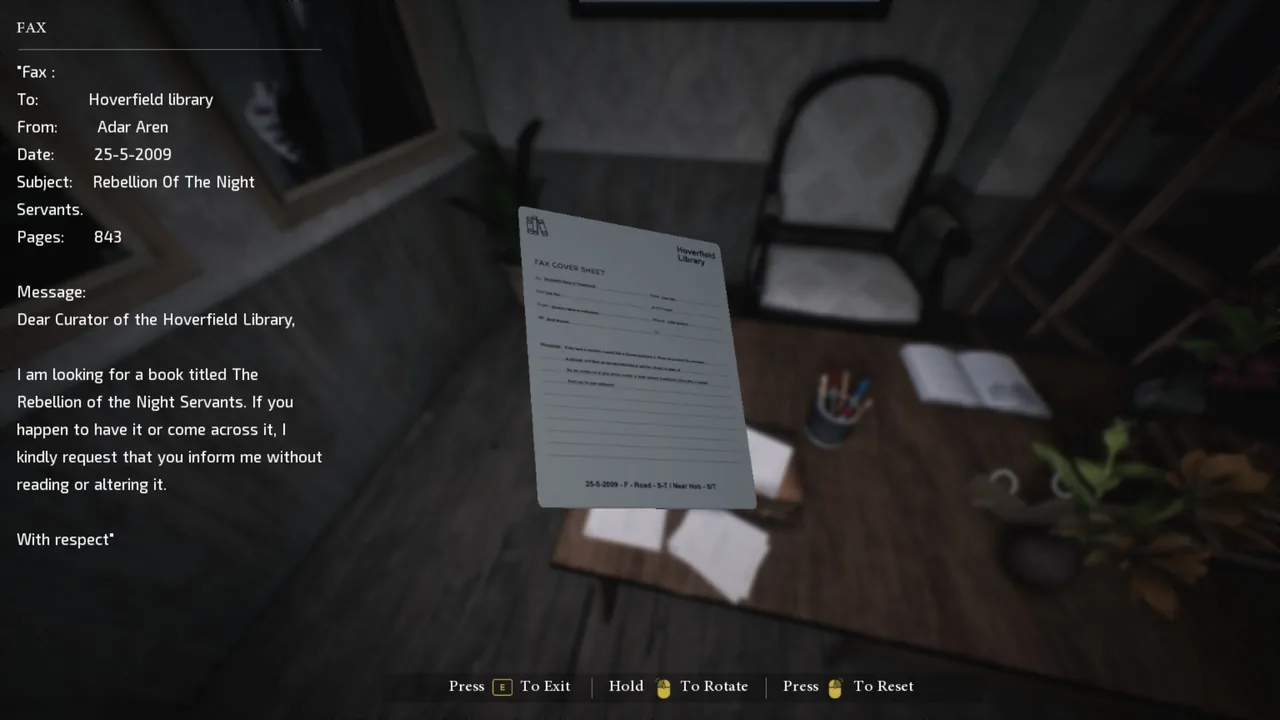
One of the readable documents players collect to piece together the mansion's lore, part of the game's diary-and-notes systemImage: Fast X Play via Steam -
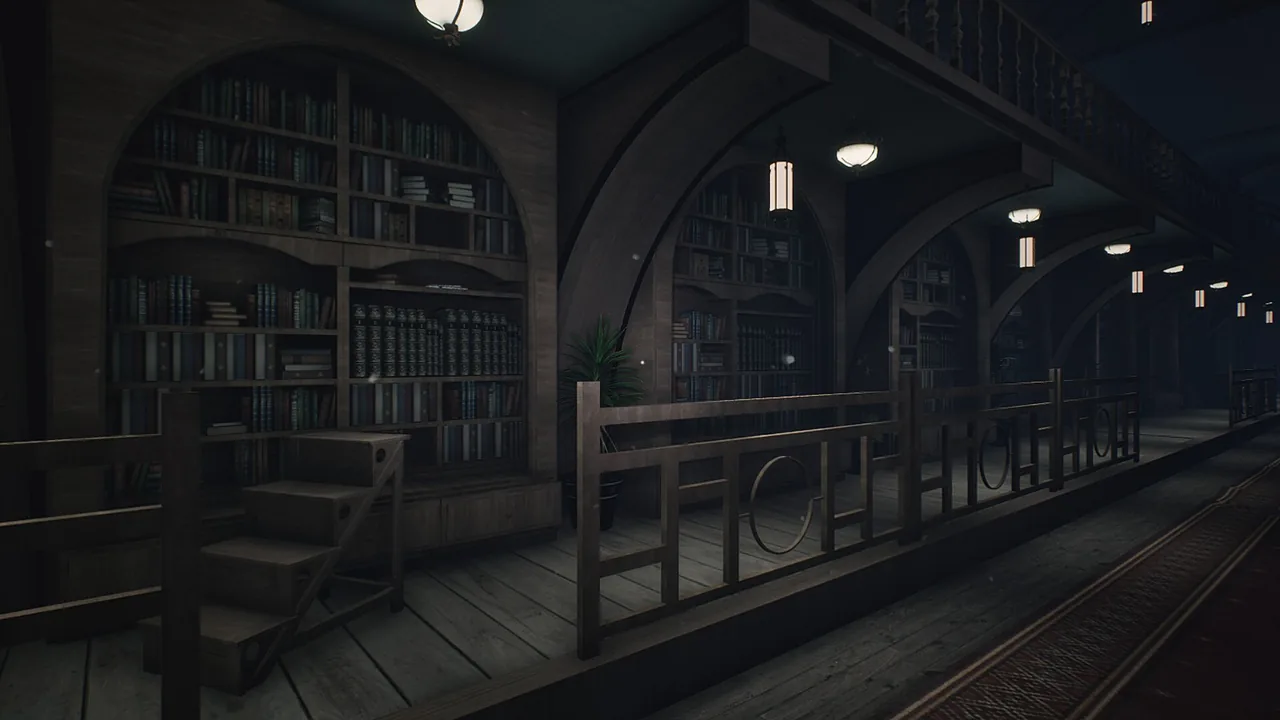
A library corridor lined with arched bookshelf alcoves, part of the Hoverfield Mansion setting reviewers single out as visually strongImage: Fast X Play via Steam -

Wanderer Game ReviewsWanderer Game Reviews