
Game review
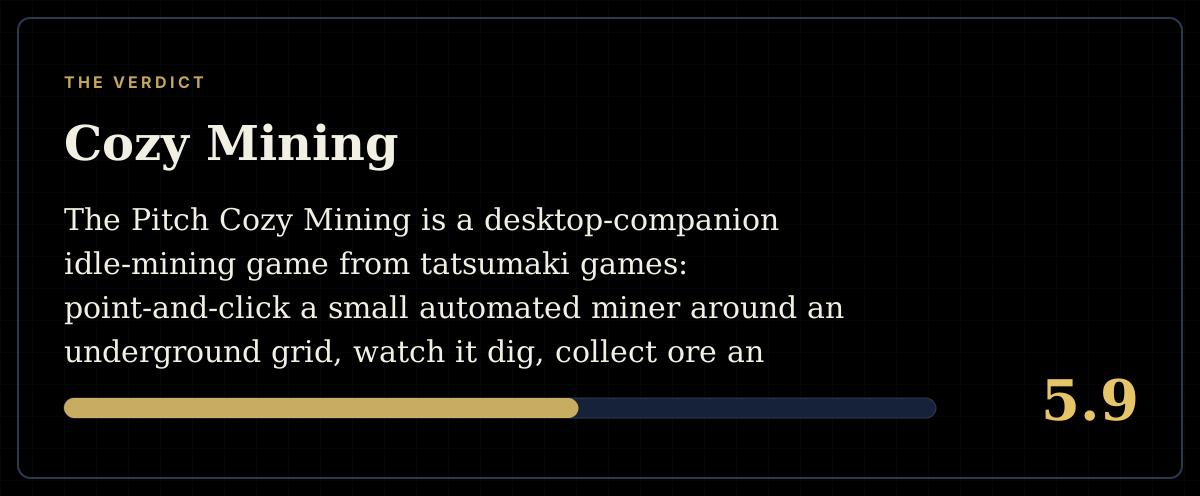
Cozy Mining
5.9 / 10
- Developer
- tatsumaki games
- Publisher
- tatsumaki games
The short version
Biggest strengths
- An unusually fast, visible patch cadence - manual route-drawing, changeable window position, bulk forging, an infinite-depth mode past Floor 1000 and more all shipped within its first three months
- Several reviewers across three different languages explicitly documented flipping their vote from negative to positive after a specific complaint got fixed
- The desktop-companion presentation (transparent background, always-on-top, docks to a screen edge) works as advertised for players running it alongside other work
Biggest weaknesses
- Progression past the early floors is widely described as visually and mechanically flat - "one straight road" is one reviewer's phrase for reaching Floor 1000 with almost no sense of change along the way
- Pathing is inefficient by default and movement speed stays a repeated complaint even after routing fixes, meaning it demands more attention than a true "set and forget" idler
- Several players unfavourably compare it to the developer's own earlier, similarly-priced desktop-mining game, Horihori Drill, calling this one's window footprint and pacing worse for the same idea
5.9 / 10
The Pitch
Cozy Mining is a desktop-companion idle-mining game from tatsumaki games: point-and-click a small automated miner around an underground grid, watch it dig, collect ore and treasure chests along its route, forge and reforge pickaxes and accessories from what it finds, and push deeper toward Floor 1000 (and, as of an update, indefinitely beyond it). It sits on the desktop with a transparent, always-on-top window meant to run alongside whatever else is on screen. Released 26 June 2026 at NZ$11.25 after a demo period during Steam Next Fest, it carries 38 Steam reviews at launch plus three months - "Mostly Positive" at 76%, a real spread rather than a landslide in either direction, which is exactly the kind of split that rewards reading the actual text rather than the aggregate score.
A Developer Who Visibly Listens
The single clearest throughline across the review pool, in English, Japanese, and Traditional Chinese alike, is how directly the developer responded to complaints after launch. The news feed backs this up with an unusually dense patch cadence for a game this size: manual right-click route-drawing added within days of launch after being one of the most-requested features, window-position changes unlocked without requiring a save reset, bulk forging and "merge all" added a few weeks later, and an "Into the Infinite Depths" update that removed the original Floor 1000 depth cap entirely. Several individual reviews are structured explicitly around this responsiveness: one English review states plainly that it was changed from negative to positive because "the developers have pushed out some great updates, added requested features, and actively listened to feedback," with the pathing fix specifically named as the reason. A Japanese review follows the identical arc - originally reluctant to recommend it, then edited in place once route-reservation and old-equipment carryover shipped, closing with direct thanks to the dev team for the changes. That pattern repeating independently across languages is a stronger signal of genuine post-launch support than any single glowing review would be on its own.
What The Loop Actually Feels Like
Where it's working, the loop is simple and does what it says: click a destination, the miner walks over, digs, and auto-collects everything in its path, and closing the laptop or tabbing away doesn't lose progress. Multiple reviewers describe using it specifically as a low-attention companion while working, studying, or half-watching something else - one Japanese review frames it directly as a healthier substitute for reflexively opening YouTube during work, and an English reviewer calls it "the illusion of gaming" for someone with no real time to sit and play. The gear side has some texture to it too: forged pickaxes can be reforged to reroll their stat lines across six categories (mining power, move speed, dig speed, crit rate, luck, max HP), and one English reviewer with over 13,000 minutes logged specifically praises how far the stat-stacking can be pushed.
But the same reviewers who like the ambient-companion pitch are frequently the ones flagging its central tension: it isn't actually a "set it and forget it" idler by default. Pathing doesn't take the most efficient route unless manually corrected, players have to periodically return to open accumulated chests and re-target the miner, and one English review states outright wanting the option to "just mine every block by itself 24/7" without the recurring babysitting. A Traditional Chinese review makes the same point from a different angle: the auto-miner prioritises passing treasure chests over the assigned path, which is convenient in isolation but undercuts the "just let it run" logic the rest of the game is built around, meaning it still needs regular checking in.
The Content Ceiling
The more serious recurring complaint, once past the moment-to-moment loop, is that there's very little that changes between Floor 1 and Floor 1000. One Japanese review, updated after reaching the end, states it plainly across two separate posts: "one straight road" from start to finish, with gear at each 50-floor threshold looking meaningfully stronger only until the next threshold resets that advantage, and treasure at Floor 255 already feeling unrewarding. A Simplified Chinese review that logged full achievement completion in roughly 30 hours makes the same point more bluntly - no real skill ceiling, digging more or faster doesn't unlock anything qualitatively new, just a return to Floor 1 with a slightly higher number. That reviewer still recommended it on balance for the price, but the "basically flat, not much character" framing shows up often enough across languages to read as the dominant honest assessment of the mid-to-late game rather than an outlier gripe. A separate Japanese reviewer, considerably more critical, explicitly steers people toward the developer's own earlier release, Horihori Drill, calling that game's design "comprehensively better" for the same core idea and specifically criticising Cozy Mining's window footprint - the fixed vertical or horizontal orientation chosen at first launch takes up more usable screen space than they wanted, a complaint later addressed by a patch letting players change the window layout after the fact.
Verdict
Cozy Mining lands as a competent, actively-supported desktop idler whose most persuasive advocates are people who watched specific complaints get fixed in near-real time, and whose most persuasive critics are people who finished it and found nothing waiting on the other side beyond a bigger number. Both readings are backed by the same review pool, which is a reasonable place to land for a NZ$11.25 companion game: worth it if the ambient click-and-forge loop and responsive patch history are the draw, thin if depth and variety over a full run are what you're paying for.
Pros and cons
Pros
- An unusually fast, visible patch cadence - manual route-drawing, changeable window position, bulk forging, an infinite-depth mode past Floor 1000 and more all shipped within its first three months
- Several reviewers across three different languages explicitly documented flipping their vote from negative to positive after a specific complaint got fixed
- The desktop-companion presentation (transparent background, always-on-top, docks to a screen edge) works as advertised for players running it alongside other work
Cons
- Progression past the early floors is widely described as visually and mechanically flat - "one straight road" is one reviewer's phrase for reaching Floor 1000 with almost no sense of change along the way
- Pathing is inefficient by default and movement speed stays a repeated complaint even after routing fixes, meaning it demands more attention than a true "set and forget" idler
- Several players unfavourably compare it to the developer's own earlier, similarly-priced desktop-mining game, Horihori Drill, calling this one's window footprint and pacing worse for the same idea
Screenshots
-
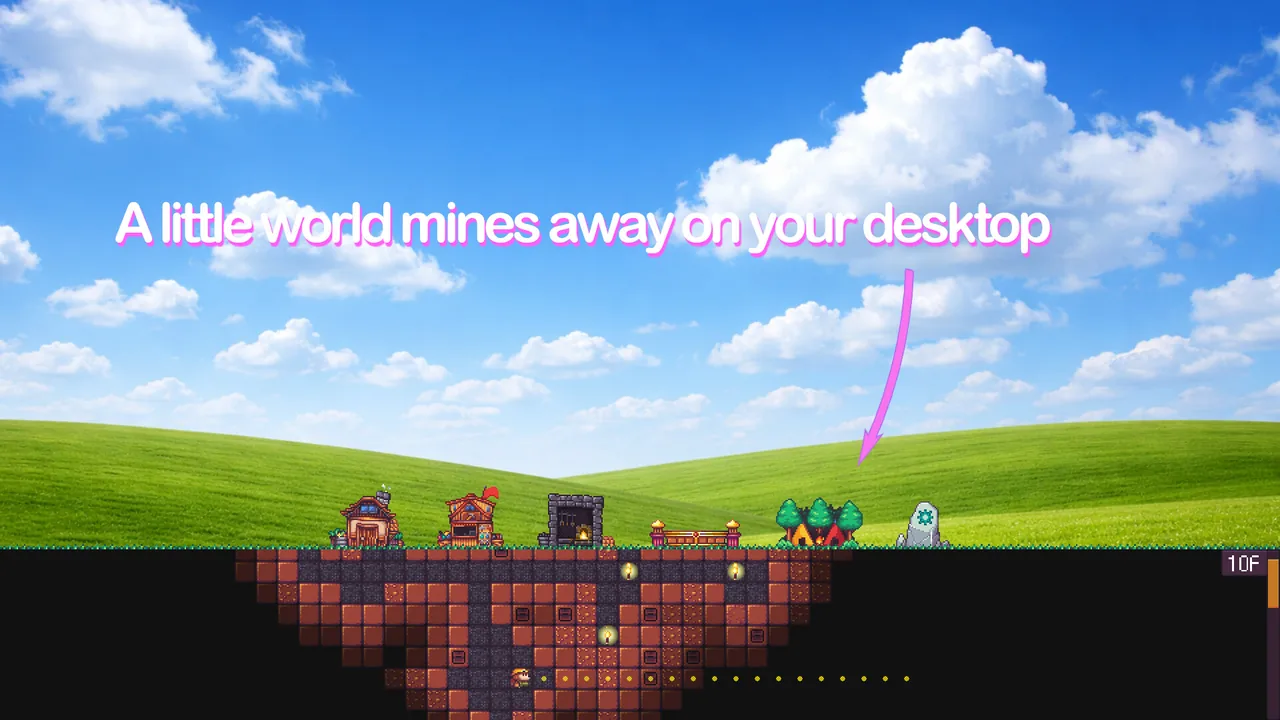
The game's underground grid sits as an overlay on the desktopImage: tatsumaki games via Steam -
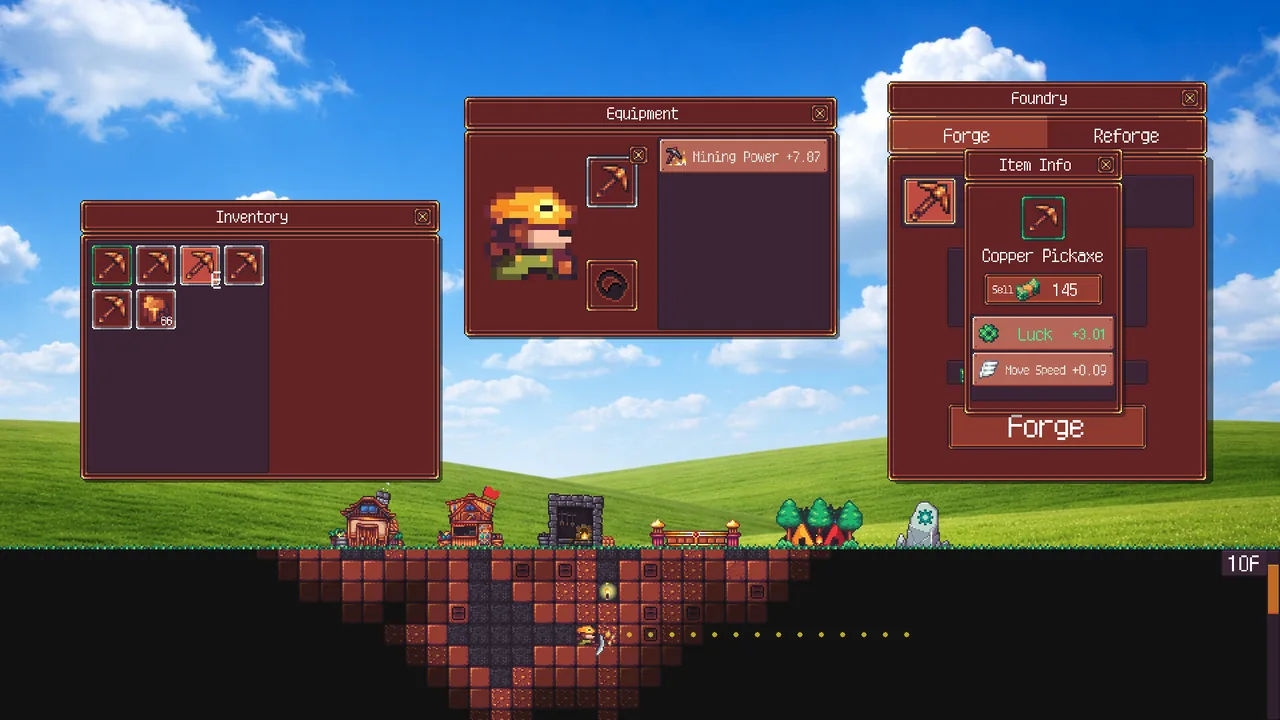
Forging and reforging pickaxes for better statsImage: tatsumaki games via Steam -
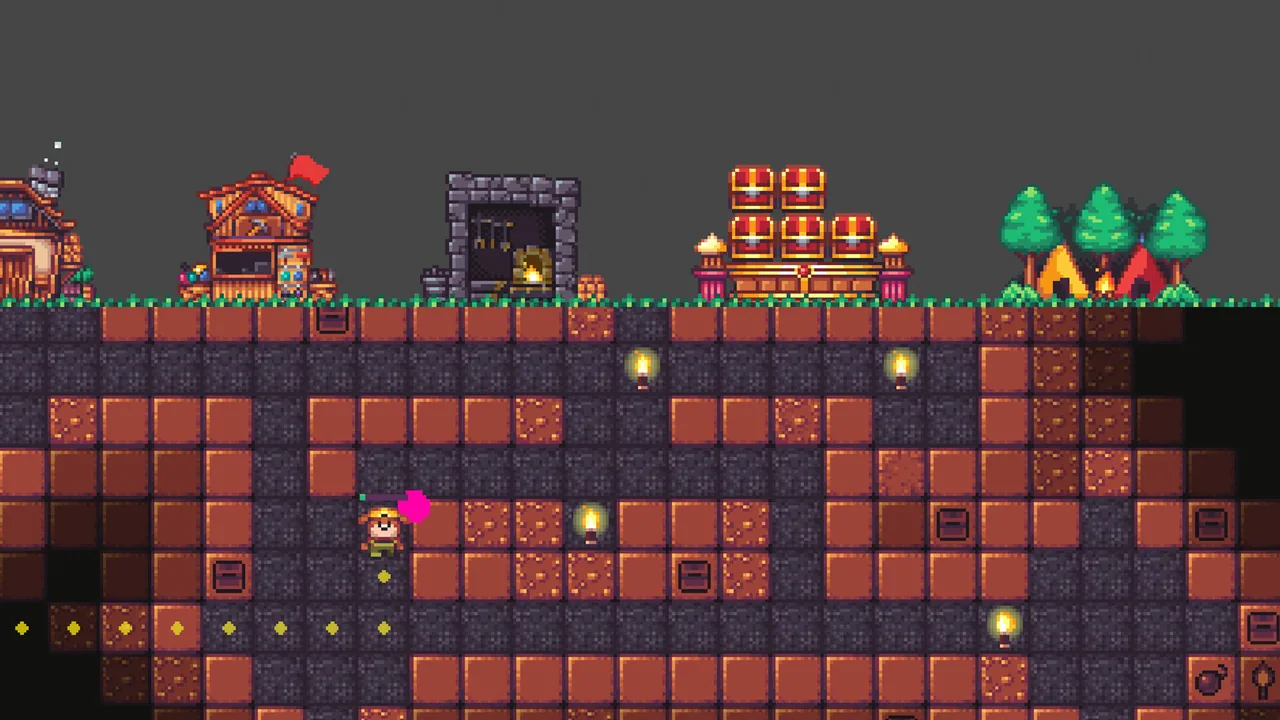
The miner auto-digging its way down through the gridImage: tatsumaki games via Steam -
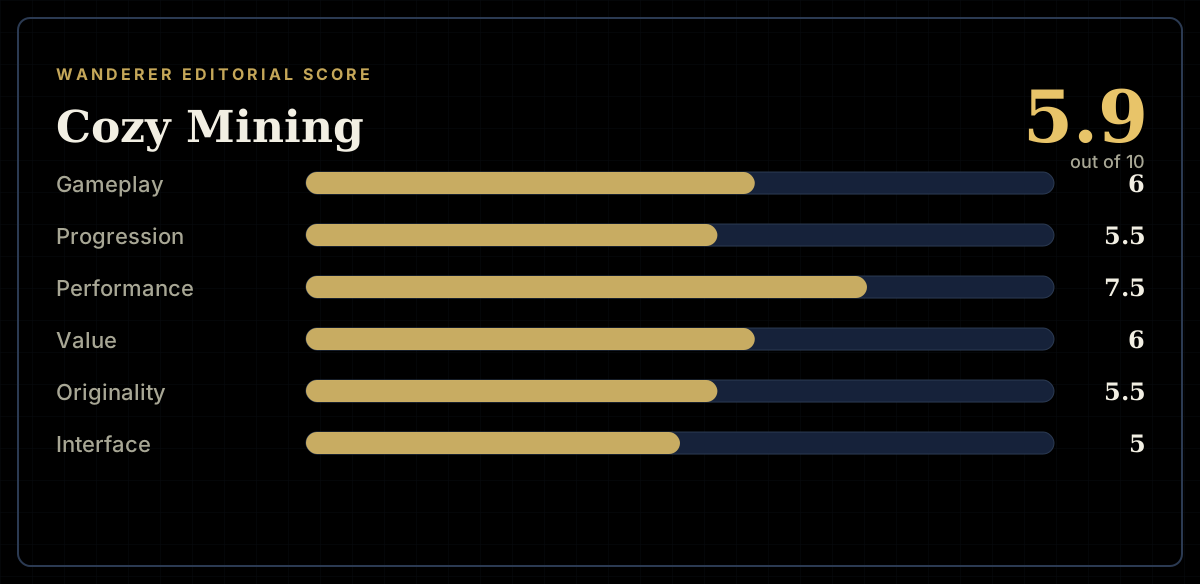
How the review scores each part of the gameWanderer Editorial -

Release details and category scores at a glanceWanderer Editorial -
The short versionWanderer Editorial