Game review
Cards of Divinity
6.5 / 10
- Developer
- Lorrie Vimes
- Publisher
- Lorrie Vimes
The short version
Biggest strengths
- Reviewers consistently praise the art direction, which builds its card designs around real classical paintings by artists like John William Waterhouse and Frederic Leighton, giving the game a distinct gallery-like presentation
- The hybrid of card-based autobattling and turn-based deck-building draws repeated praise as a fresh combination, with several reviewers highlighting the satisfying feeling of scaling heroes stronger with every battle
- A strong online leaderboard and run-to-run variety give reviewers real incentive to keep replaying, with several describing the loop as addictive despite its relatively small scope
Biggest weaknesses
- Multiple reviewers criticize a lack of clear iconography and in-game explanation, forcing players to hover over every card just to understand its effect
- A specific and repeatedly cited bug leaves one starting hero's passive skill non-functional, with reviewers noting no patches have addressed it since launch
- A vocal minority of reviewers find the underlying strategy shallow once the scaling loop is understood, describing runs as converging on a small number of dominant approaches
6.5 / 10
Overview
Cards of Divinity is a Greek mythology-themed roguelike deckbuilder from solo developer Lorrie Vimes, blending card-based autobattling with turn-based strategic decision-making. Players choose one of five Deities and build a deck of legendary heroes, spells, and enhancements to conquer a series of mythological realms, competing along the way on a global leaderboard. It released on Steam on January 10, 2025, and holds a Positive rating across 24 reviews.
Reviewers are drawn in overwhelmingly by the game's distinctive art direction and consistently describe a rewarding, if occasionally unpolished, deckbuilding loop underneath it, with the most persistent criticism centering on unclear interface communication rather than the core gameplay concept itself.
Story and Setting
There's little narrative framing beyond its mythological premise: players embody a Greek Deity assembling an army of heroes to ascend Olympus, meeting a recurring figure called the Blind Poet between conquered realms to reshape their deck. Reviewers don't dwell much on story, since the game is clearly built around its systems and presentation rather than any unfolding plot, but several specifically call out the thematic cohesion between the Greek mythology framing and the classical art used throughout.
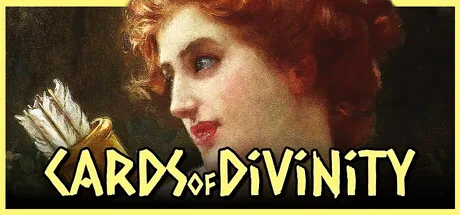
That art is the game's most distinctive hook. Card illustrations are built from real paintings by artists like John William Waterhouse and Frederic Leighton, and reviewers describe the effect as genuinely striking, with one comparing the experience to browsing a gallery. A couple of reviewers note the classical nudity present in some of the source paintings, treating it as an unusual but tasteful artistic choice rather than a gratuitous one, consistent with the developer's own framing of the imagery as celebrated museum-grade art.
Gameplay and Mechanics
The core loop merges deck-building with autobattler-style combat: players field heroes onto a board, cast spells, and watch battles largely resolve through positioning and card synergy rather than direct manual control each turn. Reviewers describe the scaling of heroes across a run as the game's most satisfying element, growing steadily stronger as more cards and enhancements are added to a deck, with several likening the escalating-numbers dopamine hit to genre favorites like Balatro.
Opinions diverge sharply on depth. A number of reviewers describe real strategic layering in choosing which deity, heroes, and spell combinations to pursue, with builds meaningfully changing how a run plays out. Others push back hard, arguing that once the scaling mechanic is understood, most runs converge on a small handful of dominant, low-effort strategies, leaving the game feeling comparatively one-note next to denser deckbuilders. Interface clarity compounds this split: several reviewers specifically criticize the lack of iconography, saying they had to hover over individual cards repeatedly just to understand basic effects, with at least one reviewer walking away confused about how to play at all.
Progression and Replayability
Progression centers on unlocking new heroes, cards, and enhancements while climbing an online leaderboard that tracks how far players can push a single run. Reviewers describe genuine run-to-run variety thanks to the range of heroes and deity combinations available, and several specifically cite the leaderboard as a strong pull to keep coming back and try to place higher, even after clearing the base content.
That replay incentive comes with a real caveat: a specific and repeatedly cited bug leaves one of the starting heroes, Hercules, with a non-functional passive skill, and multiple reviewers note the game has gone without a patch addressing it for an extended stretch after launch, raising doubts about how actively the game will continue to be supported and refined.
Visual Style and Sound Design
Presentation is unanimously the game's strongest asset in the review pool. Beyond the classical card art itself, reviewers repeatedly praise the visual effects and sound design accompanying battles, describing satisfying impact feedback and a soundtrack several specifically credit with pulling them into "one more run" territory. A few reviewers highlight small technical rough edges, including minor resolution and display issues when playing on Steam Deck and the absence of a windowed display mode on desktop.
Taken together, reviewers consistently describe the audiovisual package as punching well above what they expected from a solo-developed release, even when they have reservations about the underlying strategic depth.
The sound design in particular draws specific attention for how it reinforces the mythological theme, with reviewers describing choral and orchestral cues that make casting spells and defeating rival deities feel appropriately weighty. Combined with the painterly card frames, several reviewers note that Cards of Divinity is one of the more visually cohesive small-team roguelikes they've played recently, with almost nothing about the presentation feeling like a placeholder or afterthought even where the underlying systems show rougher edges.
Support and communication with the developer are another recurring thread. A few reviewers specifically describe positive, direct interactions with Lorrie Vimes, including responsiveness to player feedback and enthusiasm about the game's reception, which several credit with giving them more confidence that the outstanding bugs and interface gaps will eventually be addressed, even as others remain skeptical given the lack of visible patches since launch.
Verdict
Cards of Divinity pairs a genuinely striking classical art style with an engaging, if occasionally shallow, deckbuilding-autobattler hybrid, and for its modest price most reviewers feel it delivers a satisfying, replayable loop worth the cost of entry. Its unclear iconography, a persistent unfixed hero bug, and a strategic ceiling some reviewers find too low hold it back from greatness, but as a stylish solo-developer take on the roguelike deckbuilder formula, it's an easy recommendation for players drawn to its distinctive Greek mythology presentation.
Pros and cons
Pros
- Reviewers consistently praise the art direction, which builds its card designs around real classical paintings by artists like John William Waterhouse and Frederic Leighton, giving the game a distinct gallery-like presentation
- The hybrid of card-based autobattling and turn-based deck-building draws repeated praise as a fresh combination, with several reviewers highlighting the satisfying feeling of scaling heroes stronger with every battle
- A strong online leaderboard and run-to-run variety give reviewers real incentive to keep replaying, with several describing the loop as addictive despite its relatively small scope
- Reviewers widely agree the roughly $7 asking price represents strong value for the amount of polish and replay value on offer
Cons
- Multiple reviewers criticize a lack of clear iconography and in-game explanation, forcing players to hover over every card just to understand its effect
- A specific and repeatedly cited bug leaves one starting hero's passive skill non-functional, with reviewers noting no patches have addressed it since launch
- A vocal minority of reviewers find the underlying strategy shallow once the scaling loop is understood, describing runs as converging on a small number of dominant approaches
- A handful of reviewers report minor display and resolution issues on Steam Deck, along with a general lack of windowed-mode support
Screenshots
-
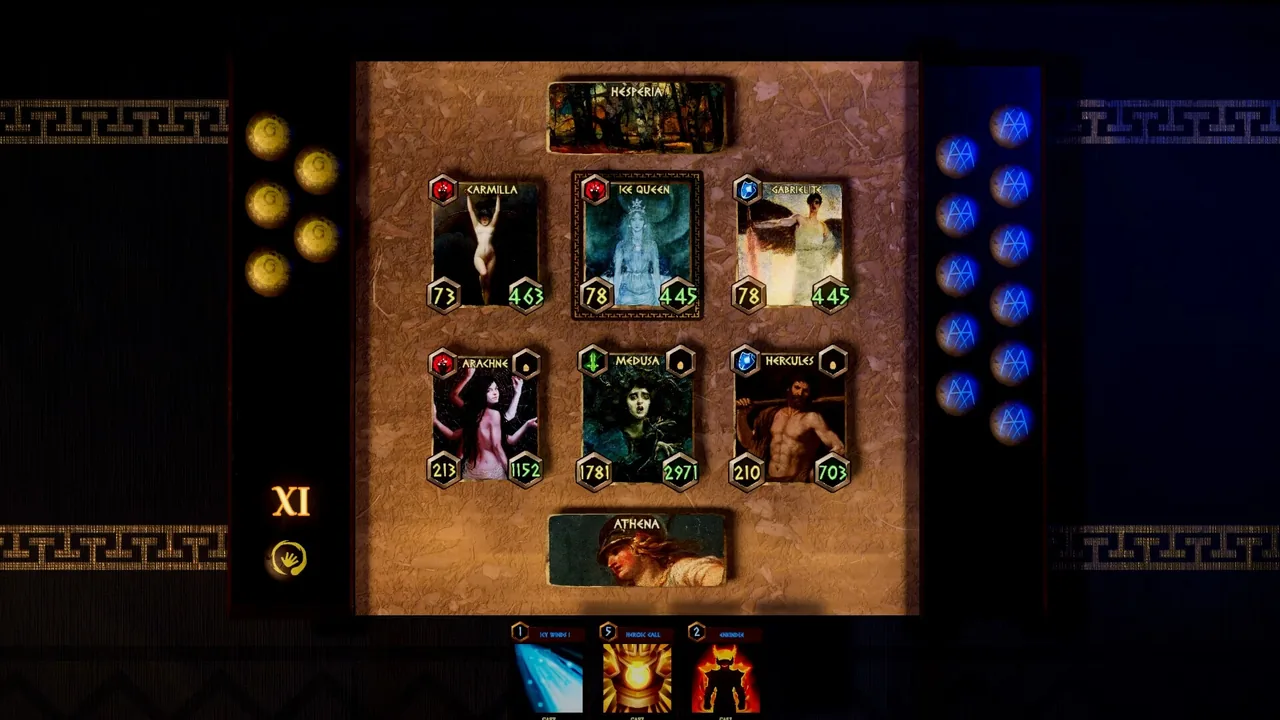
A mid-battle board state, with hero cards drawn from classical paintings tracking health and power as a run scales upImage: Lorrie Vimes via Steam -
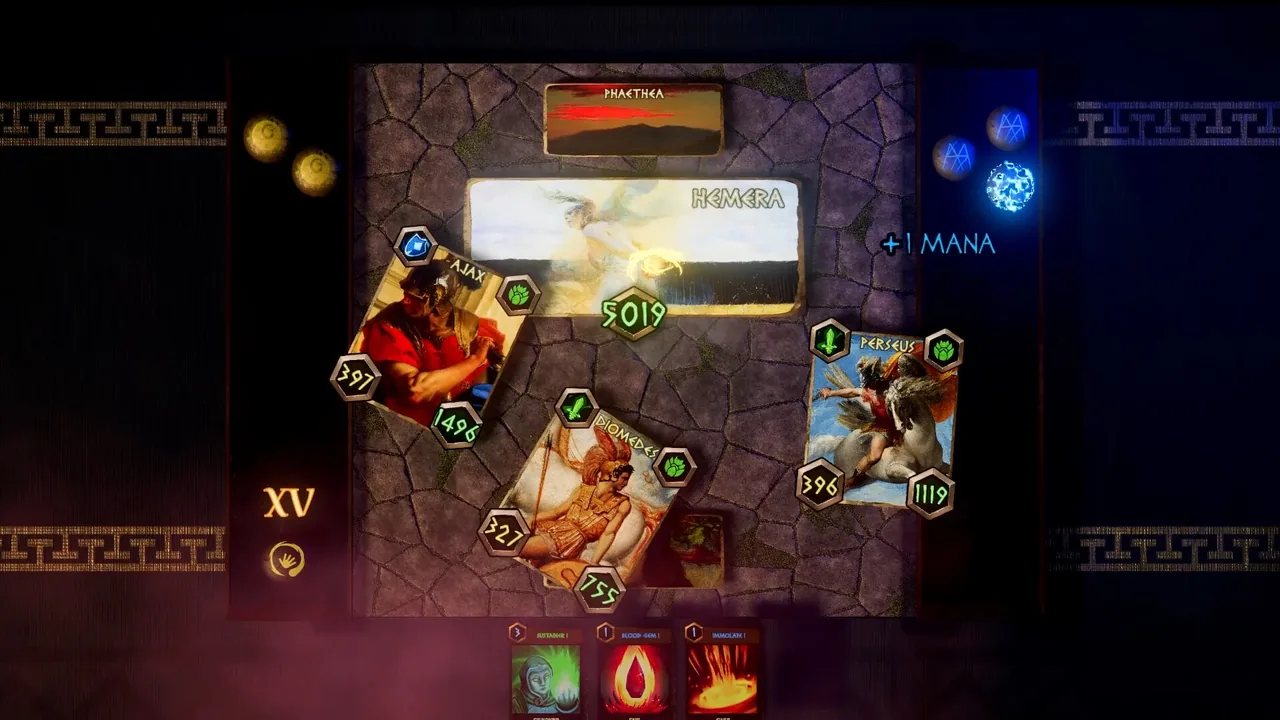
A later-run battlefield where scaled hero stats climb into the thousands, illustrating the game's escalating power curveImage: Lorrie Vimes via Steam -
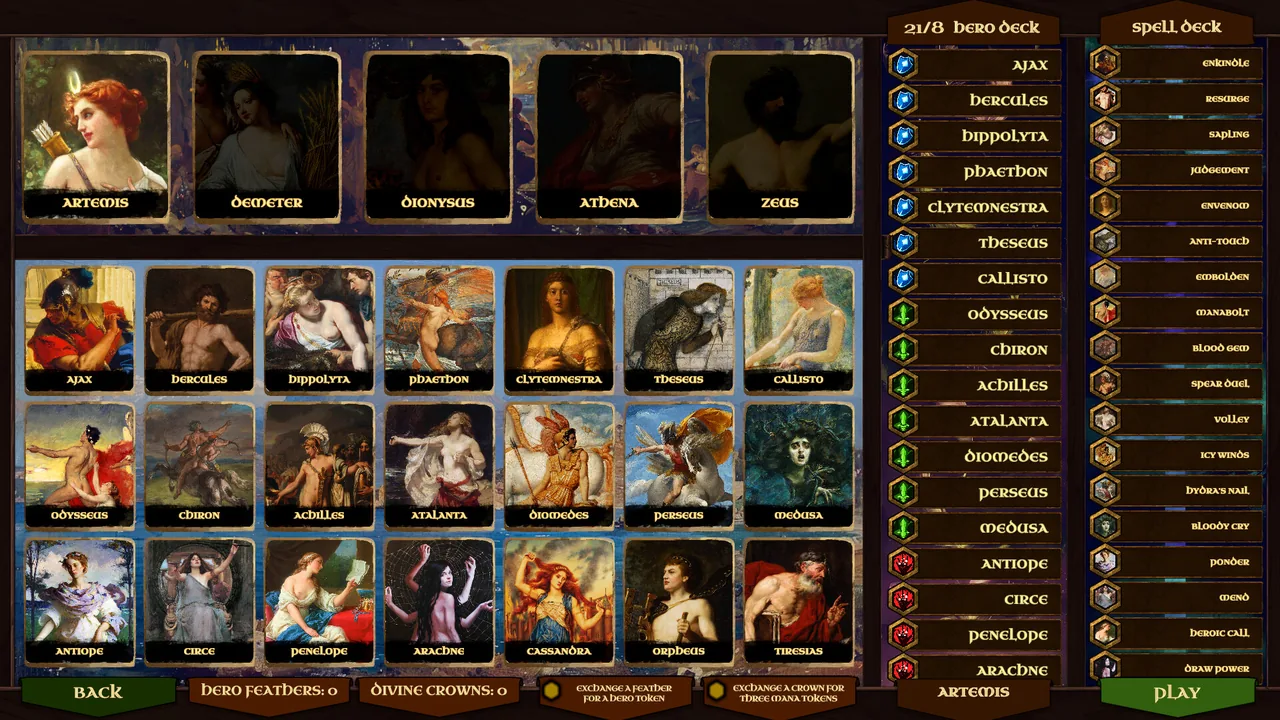
The deity and hero selection screen, where players assemble a starting deck from a roster of mythological figures rendered in classical artImage: Lorrie Vimes via Steam -
Wanderer Game ReviewsWanderer Game Reviews