
Game review
BLADECHIMERA
6.9 / 10
- Developer
- Team Ladybug
- Publisher
- PLAYISM
The short version
Biggest strengths
- Gorgeous, highly detailed pixel art and sprite animation, especially during boss fights, is widely called the game's single biggest visual selling point
- A 'warp anywhere on the map' traversal ability draws consistent praise as an exceptional quality-of-life feature that eliminates most genre backtracking
- Combat blending swords, firearms, and the shapeshifting companion Lux earns broad praise for feeling tight, responsive, and varied
Biggest weaknesses
- A large share of reviewers, including longtime Team Ladybug fans, criticize repetitive level design built from long, flat corridors with recycled enemy placements
- Progression leans heavily on story-gated keys and doors rather than earned traversal abilities, leaving some reviewers feeling exploration stays samey
- Numerous side quests are criticized as generic fetch-and-kill padding rather than meaningful content
6.9 / 10
Overview
BLADECHIMERA is a metroidvania from Team Ladybug, the studio behind Touhou Luna Nights and Record of Lodoss War: Deedlit in Wonder Labyrinth, published by PLAYISM. It casts players as Shin, an amnesiac demon hunter who strikes an unusual partnership with Lux, a demon capable of shapeshifting into a sword and manipulating time, as the two explore a demon-ravaged version of Osaka in search of Shin's forgotten past. It released on Steam on January 15, 2025, and has built a Very Positive rating across 798 reviews, with 739 recommending it.
Reviewers largely treat this as Team Ladybug's most ambitious and accessible metroidvania yet, praising its combat, art, and standout traversal convenience, while a vocal and detailed minority argues its level design and progression structure represent a genuine step backward from the studio's earlier work.
Story and Setting
Thirty years after a sudden demonic incursion known as the Demon War reshaped the world, a religious faction called the Holy Union has carved out an uneasy peace against the horde. Shin, stripped of his memories, teams up with Lux to fight through this corrupted Osaka and uncover what happened to him and the people he lost. Reviewers describe the amnesia setup as a familiar trope but say it's executed with enough care to remain genuinely interesting, with several specifically praising the chemistry between Shin and Lux as the emotional anchor of the story.
The narrative earns some of the review pool's most unreserved praise: reviewers finishing the game after full completion runs single out the story and character writing as among their favorite elements, and even critics who otherwise found the game disappointing tend to carve out an exception for its story and cast, calling the writing "pretty great" even in reviews that ultimately can't recommend the game as a whole.
Gameplay and Mechanics
Combat mixes melee weapons like greatswords and whips with firearms, all built around Lux's ability to become a sword, shield, and time-manipulating tool depending on the situation. Reviewers repeatedly describe the moment-to-moment feel as tight and responsive, with several specifically praising the absence of an over-relied-upon parry mechanic in favor of a broader toolkit of guns, blades, and Lux's own powers. Boss fights draw particularly strong praise, described by multiple reviewers as spectacles built around genuinely impressive animation work rather than pure difficulty checks.
The game's most celebrated mechanical feature, by a wide margin, is its map-warp ability: once unlocked, players can teleport to nearly any previously visited point on the map instantly, which reviewers credit with essentially eliminating the tedious backtracking that defines much of the metroidvania genre. Several reviewers explicitly recommend BLADECHIMERA to players who love the genre in principle but burn out on its traditional demands, framing the warp system as a genre-defining convenience others should copy. That said, a substantial and detailed cluster of critical reviewers pushes back hard on the moment-to-moment level design itself, describing long stretches of flat corridors populated with the same two or three recycled enemy types, arguing that the combat variety on paper doesn't translate into varied encounter design in practice.
Progression and Replayability
Character growth comes through a skill tree unlocked as Shin defeats demons and gains levels, alongside mobility upgrades like double-jump and the warp ability itself. Several reviewers note that unlike some Team Ladybug titles, much of BLADECHIMERA's map opens up through story-driven keys and events rather than earned traversal abilities, a structural choice that a number of critical reviewers single out as a regression, arguing it makes exploration feel more like following a checklist than genuinely earning access to new areas.
Side quests add a layer of extra content on top of the main story, but they're one of the most consistently criticized elements in the review pool, with multiple reviewers describing them as generic fetch-and-kill busywork that pads playtime without adding meaningful variety. Completion-focused players report clearing the story, all bosses, and side content in roughly 8 to 20 hours depending on thoroughness, which several reviewers frame as appropriately tight for the genre even if they wished for more content, echoing a recurring observation that Team Ladybug games are excellent but consistently on the shorter and more linear side.
Visual Style and Sound Design
Presentation is close to universally praised. Reviewers repeatedly call the pixel art and sprite animation some of the best in the genre, with boss encounters singled out as visual highlights thanks to elaborate, detailed animation work, and background art described as similarly meticulous. Several reviewers directly compare the audiovisual package to Castlevania: Symphony of the Night, citing both the atmosphere and the quality of the soundtrack, which multiple reviewers describe as an outstanding, driving accompaniment to combat and exploration alike.
Technical performance draws little complaint; multiple reviewers note the game runs well even on modest hardware, and controls are consistently described as tight and responsive across both platforming and combat. The one recurring technical frustration is the lack of an auto-save feature, which several reviewers say has cost them meaningful chunks of progress after an unexpected death, recommending that new players make a habit of returning to save points more often than the game's pacing might otherwise suggest.
Verdict
BLADECHIMERA is a visually stunning, mechanically accessible metroidvania that leans on its beautiful presentation, satisfying combat toolkit, and an exceptional warp-based traversal system to stand out from a crowded genre. Its story and characters land well even with skeptical reviewers, but a genuine and detailed split emerges around its level design and progression, with a significant portion of the review pool, including longtime fans of the studio, arguing that repetitive corridors and padding side quests hold it back from matching Team Ladybug's earlier work. For players who want a gorgeous, forgiving entry point into metroidvanias, it's an easy recommendation; genre veterans hoping for the studio's tightest design yet may come away wanting more.
Pros and cons
Pros
- Gorgeous, highly detailed pixel art and sprite animation, especially during boss fights, is widely called the game's single biggest visual selling point
- A 'warp anywhere on the map' traversal ability draws consistent praise as an exceptional quality-of-life feature that eliminates most genre backtracking
- Combat blending swords, firearms, and the shapeshifting companion Lux earns broad praise for feeling tight, responsive, and varied
- Positioned by many reviewers as a more accessible, less punishing metroidvania, recommended as a palate cleanser for players burned out on harder genre entries like Hollow Knight or Nine Sols
Cons
- A large share of reviewers, including longtime Team Ladybug fans, criticize repetitive level design built from long, flat corridors with recycled enemy placements
- Progression leans heavily on story-gated keys and doors rather than earned traversal abilities, leaving some reviewers feeling exploration stays samey
- Numerous side quests are criticized as generic fetch-and-kill padding rather than meaningful content
- The absence of an auto-save feature frustrates some reviewers, who report losing meaningful progress to unexpected deaths
Screenshots
-
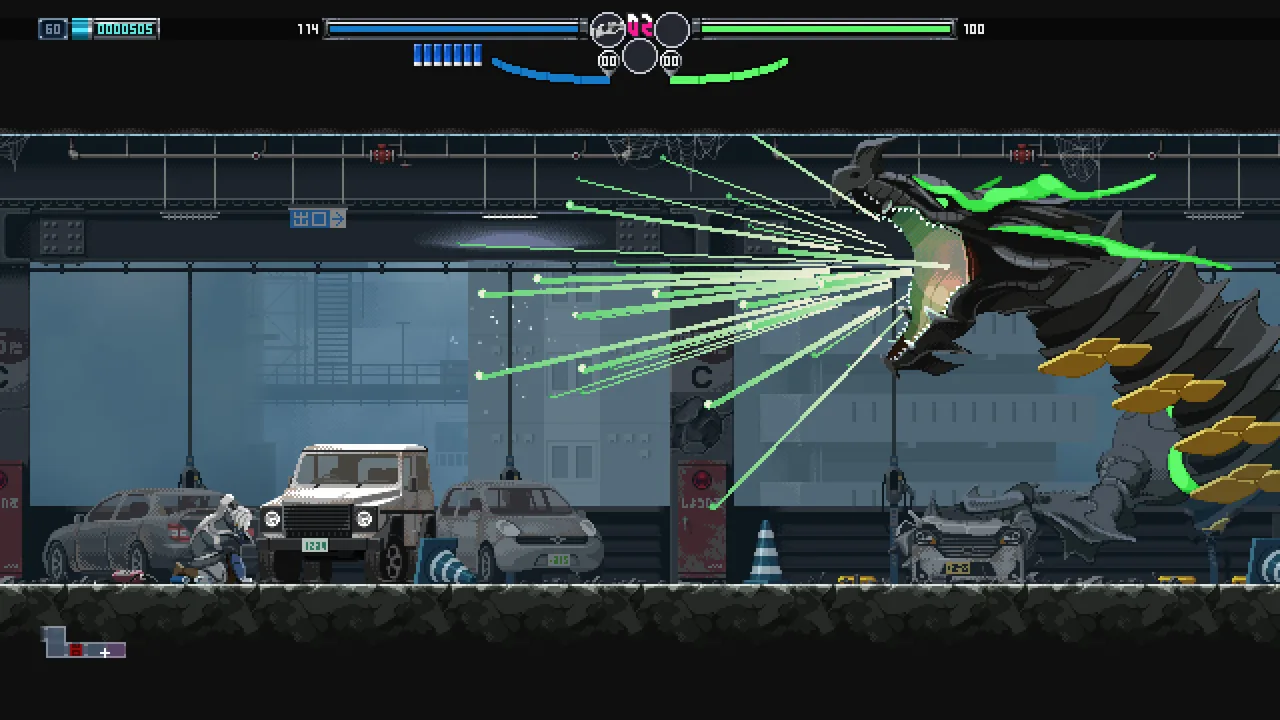
A boss encounter against a massive serpentine demon on a foggy city street, the kind of elaborate fight reviewers single out as a visual highlightImage: PLAYISM via Steam -
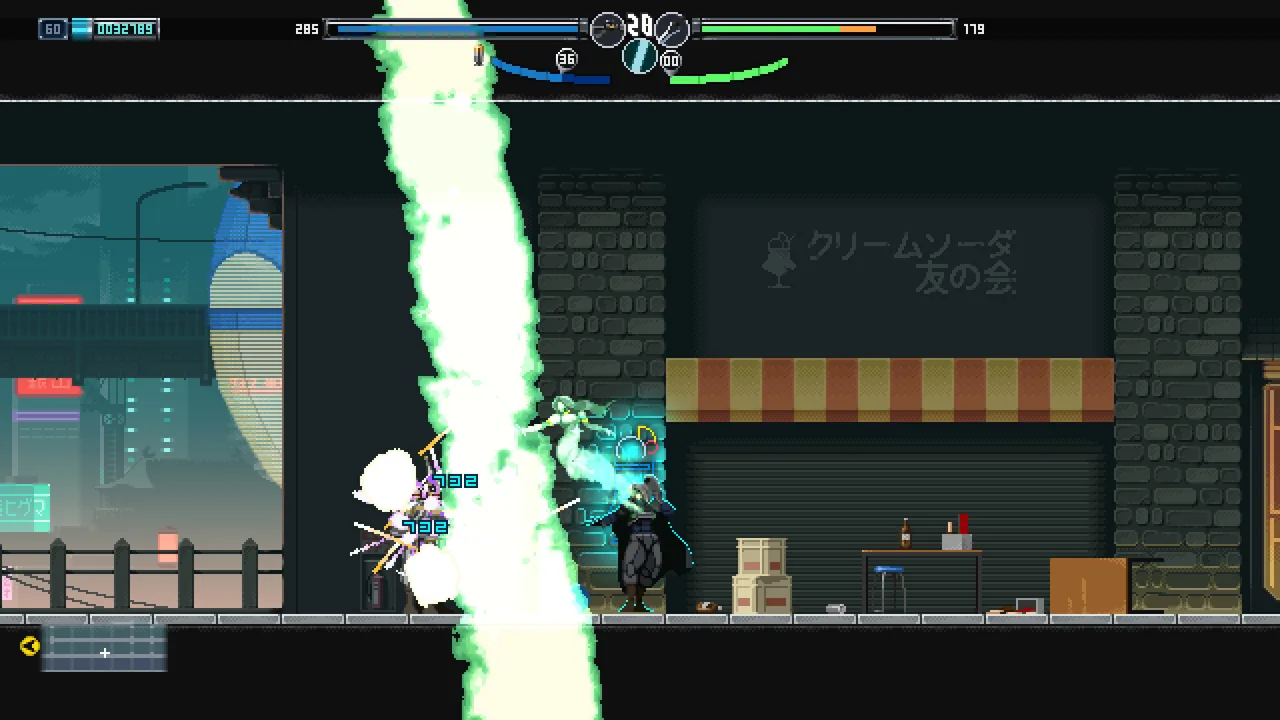
A close-quarters clash against a spectral enemy, lit by a surging beam of green energy in a neon-tinged back alleyImage: PLAYISM via Steam -
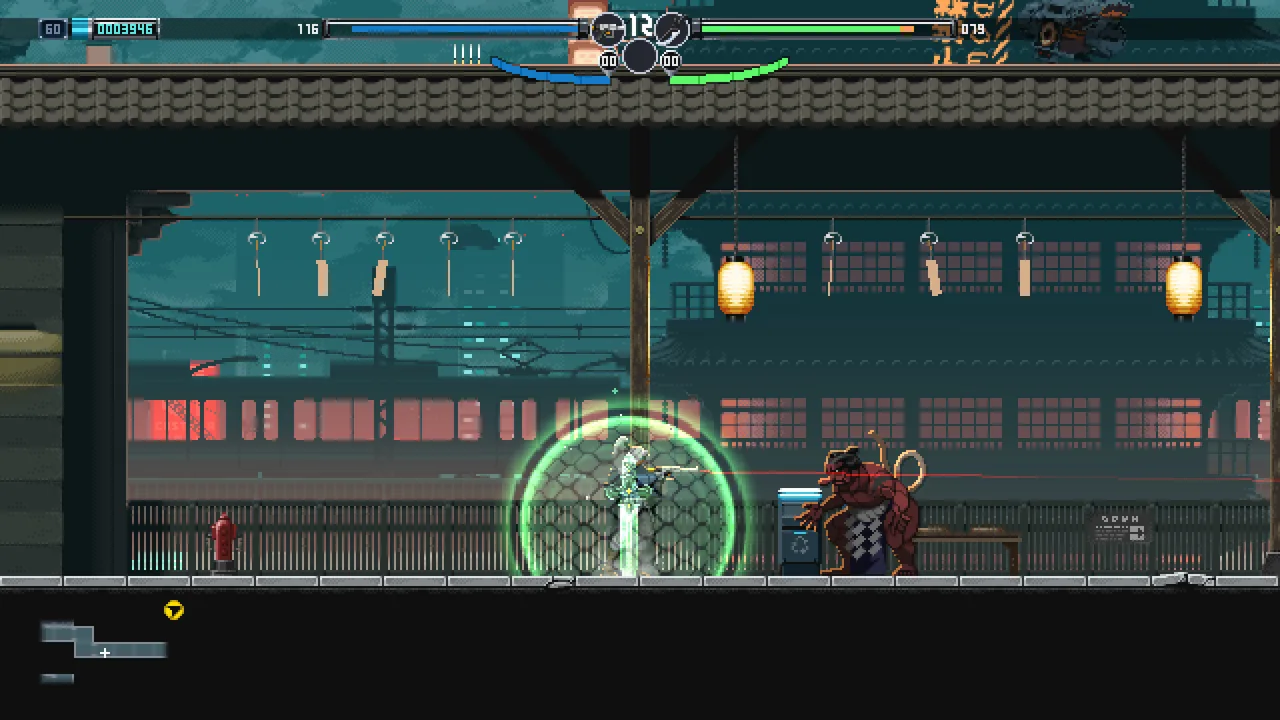
A firearm standoff against a hulking demon beneath hanging lanterns, showcasing the game's mix of gunplay and traditional Japanese-inspired backdropsImage: PLAYISM via Steam -
Wanderer Game ReviewsWanderer Game Reviews