Game review
The Stone of Madness
6.3 / 10
- Developer
- The Game Kitchen
- Publisher
- Tripwire Presents
The short version
Biggest strengths
- Reviewers consistently praise the sanity-and-phobia system as a genuinely fresh spin on the real-time tactical stealth genre, forcing players to manage psychological wear alongside guard patrols
- The hand-drawn 2D art style and monastery setting draw specific, repeated admiration, with several reviewers calling the atmosphere and character animation a standout achievement for the studio
- Two full, distinct campaigns with their own story beats and levels give reviewers a meaningful amount of content and structural variety for the price
Biggest weaknesses
- The absence of manual saving or mid-level checkpoints is the single most common complaint, with many reviewers describing lost 20-to-30-minute stretches of progress as a source of serious frustration
- Reviewers report frequent, sometimes game-breaking bugs months after launch, including objects rendering on the wrong floor, unreliable interaction prompts, and characters getting stuck in level geometry
- Several reviewers note that failed stealth encounters can permanently sideline a character for the rest of an in-game day, compounding the sting of the lack of manual saves
6.3 / 10
Overview
The Stone of Madness is a real-time tactical stealth game from The Game Kitchen, the studio behind the Blasphemous series, published by Tripwire Presents. Set in an 18th-century Spanish monastery that doubles as a madhouse and inquisitorial prison, it released on Steam on January 28, 2025, and currently sits at Mostly Positive across 102 reviews.
Reviewers are broadly won over by the game's premise and art direction, but the review pool is also unusually consistent in flagging the same handful of frustrations, chiefly a punishing lack of manual saves and a persistent stream of bugs that several reviewers say remained unresolved months after launch.
Story and Setting
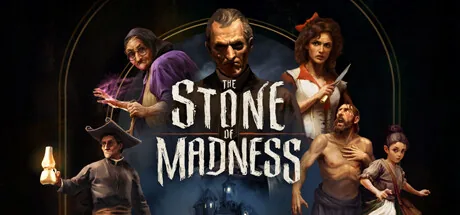
Five prisoners, Agnes, Leonora, Eduardo, Amelia, and Alfredo, each carrying their own trauma and phobia, pool their skills to uncover the monastery's secrets and plot their escape. Reviewers describe the setting as one of the game's clearest strengths, with the Pyrenees monastery's oppressive, secretive atmosphere and the historically grounded 18th-century backdrop earning specific praise for tone and worldbuilding. Several reviewers highlight the voice work and writing quality, with one specifically calling out the Spanish-language voice track as a strong way to experience the story.
Two complete campaigns are available from the outset, each with its own story, levels, and challenge structure, and reviewers who played both describe meaningful differences in pacing and difficulty between them, with the longer campaign singled out by more than one reviewer as having the stronger narrative payoff.
The content descriptors flag one brief, mostly covered sexual encounter that surfaces as part of the plot and a self-harm animation tied to one character killing an enemy, both of which reviewers treat as narrative texture rather than gratuitous content, noting that neither is required to progress and that the game handles both with restraint appropriate to its somber tone.
Gameplay and Mechanics
The core loop asks players to guide their prisoners through guarded areas in real time, combining each character's unique abilities, casting spells, picking locks, distracting guards, or exploiting invisible-only interactions, to avoid detection while working toward the day's objectives. Reviewers frequently compare the tactical structure to Commandos, Desperados, and the Mimimi catalog, while emphasizing that the sanity and phobia system sets it apart: triggering a character's specific fear drains their mental health, and enough accumulated strain can trigger a temporary breakdown that changes how that character plays for the rest of the day.
That system draws some of the review pool's strongest praise, described by multiple reviewers as a genuinely novel wrinkle on a familiar genre, forcing players to plan routes not just around guard sightlines but around each character's psychological limits. It's also, however, where much of the reviewer frustration concentrates: because there's no manual save and only end-of-day checkpoints, a bad string of sanity loss or a botched stealth sequence can cost a character for the remainder of the day, and reviewers describe reloading and replaying lengthy sequences from scratch as the game's most consistent source of irritation. A number of reviewers who initially bounced off this design ultimately came around to it once they adjusted their expectations and embraced failure as part of the loop, but plenty of others never did.
Progression and Replayability
Characters gain new and improved abilities through a research and upgrade system, unlocking additional tools for stealth, exploration, and puzzle-solving as players push deeper into the story. Reviewers describe meaningful build variety across the five-character roster, and the requirement to combine complementary abilities to clear certain obstacles gives the cast genuine tactical weight rather than treating them as interchangeable stealth units.
The two-campaign structure adds real replay incentive on top of that, with reviewers noting that revisiting familiar monastery areas across different in-game days, each bringing new changes and complications, gives the game an interlocking, escalating structure that feels distinct from more level-by-level stealth games. Several reviewers who stuck with the game past its rocky opening hours describe genuine surprise at how much content is packed in for the price, even as they acknowledge the friction required to get there.
Visual Style and Sound Design
The hand-drawn 2D art style is one of the most consistently praised elements across the entire review pool, with reviewers calling out the character animation, environmental detail, and overall presentation as a clear evolution of the visual sensibility The Game Kitchen built with Blasphemous. The soundtrack draws specific individual praise as well, described by more than one reviewer as a genuine highlight that reinforces the game's oppressive, mystery-laden atmosphere.
That polish sits uneasily alongside a persistent stream of technical problems. Reviewers report objects rendering on the wrong floor, mouse clicks registering on the wrong target, quest markers and icons lingering indefinitely, characters getting stuck in level geometry, and long waits when exiting to the main menu, with several reviewers explicitly noting these issues were still present many months after release rather than being early-access growing pains. Combined with the lack of manual saves, this technical inconsistency is the single biggest drag on an otherwise distinctive presentation.
Verdict
The Stone of Madness pairs a genuinely inventive sanity-driven take on tactical stealth with gorgeous hand-drawn presentation and a historically rich setting, and reviewers who push past its rough edges consistently describe a rewarding, unusual experience. But the absence of manual saves, combined with a persistent stream of bugs that reviewers say outlasted the launch window, makes it a game that demands real patience before it clicks. Fans of Commandos-style tactical stealth who can tolerate some jank and are willing to embrace failure as part of the design will likely find a lot to love here; those who prioritize a smooth, forgiving experience should wait for further patches or catch it on a deep sale.
Pros and cons
Pros
- Reviewers consistently praise the sanity-and-phobia system as a genuinely fresh spin on the real-time tactical stealth genre, forcing players to manage psychological wear alongside guard patrols
- The hand-drawn 2D art style and monastery setting draw specific, repeated admiration, with several reviewers calling the atmosphere and character animation a standout achievement for the studio
- Two full, distinct campaigns with their own story beats and levels give reviewers a meaningful amount of content and structural variety for the price
- Alternating between five characters with unique traumas and abilities is described as a rewarding puzzle layer once players learn to combine skills across the roster
Cons
- The absence of manual saving or mid-level checkpoints is the single most common complaint, with many reviewers describing lost 20-to-30-minute stretches of progress as a source of serious frustration
- Reviewers report frequent, sometimes game-breaking bugs months after launch, including objects rendering on the wrong floor, unreliable interaction prompts, and characters getting stuck in level geometry
- Several reviewers note that failed stealth encounters can permanently sideline a character for the rest of an in-game day, compounding the sting of the lack of manual saves
- A vocal subset of reviewers feels the marketing and genre tags oversell the game's RPG and choice-driven elements, describing the actual experience as a more linear, on-rails tactical stealth sandbox
Screenshots
-
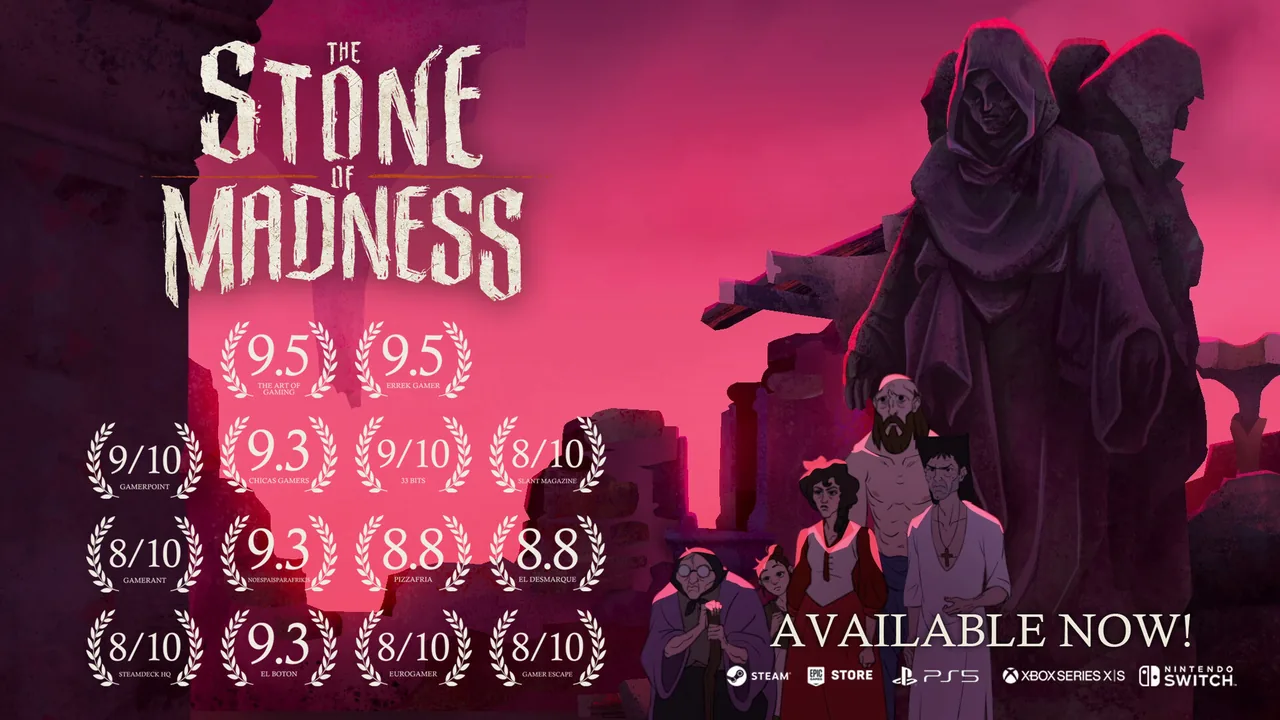
Key art highlighting the critical reception the game earned across a wide range of outletsImage: The Game Kitchen via Steam -
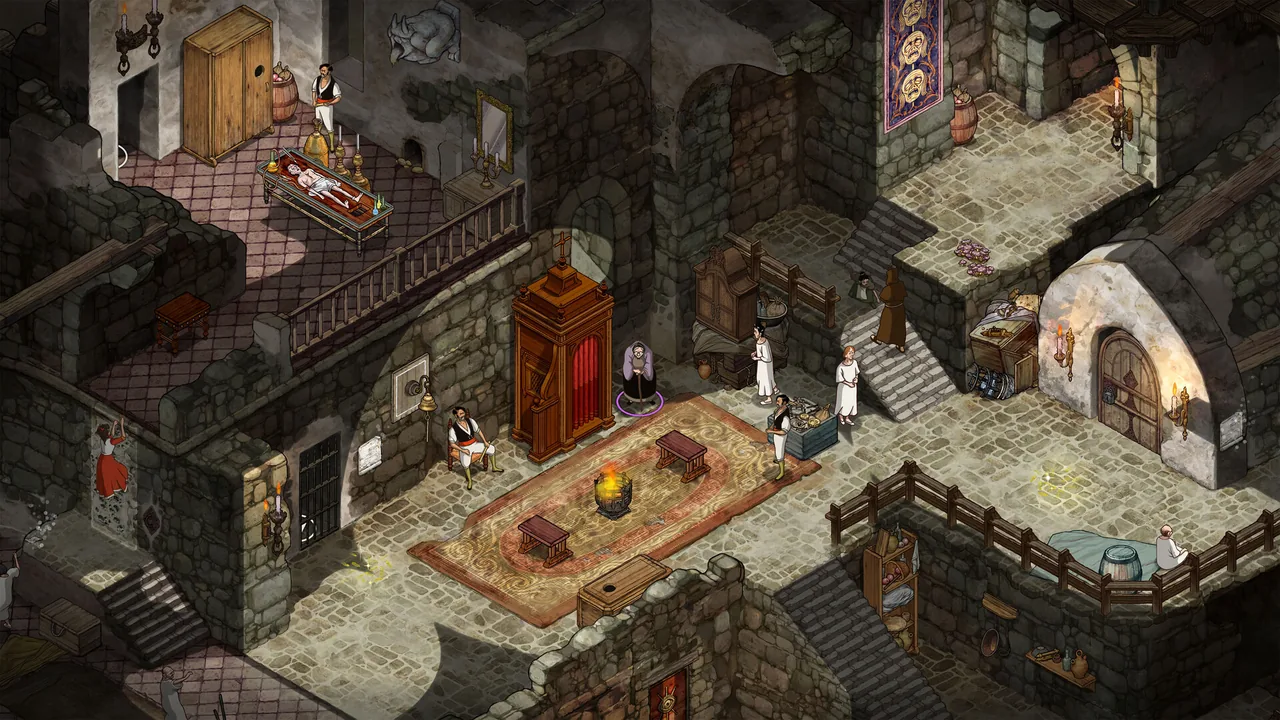
One of the monastery's hand-drawn interior spaces, dense with period detail and background activityImage: The Game Kitchen via Steam -
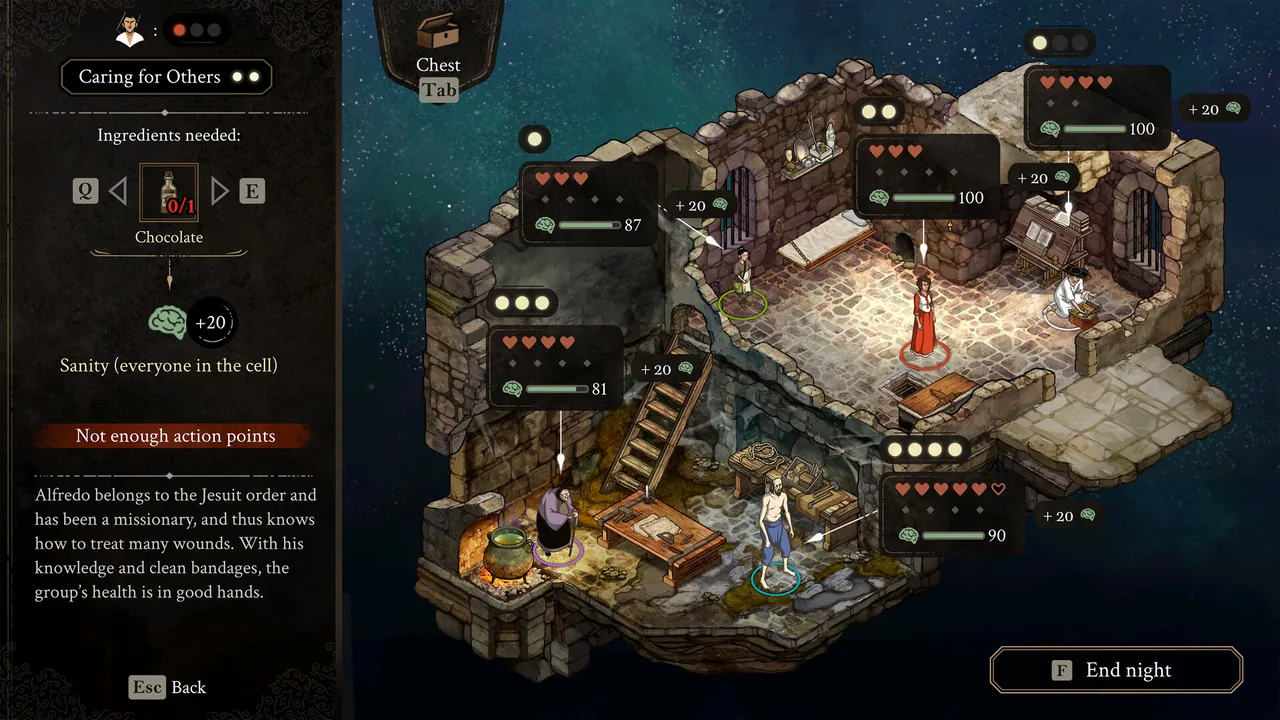
Managing a character's sanity-restoring abilities from the game's cutaway night view of the monasteryImage: The Game Kitchen via Steam -
Wanderer Game ReviewsWanderer Game Reviews