Game review
Sunken Realms
5.6 / 10
- Developer
- Magic Puncher Games
- Publisher
- Magic Puncher Games
The short version
Biggest strengths
- Genuinely impressive scope from a single developer — six visually distinct hand-crafted areas, full voice acting, and motion-captured cutscenes
- Procedurally re-arranged dungeon rooms give the crawl-craft-return loop real replay variety run to run
- Combat that reviewers consistently describe as smooth and satisfying once you look past its rough edges — parry, dodge, and stamina management all matter
Biggest weaknesses
- Frequent, sometimes progress-destroying bugs: falling through the world, treasure rooms failing to open, and lost inventory/gold after a crash
- Controller support is described by at least one reviewer as barely functional, especially in menus
- The in-game map is reported as inaccurate in a game structurally built around exploring a maze-like dungeon
5.6 / 10
The Pitch
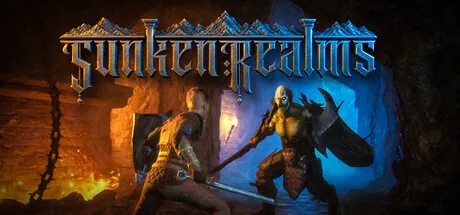
Sunken Realms is a dungeon-crawling action RPG built almost entirely by one person — Magic Puncher Games is a solo studio, and that fact colors nearly every review of the game, positive and negative alike. The setup is simple and personal: your father descended into the ruins beneath the city years ago and never came back, and you're going down after him. Between runs you return to a campfire camp to trade, craft, cook, and talk with an old companion character, and the story unfolds gradually in those quiet moments rather than through any grand plot machinery. Steam frames the pitch bluntly and it's accurate: "no open world, no battle pass, just a sword, a dungeon, and a question that won't let you go."
Structurally, it's a familiar loop — descend, fight, loot, craft, upgrade, descend again — spread across six hand-crafted areas (a stonework entryway, an orc encampment, sewers, a mushroom grotto, a spider-infested zone, and a necropolis) with room layouts that procedurally reshuffle each visit so no run plays out identically. None of that is a new idea for the genre, but reviewers who've been following the game since its playtesting and demo days consistently note how far it's come, several explicitly framing that arc of visible improvement as part of why they're rating it as generously as they are.
A Remarkably Personal Solo Effort
The single biggest recurring theme across the Very Positive English review pool (48 of 59, 81%) isn't really about mechanics at all — it's disbelief that one person built this much game. Reviewers repeatedly single out the variety across the six descending areas, the original score, and the fact that the developer personally voices every character (male, female, old, young) using AI-assisted voice editing plus motion-captured cutscenes for dialogue scenes. One playtester calls the character animation and lip-syncing "absolutely amazing" and specifically suggests a major studio should be calling this developer with an offer. Another, comparing the finished game favorably to its rougher demo, credits the atmosphere split between a "dangerous" dungeon and a "relaxing" camp as genuinely well-realized.
That goodwill translates into real gameplay praise too: combat built around parry, dodge, stamina, health, and mana management is described by multiple long-session reviewers as satisfying once you commit to its pacing rather than mashing attacks, and the weapon variety — melee, ranged, and spellcasting — gives runs enough build variety that several reviewers explicitly call the price tag (NZ$24.07 at the time of review) a bargain for what's on offer.
The Bugs Are Real, Not Just Early-Access Growing Pains
Where the enthusiasm runs out is stability, and here the complaints are specific enough that they shouldn't be dismissed as normal solo-dev launch jank. One reviewer reports falling through the world during a run and having their game crash mid-fall, only to log back in with over 4,000 gold and a full inventory wiped as if the session never happened. Another reports the same category of failure differently — three separate runs ended by falling through the floor and getting stuck in walls. A third describes treasure rooms simply failing to open after clearing every enemy in them, cutting off the loot that the entire crafting-and-progression loop depends on. Beyond the crash-tier bugs, the in-game map is called out directly as inaccurate — a serious problem for a game this dependent on the player reading a maze correctly — and controller support is described as "mostly a lie," failing even inside menus for one reviewer running a fully controller-first setup.
To the developer's credit, several reviewers frame these as actively being worked on rather than ignored, describing a responsive presence in the game's Discord and visible willingness to take feedback seriously. That's a meaningfully different situation from a studio that's gone quiet post-launch. But "the developer is listening" doesn't retroactively fix a lost 90-minute run, and a buyer weighing whether to pick this up now versus after a patch cycle should treat the bug reports as current fact, not resolved history.
The AI Voice Acting Debate
One thread running through this review section deserves its own mention because it's unusually explicit compared to most games: several reviewers bring up the developer's use of AI to edit his own recorded voice across every character, plus AI-assisted elements in the motion-capture pipeline, and take real, opposite-direction stances on it. Some reviewers frame it as an obvious and forgivable trade-off for a one-person team achieving something well beyond typical solo-dev scope — "excusable" given there's no studio budget behind it. At least one negative review, by contrast, dismisses the whole game as "AI slop" and cites it as a reason to steer clear regardless of the underlying mechanics. That's a genuinely polarizing detail worth flagging plainly for a buyer who has strong feelings about AI tooling in games, separate from any judgment about whether the combat and dungeon design themselves are any good.
Verdict
Sunken Realms earns its Very Positive standing honestly — the sheer amount of hand-built content one developer has produced here, and the goodwill that generates, is real and reviewers are right to credit it. The dungeon-crawling fundamentals underneath (parry-and-stamina combat, procedurally reshuffled rooms, a crafting loop tied to a genuinely personal story) are sound when they're working as intended. But "as intended" is currently doing a lot of work: fall-through-the-world bugs, broken treasure rooms, inaccurate maps, and near-nonfunctional controller support are common enough across independent reviews that they represent the game's actual current state, not isolated bad luck. Worth buying at its current price if you're drawn to the solo-dev-achievement angle and can tolerate real, occasionally progress-costing bugs while the developer keeps patching — hold off if you want a dungeon crawler that reliably does what it says on the box today.
Pros and cons
Pros
- Genuinely impressive scope from a single developer — six visually distinct hand-crafted areas, full voice acting, and motion-captured cutscenes
- Procedurally re-arranged dungeon rooms give the crawl-craft-return loop real replay variety run to run
- Combat that reviewers consistently describe as smooth and satisfying once you look past its rough edges — parry, dodge, and stamina management all matter
- Strong value consensus: reviewers repeatedly call it worth the asking price even while flagging real problems
Cons
- Frequent, sometimes progress-destroying bugs: falling through the world, treasure rooms failing to open, and lost inventory/gold after a crash
- Controller support is described by at least one reviewer as barely functional, especially in menus
- The in-game map is reported as inaccurate in a game structurally built around exploring a maze-like dungeon
- Use of AI-assisted voice acting and motion capture has become a visible flashpoint in the review section, independent of the game's actual quality
Screenshots
-
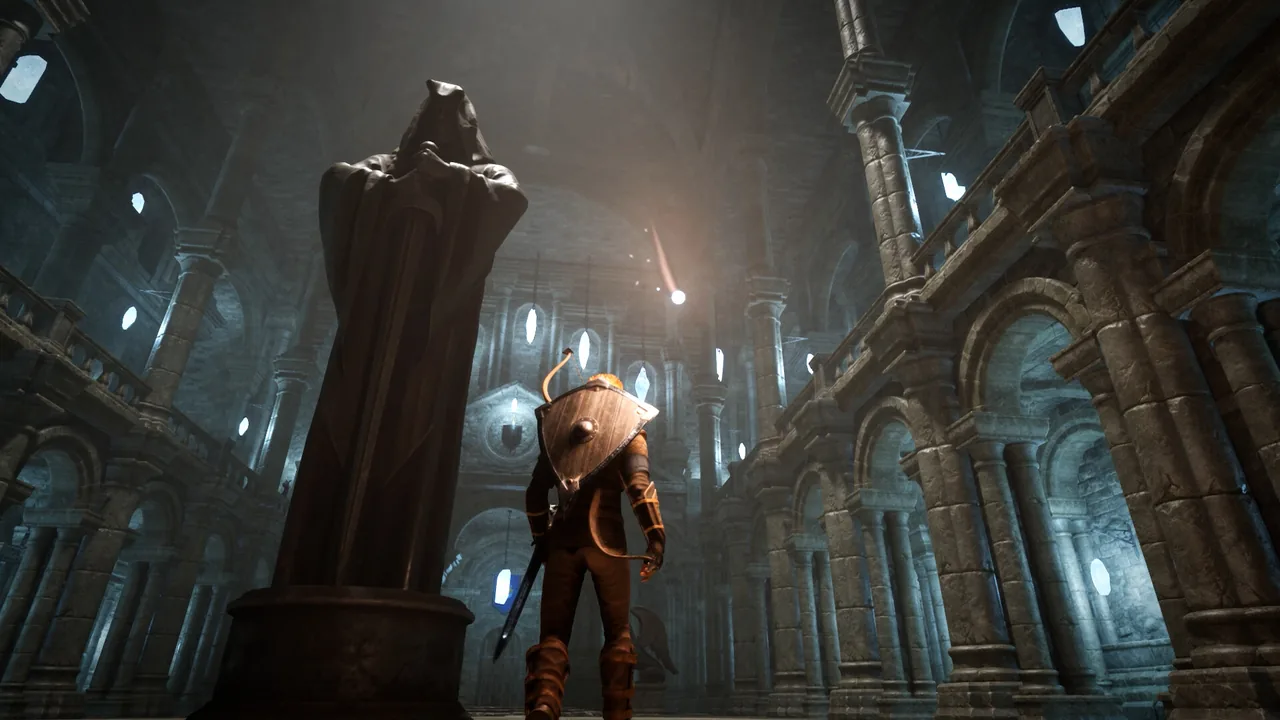
The stonework entryway — one of six hand-crafted areas the dungeon descends throughImage: Magic Puncher Games via Steam -
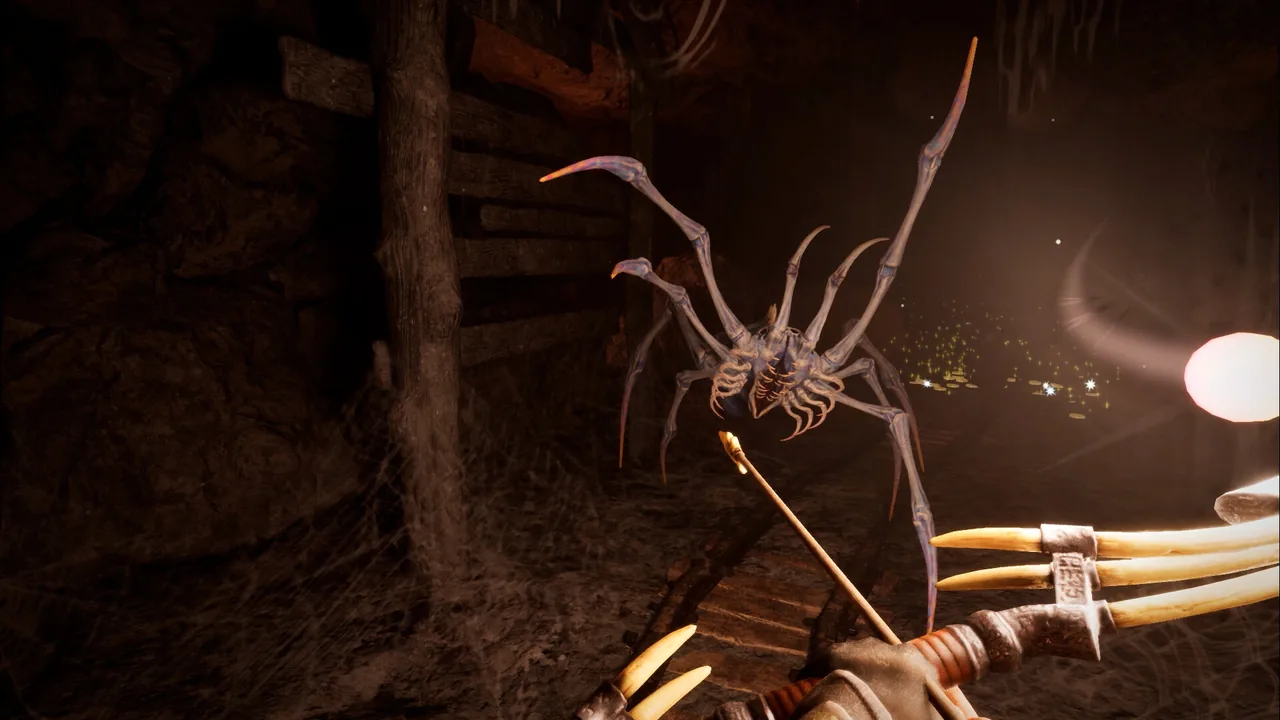
Ranged combat against one of the spider-infested area's enemiesImage: Magic Puncher Games via Steam -
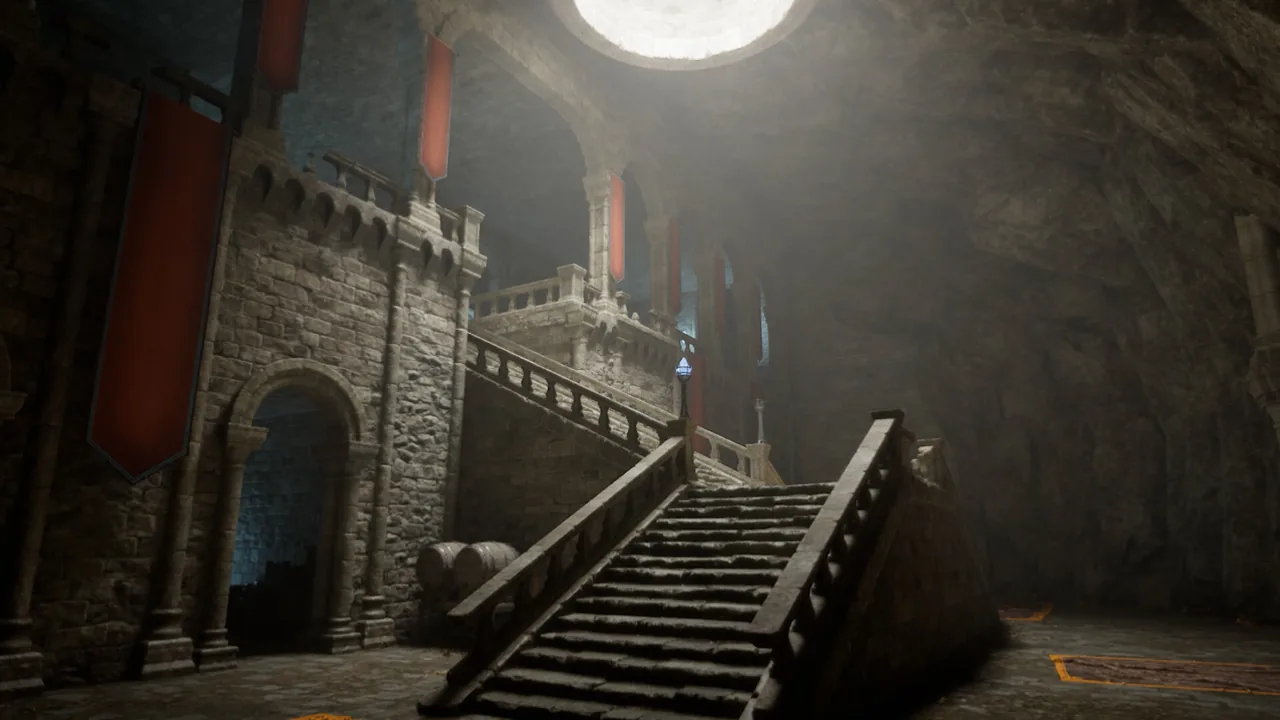
One of the necropolis area's more ornate underground structuresImage: Magic Puncher Games via Steam -

Category scores for Sunken RealmsWanderer Game Reviews