Game review
Subway Exorcist Girl
6.5 / 10
- Developer
- 纤指游戏
- Publisher
- Delicate Fingers
The short version
Biggest strengths
- Reviewers consistently single out the art style and atmosphere as the game's strongest asset, with the eerie, character-specific design of each haunted subway car earning particular praise
- The ghost girl Mio's backstory, tied to a critique of the idol industry, is repeatedly called the emotional highlight of the game, with multiple reviewers saying it made them genuinely tear up
- Each haunted train car demands a distinct puzzle-solving approach using different talismans against different anomalies, which reviewers say keeps the short runtime from ever feeling repetitive
Biggest weaknesses
- Built in RPG Maker MV, the game inherits noticeably stiff, jank-prone controls, and multiple reviewers report specific bugs including disappearing sprites, softlocks, and one recurring crash tied to an alien-encounter sequence
- English translation quality is repeatedly flagged as rough, with reviewers citing reversed dialogue choices, typos, and text-spacing issues that occasionally muddy the game's already-light narrative
- The clown-themed minigame late in the game is singled out by numerous reviewers as a frustrating RNG-heavy roadblock that stands out as disproportionately punishing compared to the rest of the experience
6.5 / 10
Overview
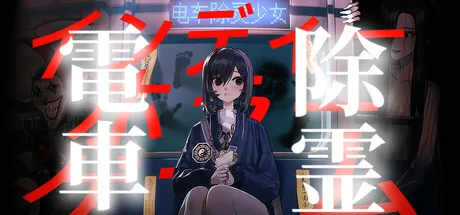
Subway Exorcist Girl is a small-scale suspenseful horror puzzle game developed solo by 纤指游戏 (Delicate Fingers), inspired in part by the viral liminal-space horror of "Exit 8." Players step into the role of a part-time exorcist girl called into a subway train overrun by strange, unexplained phenomena, moving from car to car to identify anomalies, apply talismans to seal them, and uncover the ghost stories tied to each haunting. It released on Steam on January 25, 2025, priced at a modest NZ$3.19, and holds a Positive standing across 35 reviews. Built in RPG Maker MV and featuring light roguelike randomization, no two runs through the subway present quite the same set of threats.
The review pool paints a consistent picture of a rough-around-the-edges but genuinely heartfelt passion project: reviewers repeatedly acknowledge the jank and translation issues that come with a solo-developer budget, while just as consistently praising the atmosphere, art, and one particular ghost's story as more than worth the price of admission.
Story and Setting
The framing is simple: a young exorcist takes her first job investigating a haunted subway train, moving car by car through a dark, eerie environment filled with the unknown. Each carriage houses a different anomaly tied to a different ghost, and reviewers repeatedly single out one story in particular, that of a character named Mio and her connection to a figure called Moon, as the emotional core of the experience. Multiple reviewers describe this specific vignette as genuinely touching, with one calling it "excellent storytelling" and another saying the story "made me sweat from my eyes," and several note it ties into a pointed critique of the idol industry and the pressures placed on young performers.
Beyond that highlight, reviewers describe the overall narrative as light and secondary to the puzzle-solving, existing mainly to provide context and color for each car's specific threat rather than to build a sprawling plot. This isn't treated as a major flaw; most reviewers frame the game's ambitions as appropriately modest for its scope and price, with the storytelling serving the atmosphere rather than trying to carry the whole experience on its own.
Gameplay and Mechanics
The core loop asks players to explore each subway car, identify what's wrong using environmental clues, and apply the correct talisman or approach to neutralize the threat before it kills and respawns them, with light roguelike randomization meaning no single playthrough unfolds identically. Reviewers praise the variety this generates across a short runtime, noting that different cars, from a giant baby to an unsettling clown, each require genuinely distinct problem-solving approaches rather than a single repeated mechanic reskinned across levels.
That variety comes at a cost in polish. Built in RPG Maker MV rather than a more modern engine, reviewers consistently describe the controls as stiff and occasionally janky, with specific bug reports including sprites disappearing mid-movement, softlocks tied to early mechanics, and a repeating crash during one alien-themed encounter sequence severe enough that at least one reviewer requested a refund over it. The clown car's minigame draws the most pointed frustration in the entire review pool, with multiple reviewers describing its random-number-driven challenge as disproportionately punishing and not particularly fun compared to the rest of the game's puzzles.
Progression and Replayability
There isn't a deep progression system here; players collect and manage a limited supply of talismans, mostly the basic and lightning varieties according to reviewers, while other specialized talismans see comparatively little use across a typical run. Several reviewers note that resource management around talismans matters more than expected, warning that running out of the right type partway through can leave a run unfinishable without restarting.
Completion time is consistently reported as short, most reviewers finishing in one to three hours, and few describe returning for multiple playthroughs beyond finishing the achievement list, one of which (a clown-related challenge) is specifically called out as an unusually tough final hurdle. For a game priced under NZ$5, reviewers broadly frame this brevity as appropriate rather than disappointing, several explicitly comparing the value proposition favorably against pricier horror titles that offer comparatively less content per dollar.
Visual Style and Sound Design
Art direction is the review pool's most unambiguous strength, with reviewers repeatedly praising the distinct visual identity given to each train car and describing the overall aesthetic as hauntingly beautiful despite the technical rough edges elsewhere. The atmosphere built through lighting, environmental detail, and the design of each ghost or anomaly earns consistent five-star-style praise even from otherwise critical reviewers, several of whom recommend the game on visual merit alone.
Music receives similarly strong, if less frequent, praise, with reviewers describing the score as fitting the subway's dark, unsettling mood well. Where the presentation stumbles is in localization and UI polish: several reviewers flag reversed dialogue-choice text, inconsistent character-name rendering between Chinese and English during specific sequences, and general text-spacing issues that occasionally undercut an otherwise strong audiovisual package.
Verdict
Subway Exorcist Girl is a short, rough-edged, but genuinely heartfelt solo-developer horror puzzle game whose ambition outpaces its budget in ways reviewers are largely willing to forgive. The atmosphere, art direction, and Mio's specific ghost story are strong enough that multiple reviewers describe the whole experience as worth the price for that one vignette alone, even as they catalog a real list of bugs, translation rough spots, and an unevenly balanced clown minigame that occasionally tips from frustrating into unfair. Anyone looking for a substantial, polished horror epic should look elsewhere, but for players willing to meet a passionate solo project halfway, and to support a developer clearly still refining their craft, there's a small, memorable experience here worth the modest asking price.
Pros and cons
Pros
- Reviewers consistently single out the art style and atmosphere as the game's strongest asset, with the eerie, character-specific design of each haunted subway car earning particular praise
- The ghost girl Mio's backstory, tied to a critique of the idol industry, is repeatedly called the emotional highlight of the game, with multiple reviewers saying it made them genuinely tear up
- Each haunted train car demands a distinct puzzle-solving approach using different talismans against different anomalies, which reviewers say keeps the short runtime from ever feeling repetitive
- As a solo-developer passion project priced under NZ$5, reviewers widely describe it as a worthwhile, low-risk purchase, with several explicitly recommending it to support the developer directly
Cons
- Built in RPG Maker MV, the game inherits noticeably stiff, jank-prone controls, and multiple reviewers report specific bugs including disappearing sprites, softlocks, and one recurring crash tied to an alien-encounter sequence
- English translation quality is repeatedly flagged as rough, with reviewers citing reversed dialogue choices, typos, and text-spacing issues that occasionally muddy the game's already-light narrative
- The clown-themed minigame late in the game is singled out by numerous reviewers as a frustrating RNG-heavy roadblock that stands out as disproportionately punishing compared to the rest of the experience
- At roughly 1 to 3 hours to complete, several reviewers note the game's puzzles are neither especially difficult nor essential, with one describing the encounters as more exposition-delivery than genuine challenge
Screenshots
-
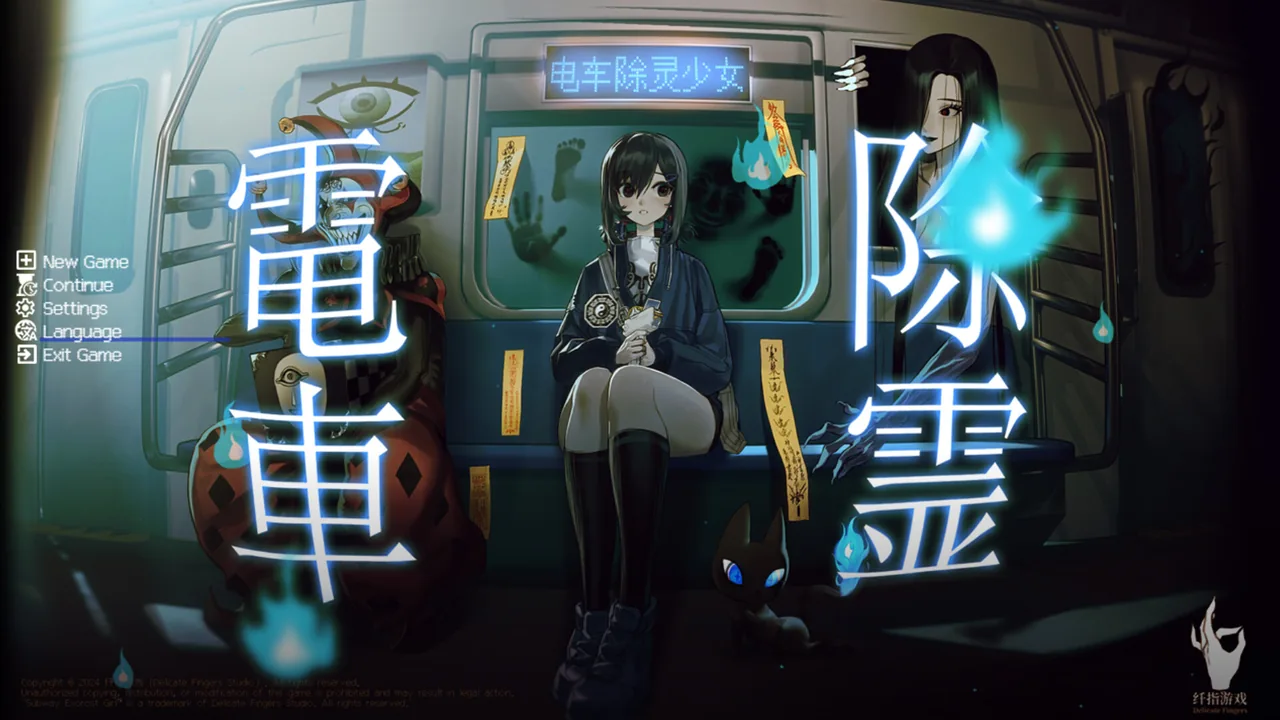
The title screen sets the tone with its haunted train-car art directionImage: Delicate Fingers via Steam -
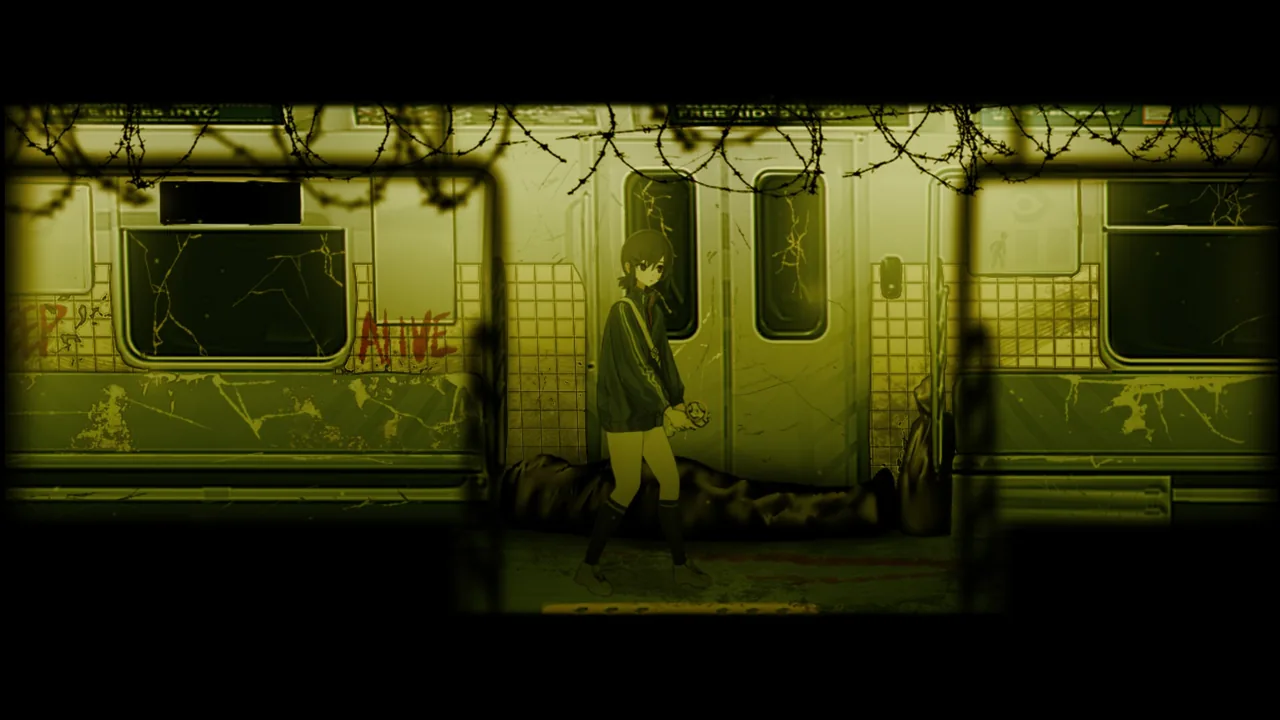
A grim, sepia-filtered car explores the game's horror atmosphereImage: Delicate Fingers via Steam -
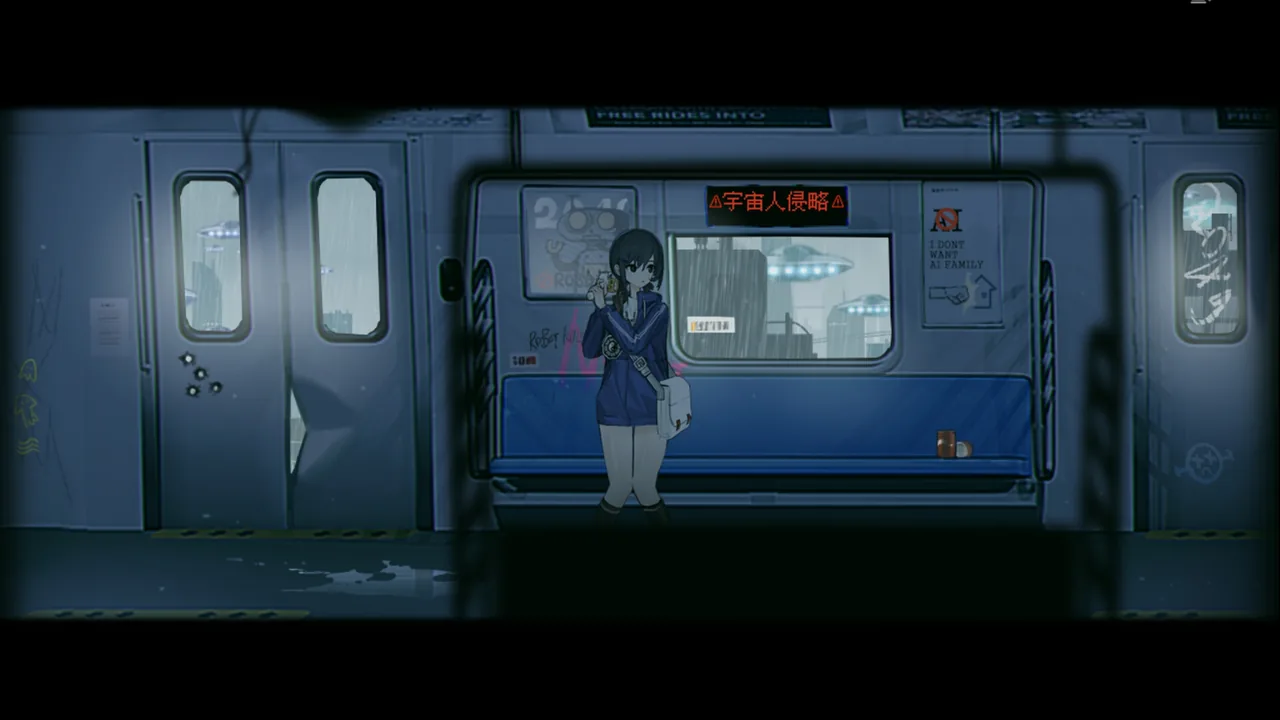
One of the game's more unusual anomalies involves an alien invasion outside the trainImage: Delicate Fingers via Steam -
Wanderer Game ReviewsWanderer Game Reviews