Game review
Knights of Fiona
4.3 / 10
- Developer
- CharacterBank Inc
- Publisher
- CharacterBank Inc
The short version
Biggest strengths
- A distinctive premise for the genre — a full JRPG story, party-based combat, and hub-town structure built specifically for VR rather than ported to it
- Strong art direction and worldbuilding draw consistent praise, even from largely critical reviewers
- Localization by veteran translator Nob Ogasawara (Pokémon, Dragon Quest, Yakuza) gives the writing real genre pedigree
Biggest weaknesses
- Comfort-breaking control issues are widely reported: weapons requiring unrealistic grip strength to hold, especially on Index controllers, with no toggle-grab option
- The UI is a persistent, specific complaint — dialogue text that tracks head movement in a way that makes it drift out of view rather than staying readable
- Combat is repeatedly described as floaty, weightless, and lacking impact, undercutting the physical-presence pitch VR combat is supposed to deliver
4.3 / 10
The Pitch
Knights of Fiona is a full-scale VR JRPG from CharacterBank Inc, the studio behind the well-regarded Ruinsmagus, built around a premise that's genuinely uncommon in the genre: rather than adapting a conventional JRPG to a headset, it tries to make the player feel physically present as a knight inside its fantasy world of Gallia. You play as one of Knight Commander Fiona's sworn order, fighting dragons born from generations of accumulated hatred, either solo with AI companions or online with up to two friends sharing the same quest. The narrative was localized by Nob Ogasawara, the translator behind Pokémon, Dragon Quest, and Yakuza — a genuine pedigree signal for a small studio's VR project — and the opening chapters are free to try, with the rest of the story gated behind a paid "Story Pass."
That premise lands with real weight in early impressions: reviewers repeatedly single out the art direction, the JRPG-inspired worldbuilding, and the ambition of building a party-based, physically-interactive combat system from the ground up for VR rather than bolting VR onto an existing formula. But Steam's "Mixed" reception (18 of 44 English reviews positive) tells the other half of the story — a launch that, by a wide margin of its own reviewers' accounts, needed more time in the oven before asking players to pay for the second half of it.
An Ambitious Premise, Undercut by the Basics
The single most common thread across negative reviews isn't the story or the art — it's whether the game is comfortable and legible to actually play. Multiple reviewers on Valve Index controllers report that holding a weapon requires grip strength well beyond what's reasonable, with no toggle-grab option to compensate, leading to weapons being dropped constantly during combat. Text and dialogue present their own specific, repeated frustration: the UI reportedly tracks the player's head position in a way meant to keep it visible, but instead causes it to drift toward the bottom of the view or reposition itself further away exactly when a player looks down to read it — one reviewer calls it "pure frustration" that made them unable to engage with story dialogue at all. Loading screens are described as frequent and long, tutorials as unclear or excessive, and in-game settings as sparse to the point that basic comfort and accessibility options are missing entirely for some players.
Combat itself draws a consistent, if less severe, complaint: multiple reviewers describe it as "floaty," lacking weight or impact, with weapons that "go through [enemies] like a ghost" rather than connecting with any physical sense of force — a significant problem for a game whose entire pitch rests on VR's physical-presence advantage over flat-screen JRPGs. One reviewer who put over 30 hours in and reached the level cap still describes a stamina system that "makes the game feel a bit turn-based" in a way they didn't find enjoyable, arguing it removes player agency rather than adding tactical depth.
Real Praise for What the Team Got Right
None of this means the game lacks defenders, and it's notable that even sharply critical reviews tend to carve out specific praise rather than dismissing the whole project. "The art direction is awesome" and "world building is great" appear even inside reviews that otherwise recommend against buying, and one longer, more considered review calls the game "an uncommon direction" for the JRPG formula, crediting the ambition of the physically-interactive party system even while noting the execution doesn't yet match the concept. Players who came in specifically for the anime-JRPG-in-VR novelty, rather than expecting a fully polished flagship release, are consistently more forgiving — several frame their recommendation as conditional on continued development, citing visible, ongoing patches since launch as a reason for cautious optimism rather than dismissal.
The hub city of Geogallia, its shop and quest-board structure, and the shared "Gesh" oath mechanic that ties party members together narratively as well as mechanically are also cited approvingly by reviewers who got further into the story, several of whom describe genuine attachment to the cast and setting despite everything else going on around it. It reads less like a game where the creative vision failed, and more like one where a small team's execution hasn't yet caught up to an idea worth pursuing.
The Monetization Question
A specific, recurring criticism sits apart from the technical complaints: reviewers are uneasy about how the game is structured commercially. The core loop is free, but the story beyond the opening chapters is locked behind a roughly US$17-19 Story Pass, and a separate cosmetics shop sits alongside it — prompting at least one reviewer to describe the monetization as "gacha style" and another to note the free tier felt like being repeatedly told content was "not available for free version" before they'd even gotten a real sense of the game. For a project explicitly drawing on the pedigree of a beloved prior game (Ruinsmagus) and a premium JRPG translator, several reviewers say this structure reads as mismatched with the ambition on display, and at least one reviewer explicitly requested a refund on the Story Pass after finding the paid content didn't meaningfully change the grind-heavy, mission-based structure underneath it.
Verdict
Knights of Fiona is a case of a genuinely interesting idea — a from-the-ground-up VR JRPG with real narrative pedigree and party-based physical combat — shipping before its fundamentals were ready to support it. Grip and comfort issues, a UI that actively fights against reading its own dialogue, weightless combat, and a monetization structure that's drawn real skepticism all stack up into a launch that a clear majority of its own reviewers can't yet recommend. But the praise that does exist is specific and consistent enough — art direction, worldbuilding, the ambition of the core concept — to suggest this could become a much better game with sustained patching, and it costs nothing to find out where you land on it yourself. Worth trying the free tier if VR JRPGs are a niche you've been waiting for someone to fill; hold off on the Story Pass until the basics catch up to the pitch.
Pros and cons
Pros
- A distinctive premise for the genre — a full JRPG story, party-based combat, and hub-town structure built specifically for VR rather than ported to it
- Strong art direction and worldbuilding draw consistent praise, even from largely critical reviewers
- Localization by veteran translator Nob Ogasawara (Pokémon, Dragon Quest, Yakuza) gives the writing real genre pedigree
- The free-to-play tier lets anyone try the opening chapters before deciding whether to buy the Story Pass, and several reviewers see real potential if the team keeps patching
Cons
- Comfort-breaking control issues are widely reported: weapons requiring unrealistic grip strength to hold, especially on Index controllers, with no toggle-grab option
- The UI is a persistent, specific complaint — dialogue text that tracks head movement in a way that makes it drift out of view rather than staying readable
- Combat is repeatedly described as floaty, weightless, and lacking impact, undercutting the physical-presence pitch VR combat is supposed to deliver
- Monetization structure (a paid Story Pass on top of a free tier, plus a cosmetics shop) draws pointed criticism as feeling mismatched with a premium JRPG pitch
Screenshots
-
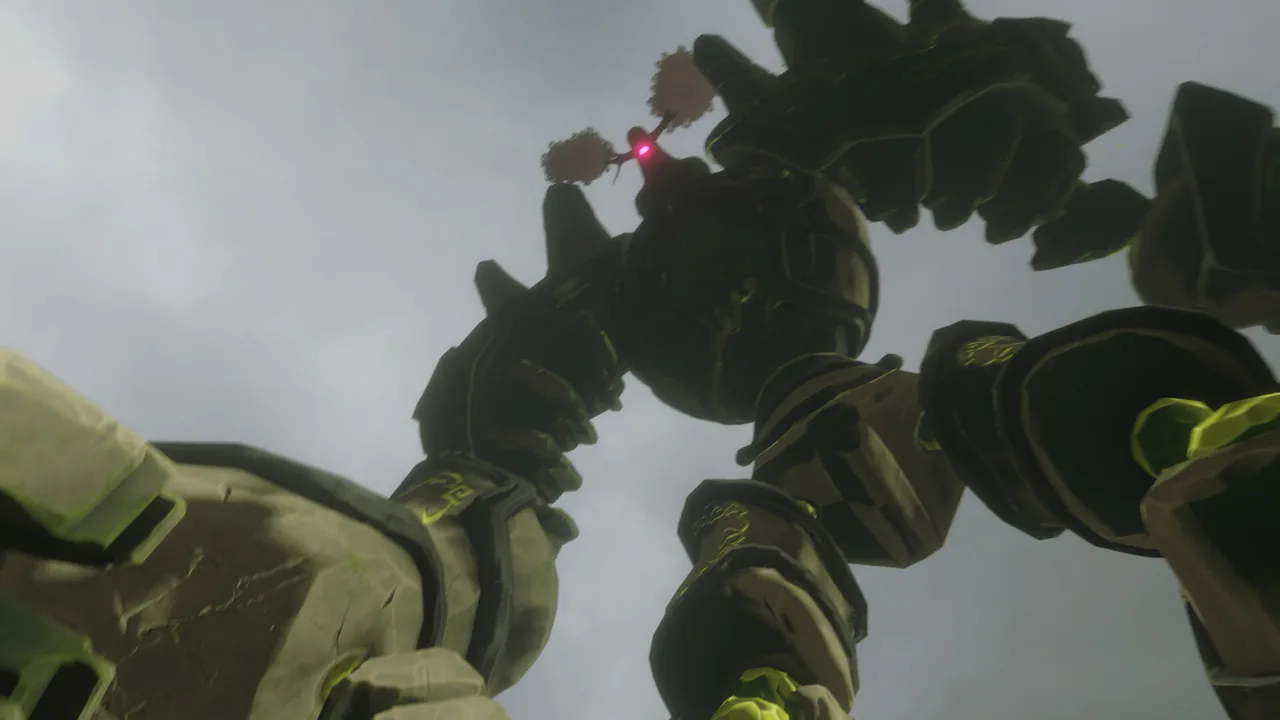
A first-person VR encounter with one of the game's towering golem enemiesImage: CharacterBank Inc via Steam -
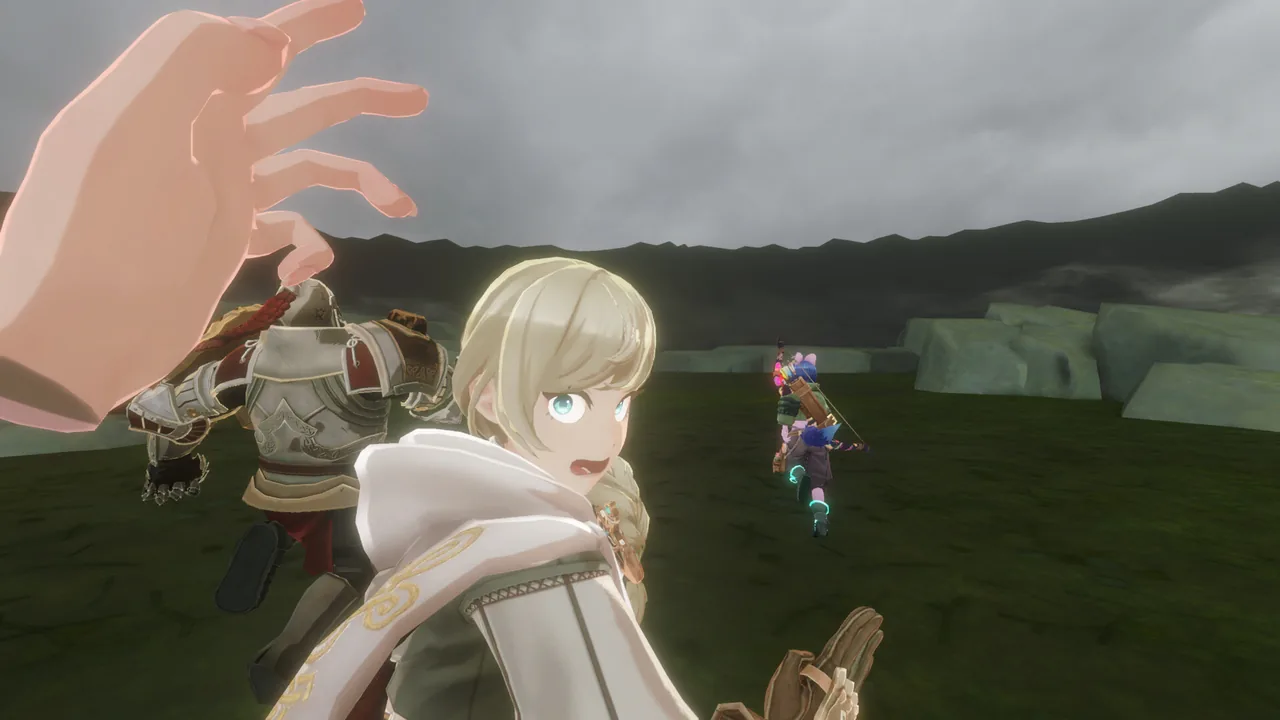
A first-person VR moment with Knight Commander Fiona and the player's partyImage: CharacterBank Inc via Steam -
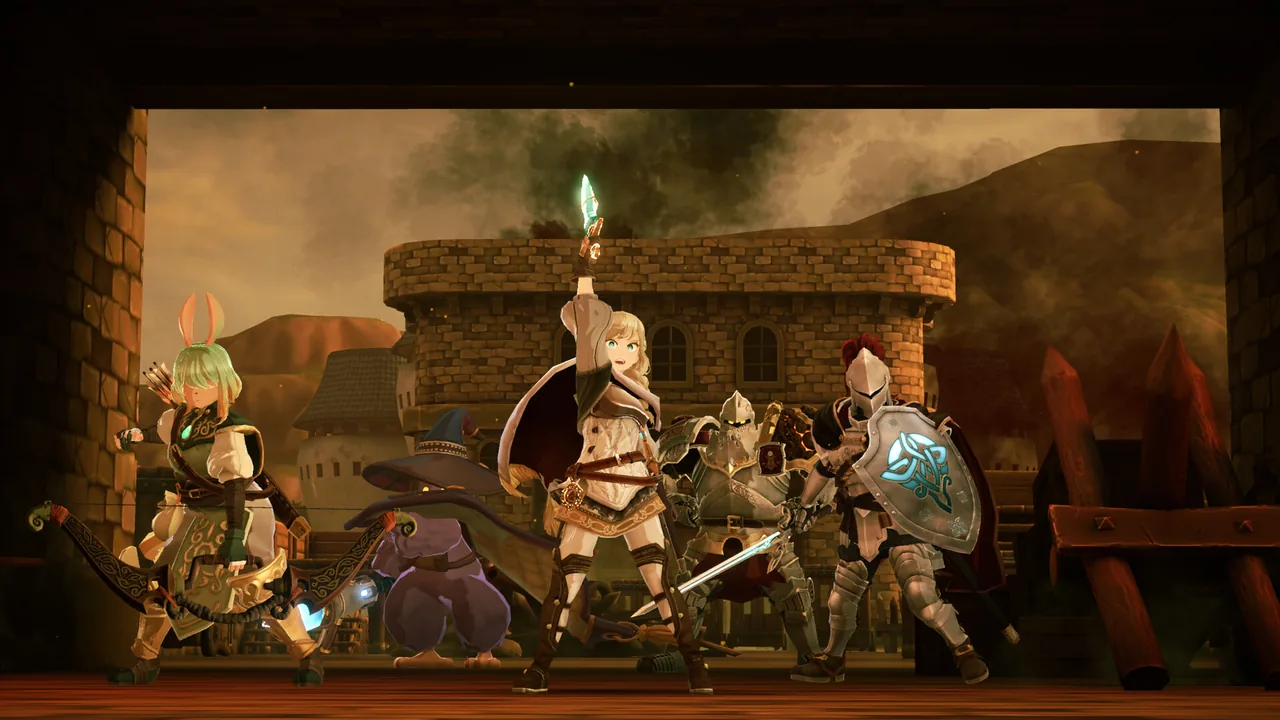
The party-based knight order, gathered at one of Gallia's stone gatehousesImage: CharacterBank Inc via Steam -

Category scores for Knights of FionaWanderer Game Reviews