
Game review
Journey of Realm: Dawn Dew
6.6 / 10
- Developer
- Scallion Rabbit
- Publisher
- Anotherindie
The short version
Biggest strengths
- A deep, flexible build system — postures, self-assembled skills, items, and summonable support units combine into genuinely distinct playstyles
- Metroidvania-style exploration is consistently praised as addictive, with large, detailed box-style maps and generous teleport access
- Exceptional value: reviewers cite roughly 20-25 hours of content, an art style and score frequently compared to Ender Lilies/Ender Magnolia, at a low price
Biggest weaknesses
- English translation is rough and inconsistent — understandable but frequently described as awkward, machine-sounding, or hard to parse for story beats
- Difficulty is a common complaint on default settings: one dominant build or strategy can trivialize most encounters, especially bosses
- Controller support is advertised but only partially functional, requiring manual tweaking according to at least one reviewer
6.6 / 10
The Pitch
Journey of Realm: Dawn Dew is a solo-developed indie hybrid: a side-view, Metroidvania-style exploration game wrapped around turn-based combat with heavy build customization. You play as Dew, a small, ethereal soul summoned into a corrupted realm to rescue lost spirits and push back a rising tide of "black beasts." The pitch draws immediate, repeated comparisons from its own audience to Ender Lilies and Ender Magnolia — a melancholic, corruption-themed world rendered in soft, atmospheric 2D art, paired with a hopeful musical score — but the combat underneath is a different animal entirely: a "posture" system that reshapes Dew's stats and combat style, self-assembled skill loadouts, consumable-but-recoverable props, and summonable support units that can become the actual centerpiece of a build.
Developed by the studio Scallion Rabbit (branded on Steam as "CongSe Studio") and published by Anotherindie, the game launched to a Very Positive reception (91 of 98 English reviews positive), a remarkable outcome for what reviewers repeatedly note is the work of a single developer. The catch, and the one thread that runs through nearly every review regardless of overall verdict, is that the game was built in Chinese first and translated afterward — and that translation, while functional, is far from seamless.
A Build System With Real Teeth
The single most consistently praised element of Dawn Dew is the depth of its combat customization. Reviewers describe collecting "nearly a hundred skills, experiences, props, dozens of postures, and support units" over the course of a run, and — critically — actually using a meaningful subset of them to shape distinct playstyles. One reviewer, deep into the mid-late game, describes finding "an awesome setup, applicable to any bosses," while another frames the appeal precisely: "doing a deck builder while exploring makes what you get feel much more meaningful than say getting it in a roguelike run," since builds here are earned through permanent exploration progress rather than randomized per-run drops. The presence of infinite respec and saved build presets draws specific praise for letting players experiment without punishing curiosity, and the ability to refight bosses without finishing the whole game again is called out as a smart, player-respecting design choice.
The exploration side holds up its end too. Maps are described as "fairly large and detailed," full of "twists and opening shortcuts," with clear guidance and near-universal fast travel that several reviewers say keeps backtracking from ever becoming a chore — a notable contrast to some of the genre's stricter Metroidvania forebears, since Dawn Dew intentionally skips traditional ability-gated unlocks in favor of tackling different forms of corruption instead. One reviewer who logged over 4,000 minutes still called out "infinite respec, build presets, and the ability to fight bosses again" as the standout features worth highlighting above everything else.
The Translation Problem Nobody Can Ignore
If there's one thing that appears in almost every review, positive or negative, it's the state of the English localization. Reviewers are broadly forgiving about it — most explicitly still recommend the game — but the language is consistent: "translation and localization could also use a bit more work," "some stuff right now (very little) that is not translated," "the story was even harder to parse [than the skills]." One reviewer flatly states they stopped engaging with the plot altogether because "translation is bad, mostly text-only, thus I don't care about any details, just know the story in general is enough for me," despite otherwise recommending the game strongly. Others are more generous, noting the developer is actively patching translation issues based on Discord bug reports, and that gameplay-critical text (skill and item descriptions) reads noticeably better than the more literary, lore-heavy writing.
It's worth being precise about what this means for a prospective buyer: this isn't a game that's broken or incomprehensible in English, but it is one where the narrative — themes of "compassion, redemption, and the restoration of a world plagued by corruption," per one longer review — lands with noticeably less impact than the combat and exploration systems built around it. A smaller but recurring complaint sits alongside it: controller support is listed on the store page but at least one reviewer describes it as "at very best partial, and even then — after some tweaking," a rough edge worth knowing about before assuming full gamepad compatibility out of the box.
Depth of Systems, Shallow Difficulty Curve
The other recurring criticism cuts against the build system's own strength: several reviewers report that Dawn Dew's difficulty doesn't keep pace with how much theorycrafting it invites. One reviewer states plainly that "the game is way too easy," explaining that a single build let them clear 70% of the game using only two skills and one item, concluding "it's frustrating that I can beat any encounter without looking at my screen." Others land in a middle ground: the game is enjoyable and well-paced on Normal, but Hard difficulty is locked behind a first playthrough, and even Hard reportedly cedes to a "set up, then repeat" rhythm in boss fights once a workable defensive loop is found, rather than requiring adaptation encounter to encounter. This isn't a universal complaint — reviewers who chose harder settings from the outset describe genuine, occasionally punishing pushback from specific bosses — but the pattern suggests the game's default difficulty undersells the depth of its own combat toolkit for players who don't seek out the harder settings proactively.
Verdict
Journey of Realm: Dawn Dew is a striking outcome for a solo developer: a Metroidvania-flavored, turn-based RPG whose build variety, exploration design, and Ender Lilies-adjacent atmosphere have earned it a Very Positive reception and a loyal, vocal fanbase pushing for wider recognition. The rough English translation and an unevenly tuned default difficulty are real, frequently repeated caveats — this is a game whose narrative ambitions land softer than its mechanical ones, and one best enjoyed by players willing to opt into harder difficulty settings for a real fight. None of that undercuts what's clearly a lot of thoughtfully assembled content at a genuinely low price. Recommended for genre fans who don't mind reading around some rough edges in the prose to get to a combat system with real depth underneath it.
Pros and cons
Pros
- A deep, flexible build system — postures, self-assembled skills, items, and summonable support units combine into genuinely distinct playstyles
- Metroidvania-style exploration is consistently praised as addictive, with large, detailed box-style maps and generous teleport access
- Exceptional value: reviewers cite roughly 20-25 hours of content, an art style and score frequently compared to Ender Lilies/Ender Magnolia, at a low price
- An impressive achievement for a solo developer, with responsive translation patching based on community/Discord feedback
Cons
- English translation is rough and inconsistent — understandable but frequently described as awkward, machine-sounding, or hard to parse for story beats
- Difficulty is a common complaint on default settings: one dominant build or strategy can trivialize most encounters, especially bosses
- Controller support is advertised but only partially functional, requiring manual tweaking according to at least one reviewer
- Combat can turn repetitive in boss fights, several reviewers describing a 'set up defenses, then repeat' rhythm rather than dynamic exchanges
Screenshots
-
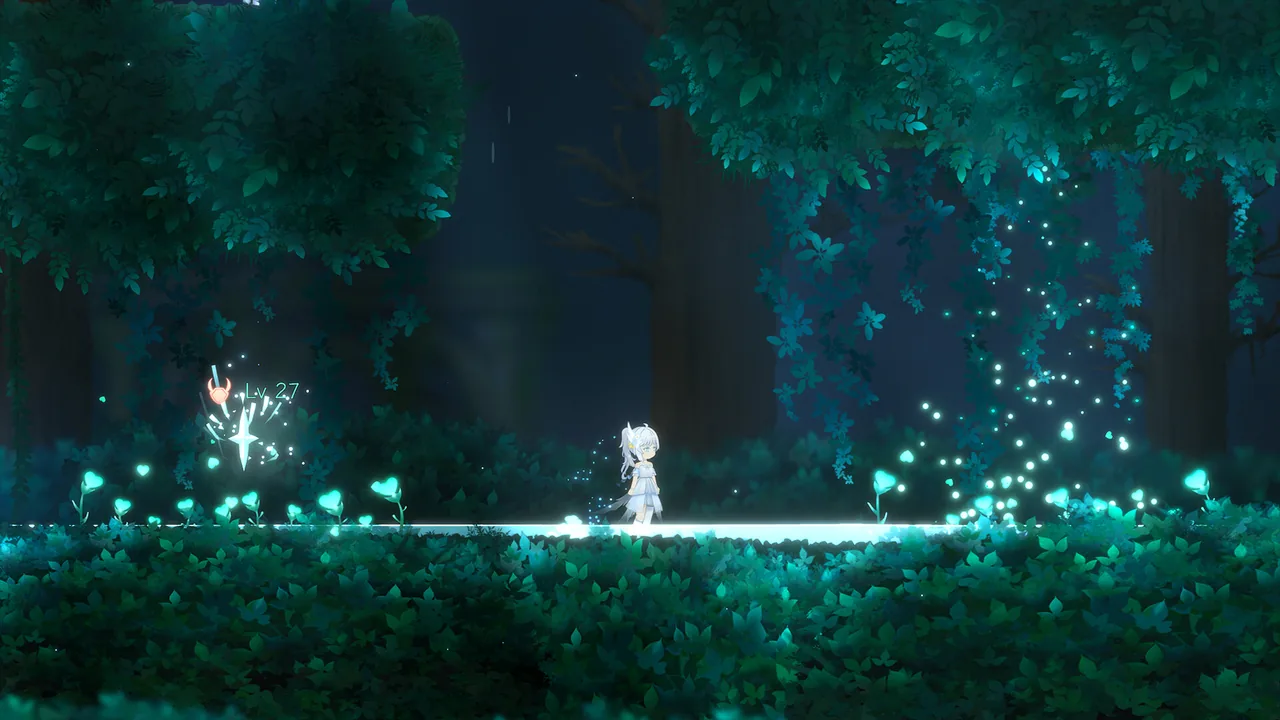
Exploring one of Dawn Dew's atmospheric box-style mapsImage: Anotherindie via Steam -
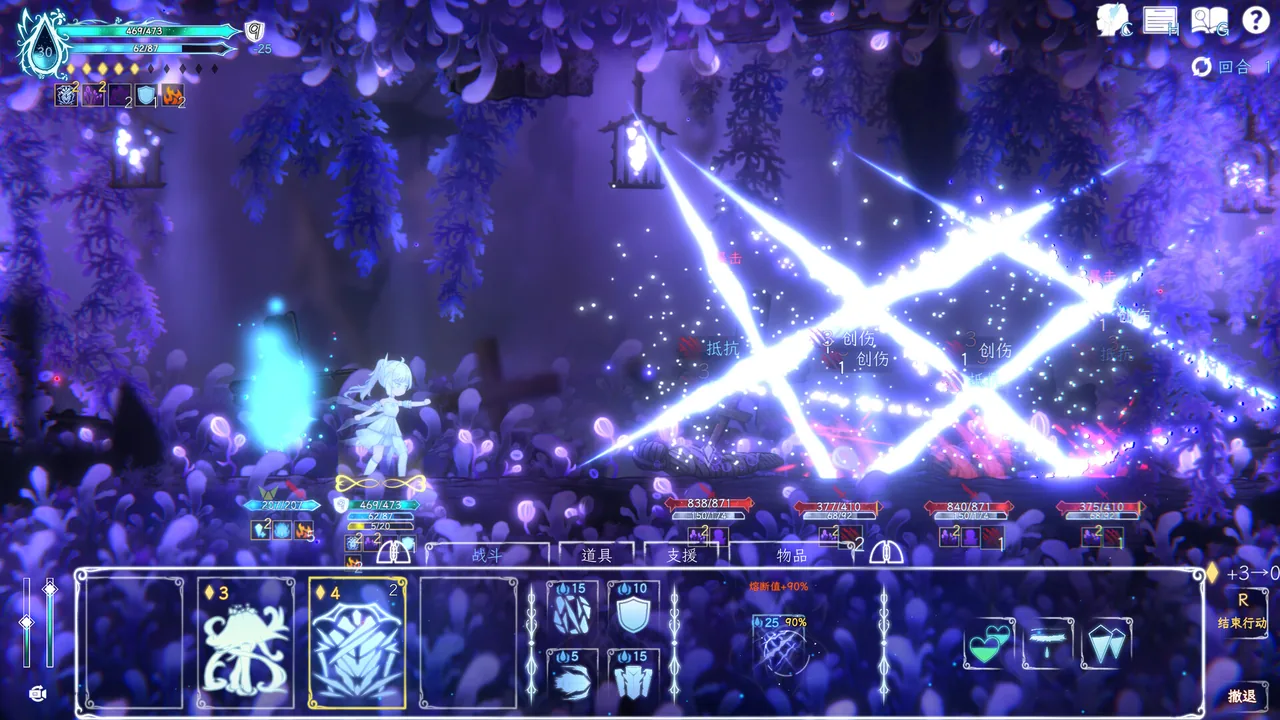
Turn-based combat, showing the posture and skill-card selection systemImage: Anotherindie via Steam -
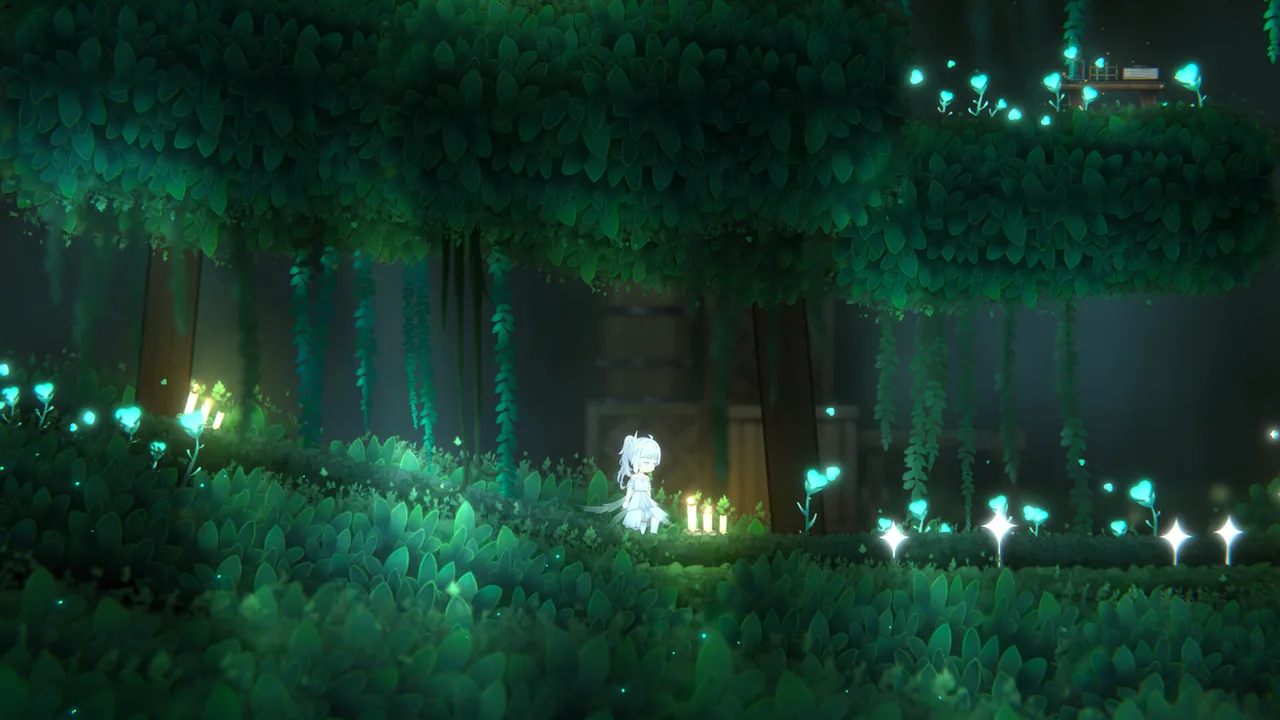
A quieter moment among the game's Ender Lilies-esque forest environmentsImage: Anotherindie via Steam -

Category scores for Journey of Realm: Dawn DewWanderer Game Reviews