Game review
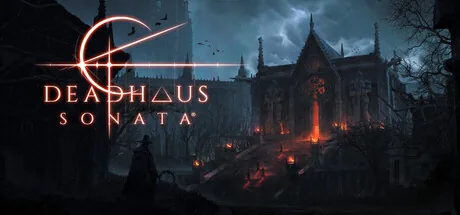
Deadhaus Sonata
4.4 / 10
- Developer
- Apocalypse Studios
- Publisher
- Apocalypse Studios
The short version
Biggest strengths
- Genuine gothic-horror atmosphere and lore depth that longtime Legacy of Kain / Blood Omen fans recognize and respond to
- The tarot-card skill system is a distinctive, well-liked hook — trading-card-style build customization without a monetized card economy
- A small (under-10-person) team with visible passion and years of community engagement via Discord and lore content
Biggest weaknesses
- Launched with only one of seven planned classes playable and roughly four hours of content, by the developer's own admission
- Performance is a widespread complaint — frame drops into the 20s-30s on capable hardware, particularly in the catacombs areas
- A day-one cosmetic microtransaction store alongside a paid Early Access purchase draws sharp, repeated criticism over priorities
4.4 / 10
The Pitch
Deadhaus Sonata carries unusually heavy pedigree for a small indie project: it's directed by Denis Dyack, the creative mind behind Legacy of Kain: Blood Omen and Eternal Darkness, now working with a team of fewer than ten developers. The pitch draws a direct line to that legacy — you become one of the undead, starting as a Vampire who feeds on the living to grow stronger, exploring the divine-war-shattered land of Malorum through a third-person action RPG built around a tarot-card skill system, where each card represents an ability earned through quests and exploration rather than random loot drops.
It's an ambitious foundation: a "living game" built on a custom Eternity Engine, promising co-op play for up to six classes eventually, feats-based itemization tied to player history rather than pure RNG, and a narrative delivered partly through in-lore radio plays the studio has published separately online. For fans who grew up on Blood Omen's gothic scenery-chewing voice work, the ingredients are all recognizably there. The problem, according to a very vocal portion of its 74 English reviews, is that almost none of those ingredients are finished yet — and the game charged money for Early Access on day one anyway, alongside a functioning cosmetic store.
The Lore and Atmosphere Land, When You Can See Them
Setting aside its rough edges for a moment, Deadhaus Sonata's core creative identity clearly resonates with the audience it's chasing. Reviewers repeatedly invoke Blood Omen and Soul Reaver by name, describing the writing, voice acting, and gothic narrative tone as capturing "the feel of Legacy of Kain" in a way few modern games attempt. One longtime community member, following the project since it was "just concepts and an idea" back in 2021, praises the Celestial Clock puzzle system and the depth of world-building visible even in the starting area. Several reviewers specifically credit the studio's lore content — in-universe radio dramas hosted on Spotify and the game's own website — as evidence of a level of narrative investment rare in a small Early Access project.
The tarot-card skill system draws consistent, specific praise as the game's most original mechanical idea: cards are earned through play rather than bought or gacha-randomized, letting players build toward precision, raw power, mobility, tanking, or supernatural control, and one reviewer explicitly likes that it gives "the fun of trading cards... without spending tons like Pokémon." Reviewers who came in through Steam Next Fest demos also note real lore depth delivered in-game via the Celestial Clock and environmental storytelling, distinguishing it from action RPGs that treat their setting as pure backdrop.
An Early Access Launch That Undersold Its Own State
The dominant thread running through the negative-and-mixed reviews isn't really about whether Deadhaus Sonata could eventually be good — it's about how little of it currently exists relative to what a paying Early Access customer might reasonably expect. By the developer's own admission, cited by multiple reviewers, launch content amounts to roughly four hours and one of seven planned classes (Vampire), representing what one reviewer estimates as 10-20% of the eventual full scope. Performance complaints are widespread and specific: multiple reviewers report dropping into the 20-30fps range on capable modern hardware, particularly in catacomb areas, with one reviewer on a high-end GPU calling the result "barely functional." Combat is repeatedly described as clunky, floaty, or unpolished, and interface criticism is sharp enough that one reviewer calls the UI "among the ugliest I've ever seen."
The sharpest, most-upvoted criticism, though, targets sequencing rather than polish: reviewers are frustrated that a day-one, fully-functional cosmetic microtransaction store shipped alongside a paid Early Access entry that's explicitly still missing most of its planned content, arguing that monetization infrastructure was prioritized ahead of the "stable gameplay foundation" Early Access is supposed to exist to build. A smaller but pointed thread of reviews alleges the game uses AI-generated art inconsistent with its store-page AI-content disclosure — an accusation that remains contested and unresolved as of this review, but one specific and recurring enough across independent reviewers to be worth flagging directly rather than omitting.
Signs of Actual Momentum, Not Just Promises
What separates Deadhaus Sonata's review section from a typical "abandoned cash grab" pile-on is how many reviewers explicitly describe watching the game improve in real time. One reviewer who initially called the combat "miserable" and "clunky at best" in an hour-one impression later added a follow-up noting "VAST improvements in just a couple of patches," while still stopping short of a full recommendation. Another, comparing the current build unfavorably to an earlier tech-demo version that had reportedly better animation and combat feel, still credits the team's transparency about what's missing rather than treating the regression as a red flag on its own. That pattern — rocky first impression, softened by visible responsiveness — recurs often enough across independent reviews to read as a genuine trend rather than isolated generosity.
Co-op, one of the game's headline features, has its own specific growing pains: at least one reviewer playing with a partner found that tarot cards earned during a shared mission were awarded to only one player, leaving the other without abilities unique to that content — a structural bug rather than a balance complaint, and one worth knowing about before buying specifically to play with a friend. Combined with reports of the game overheating some PCs and inconsistent crash behavior across different GPU vendors, the overall picture is of a game whose foundational systems are still being actively rebuilt in public, for better and worse.
Verdict
Deadhaus Sonata is, at this exact moment, two different reviews depending on which reviewer you read: a beloved creative team's earnest, lore-rich return to gothic action-RPG territory that's clearly still finding its feet, or a barely-playable four-hour vertical slice charging full Early Access price with a day-one cash shop attached. Both are true simultaneously, and that tension — not any single bug or missing feature — is the actual story of its current review section. The tarot-card build system and Legacy of Kain-adjacent atmosphere are genuine, specific strengths worth watching; the performance issues, missing classes, and monetization sequencing are equally real reasons to wait. This is a "back the project, don't expect to play it seriously yet" purchase for now — worth a look if you're a Legacy of Kain devotee who wants to support the team directly, but not yet a recommendation for anyone looking for a finished game today.
Pros and cons
Pros
- Genuine gothic-horror atmosphere and lore depth that longtime Legacy of Kain / Blood Omen fans recognize and respond to
- The tarot-card skill system is a distinctive, well-liked hook — trading-card-style build customization without a monetized card economy
- A small (under-10-person) team with visible passion and years of community engagement via Discord and lore content
- Multiple reviewers report real, patch-to-patch improvement even within the short window since Early Access launch
Cons
- Launched with only one of seven planned classes playable and roughly four hours of content, by the developer's own admission
- Performance is a widespread complaint — frame drops into the 20s-30s on capable hardware, particularly in the catacombs areas
- A day-one cosmetic microtransaction store alongside a paid Early Access purchase draws sharp, repeated criticism over priorities
- A subset of reviewers allege AI-generated art was used despite the store page's AI-content disclosure, an unresolved point of contention
Screenshots
-
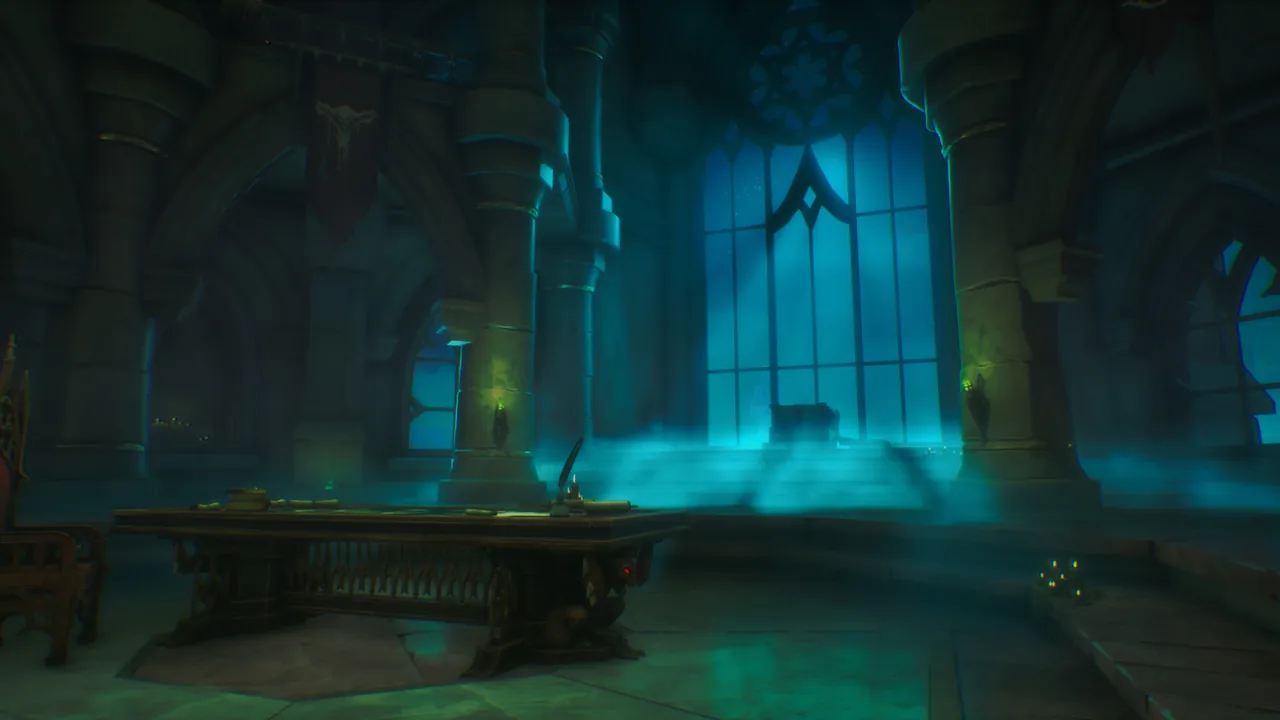
One of Malorum's gothic interiors, lit in the game's signature teal mistImage: Apocalypse Studios via Steam -
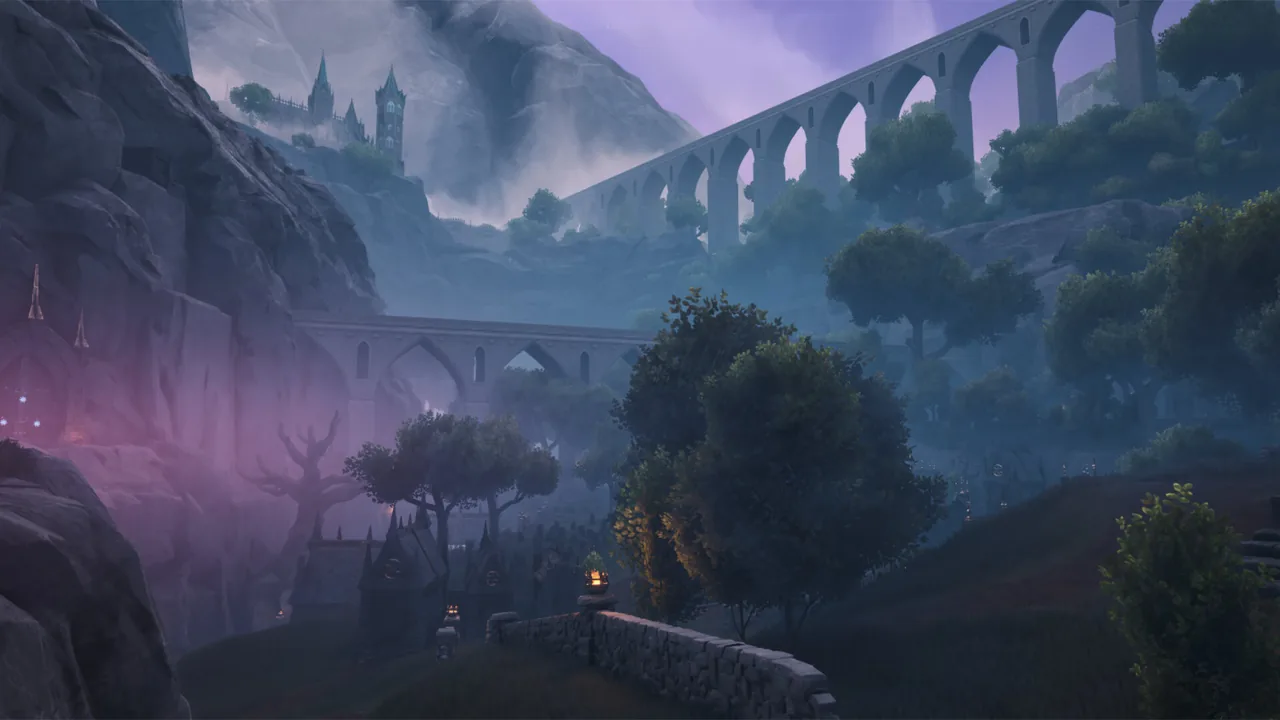
A graveyard valley at dusk, with an aqueduct and castle overlooking MalorumImage: Apocalypse Studios via Steam -
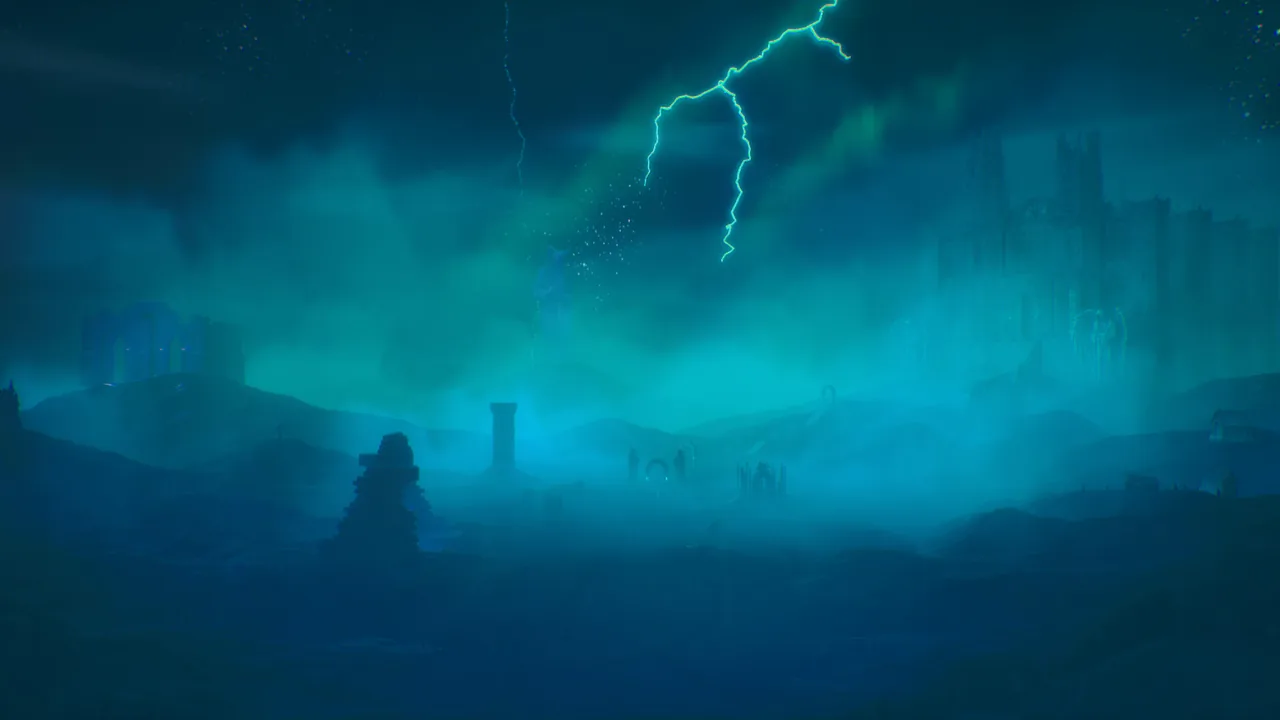
A lightning storm over Malorum's ruins, part of the game's atmospheric world-buildingImage: Apocalypse Studios via Steam -
Category scores for Deadhaus SonataWanderer Game Reviews