Game review
Crusaders Quest : Hero Town
5.1 / 10
- Developer
- CQ LABS
- Publisher
- LoadComplete
The short version
Biggest strengths
- Genuinely charming pixel-art take on the Crusaders Quest cast, and it plays well as a low-effort desktop companion
- Active post-launch support with frequent hotfixes and content dev notes; several reviewers explicitly credit the devs for fast bug turnaround
- Nostalgia lands for returning mobile-game fans, several of whom describe it as unexpectedly absorbing despite going in skeptical
Biggest weaknesses
- Base game is paid, then heroes going forward are being sold as separate DLC — a monetisation shift from the free mobile original that has triggered a sustained, substantive backlash in the review section
- Content runs out fast: multiple reviewers report finishing the available progression in 10-20 hours, with a repetitive, thin endgame after that
- The window won't reliably stay minimized or keep its always-on-top settings between launches, undermining the entire 'sits quietly on your desktop' pitch
5.1 / 10
The Pitch
Crusaders Quest: Hero Town takes the cast and pixel-art sensibility of CQ LABS' long-running mobile gacha RPG and repurposes them into something structurally different: a desktop companion idler that sits on the side of your screen while pixel heroes automatically gather resources, fight monsters, and rebuild a small town. It isn't a straight port — the original mobile game was an active, tap-to-attack gacha RPG with real-money summon mechanics, and this is a passive, background-running idle title you buy once rather than a live-service gacha you feed indefinitely. That's a meaningful enough structural change that it reads as a genuine spinoff built around a recognisable IP, not a re-skin of the same game on a new platform.
For players who spent time with the original — and there are clearly a lot of them among the reviewers here — the appeal is straightforward: familiar characters (Mu, R-0, Monte, Hikari, and the rest of the "Gacha Rangers" get name-checked repeatedly in the review section) rendered in a charming, chunky pixel style, doing idle-genre things instead of gacha-summon things. One returning player describes it as feeling like "a conditional remake" of their old favourite mobile game, done "in a slightly different style," and says they played through it "literally without interruptions until the content ran out." That's about as clean an encapsulation of both what works and what doesn't here as any single sentence could manage.
A Crowded Desktop-Idler Field, And A Comparison Problem
Hero Town doesn't exist in isolation. Reviewers repeatedly and specifically benchmark it against a small cluster of competing desktop-companion idlers released around the same window — Battle On! Hero Academy, TBH: Task Bar Hero, Desktop Raid — and the comparisons are rarely flattering in Hero Town's favour on pure feature count. One reviewer calls it "a more simplistic version" of Battle On! Hero Academy at first glance, though they go on to note Hero Town holds its own on cost and stability. Another reviewer's entire pitch is essentially "buy this instead of Task Bar Hero," citing that game's well-documented bot, hacker, and Steam Market problems as reasons to prefer Hero Town's comparatively quieter, less exploit-plagued environment. That's a real, useful data point about the current desktop-idle subgenre as a whole — it's crowded enough right now that reviewers are actively triangulating between four or five near-identical pitches — but it also means Hero Town's individual strengths have to be judged relative to genre siblings that, by multiple accounts, offer more content for a similar price.
The DLC Backlash Is Substantive, Not Noise
The single most-upvoted negative review in the pool — 176 people found it helpful — isn't a driveby complaint. It's a specific, considered objection to a monetisation change: CQ LABS announced that new heroes going forward will be sold as paid DLC rather than added free, and for a returning mobile-game fan that reads as a bait-and-switch on the original game's most contentious mechanic finally being reintroduced through the back door. The second most-upvoted review goes further with numbers: as of version 1.2.5, the base game ships with 42 free six-star heroes, and the first paid DLC pack adds 12 more — meaning every hero released from that point forward is, by the reviewer's read, permanently locked behind additional purchases on top of the base game's own asking price.
It's worth noting there's real pushback against this reading within the review pool itself — one highly-rated positive review argues the backlash is "largely unwarranted," pointing out you're never required to spend to progress the way the original mobile gacha demanded real money for summons. Both readings can be true simultaneously: the DLC model is objectively a change from "everything free, monetised through gacha odds" to "base price plus optional paid content," and reasonable players disagree about whether that's actually worse for the average buyer. What isn't in dispute is that the backlash is large, specific, and sustained enough — not a handful of trolls — that it has to weigh into the game's practical value proposition today, whatever its long-run trajectory turns out to be.
Short Legs
Independent of the monetisation argument, there's a second, distinct complaint pattern about sheer content volume. Multiple reviewers who otherwise enjoyed themselves report finishing the meaningfully progressable content in the 10-20 hour range, after which the loop becomes repetitive without new systems to chase. One reviewer specifically flags an achievement-pacing mismatch as emblematic of the problem: getting to 5,000 "honor" points takes roughly 15 hours, but one achievement demands a full million — a jump that reads less like intentional long-tail pacing and more like a grind wall bolted on after the actual content ran dry. For a game whose core pitch is "leave it running in the background indefinitely," having the actual content floor sit closer to a 10-20 hour single-player campaign than an open-ended idle loop is a real mismatch between marketing and delivery.
There's also a specific technical complaint that undercuts the "quiet desktop companion" pitch directly: the window is coded to stay on top of other applications by default, and getting it to behave — staying minimized, remembering size and position settings between launches — reportedly requires fighting the game's own settings, which it periodically overwrites anyway. For a game whose entire premise is coexisting unobtrusively alongside your actual work, that's not a minor annoyance; it's friction at the one job the game is specifically designed to do. One player additionally reported a genuinely severe bug: 60 hours of saved progress reverting to a fresh tutorial state while the in-game town itself remained full of already-built structures, an inconsistency the reviewer correctly flagged as a sign the release shipped in rougher shape than its version number suggested.
Verdict
Crusaders Quest: Hero Town is a well-made, frequently-patched piece of nostalgia bait that mostly succeeds at what it sets out to do — the pixel art is charming, returning fans of the mobile original clearly find real pleasure in seeing the cast again, and the developers have a demonstrated track record of turning bug reports into hotfixes quickly rather than letting them fester. But it's launched into a genuinely crowded field of near-identical desktop idlers, several of which reviewers say offer more for a similar price, and it's carrying two specific, substantive complaints of its own: a hero-DLC monetisation shift that a meaningful slice of its own audience considers a betrayal of the free-to-play spirit its IP built its reputation on, and a content floor that runs out well before the "always-on companion" pitch suggests it should. Worth a look for CQ nostalgics specifically, provided you go in expecting a solid 10-20 hour experience rather than the indefinite background hum the marketing implies — everyone else should try one of the genre's less contentious competitors first.
Pros and cons
Pros
- Genuinely charming pixel-art take on the Crusaders Quest cast, and it plays well as a low-effort desktop companion
- Active post-launch support with frequent hotfixes and content dev notes; several reviewers explicitly credit the devs for fast bug turnaround
- Nostalgia lands for returning mobile-game fans, several of whom describe it as unexpectedly absorbing despite going in skeptical
- Cheaper up front than some desktop-idler competitors, and does not require real-money gacha spending the way the original mobile game did
Cons
- Base game is paid, then heroes going forward are being sold as separate DLC — a monetisation shift from the free mobile original that has triggered a sustained, substantive backlash in the review section
- Content runs out fast: multiple reviewers report finishing the available progression in 10-20 hours, with a repetitive, thin endgame after that
- The window won't reliably stay minimized or keep its always-on-top settings between launches, undermining the entire 'sits quietly on your desktop' pitch
- At least one reported catastrophic bug wiped 60 hours of saved progress back to the tutorial state while leaving the town itself full
Screenshots
-
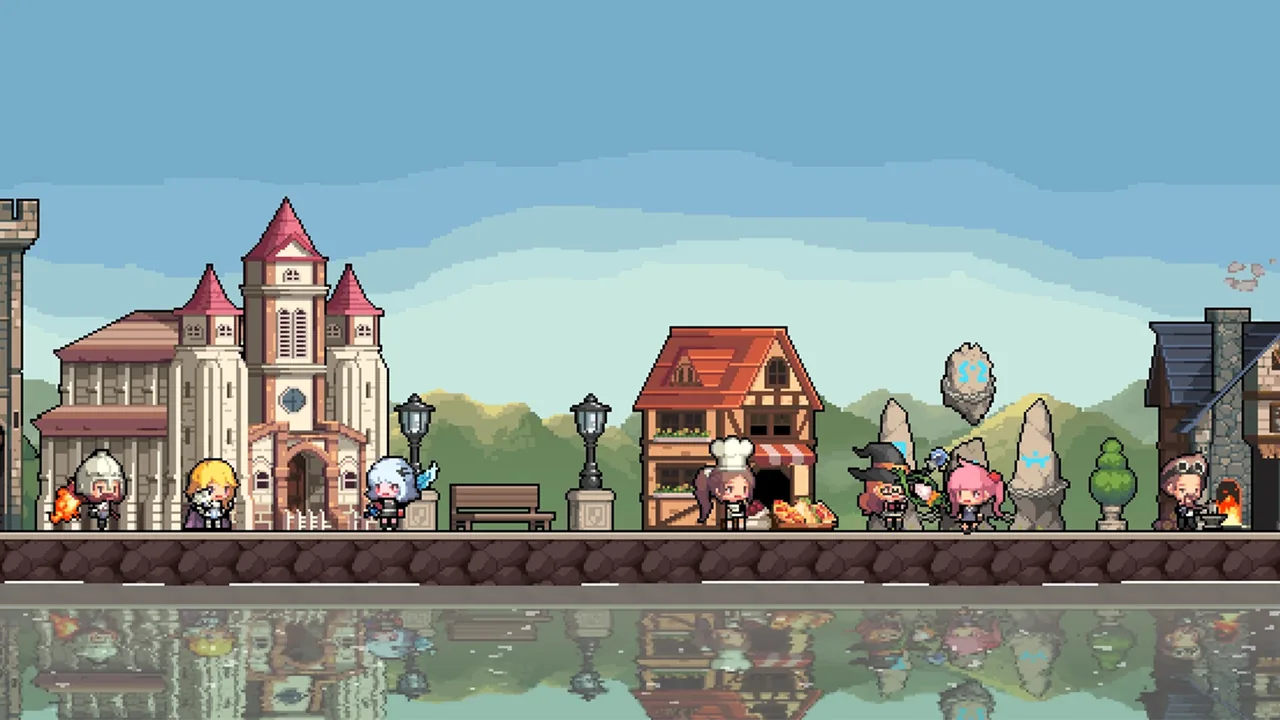
The town view — heroes wander and work automatically among the buildings you construct.Image: LoadComplete via Steam -
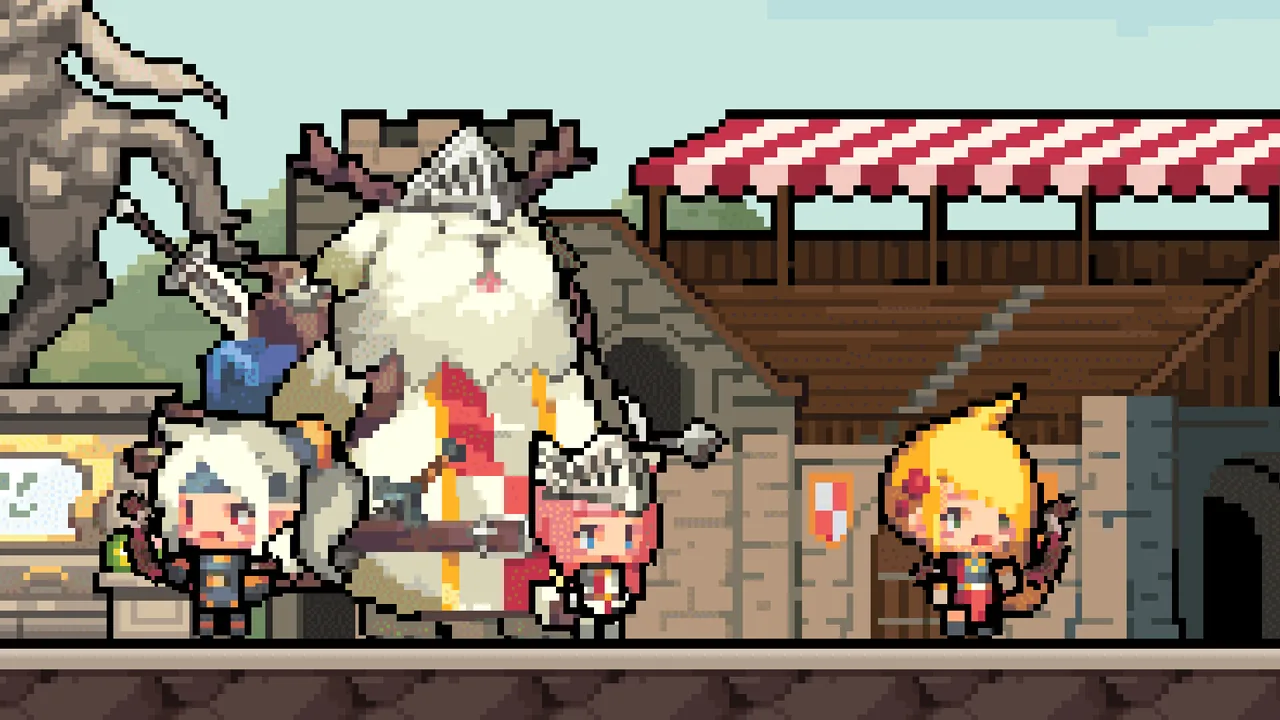
A closer look at the town's cast, including one of its larger, more elaborately-costumed heroes.Image: LoadComplete via Steam -
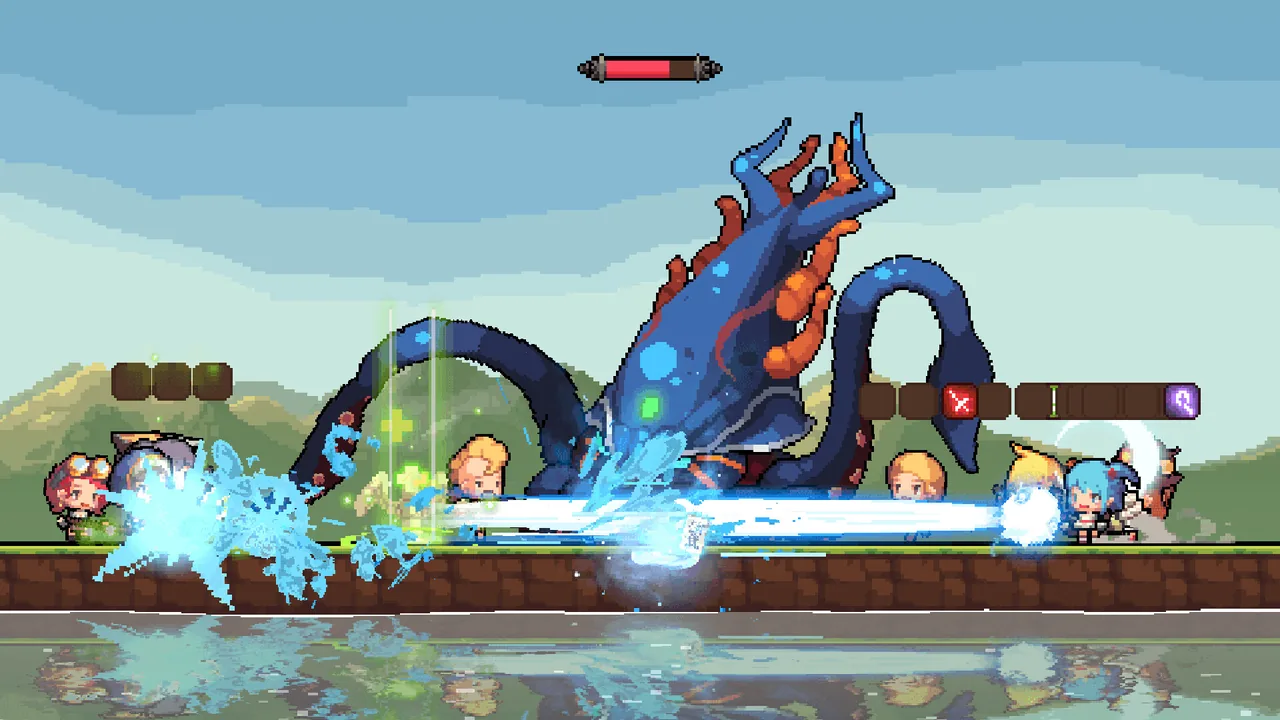
Combat plays out largely on its own against bosses like this serpent, with heroes triggering skills automatically.Image: LoadComplete via Steam -
Developer, release date and platform details at a glance.Wanderer