Game review
Airships: Lost Flotilla
7.3 / 10
- Developer
- David Stark
- Publisher
- David Stark, Metaroot
The short version
Biggest strengths
- Reviewers consistently describe the arena-shooter loop as bizarrely addictive, praising the way a ship's slow, weighty turning creates a genuinely distinct feel compared to more common twin-stick survivors-likes
- A wide roster of ships, from tanky battleships to nimble propeller craft, each with different weapon and module slots, draws repeated praise for build variety and replayability
- Reviewers describe surprising content depth for the price, citing a hidden language system, branching path-planning between missions, and faction relationships as rewarding features that aren't obvious at first glance
Biggest weaknesses
- Framerate drops during busy encounters with many enemies on screen are a recurring complaint, with reviewers surprised given how simple the underlying graphics are
- Difficulty balance draws mixed reactions, with some reviewers feeling that later challenges demand precise strategic knowledge upfront rather than rewarding trial and error the way comparable games do
- Several reviewers wish for more granular weapon control, since the fully automated firing systems leave little room to manually prioritize targets in chaotic fights
7.3 / 10
Overview
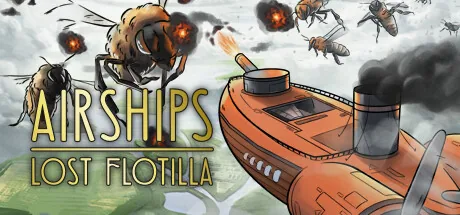
Airships: Lost Flotilla is a steampunk autoshooter from solo developer David Stark, set in the same world as his earlier Airships: Conquer the Skies. Players guide a fleeing airship through waves of pirates, cultists, and sky monsters, harvesting wreckage and upgrading their vessel on the way to safe harbor. It released on Steam on January 23, 2025, published by David Stark and Metaroot, and holds a Very Positive standing across 231 reviews.
The review pool is enthusiastic almost across the board, with reviewers repeatedly describing a game that looks simple on the surface but reveals unexpected depth, from build variety across its many ships to a branching campaign structure and hidden systems that reward repeated runs.
Story and Setting
The premise is lean: a fleet betrayed and scattered by enemies, its survivors fighting through hostile skies toward safety. Reviewers describe the steampunk aesthetic and creature design as a genuine highlight, with the bestiary in particular earning praise for lore that several reviewers call surprisingly dark or "nightmare fuel" for what initially reads as a lighthearted arcade shooter.
A few longtime fans of the developer's earlier work note that Lost Flotilla shares a universe with Airships: Conquer the Skies and expands on its established lore, treating the connection as a pleasant bonus for returning players rather than a requirement to enjoy the new game. Newcomers, meanwhile, report no trouble picking up the setting cold, since the game front-loads action over exposition and lets the writing surface gradually through the journal and enemy encounters rather than dedicated story sequences.
Gameplay and Mechanics
The core loop puts players in control of a single airship navigating a series of arena encounters, firing automatically at waves of enemies while managing positioning and ship-specific abilities. Reviewers repeatedly single out the ship's slow, momentum-based turning as the game's defining mechanical hook, describing a unique tension between maneuvering to line up shots and dodging enemies that have to contend with the same turning limitations. Several compare the overall feel favorably to a mashup of Vampire Survivors and FTL, with the airship setting and turn-based navigational stakes giving it a distinct identity within an increasingly crowded genre.
Not every reviewer finds the balance equally satisfying. A vocal minority describes some encounters as difficult in a way that feels less like escalating challenge and more like a required knowledge check, punishing players who haven't already learned optimal builds and strategies through repetition. Several reviewers also wish for more manual control over weapon targeting, since the fully automated firing systems can struggle to prioritize the most dangerous enemy during especially chaotic fights.
Resource management adds another layer reviewers call out favorably: wreckage harvested from downed enemies feeds directly into on-the-fly repairs and upgrades, so a run's momentum depends as much on cleanup and salvage discipline as on raw combat skill. That tension between pressing forward for more loot and turning back to consolidate what a ship has already gathered is, according to several reviewers, where the game's tactical decision-making actually lives, even though the moment-to-moment shooting looks simple at a glance.
Progression and Replayability
Between runs, players unlock new ships, weapons, and modules, and reviewers consistently highlight how differently each ship handles, from tanky, nearly stationary battleships to fast, maneuverable scouts, giving genuine reason to revisit the roster rather than settling on a single build. A branching path-planning system lets players choose their route between missions, trading off enemy difficulty, rewards, and faction relationships, with one reviewer specifically praising the ability to befriend a cultist faction for unique battle assistance.
Several reviewers note that the game's true depth isn't obvious on a first run, describing a hidden language and lore system that only reveals itself with repeated play, and encouraging newcomers to push past an initially "bare-bones" first impression. The main campaign itself runs short, generally clocking in around two hours for a full playthrough, and while most reviewers say that's appropriate for the low asking price, several would welcome a longer campaign, additional modes, or a proper endless mode for players who finish the existing content and want more.
Unlocking new ships and modules also gates access to different parts of the branching campaign map, so reviewers describe a natural incentive loop where a strong early run opens up tougher, more rewarding paths on the next attempt rather than simply repeating the same route with a marginally stronger loadout. That structure, several note, gives the short campaign more replay value than its length alone would suggest, since chasing a full roster of ships and a complete faction relationship map takes considerably longer than a single clean playthrough.
Visual Style and Sound Design
Visually, reviewers are candid that Lost Flotilla won't win points for cutting-edge graphics, several explicitly describing it as looking like "an up-budgeted flash game," but most frame that as an endearing feature rather than a flaw given the game's low price and solo-developer scope. The steampunk art direction and creature designs draw more specific praise, with reviewers calling out a distinct visual identity despite the technical simplicity. The soundtrack receives standout mentions as well, with more than one reviewer calling the score "bombastic" and a genuine highlight of the presentation.
Where the presentation falls short is performance under load: reviewers report noticeable framerate drops when many enemies crowd the screen at once, a complaint several find surprising given how basic the underlying visuals otherwise are, and multiple reviewers suggest the game could use further optimization passes to smooth out these busier encounters.
Verdict
Airships: Lost Flotilla is a deceptively deep, distinctly flavored entry in the crowded autoshooter-survivors genre, elevated by its slow-turning airship mechanic, creative steampunk lore, and a surprising amount of content packed into a short, inexpensive package. Framerate hiccups during hectic fights, a difficulty curve that can feel punishing before the player has learned its systems, and a short main campaign are real limitations, but reviewers overwhelmingly describe the core experience as worth far more than its modest price tag. For fans of genre staples like Vampire Survivors or Brotato looking for a fresh mechanical twist, this is an easy, confident recommendation.
Pros and cons
Pros
- Reviewers consistently describe the arena-shooter loop as bizarrely addictive, praising the way a ship's slow, weighty turning creates a genuinely distinct feel compared to more common twin-stick survivors-likes
- A wide roster of ships, from tanky battleships to nimble propeller craft, each with different weapon and module slots, draws repeated praise for build variety and replayability
- Reviewers describe surprising content depth for the price, citing a hidden language system, branching path-planning between missions, and faction relationships as rewarding features that aren't obvious at first glance
- The steampunk setting and bestiary earn specific praise for their creative, sometimes genuinely unsettling lore, with several reviewers calling the writing and worldbuilding a cut above the genre's usual presentation
Cons
- Framerate drops during busy encounters with many enemies on screen are a recurring complaint, with reviewers surprised given how simple the underlying graphics are
- Difficulty balance draws mixed reactions, with some reviewers feeling that later challenges demand precise strategic knowledge upfront rather than rewarding trial and error the way comparable games do
- Several reviewers wish for more granular weapon control, since the fully automated firing systems leave little room to manually prioritize targets in chaotic fights
- A handful of reviewers wanted a longer main campaign or an infinite endless mode, noting the primary campaign can be completed in only a couple of hours
Screenshots
-
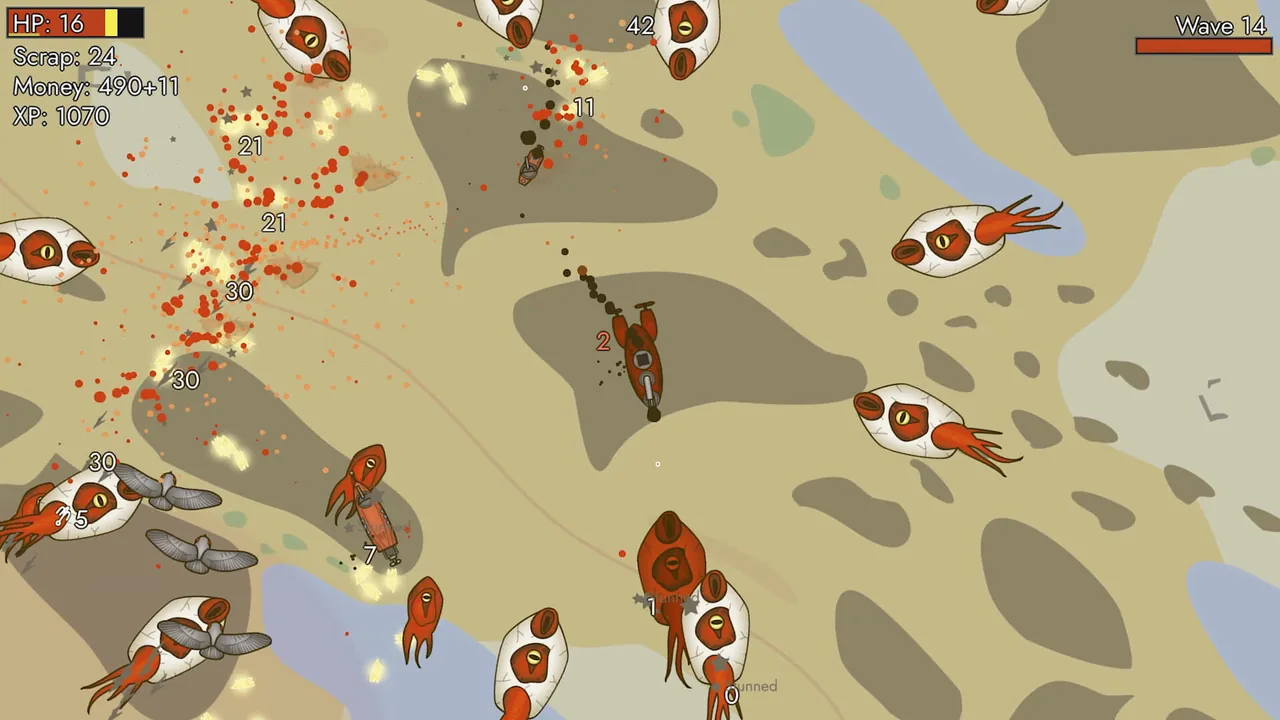
A late-wave encounter against a swarm of squid-like sky creatures, with scrap and XP piling up from the fightImage: David Stark via Steam -
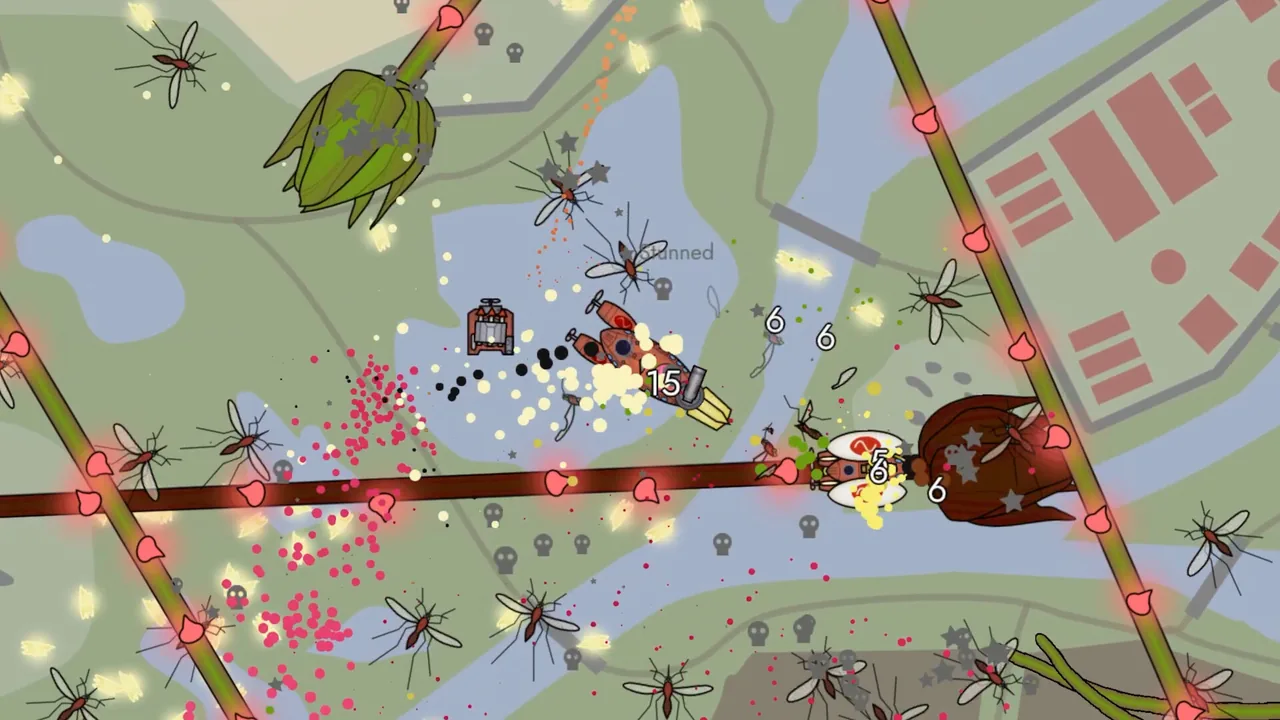
A damaged airship holds the line against a mosquito swarm on one of the game's marshland mapsImage: David Stark via Steam -
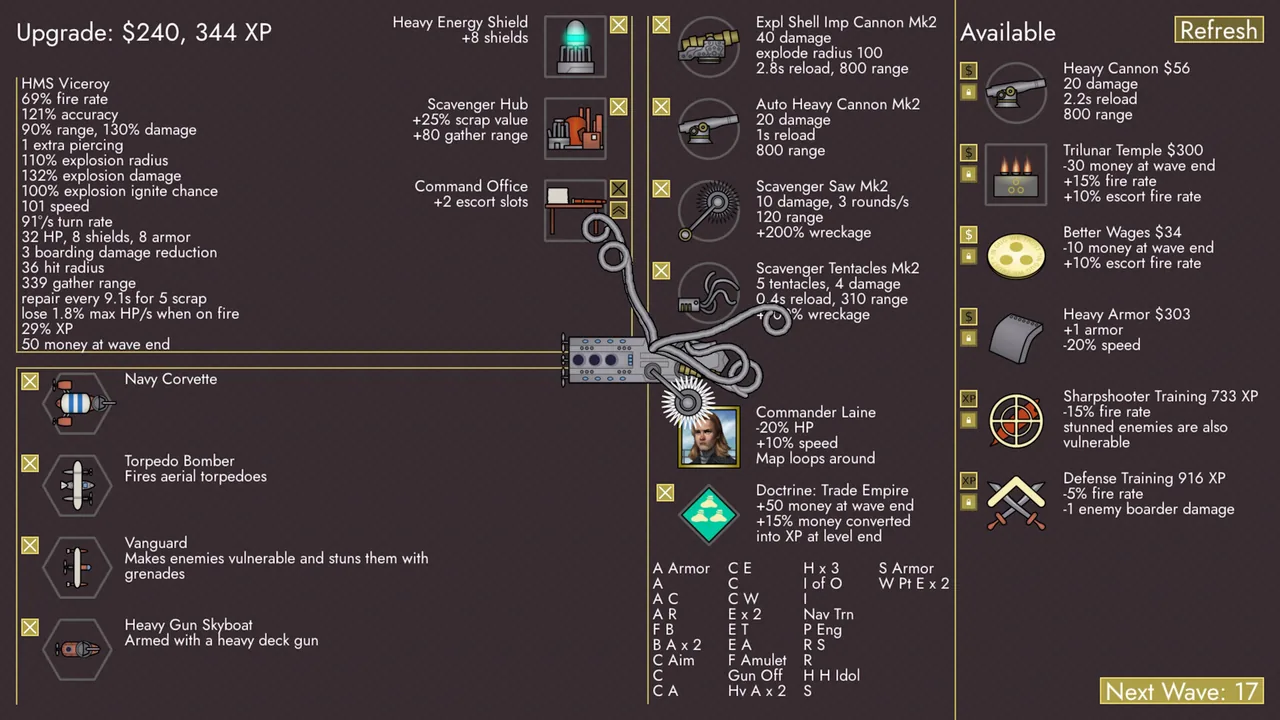
The upgrade screen, where scrap and XP are spent on weapons, modules, and crew perks between wavesImage: David Stark via Steam -
Wanderer Game ReviewsWanderer Game Reviews