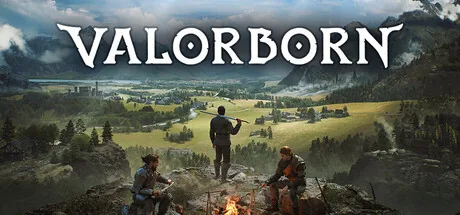
Game review
Valorborn
5.1 / 10
- Developer
- Laps Games
- Publisher
- Laps Games
The short version
Biggest strengths
- A genuinely ambitious 'living world' sandbox RPG in the Kenshi mold: permadeath, faction conflict, fully enterable buildings, and a squad the world doesn't scale to fit
- An automated work system for managing squad labor that several reviewers single out as already deeper and more satisfying than expected
- A visibly active, communicative solo-ish studio that reviewers repeatedly credit with real potential, even amid harsh criticism
Biggest weaknesses
- Core interactions frequently break outright: chests that can't be opened, construction that can't be placed or clicked, and a tutorial repeatedly reported as unfinishable across separate playthroughs
- A save system multiple reviewers describe as reverting or corrupting constructed buildings and lost progress
- A clunky, laborious inventory and trading interface that requires closing one character's panel to open another's, with no drag-and-drop item transfer between party members
5.1 / 10
Medieval Kenshi, built by a small team chasing a huge ambition
Valorborn wears its inspiration openly: a squad-based, open-world survival RPG where the world does not scale to the player, permadeath is real, and success depends on preparation rather than raw stats. Reviewers invoke Kenshi in almost every substantial write-up, and not casually — several are longtime Kenshi players comparing Valorborn against a game they know intimately, and most conclude the resemblance is earned rather than superficial. One reviewer frames the comparison as a straightforward value proposition: "do you want medieval Kenshi or not?" Others go further, arguing that games this ambitious are inherently hard to build well and that the mere attempt, on Unreal Engine rather than Kenshi's aging in-house tech, deserves real credit. The setting supports the ambition: fully enterable buildings, a faction-driven world that doesn't pause for the player's convenience, and a squad structure where losing a fight to a better-equipped enemy is a lesson rather than an unfair defeat.
A promising loop of building, crafting, and squad management
Underneath the Kenshi comparison sits a genuine base-building and party-management RPG. Players construct bases, recruit and equip a squad, gather resources, and craft equipment and structures, all while managing a work system that assigns labor across the party. That automated work system draws some of the review pool's most enthusiastic praise — one long-session reviewer with over 3,000 minutes played specifically calls out how deep and configurable it becomes once understood, describing solid personal progress toward self-sufficient industry and thousands of gold in accumulated wealth within a handful of hours. Character progression follows a similar shape to Kenshi's use-based skill growth rather than simple experience-point leveling, and reviewers who have stuck with the game describe reaching a point where grinding gives way to genuine questing and exploration — evidence the underlying systems can click once the early friction is overcome.
Combat with real stakes, held back by real jank
Combat is one of the more consistently praised pillars: fights are tactical and genuinely risky, with enemies that don't level down to accommodate an underprepared party, forcing players to actually scout, prepare, and retreat rather than simply grinding through resistance. That said, several detailed reviews flag specific rough edges undercutting the tension: a broken crouch mechanic that let one player wipe an entire enemy camp through unintended one-by-one assassinations, group fights where squad members line up single-file behind each other instead of surrounding a target, and a perception system reviewers say still needs real tuning. Enemy aggro range is also called out as unrealistically global rather than proximity-based, pulling fights the player didn't choose to start. None of these complaints describe combat as fundamentally broken — reviewers largely frame them as exactly the kind of balance work that's expected to improve, but they currently blunt what should be the game's sharpest edge.
The bugs that actually stop play
Where the review pool turns sharply negative is not balance but reliability. The most frequently repeated complaint by far is a broken or unreliable tutorial: multiple separate reviewers report the tutorial's key interaction — repairing or interacting with an object needed to progress — simply doesn't register, blocking new players before they've even reached the open world. Construction and inventory interactions are reported to randomly stop working entirely, with chests becoming un-openable and building placement failing without explanation. Several reviewers describe a specific and troubling save-related bug where constructed buildings and stored items vanish after a save-reload cycle, in one case reportedly wiping a storage chest the player had just finished building. Crafted items and gathered materials are also reported to occasionally disappear outright — consumed by the crafting system without producing the promised output, a bug one reviewer says persisted despite repeated relaunches and a full computer reboot.
A clunky interface layered on top of the chaos
Even setting aside outright bugs, the interface draws sustained criticism as simply unfinished. Managing a multi-character squad's inventory is described as needlessly laborious: players must fully close one character's inventory panel before opening another's, with no drag-and-drop transfer of items between party members, and separating trade currency requires manually tracking coins per-merchant in a way multiple reviewers find baffling rather than deliberate. Camera behavior, particularly during the tutorial, is reported to get stuck. These aren't dealbreakers on their own, but reviewers repeatedly note they compound the frustration of an already bug-riddled early build, turning routine squad management into one of the most tiring parts of playing.
Verdict
Valorborn is a case study in a game whose foundation reviewers genuinely believe in, sitting inside a build that isn't yet ready to showcase it. The Kenshi comparisons are earned rather than marketing shorthand — the living-world ambition, the squad-based survival loop, and an automated work system that already impresses some players all point toward real long-term potential, and the developer's active patch cadence has bought considerable goodwill even from reviewers currently marking the game not recommended. But right now, a broken tutorial, unreliable saves that can erase constructed progress, randomly non-functional core interactions, and a genuinely clunky inventory interface make Valorborn a rough, frequently frustrating experience rather than the polished Kenshi successor its fans are hoping for. Buy in now only if you're genuinely willing to be part of an early, bug-heavy development process and can afford to lose some progress along the way; everyone else should wishlist it and watch for a build where the tutorial reliably works and saves can be trusted.
Pros and cons
Pros
- A genuinely ambitious 'living world' sandbox RPG in the Kenshi mold: permadeath, faction conflict, fully enterable buildings, and a squad the world doesn't scale to fit
- An automated work system for managing squad labor that several reviewers single out as already deeper and more satisfying than expected
- A visibly active, communicative solo-ish studio that reviewers repeatedly credit with real potential, even amid harsh criticism
- Tense, unforgiving combat where under-leveled fights against better-equipped enemies feel genuinely dangerous rather than trivial
Cons
- Core interactions frequently break outright: chests that can't be opened, construction that can't be placed or clicked, and a tutorial repeatedly reported as unfinishable across separate playthroughs
- A save system multiple reviewers describe as reverting or corrupting constructed buildings and lost progress
- A clunky, laborious inventory and trading interface that requires closing one character's panel to open another's, with no drag-and-drop item transfer between party members
- At roughly NZ$36 at full price, reviewers widely consider the current, heavily bugged state poor value, with several recommending a wishlist-and-wait approach instead
Screenshots
-
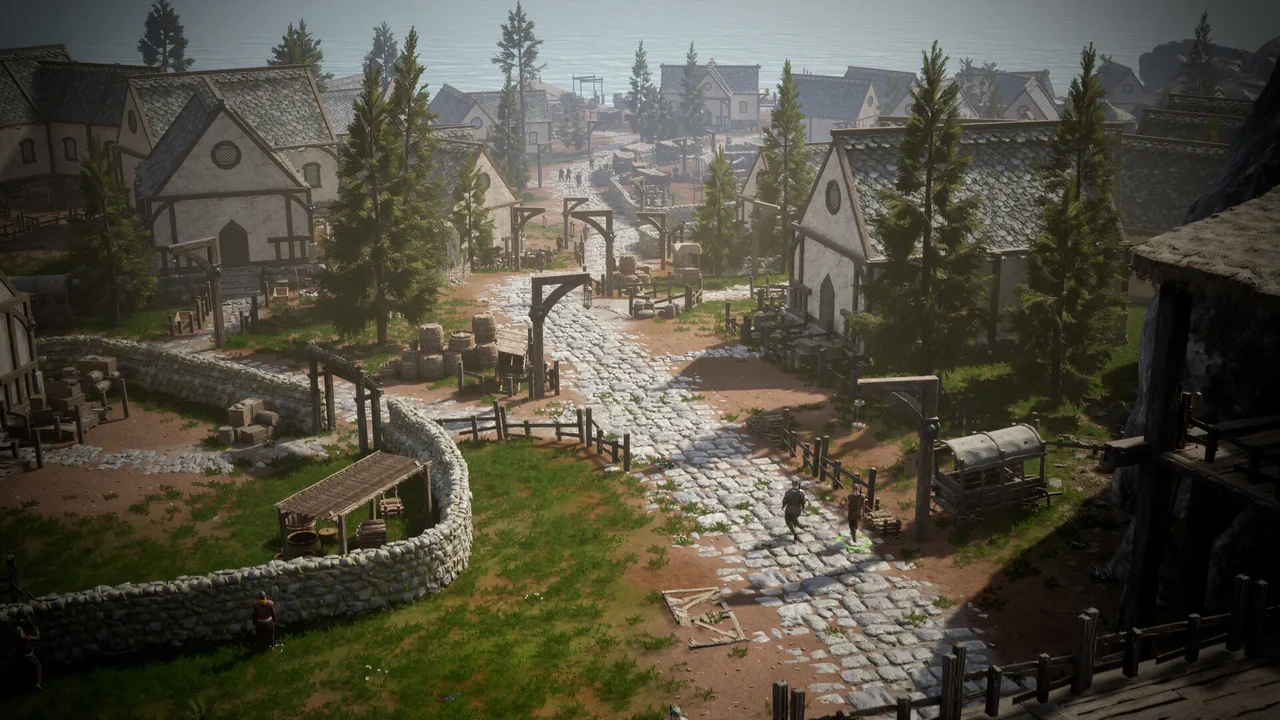
A coastal village, built up with stone walls and timber housingImage: Laps Games via Steam -
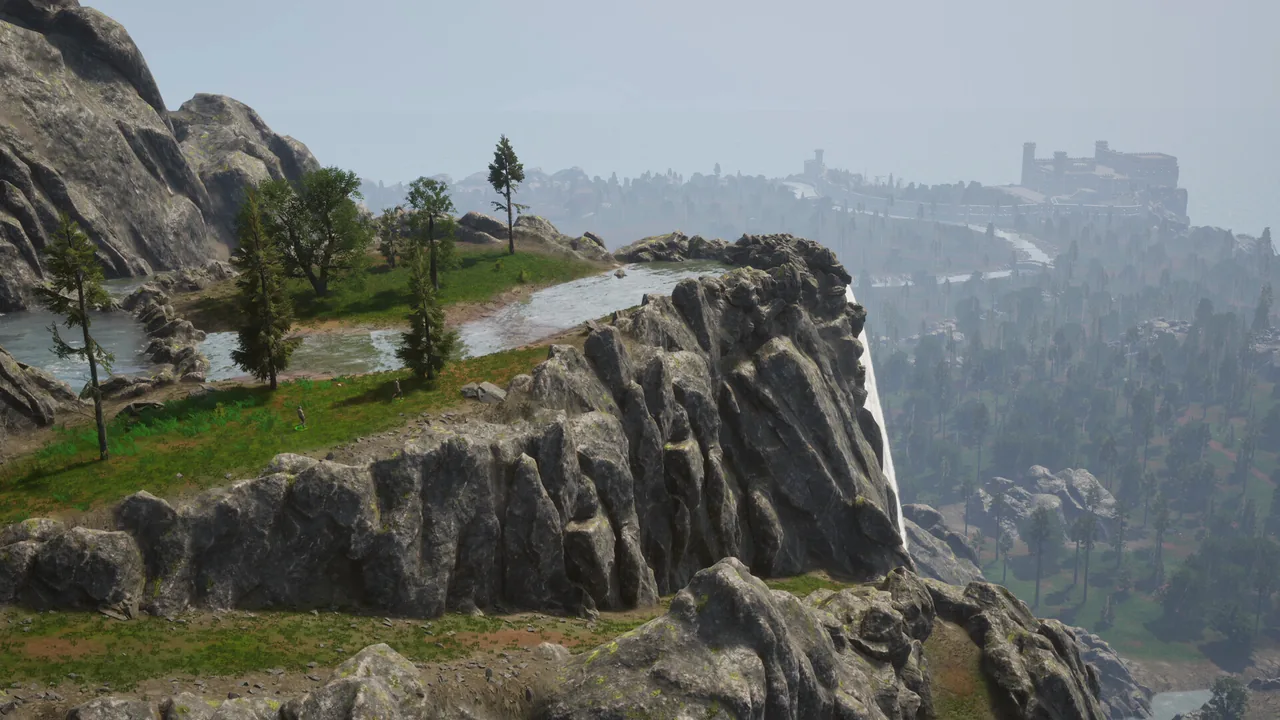
Exploring a rocky overlook, with a distant fortress town visible through the hazeImage: Laps Games via Steam -
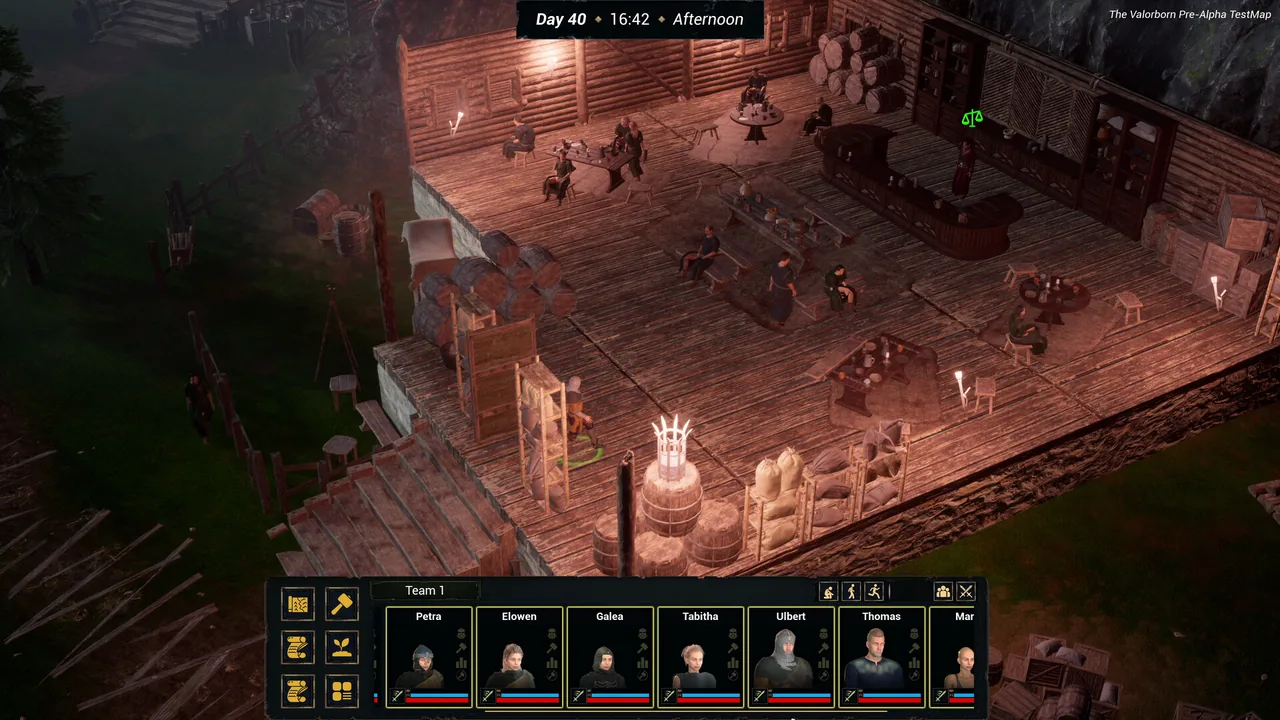
Managing a seven-person squad inside a torchlit base, with each member's status tracked along the bottom barImage: Laps Games via Steam -

Category scores for ValorbornWanderer Game Reviews