Game review
Swords And Magic: Path Of Conquest
6.2 / 10
- Developer
- ShadowMoon Wolf Game Tech Ltd
- Publisher
- ShadowMoon Wolf Game Tech Ltd
The short version
Biggest strengths
- An addictive core loop of recruiting, equipping, and auto-battling a party of 6, 12, or 24 characters through wave-based dungeon raids
- Class and monster design shows real thought, with reviewers noting slimes resist melee damage and shielded goblins actually block, matching genre expectations
- A widely praised solo developer who reviewers describe as unusually responsive, shipping frequent fixes and content updates during Early Access
Biggest weaknesses
- Missing basic quality-of-life tools, including no auto-heal for fallen party members and no way to prioritize targets in auto-resolved fights
- Onboarding is thin to nonexistent, leaving players to learn core systems like run-only item scaling through trial and error
- Multiple reviewers reported bugs, including camera clipping, characters stuck on scenery, and an inability to pause during combat
6.2 / 10
Overview
Swords And Magic: Path Of Conquest is an Early Access single-player RPG from ShadowMoon Wolf Game Tech Ltd that fuses party progression with real-time auto-battling, entering Steam in January 2026 to a small but notably positive English review pool. Players recruit adventurers, starting from either an Archer or a semi-magic Divine Sword, and grow a squad that can eventually field 6, 12, or 24 fighters into wave-based dungeon raids. The pitch lands closer to an auto-chess-meets-roguelite hybrid than a traditional party RPG, and reviewers consistently describe it as a surprisingly addictive foundation for a project credited largely to a single developer, even as its Early Access rough edges are impossible to ignore.
World and Structure
There isn't much of a story driving Path Of Conquest; the framing is functional rather than narrative, built around sending a guild's worth of recruits into procedurally varied dungeons rather than following any particular protagonist. Structure comes instead from the Monster Codex, which logs information on every creature the player has defeated so they can plan strategy around specific threats, and from the Roguelite Dungeon system itself: raids are split into discrete waves, and after clearing each one, players choose between grabbing a powerful run-only Collection to push deeper or withdrawing with what they've already earned. Several reviewers noted this risk-reward pacing gives even short sessions a clear rhythm, though more than one also pointed out that Collections and other run-specific bonuses aren't explained anywhere in-game, leaving new players to discover through trial and error that these effects don't carry over between dungeon attempts.
Gameplay and Mechanics
The moment-to-moment loop centers on recruiting characters, assigning talents and combat abilities, gearing them up, and then watching auto-resolved battles play out while making strategic choices between waves, including picking which enemy to face next rather than facing a fixed lineup. Reviewers responded well to the underlying monster logic: one specifically praised how slime enemies prove unexpectedly resilient against melee classes while shielded goblins genuinely block incoming attacks, calling out the design as delivering exactly the fantasy logic players expect from those enemy archetypes. That said, the loop is currently missing conveniences that reviewers felt were basic necessities rather than luxuries. Multiple players asked for an auto-heal option after losing party members, since manually clicking a healing potion onto each fallen character in a 24-person raid was repeatedly singled out as tedious busywork, and others wanted the ability to set targeting priorities for the "Let Team Decide" auto-resolve option rather than leaving it fully automated. Bugs also surfaced across the pool: camera clipping, characters getting stuck walking into trees, and an inability to open the pause menu mid-combat were all cited by at least one reviewer as significant enough to force quitting the game outright. Class variety drew mixed notes too: one reviewer wanted a true druid or cleric healer option and found the existing Necrosummer character's movement speed frustratingly slow, while a harsher 45/100 review argued the game currently suits "experienced Beta-Testers" more than general players, a critique the solo developer, posting under the handle Archer, personally responded to by noting it was their first project. Despite these complaints, the developer's update cadence came up again and again as a mitigating factor, with reviewers describing daily fixes and additions that visibly reshaped the game for the better within days of purchase.
Visual Style and Sound Design
Steam's own store description touts a "fantasy world in realistic graphics," and reviewer reaction to the presentation was broadly favorable, with one describing the auto-battles as genuinely looking like an action RPG fight in motion rather than a static number-cruncher, despite no direct player control over combat. The game ships with accessibility-minded options including adjustable difficulty, keyboard-only and mouse-only control schemes, and full controller and Steam Cloud support, a reasonably robust technical baseline for a small-team Early Access release. Interface polish trails the combat presentation, though: reviewers flagged light-colored UI text sitting on light backgrounds as hard to read, and at least one player found the overall UI too small with no scaling option currently available, both issues consistent with a game still working through its Early Access punch list.
Progression and Replayability
Progression runs through recruiting and leveling a roster, crafting equipment from resources harvested in dungeons and the wider world, and building each character's talent and gear loadout to complement the rest of the squad. Reviewers described real depth here once the systems click, citing high itemization variety and strong replayability as characters and their builds diverge across different runs, and multiple players explicitly compared the addictive quality to incremental or idle games layered with extra strategic steps. The 24-man raid mode drew specific praise as an especially fun and rewarding endgame-style option once a roster is built out. On the downside, itemization can outpace the player early on, with one reviewer describing frustration at repeatedly finding loot above their current party's level with no clear indication of which characters could even use a given item, a rough-edge symptom of the missing tutorial rather than a fundamental design flaw.
Verdict
Swords And Magic: Path Of Conquest is an Early Access auto-battler with real promise: a satisfying recruit-and-build loop, thoughtful monster design, and a small development team that reviewers trust to keep improving the game quickly. It's held back right now by missing quality-of-life basics, thin onboarding, and a handful of outright bugs that speak to how early this build still is. Worth a look for fans of auto-battlers and incremental-style RPGs willing to tolerate some jank in exchange for a genuinely compelling core loop and a developer with a track record of listening to feedback.
Pros and cons
Pros
- An addictive core loop of recruiting, equipping, and auto-battling a party of 6, 12, or 24 characters through wave-based dungeon raids
- Class and monster design shows real thought, with reviewers noting slimes resist melee damage and shielded goblins actually block, matching genre expectations
- A widely praised solo developer who reviewers describe as unusually responsive, shipping frequent fixes and content updates during Early Access
- Deep itemization and build variety across talents, gear, and collections, with high replayability once the party-management systems click
Cons
- Missing basic quality-of-life tools, including no auto-heal for fallen party members and no way to prioritize targets in auto-resolved fights
- Onboarding is thin to nonexistent, leaving players to learn core systems like run-only item scaling through trial and error
- Multiple reviewers reported bugs, including camera clipping, characters stuck on scenery, and an inability to pause during combat
- Readability issues such as light text on light backgrounds and a UI some players found too small point to unfinished interface polish
Screenshots
-
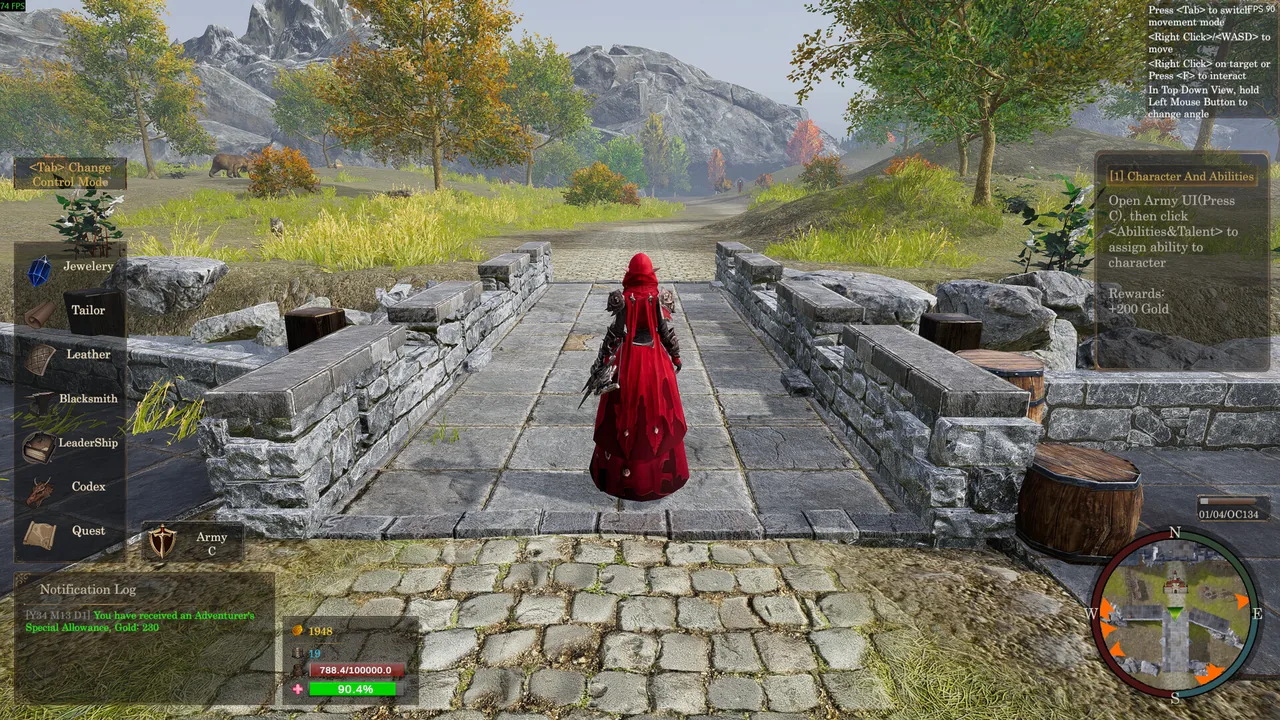
Between raids, players manage crafting, quests, and guild systems from the open overworldImage: ShadowMoon Wolf Game Tech Ltd via Steam -
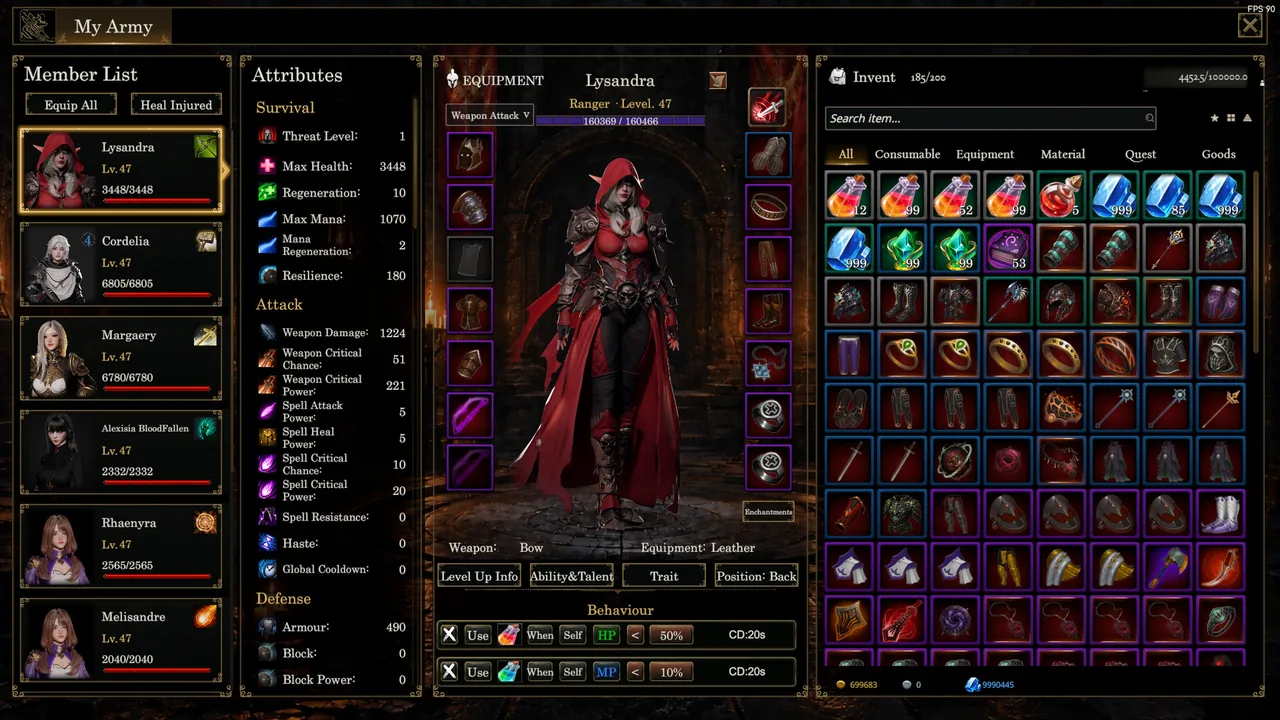
The Army screen is where talents, gear, and combat behavior get assigned to each recruitImage: ShadowMoon Wolf Game Tech Ltd via Steam -
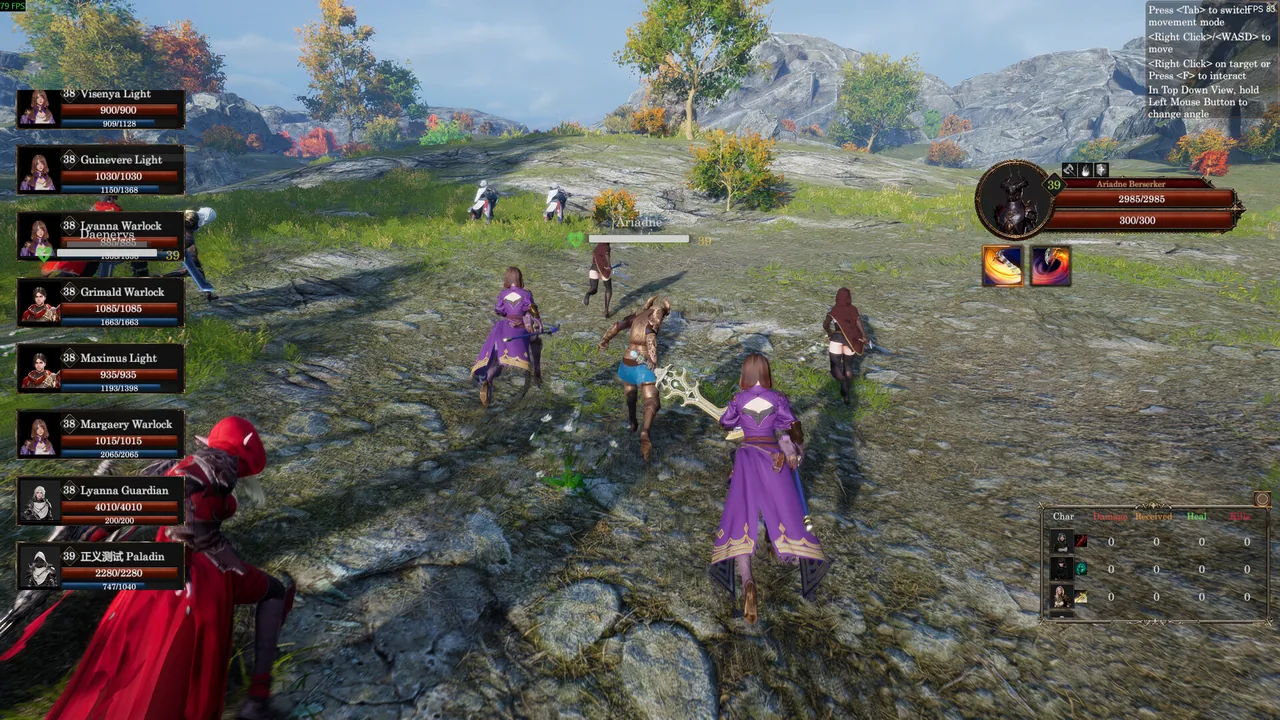
Wave-based auto-battles pit a recruited party against enemy groups on open terrainImage: ShadowMoon Wolf Game Tech Ltd via Steam -
Technical specificationsWanderer Game Reviews