Game review
Spark in the Dark
6.3 / 10
- Developer
- Stellar Fish
- Publisher
- Stellar Fish
The short version
Biggest strengths
- Genuinely oppressive darkness mechanic that makes exploration itself feel dangerous
- Slow, deliberate, stamina-based combat with a permadeath option that reviewers repeatedly compare to Exanima and Fear and Hunger
- Attribute progression tied to exploration and discovered quests rather than automatic leveling rewards curiosity
Biggest weaknesses
- Enemy variety is heavily front-loaded around one recolored spider enemy type, to the point several reviewers joke about it directly
- No in-game map at all, which turns later, more convoluted dungeon floors into genuine navigation chores
- Combat has reported hit-detection jank: weapons visibly phasing through enemies that then land a free hit back
6.3 / 10
The Pitch
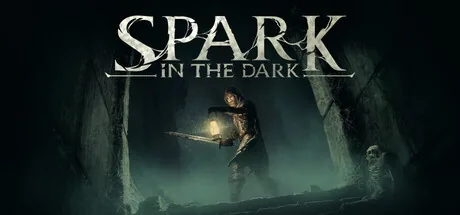
Spark in the Dark is Stellar Fish's Early Access dungeon crawler, an atmospheric, isometric descent into a "grim ancient Dungeon" full of monstrous creatures, deadly traps and centuries of buried lore, played as one of five hero classes with permadeath as an optional but heavily encouraged difficulty setting. It launched into Early Access on 7 April 2026 at a modest NZ$26.75, and its 373 English-language Steam reviews (323 positive) sit comfortably at Very Positive. The single word that comes up more than any other across those reviews is "atmosphere," and it's not hard to see why once you understand the game's central conceit: the dungeon is genuinely, deliberately dark, and your only real light source is a limited lantern.
Darkness as a Core Mechanic
Unlike games that use low visibility as a cheap horror cue, reviewers describe Spark in the Dark's darkness as load-bearing to the entire design. Without your lantern lit, you can see little beyond a faint spark in the gloom, and rare light sources double as intuitively safe zones to rest and regroup. Reviewers repeatedly frame this as the source of the game's tension rather than a gimmick, several explicitly comparing the feeling of never knowing what's waiting around the next corner to classic dungeon crawlers like the original Diablo or the notoriously punishing Fear and Hunger, and one detailed review calls it the first game in years to genuinely scare them while simply exploring rather than through jump scares.
Slow, Punishing, Deliberate Combat
The combat draws consistent comparisons to Exanima, careful, stamina-managed, dodge-and-block encounters where rushing in gets you killed fast, alongside broader Dark Souls comparisons for its overall tone and permadeath option. Character progression splits basic skills, which improve with use, from more advanced abilities that must be found within the dungeon itself, and attributes only increase through completing discovered quests and secrets rather than automatic leveling, a system multiple reviewers single out as rewarding genuine exploration over grinding. Several long-time genre fans describe the difficulty as unusually well-tuned for tension without feeling unfair, and one reviewer with over 400 hours logged describes still being stuck on the first floor and loving every attempt.
Where the Dungeon Runs Out of Ideas
The most consistent complaint, showing up across reviews that are otherwise glowing, is enemy variety. Multiple reviewers describe entire stretches of the dungeon as functionally a "spider cave," with one reviewer laying out a literal list of a dozen consecutive spider encounters broken up by a single zombie, joking that by the time a different enemy type shows up, you'd rather befriend it than fight it. A more measured version of the same critique notes that what variety does exist tends to be simple recolors and resizes of the same base enemies with different status effects or damage values layered on, rather than genuinely new threats, and several reviewers connect this directly to the game losing tension by the midpoint of a run after the initial dread wears off.
Rough Edges: Bugs, Navigation, and Save Friction
Beyond enemy variety, three specific complaints recur often enough to be worth flagging. There's no in-game map at all, which several reviewers say is fine on the simpler first floor but becomes a genuine chore once later floors get more convoluted, one reviewer describes an hour-long "goose chase" hunting for a single key tucked into an easy-to-miss corner. Combat hit detection gets flagged as inconsistent by multiple reviewers, describing weapons visibly phasing through enemies who then land a free hit in return, a problem distinct from the game's intentional difficulty. And the save system only checkpoints at rest points rather than on exit, which one detailed Steam Deck-focused review calls their single biggest criticism, since not every rest point is actually safe from ambush, occasionally forcing a backtrack just to close the game safely. None of these come across as dealbreakers in the reviews that raise them, more as clearly-known Early Access rough edges the developer is expected to smooth out. A separate, smaller wrinkle worth flagging: a couple of reviewers note that Stellar Fish hasn't published a public roadmap, which leaves the direction of future updates something of an open question even for players otherwise eager to see where the game goes next.
An Audience Actively Rooting for a Harder Game
One notable thread running through the positive reviews is how explicitly players ask the developer not to soften the experience. Multiple reviewers directly address Stellar Fish in their reviews, urging them to keep the difficulty and darkness uncompromising rather than smoothing it out to chase a wider audience, with one writing simply "I hope the devs don't lose the vision trying to please everyone." That's an unusually direct, unified message for an Early Access review section to send, and it lines up with requests elsewhere for more of what's already there rather than less, one reviewer asks for a co-op mode specifically so they can share the dread with a partner rather than make the game any less punishing solo.
Verdict
Spark in the Dark is exactly the kind of Early Access dungeon crawler that earns its Very Positive rating on the strength of one thing done exceptionally well: an oppressive, genuinely unsettling sense of place that most horror-adjacent games struggle to manufacture even with far bigger budgets. The slow, deliberate combat and exploration-driven progression back that atmosphere up rather than undercutting it. What's holding it back right now is squarely Early Access territory, thin enemy variety that leans hard on one recurring foe, some real hit-detection jank, and quality-of-life gaps like the missing map and awkward save rules. If you're the kind of player who loved Exanima or Fear and Hunger and wants something similarly hardcore and atmospheric to get lost in, it's easy to recommend even in its current state, just go in expecting a game still finding its full shape rather than a finished product.
Pros and cons
Pros
- Genuinely oppressive darkness mechanic that makes exploration itself feel dangerous
- Slow, deliberate, stamina-based combat with a permadeath option that reviewers repeatedly compare to Exanima and Fear and Hunger
- Attribute progression tied to exploration and discovered quests rather than automatic leveling rewards curiosity
- Strong art and sound direction that reviewers credit with real, sustained dread
Cons
- Enemy variety is heavily front-loaded around one recolored spider enemy type, to the point several reviewers joke about it directly
- No in-game map at all, which turns later, more convoluted dungeon floors into genuine navigation chores
- Combat has reported hit-detection jank: weapons visibly phasing through enemies that then land a free hit back
- Saves only at rest points rather than on exit, and some rest points aren't safe from ambush
Screenshots
-
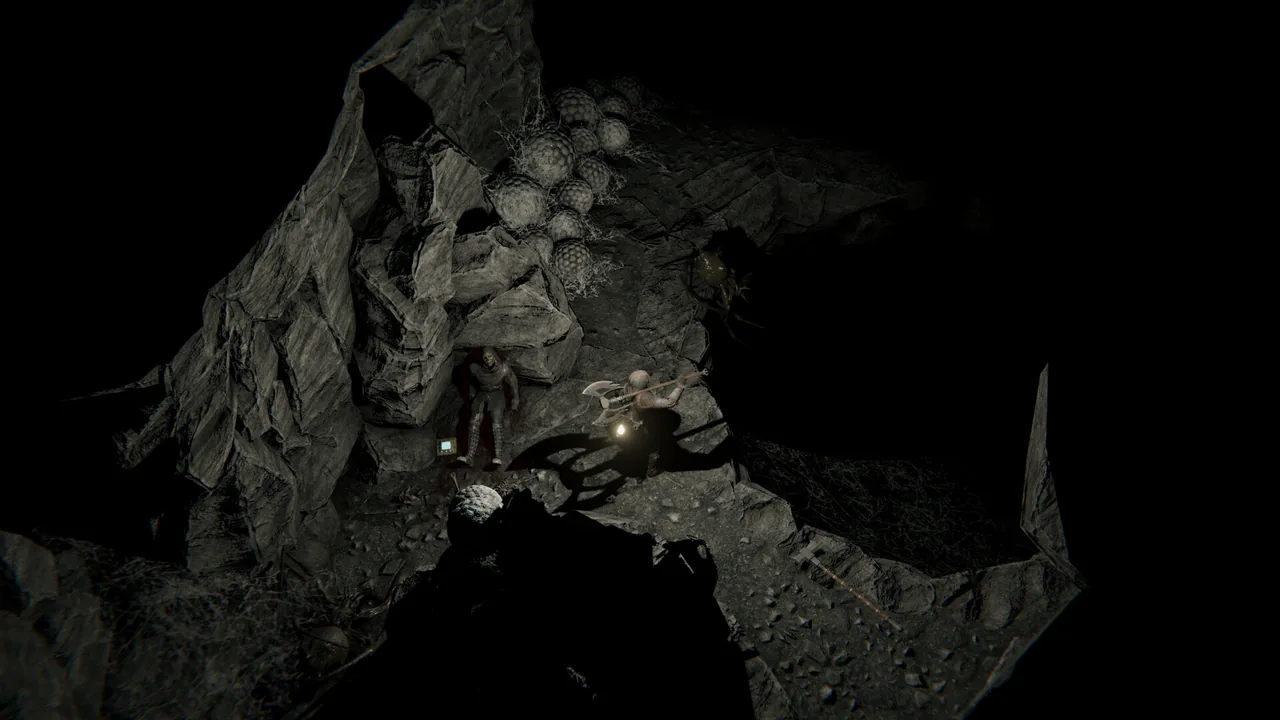
The lantern's small radius of light against the dungeon's near-total darknessImage: Stellar Fish via Steam -
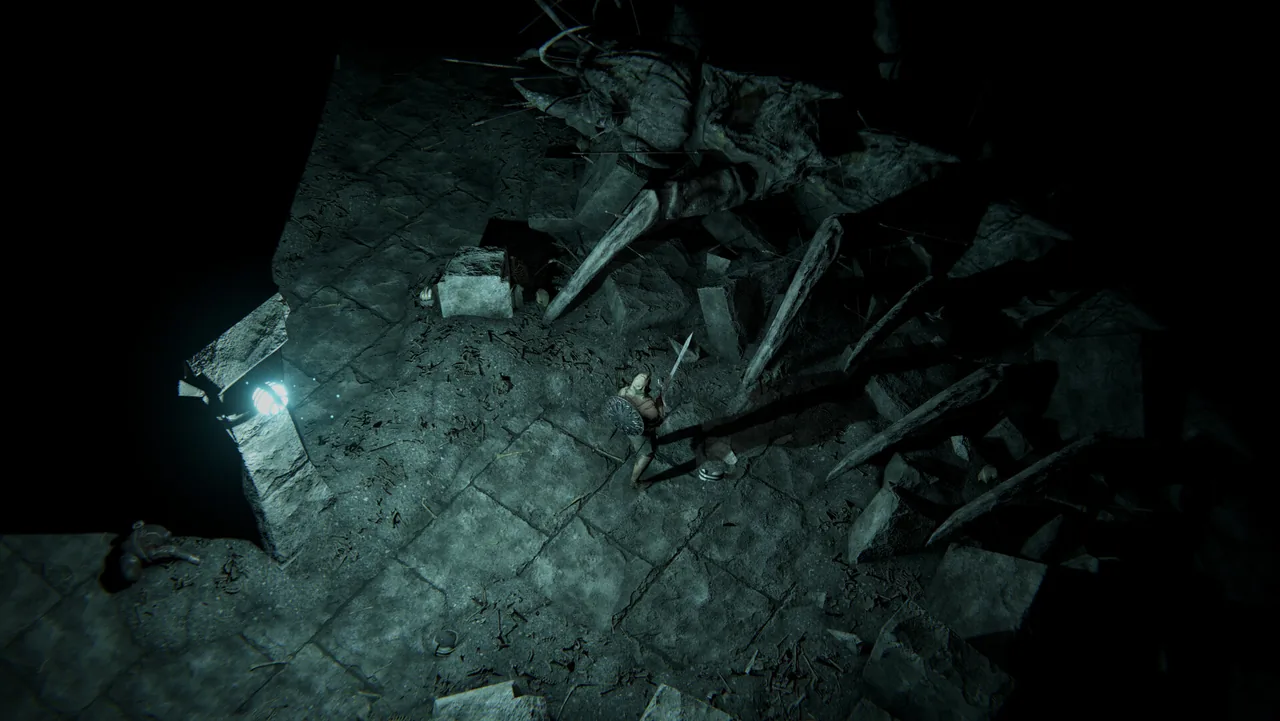
A rest point offers a brief, safe pool of light amid the dungeon's bone-strewn corridorsImage: Stellar Fish via Steam -
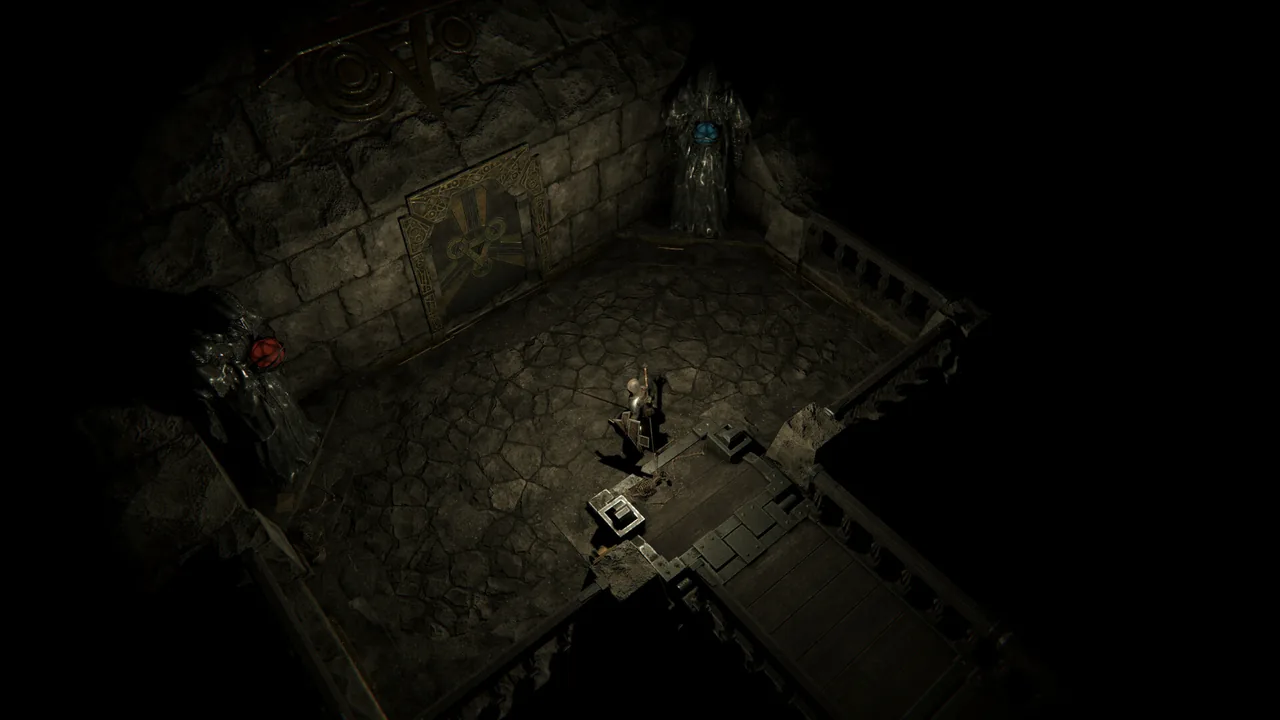
A carved dungeon chamber guarded by glowing statues, one of the game's centuries-old buried-lore set piecesImage: Stellar Fish via Steam -

Category scores for Spark in the DarkWanderer Game Reviews