
Game review
Shifting Sands
6.8 / 10
- Developer
- Silent Sun
- Publisher
- Silent Sun
The short version
Biggest strengths
- A genuinely gripping scavenge-and-return loop, with reviewers repeatedly invoking 'just one more run' pull
- Inventory management is treated as the core decision-making system, not a side menu — every slot is a real risk/reward bet
- A lively, lore-rich hub (the Nexus) with its own activities — sorting scrap, card games, vendor jobs — rather than a pass-through menu screen
Biggest weaknesses
- Early Access instability is real — multiple reviewers report crashes, including one specific, reproducible crash tied to moving between map tiles
- At least one reviewer describes a softlock that cost meaningful run progress before a hotfix
- A premium NZ$30.99 asking price for pre-1.0 software, even with fast developer patch response
6.8 / 10
The Pitch
Shifting Sands drops you into a sci-fi desert world that buries and reveals its own secrets on a daily cycle: you die, a mysterious "sandpit" brings you back, and you're now a scrapper working shifts out of the Nexus, an ancient monument that holds back a planet-scouring storm for a few hours each day. Every morning you venture out into crashed ships and half-buried wrecks to scavenge salvage; every evening the storm resets the map, and whatever you didn't carry home is gone. It's Early Access, from small two-person-scale developer Silent Sun, and it's explicitly pitched — by both the store page and its own early reviewers — as sitting somewhere between a roguelike, an extraction looter, and a desert-flavored spin on Fallout's post-apocalyptic scavenging fantasy.
The reception so far is unusually clean for a young Early Access release: all 13 of its English-language reviews are positive, several of them long and detailed rather than the drive-by one-liners more common at this review-count tier. That's a small sample, worth treating with appropriate caution, but the consistency and specificity of the praise — and the specificity of the complaints — gives a genuinely useful early read on what the game is and isn't yet.
Inventory Management Is the Real Game
The mechanic reviewers keep returning to isn't combat or exploration on their own, but the tension built into a genuinely limited pack. Every piece of salvage takes up slots, and every run forces a running calculation: is the sealed compartment worth cracking open when it might cost you the space for three guaranteed-value scrap pieces you already have? One reviewer frames this directly as "the game inside the game" — common scrap is safe, predictable value, while rare components are described as potentially life-changing back at the Nexus, but only if you survive the trip home with them still in your pack. Reviewers compare the payoff specifically to Diablo 2, where finding a good item is memorable rather than incremental, and several describe the loop of pushing deeper for better salvage versus playing it safe near the Nexus as the game's real strategic core.
That salvage feeds into an upgrade system back at base — scanners that ping buried caches, reinforced boots for traversing dunes, tools that cut through sealed compartments — that reviewers describe as genuinely build-shaping rather than cosmetic, since no single playthrough is expected to unlock everything. One long-playtime reviewer, 29 days into the game's internal calendar, describes still barely scratching the surface of what's available to upgrade, which several others echo as evidence of real depth rather than padding.
A Hub Worth Spending Time In
Unusually for the genre, reviewers single out the Nexus hub itself as compelling rather than a screen to click through as fast as possible. Beyond vendors and upgrade stations, players describe sorting scrap on a conveyor belt, playing card minigames, and taking on jobs from named visitors who reviewers describe as having distinct personalities and, in at least one case, apparent ongoing storylines the reviewer hadn't had time to fully explore yet. One reviewer explicitly compares the sense of discovery and nostalgia to Fallout 2 while still feeling like "its own thing" rather than a pastiche, and multiple reviews single out the soundtrack and the pixel art's animation work as standout presentation elements for a small studio's Early Access release.
Early Access Rough Edges, With Fast Patch Response
The clearest thread of criticism, unsurprising for pre-1.0 software, is stability. Multiple reviewers report crashes, with one identifying a specific and reproducible trigger — moving to an adjacent tile on the overworld map — that they worked around by sticking to straight paths while waiting on a fix. A more serious complaint describes a softlock that cut a run short entirely. What's notable across nearly every bug report in this review set, though, is how quickly the developer responded: one reviewer's negative-leaning list of complaints was followed the very next day by an edit noting that 98% of the crashes they'd hit had already been hotfixed, and another reviewer explicitly credits Silent Sun's responsiveness as a reason to trust the NZ$30.99 asking price despite the game's unfinished state. That's a meaningfully different Early Access story than games that ship buggy and stay that way — but it's still worth going in expecting instability today, not the polished version reviewers are describing after patches.
Is It Worth Buying Into Early?
At NZ$30.99, Shifting Sands sits at a premium end for Early Access, and reviewers are candid about weighing that cost against a still-unfinished game rather than pretending the price is a non-issue. The dominant view among reviewers who addressed it directly is that the combination of existing content depth — one reviewer was 29 in-game days deep and still uncovering new systems — and the developer's fast patch cadence tips the balance toward recommending an early buy-in rather than waiting for 1.0. That's a reasonable read given the evidence here, but it's still a bet on a small studio sustaining that pace over what will likely be a long Early Access period, and buyers with low tolerance for pre-release bugs should weight the stability complaints more heavily than the optimism.
Verdict
Shifting Sands earns its early praise less from any single flashy system than from getting the fundamentals of a scavenge-and-return loop right: a pack that's small enough to force real decisions, a hub that's worth spending time in rather than skipping through, and salvage that feels consequential rather than like incremental filler. Its Fallout- and Diablo-2-adjacent comparisons aren't idle flattery — reviewers who know those games specifically are the ones making them. The catch is the one every Early Access title carries: real crashes and at least one reported softlock, a premium price tag for software still finding its footing, and a review sample small enough that broader balance and long-term content depth remain open questions. For fans of extraction-loop roguelikes willing to tolerate rough edges in exchange for a genuinely responsive developer, this is a promising one to get in on early rather than wait out.
Pros and cons
Pros
- A genuinely gripping scavenge-and-return loop, with reviewers repeatedly invoking 'just one more run' pull
- Inventory management is treated as the core decision-making system, not a side menu — every slot is a real risk/reward bet
- A lively, lore-rich hub (the Nexus) with its own activities — sorting scrap, card games, vendor jobs — rather than a pass-through menu screen
- Strong art direction and pixel animation work, paired with genre comparisons to Fallout 2 and Diablo 2's loot excitement
Cons
- Early Access instability is real — multiple reviewers report crashes, including one specific, reproducible crash tied to moving between map tiles
- At least one reviewer describes a softlock that cost meaningful run progress before a hotfix
- A premium NZ$30.99 asking price for pre-1.0 software, even with fast developer patch response
- With only 13 English reviews so far, the long-term verdict on balance and content depth over a full playthrough is still genuinely unsettled
Screenshots
-
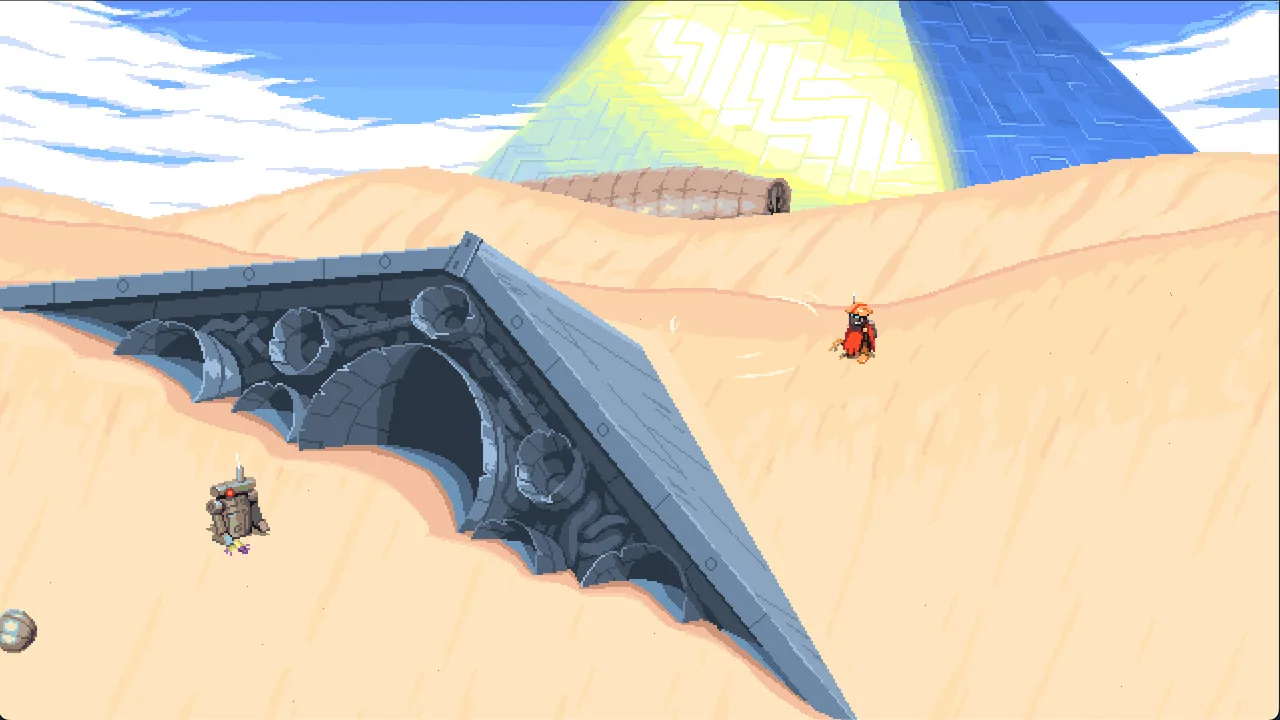
The desert reshapes itself between runs, burying old wrecks and revealing new onesImage: Silent Sun via Steam -
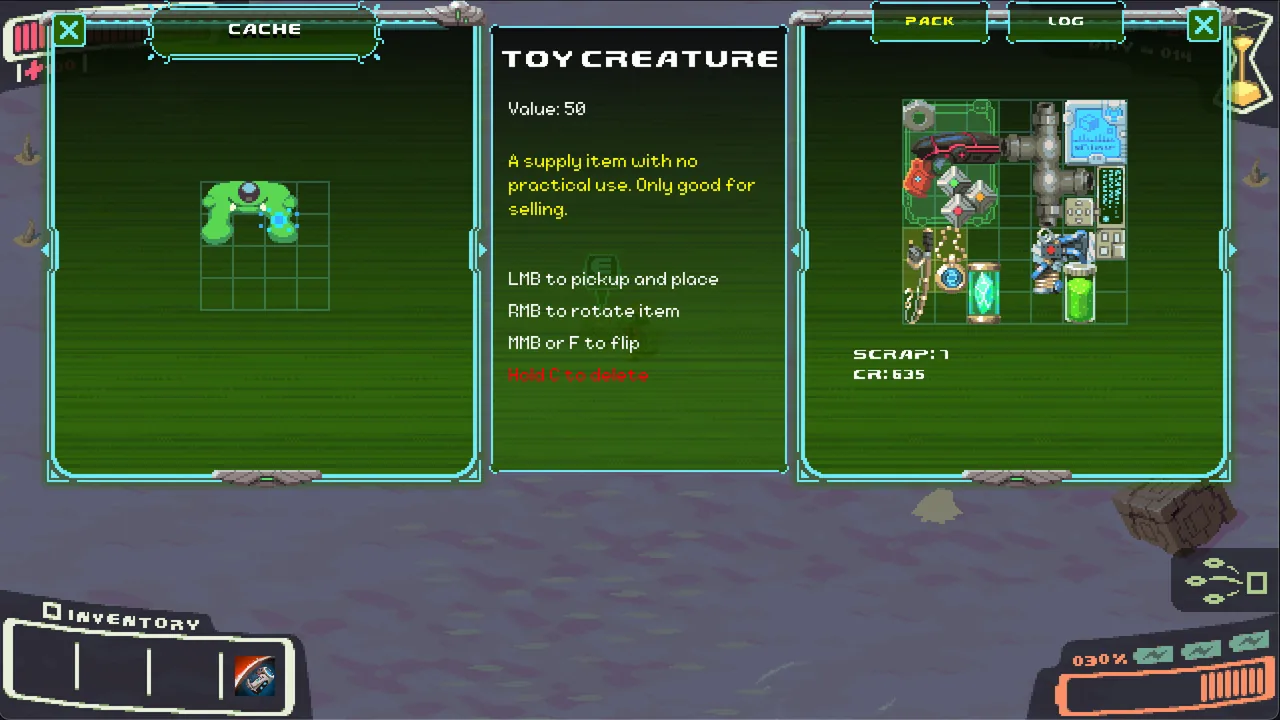
Every salvaged item competes for limited pack space, the risk/reward system reviewers single out as the game's real coreImage: Silent Sun via Steam -
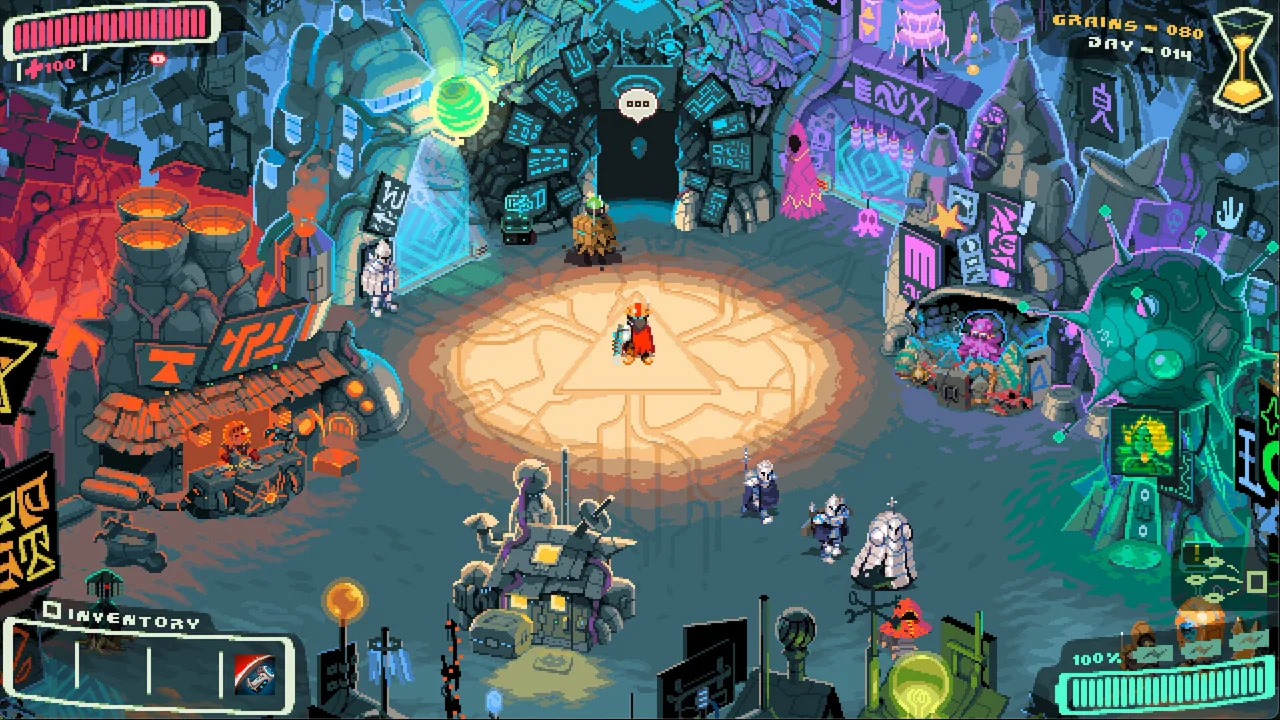
The Nexus hub between runs, praised by reviewers as a destination in its own right rather than a menu to click throughImage: Silent Sun via Steam -

Category scores for Shifting SandsWanderer Game Reviews