Game review
Ruinlander
4.7 / 10
- Developer
- wineviper
- Publisher
- wineviper
The short version
Biggest strengths
- A genuinely old-school hardcore survival-RPG concept that reviewers who click with it compare directly to genre favorites like NeoScavenger, Kenshi, ATOM RPG, and Day R
- An open, sandbox-style post-apocalyptic wasteland with a reputation system across rival factions and cities that rewards patient, deliberate play
- A solo developer widely praised by supportive reviewers as genuinely responsive, already shipping a requested sandbox mode and continuing to patch issues raised by the community
Biggest weaknesses
- Character progression is reported as barely functional in its current state — no meaningful leveling system, leaving invested players feeling stuck at a starting-level character regardless of time spent
- A restrictive, punishing save system that was reportedly completely broken at launch (all progress wiped on closing the game), and even after patches remains limited to expensive consumable items or sleeping in towns
- Reproducible bugs including one detailed report of losing roughly two hours of progress to an inventory-overload glitch that force-quit to the main menu
4.7 / 10
Survival in the wasteland, not heroics
Ruinlander sets its stall out clearly from the opening line of its own store page: instead of saving the world, worry about what to eat, how not to freeze, and how to avoid a fatal dose of radiation. Set decades after a global cataclysm that carved the map into fortified city-states and lawless raider territory, it's a turn-based, stat-driven survival RPG built entirely around scarcity — hunger, thirst, fatigue, hypothermia, radiation, and injury all compete for a player's attention alongside a reputation system spanning rival factions and cities. The world itself is populated less by monsters than by other desperate survivors: fortified city-states competing for dwindling resources, small settlements caught between them, and a scattering of raider gangs, cannibals, and sectarians who never bought into rebuilding at all. It's a premise squarely aimed at a specific, underserved audience, and the review pool's warmest comparisons make that lineage explicit: NeoScavenger, Kenshi, ATOM RPG, and Day R all come up repeatedly from reviewers who say Ruinlander scratches an old-school RPG itch they didn't realize they'd been missing.
A promising core concept undercut by real balance problems
Where the review pool splits hardest is combat and difficulty. Several detailed negative reviews describe near-identical experiences: a player spends days or weeks in the starting town working, saving, and gearing up — guns, armor, medical supplies — only to be killed almost immediately by a small pack of wolves or a handful of low-tier bandits within minutes of finally leaving town. One reviewer who invested forty in-game days and a full loadout of weapons and armor describes dying to three melee-armed enemies on their very first encounter outside the settlement, and several others report similarly lopsided early fights. Reviewers who enjoy the challenge frame it as intentionally brutal, old-school design in the spirit of its inspirations; reviewers who bounce off it describe the difficulty curve as simply broken, with one detailed review specifically calling for a proper guided tutorial or early campaign missions to help new players survive the crucial first hours rather than being thrown straight into unwinnable encounters.
Progression that currently feels like it isn't there
Beyond combat balance, the review pool's most substantive complaint concerns character growth itself. One long-session reviewer states plainly that there does not currently appear to be a true leveling system — regardless of hours invested, characters remain stuck feeling like they're still at their starting capability, which saps the incentive to keep pushing into more dangerous territory. Weapon identity draws a related criticism: with no status effects like bleeding or stun currently implemented, weapon choice reportedly boils down to comparing action-point cost against raw damage rather than offering meaningfully different playstyles. None of this reads as an unfixable design flaw this early in Early Access, but it's a consistent enough thread — echoed independently by multiple reviewers rather than a single outlier complaint — that it should be treated as a genuine, current shortfall rather than a nitpick.
A save system reviewers call actively hostile
The most severe technical complaint by far concerns saving. Multiple reviews report that, at launch, the save system was completely broken — closing the game reverted all progress back to day one regardless of what had been accomplished, a bug reviewers describe as apparently since patched, though the underlying design remains restrictive: saving currently requires either an expensive consumable item or sleeping in a town, an Ironman-adjacent structure several reviewers say the developer should reconsider given how punishing the surrounding difficulty already is. One detailed review separately documents losing roughly two hours of progress to an unrelated inventory-overload bug that abruptly force-quit them to the main menu mid-hunt, at full health and with no warning. Bug reports are not universal, though — several reviewers with meaningful playtime report zero crashes or major issues, suggesting a genuinely inconsistent experience depending on playstyle and specific systems engaged.
A responsive solo developer, and a community split on tone
A recurring bright spot across the review pool is the developer's visible responsiveness: multiple reviewers specifically credit wineviper, working solo, with actively listening to feedback and already shipping a requested sandbox mode in response to community requests, and several reviewers frame their current criticism as constructive rather than a final verdict, explicitly recommending other players wait a month or two to see how quickly reported issues get addressed. That goodwill sits alongside a genuinely heated public disagreement in the review section itself — one detailed negative review describes what the author characterizes as repeated harassment from other users defending the game rather than engaging with the specific gameplay criticisms raised, a dynamic worth being aware of for anyone browsing the Steam reviews directly rather than taking the aggregate score at face value. A separate, smaller thread of criticism raises a different kind of concern: one reviewer points out that, across roughly fifteen playable character portraits, every single one depicts a white man, calling the total lack of variation in a fictional sandbox setting a deliberate and uncomfortable choice rather than an oversight.
Verdict
Ruinlander has real bones: a genuinely distinctive hardcore survival-RPG premise that lands exactly where genre fans of NeoScavenger, Kenshi, and ATOM RPG want it to, backed by a solo developer reviewers describe as actively engaged and improving the game in response to feedback. But it's an unmistakably rough Early Access build right now — a combat difficulty curve several reviewers call outright broken rather than merely hardcore, a leveling system that reportedly isn't meaningfully functional yet, and a save structure that was completely broken at launch and remains restrictive even after patching. For genre veterans specifically hungry for this kind of unforgiving, old-school post-apocalyptic RPG and willing to tolerate real Early Access roughness, Ruinlander is worth a cautious look now; everyone else should probably wait for a balance pass and a proper progression system before diving in.
Pros and cons
Pros
- A genuinely old-school hardcore survival-RPG concept that reviewers who click with it compare directly to genre favorites like NeoScavenger, Kenshi, ATOM RPG, and Day R
- An open, sandbox-style post-apocalyptic wasteland with a reputation system across rival factions and cities that rewards patient, deliberate play
- A solo developer widely praised by supportive reviewers as genuinely responsive, already shipping a requested sandbox mode and continuing to patch issues raised by the community
- A fair, 'nice impulse price' for a genre that scratches a specific, underserved old-school RPG itch, according to several reviewers who found themselves unexpectedly hooked for dozens of hours
Cons
- Character progression is reported as barely functional in its current state — no meaningful leveling system, leaving invested players feeling stuck at a starting-level character regardless of time spent
- A restrictive, punishing save system that was reportedly completely broken at launch (all progress wiped on closing the game), and even after patches remains limited to expensive consumable items or sleeping in towns
- Reproducible bugs including one detailed report of losing roughly two hours of progress to an inventory-overload glitch that force-quit to the main menu
- Early-game difficulty spikes reported as punishingly unbalanced by multiple reviewers, with well-prepared characters dying to small groups of wolves or bandits shortly after leaving the starting town
Screenshots
-
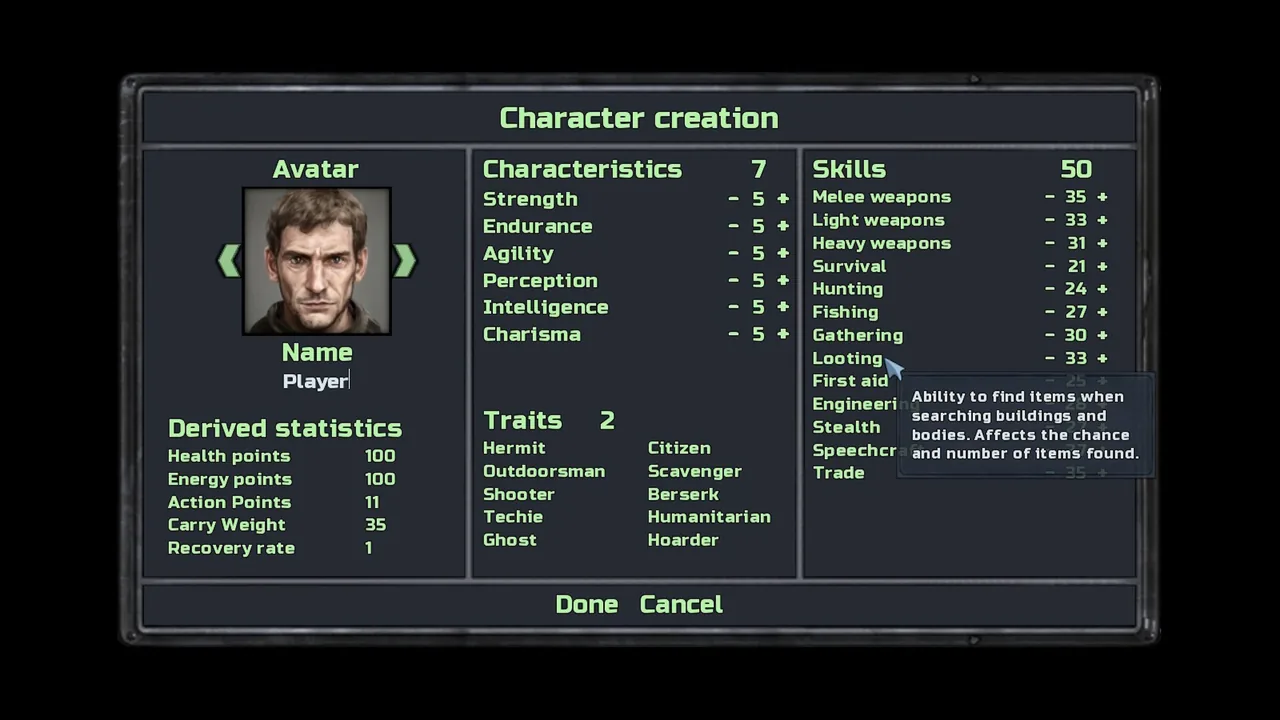
Building a survivor at character creation, distributing points across attributes, skills, and background traitsImage: wineviper via Steam -
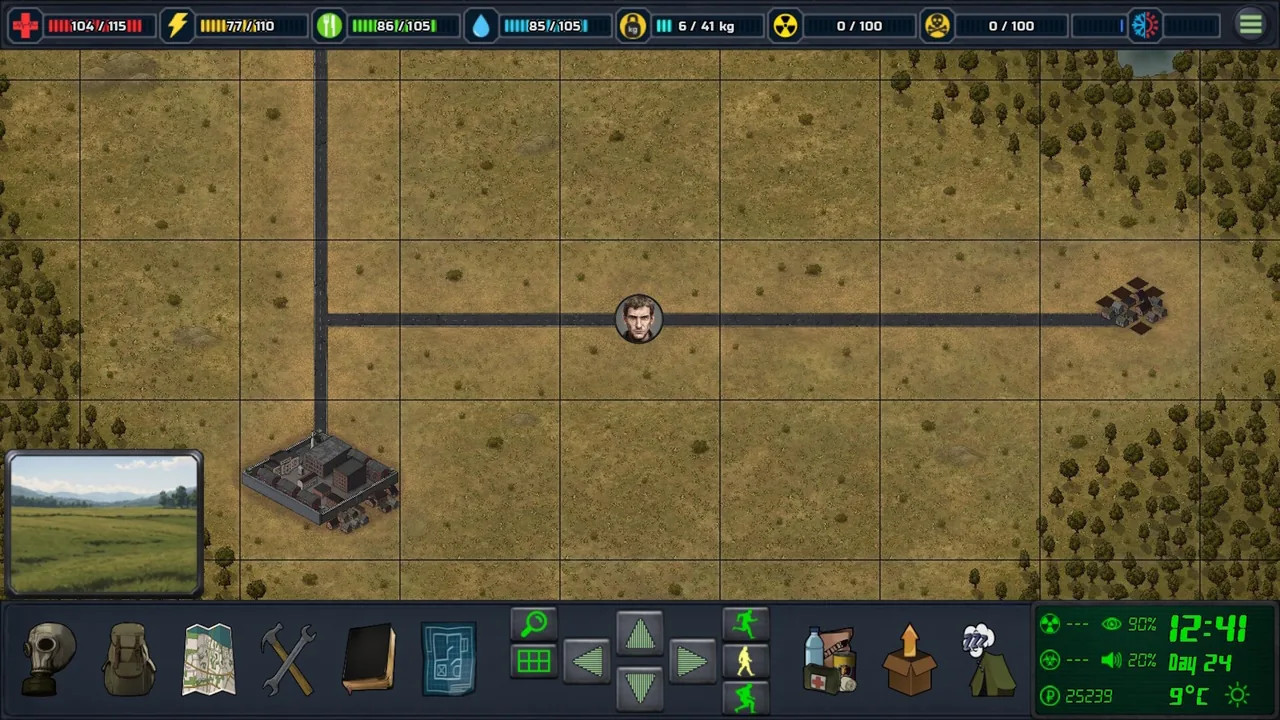
Trekking an open wasteland road toward a distant settlement, tracking hunger, thirst, and radiation along the wayImage: wineviper via Steam -
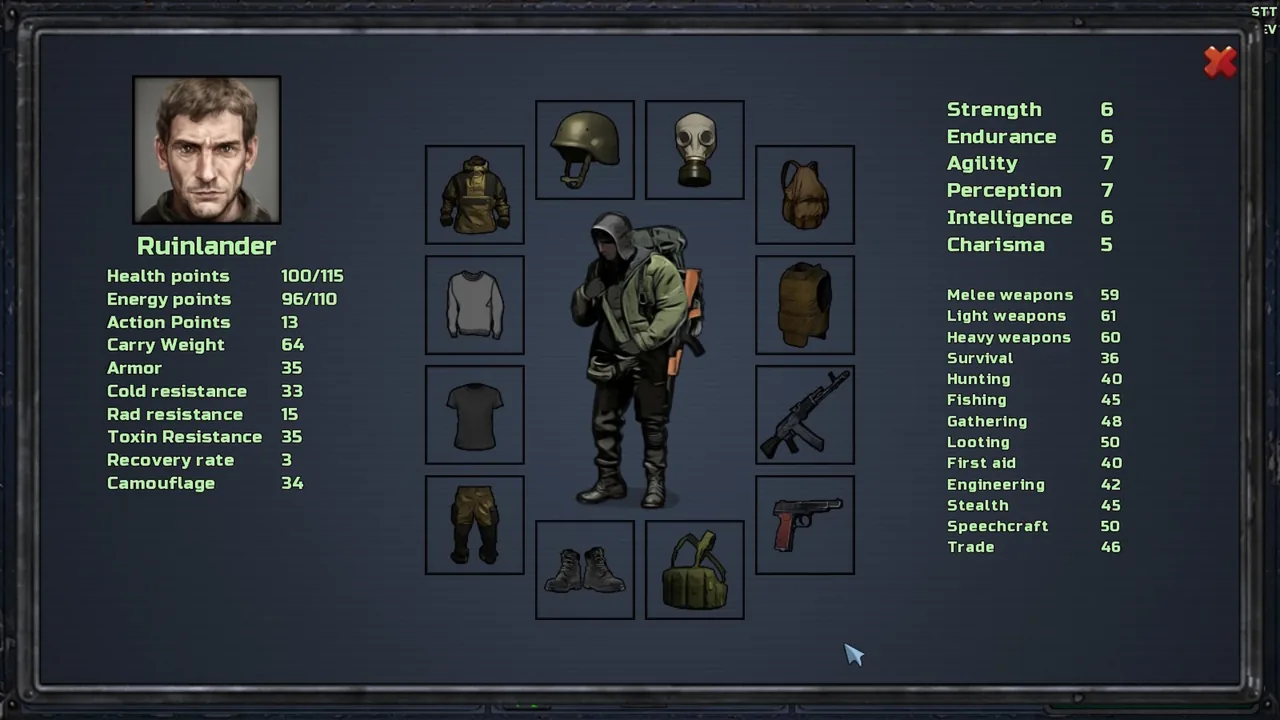
A fully geared survivor, kitted out with a gas mask, body armor, and weapons ahead of a trip into the wastelandImage: wineviper via Steam -
Category scores for RuinlanderWanderer Game Reviews