Game review
Romestead
6.6 / 10
- Developer
- Beartwigs
- Publisher
- Three Friends
The short version
Biggest strengths
- An unusually generous amount of content for a day-one Early Access release, with reviewers regularly comparing the scope favorably to established genre veterans like Valheim and Core Keeper
- A rewarding, addictive town-building loop layered under Zelda-style top-down dungeon combat, with reviewers repeatedly describing themselves as staying up all night for 'just one more building'
- Well-designed, mechanically interesting boss fights with real phases and attack patterns, praised even by reviewers frustrated with other parts of the game
Biggest weaknesses
- Boss and late-game difficulty is significantly tuned around multiplayer groups, leaving solo players — especially against the volcano biome's later bosses — describing fights as close to unwinnable regardless of build
- Base management carries real friction: buildings can't be moved or repositioned without fully demolishing and rebuilding them, and automation options feel underdeveloped by the late game
- Reproducible bugs including missing quest items that can softlock a quest, NPCs wandering out of town to be killed by monsters, and raids reviewers describe as an unfocused enemy swarm rather than a designed encounter
6.6 / 10
Rome has fallen, and it's yours to rebuild
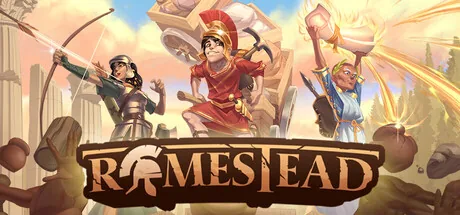
Romestead sets its survival-crafting-and-town-building loop in a fallen Roman Empire overrun by the walking dead, where the old gods have gone silent and it's up to one to eight players to gather, build, and fight their way back to civilization. Reviewers reach for a wide spread of comparisons to place it — Valheim's crafting and progression, Stardew Valley's cozy town-decorating aesthetic, Core Keeper's procedurally generated exploration and boss design, even Graveyard Keeper's atmosphere — and the consensus is that Romestead successfully blends several of those influences rather than simply imitating one. The Roman-apocalypse setting itself draws specific praise as genuinely underused territory for the genre, giving familiar systems — gathering, building, fighting — a distinct visual and thematic identity that several reviewers say helps it stand out in an increasingly crowded field of survival city-builders.
A town-building loop reviewers call genuinely addictive
The core progression loop — explore, gather resources, recruit villager artisans, and slowly grow a camp into a working settlement — draws some of the review pool's most enthusiastic praise. One reviewer with over 200 hours between the demo and playtest calls the early access release "very polished" for the amount of content on offer, and multiple reviewers independently describe losing entire nights to "just one more building" or "just one more upgrade." Villagers can be assigned to farms, workshops, trading posts, and gathering centers, and city-builder elements layer on top once a settlement reaches sufficient size: roads, walls, defenses, and trade routes between multiple specialized towns as players discover new biomes. The offering-and-worship system tied to the Roman gods adds a light tech-tree layer, unlocking buffs and technologies as players restore each deity's favor — a system reviewers generally find satisfying, if somewhat underexplained early on.
Combat and bosses that impress, but skew hard toward groups
Combat is top-down and Zelda-inspired, with a dashing mechanic reviewers say spices up otherwise straightforward fights, and boss encounters draw particular praise for genuine mechanical depth — multiple phases, real attack patterns, and fights reviewers compare favorably to genre-defining boss design elsewhere. The catch is difficulty tuning: several detailed reviews report that fights, especially in the later volcano biome, are balanced around multiplayer groups to the point of feeling close to unwinnable solo, regardless of build or preparation. One reviewer who tried ranged, defensive, and magic-leaning approaches across 20 hours specifically singled this out as the game's biggest weakness for anyone without a regular co-op group. Character progression compounds the issue somewhat — gear and a personal skill tree exist, but reviewers describe build diversity as fairly shallow, with most equipment simply providing stat bonuses rather than meaningfully different playstyles. Weapon balance is also called out as uneven in its current state: one detailed review reports that a basic sword can carry a player through most encounters just by spamming attacks, while spears struggle to keep pace even against ordinary enemies — the kind of imbalance reviewers generally chalk up to early-access tuning rather than a fundamental design flaw.
The friction hiding inside a cozy loop
Base management, in particular, draws consistent complaints even from reviewers who otherwise love the game. Buildings can't be relocated once placed — moving one means emptying its inventory, demolishing it, and rebuilding from scratch elsewhere, along with reassigning whichever villager was working there. Automation exists but multiple reviewers say it never goes far enough to meaningfully reduce manual busywork by the late game, and food production in particular is repeatedly flagged as unexpectedly tedious to sustain at scale. Long loading times and a handful of reproducible bugs round out the friction: quest items that can go missing and softlock progress, NPCs that occasionally wander outside town walls and get killed by monsters instead of retreating like they're supposed to, and raids that several reviewers describe less as a designed siege encounter and more as an unfocused swarm of enemies beelining for the player while ignoring the town's defenses entirely. A handful of reviewers also question how procedural the world generation really is in practice, reporting they've run into the same four or five dungeon layouts repeatedly across different playthroughs, and preparing raw terrain for building is flagged as needlessly slow, since the ruins and obstacles scattered across the map can take a frustratingly long time to clear before construction can even begin. On the more positive side of technical performance, reviewers report the game running smoothly on Steam Deck (docked or handheld) with full controller support, and Linux compatibility working out of the box — a rarer bright spot for a day-one Early Access survival title.
Worth its price even in a rough state
Despite the friction, value is one of the most consistently praised aspects of the review pool. At roughly NZ$22, reviewers repeatedly call the amount of content already present remarkable for a day-one Early Access launch, and several specifically push back on newer or lower-hour reviewers for judging the game as though it should already be a finished, hundreds-of-hours product. The developers also earn considerable goodwill for responsiveness — reviewers document quality-of-life patches landing within days of launch, including automation improvements and bug fixes for specific reported issues, which several cite as a strong signal the small team is genuinely committed to iterating rather than abandoning the project once initial sales land.
Verdict
Romestead is a genuinely charming, content-rich Early Access debut that mixes town-building, exploration, and Zelda-style combat in an unusually fresh Roman-apocalypse setting — and for many reviewers, especially those playing with friends, it's already delivering dozens of hours of addictive, well-paced fun for a modest price. The rough edges are real, though: base management friction, thin build diversity, several reproducible bugs, and difficulty tuning that leaves solo players fighting an uphill battle against bosses designed with a full party in mind. If you've got a regular co-op group and can tolerate genuine Early Access roughness, Romestead is easy to recommend right now; solo players should go in expecting the later biomes to test their patience, and may want to wait for a balance pass before diving into the volcano.
Pros and cons
Pros
- An unusually generous amount of content for a day-one Early Access release, with reviewers regularly comparing the scope favorably to established genre veterans like Valheim and Core Keeper
- A rewarding, addictive town-building loop layered under Zelda-style top-down dungeon combat, with reviewers repeatedly describing themselves as staying up all night for 'just one more building'
- Well-designed, mechanically interesting boss fights with real phases and attack patterns, praised even by reviewers frustrated with other parts of the game
- Priced fairly at roughly NZ$22, widely called strong value by reviewers even in its current unpolished state
Cons
- Boss and late-game difficulty is significantly tuned around multiplayer groups, leaving solo players — especially against the volcano biome's later bosses — describing fights as close to unwinnable regardless of build
- Base management carries real friction: buildings can't be moved or repositioned without fully demolishing and rebuilding them, and automation options feel underdeveloped by the late game
- Reproducible bugs including missing quest items that can softlock a quest, NPCs wandering out of town to be killed by monsters, and raids reviewers describe as an unfocused enemy swarm rather than a designed encounter
- Character and weapon progression is comparatively shallow — mostly stat-boosting gear rather than meaningful build diversity, and large worlds can recycle the same three biomes without enough new content to justify their size
Screenshots
-
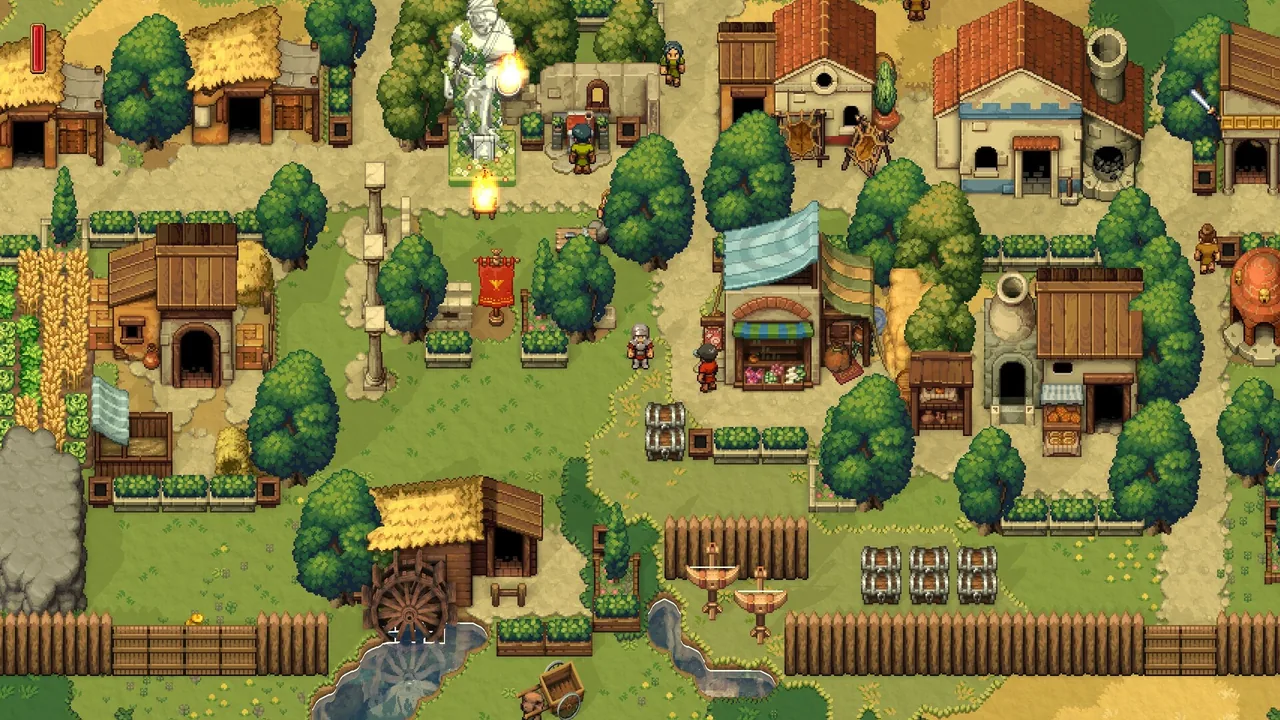
A growing Roman settlement, complete with a statue, market stalls, and a working water millImage: Three Friends via Steam -
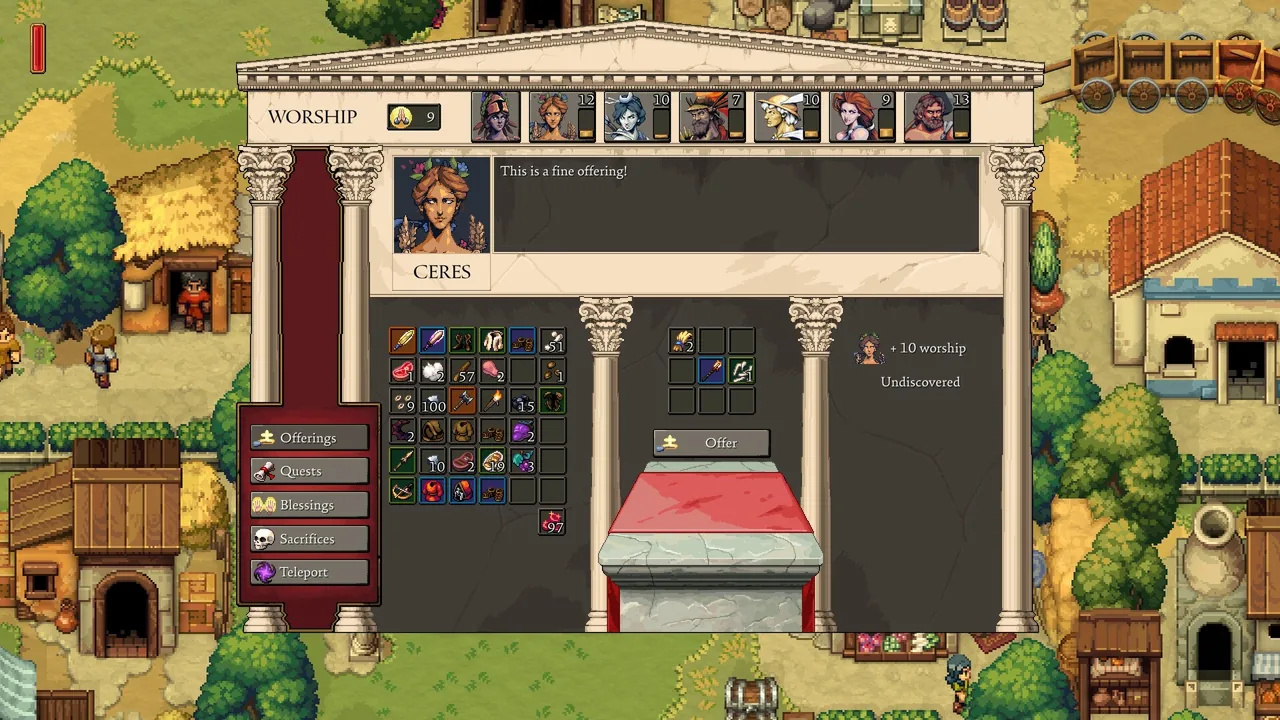
Making an offering to Ceres at the temple, part of the game's worship and blessing systemImage: Three Friends via Steam -
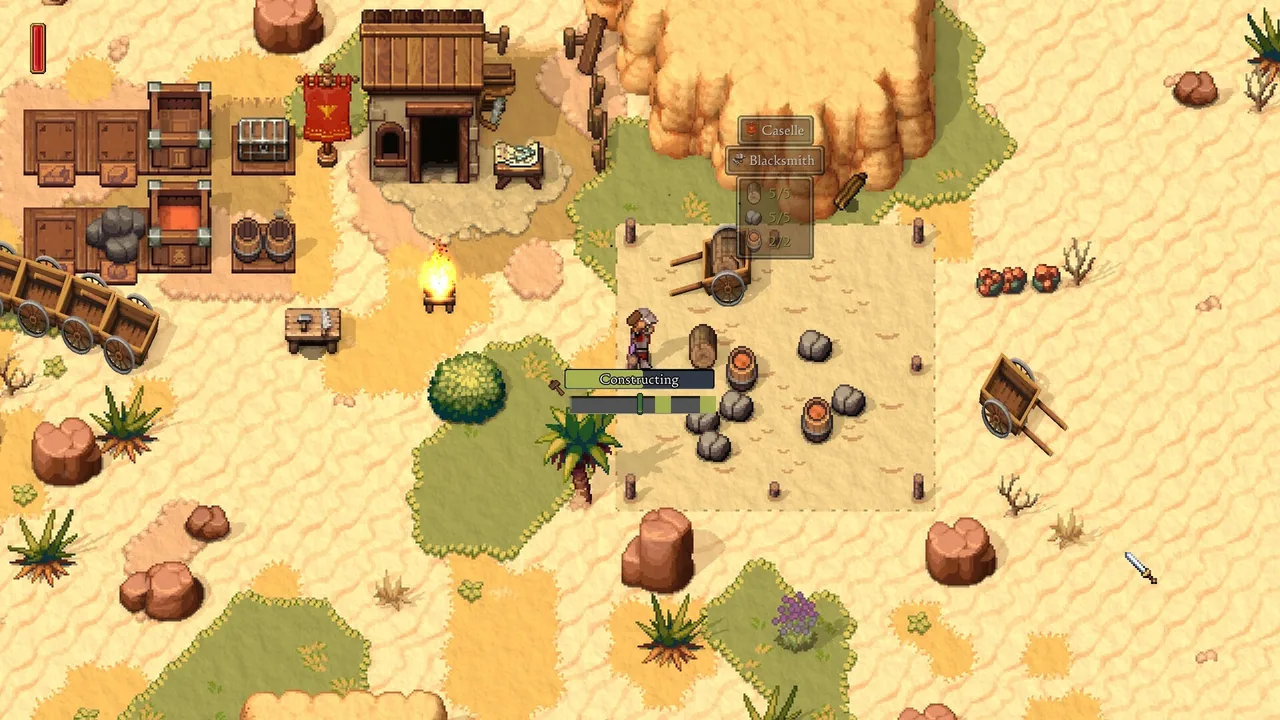
Constructing a new outpost building in a sandy desert biomeImage: Three Friends via Steam -
Category scores for RomesteadWanderer Game Reviews