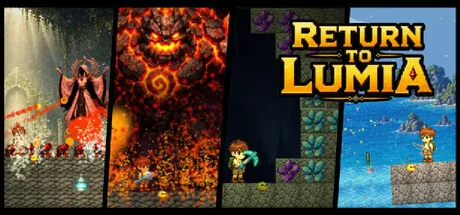
Game review
Return to Lumia
6.3 / 10
- Developer
- hwangso.world
- Publisher
- hwangso.world
The short version
Biggest strengths
- A mining-and-crafting core loop that one reviewer, with roughly 67 hours logged, describes as quietly and compulsively addictive: 'every time I close it, I find myself thinking, Maybe I'll just mine a little more ore'
- Ten distinct dungeons and bosses to conquer on top of the mining loop, giving structured goals beyond open-ended digging
- A genuine tool-upgrade and enchantment progression chain, plus town-rebuilding and NPC relationship-building to unlock new recipes and features
Biggest weaknesses
- An extremely small review base — just two reviews at time of writing — leaving huge gaps in what's actually known about later-game content, balance, or bugs
- The game's own pitch leans on a fairly familiar mining/crafting/dungeon-crawling/town-rebuilding formula that genre veterans of Terraria, Stardew Valley, or similar sandbox-RPG hybrids will find few genuine surprises in
- Neither available review speaks to interface quality, tutorialization, or accessibility for players unfamiliar with the genre's conventions, leaving real uncertainty there
6.3 / 10
Reclaiming a town from the Abyssal Darkness, one ore vein at a time
Return to Lumia pitches itself plainly: a 2D mining sandbox RPG where players dig, craft, and fight their way toward restoring a hometown, Lumia, that's been consumed by something called the Abyssal Darkness. The structure is straightforward on paper — explore underground biomes, gather resources, forge better gear, and gradually rebuild the ruined town while conquering ten dungeons and their bosses along the way. It's a familiar shape for anyone who's spent time with mining-and-crafting sandbox RPGs before, but the pitch is honest about what it is rather than overselling itself, and the small but genuinely enthusiastic response from its earliest players suggests that familiar shape is being executed with real care.
Mining and crafting as the engine room
The core loop is built around digging deeper into underground biomes for progressively rarer resources, which then feed into crafting and enchanting better equipment back in town. One detailed early reviewer lays out several specific mechanical details worth noting: mining tools need to be upgraded before deeper resources can be gathered efficiently, merchants sell water that can be placed and then dug out from underneath to create a makeshift elevator shaft (with a "Dive" gauge to manage as a risk), and Return Scrolls — bought from merchants once players raise their affinity high enough — offer instant travel back to town from deep underground. That same reviewer singles out one enchantment specifically — something the game calls "Mingin Rage," unlocked once the blacksmith opens up — as a genuine turning point, claiming it "changes the game completely" by letting players mine two blocks with a single click. It's the kind of granular, practical tip-sharing that tends to come from someone who's genuinely invested in a game's systems rather than skimming the surface, and it paints a picture of a mining loop with real mechanical texture rather than simple point-and-dig repetition.
Ten dungeons, bosses, and a town worth rebuilding
Beyond straightforward mining, Return to Lumia structures its middle-and-late game around ten distinct dungeons, each with its own boss to defeat, giving players concrete milestones to aim for rather than open-ended digging alone. The same detail-oriented reviewer maps out where several of these actually are for newcomers who can't find them: the Slime and Guardian dungeons sit to the left and right of the starting area, while the Spider Queen and Crystal King are tucked underground near those same two entrances — small but telling evidence that the world, while compact, rewards players willing to poke around its edges rather than following a single obvious path. Progress is tied back to the town itself: rebuilding Lumia and building relationships with its NPCs unlocks new features and crafting recipes over time, giving the mining and dungeon-conquering loops a visible, cumulative payoff in the town's physical and social state rather than just a growing inventory. It's a structure that leans heavily on genre conventions established by games like Terraria and Stardew Valley, blending sandbox digging with light life-sim elements including fishing, gathering, and general town-building activities the game itself describes as "relaxing."
A game its own developer undersells
What's striking about the available reception is how much more enthusiastic actual players are than the modest, matter-of-fact store pitch would suggest. One reviewer, describing themselves as having gotten a beta key and expecting to play "an hour or two," instead logged roughly 67 hours and opens their review with "Give me my 60 hours back!!!!" — not as a genuine complaint, but as a wry admission of how compulsively the loop pulled them in. Their description of the appeal is worth quoting directly: "it's not even the kind of game that constantly throws excitement at you," they write, "but every time I close it, I find myself thinking, 'Maybe I'll just mine a little more ore.'" That's a specific, credible account of the exact kind of quiet, additive momentum that well-tuned mining-and-crafting loops are built to produce, and it's a genuinely strong signal even coming from just one voice.
A tiny sample, but a consistent one
As with several of the smallest releases covered this cycle, the honest caveat here is scale: only two reviews exist for Return to Lumia at the time of writing, both positive, and both from players who clearly put real time in rather than bouncing off after a few minutes. That's an encouraging consistency rather than a verdict — two enthusiastic accounts, one built around detailed mechanical tips and one built around a compulsive 67-hour binge, don't tell you everything about how the later dungeons, boss balance, or interface hold up under wider scrutiny. But for a mining sandbox RPG priced at just NZ$7.49, the downside risk of finding out firsthand is about as low as this genre gets.
Verdict
Return to Lumia doesn't reinvent the mining-and-crafting sandbox RPG, leaning comfortably on a Terraria-and-Stardew-adjacent formula of digging, crafting, dungeon-conquering, and town-rebuilding. What it has going for it, on the strength of an admittedly tiny sample, is genuine execution: a mining loop detailed enough to generate real player-shared tips, ten structured dungeons to aim for, and at least one player who logged 67 hours despite planning to play for two. At a low asking price and with no red flags among its earliest reviewers, it's a reasonable, low-risk pick for genre fans willing to be early adopters — just don't expect the identity-defining originality of the genre's biggest names.
Pros and cons
Pros
- A mining-and-crafting core loop that one reviewer, with roughly 67 hours logged, describes as quietly and compulsively addictive: 'every time I close it, I find myself thinking, Maybe I'll just mine a little more ore'
- Ten distinct dungeons and bosses to conquer on top of the mining loop, giving structured goals beyond open-ended digging
- A genuine tool-upgrade and enchantment progression chain, plus town-rebuilding and NPC relationship-building to unlock new recipes and features
- A modest NZ$7.49 asking price that both available reviewers implicitly or explicitly treat as a steal given how much time they got out of it
Cons
- An extremely small review base — just two reviews at time of writing — leaving huge gaps in what's actually known about later-game content, balance, or bugs
- The game's own pitch leans on a fairly familiar mining/crafting/dungeon-crawling/town-rebuilding formula that genre veterans of Terraria, Stardew Valley, or similar sandbox-RPG hybrids will find few genuine surprises in
- Neither available review speaks to interface quality, tutorialization, or accessibility for players unfamiliar with the genre's conventions, leaving real uncertainty there
- With so few voices weighing in, there's no way yet to gauge whether the compulsive early loop one reviewer describes actually sustains itself across all ten dungeons, or tapers off
Screenshots
-
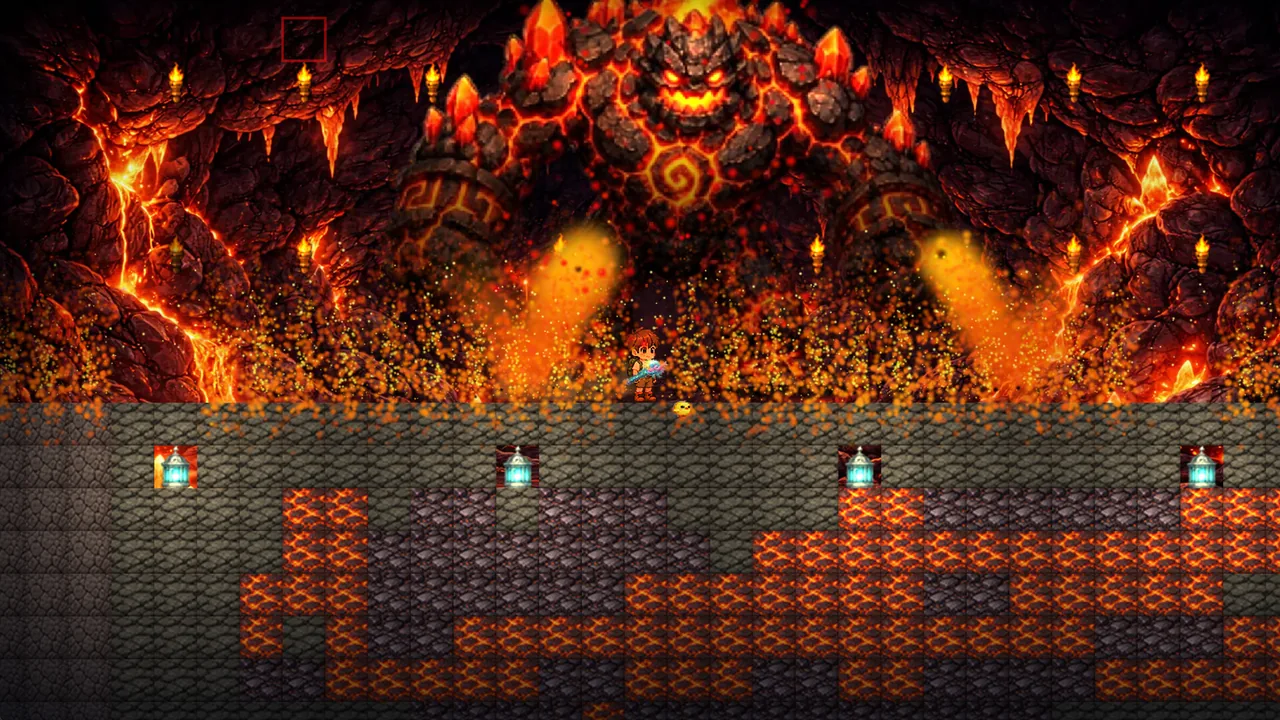
Squaring off against one of the game's underground bosses in a molten cavernImage: hwangso.world via Steam -
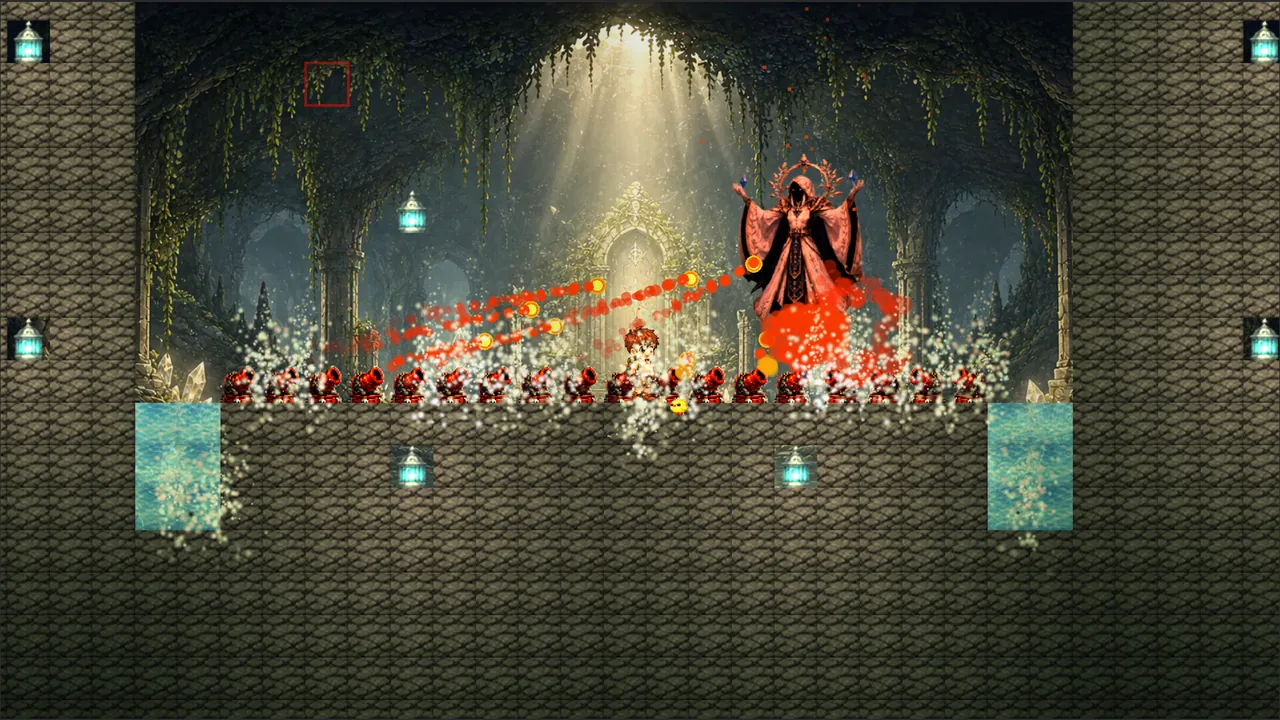
A ranged boss encounter in a sunlit, overgrown ruinImage: hwangso.world via Steam -
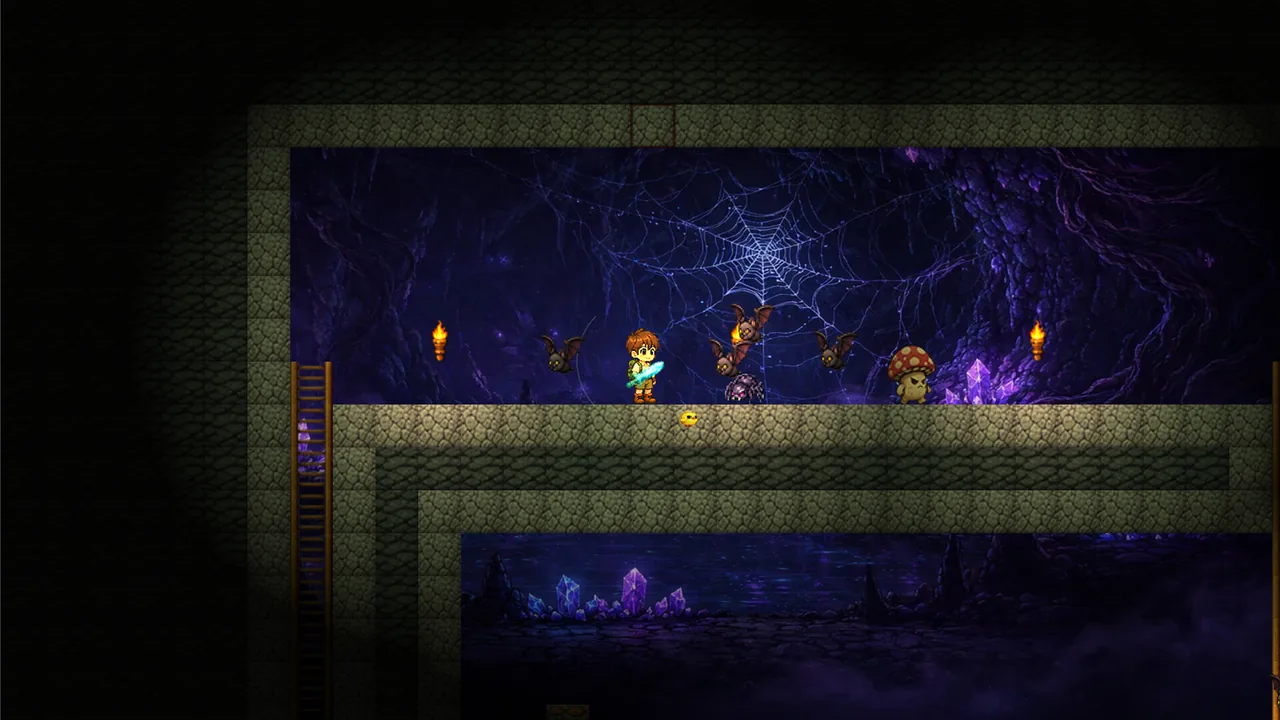
Descending through one of the underground dungeons, complete with bats and a spider's webImage: hwangso.world via Steam -

Category scores for Return to LumiaWanderer Game Reviews