
Game review
Realms and Ruins: Abencor
5.3 / 10
- Developer
- Bonedude Games Studios LLC
- Publisher
- Bonedude Games Studios LLC
The short version
Biggest strengths
- A genuinely nostalgic first-person, grid-based dungeon crawler built in the mold of Wizardry and Might & Magic, with over 100 hand-crafted maps and 20-plus dungeons to get lost in
- Real character-building hooks that reviewers specifically enjoy: choosing a starting background and freely allocating stat points into strength, dexterity, or magic on every level-up
- A slow-burn world that multiple reviewers say rewards patience, with one long-session reviewer describing content that keeps unfolding well past the deliberately slow opening
Biggest weaknesses
- Real-time rather than turn-based combat, a choice several old-school CRPG fans explicitly say doesn't suit the genre they came here for, with one reviewer wishing outright for a turn-based option
- Multiple reproducible bugs capable of bricking a save file entirely — resizing the window, getting blinded in a specific lava cave, and hitting travel directions while being carried by water currents are all separately reported as game-breaking
- A clunky, unpolished interface, including a cramped auto-map that can't be zoomed out and unclear default controls for basic functions like opening the inventory or map
5.3 / 10
A love letter to the boomer-RPG, built by one person
Realms and Ruins: Abencor wears its inspiration proudly right there in its own marketing copy, describing itself unapologetically as a "boomer role-playing game" — or bRPG — deliberately harking back to first-person, grid-based dungeon crawlers like Wizardry and Might & Magic. The premise is classic genre fare: three powerful rulers, each holding an artifact used generations ago to seal away a great evil, have all died under mysterious circumstances, leaving their lands in disarray as monsters begin creeping back in. It's a setup that exists mostly to get the player moving through treacherous mountains, mysterious forests, and ancient dungeons, and the scale on offer is genuinely substantial for a single-developer project: over 100 hand-crafted maps spanning towns and overworld regions, more than 20 dungeons, upwards of 100 monster types, and 150-plus weapons, armor pieces, and treasures to dig up along the way.
Real-time combat that splits the old-school audience
The single biggest point of contention across the review pool is a decision that cuts against the very genre Abencor is explicitly modeling itself on: combat here is real-time rather than turn-based. One reviewer states the preference bluntly, wishing the game had turn-based combat instead and comparing what's here more to Eye of the Beholder than Wizardry. Another detailed critical review goes further, calling the combat and overall depth "shallow" enough to wonder if the "bRPG" label in the marketing copy was a joke, and directly recommending a cheaper genre alternative, The Darkness Below, as a truer Might & Magic-style experience. It's a meaningful split — the real-time system does have room for ability use and positioning, and reviewers who enjoy pure action-adventure dungeon-bashing describe genuinely liking it, but anyone specifically drawn in by the Wizardry comparison in the store description should know upfront that the combat model diverges from that lineage.
A world that rewards patience, once it opens up
Where the review pool turns notably warmer is on exploration and pacing. Multiple reviewers describe a slow, sometimes awkward opening giving way to a much richer game the longer they stuck with it. One long-session reviewer, having followed the game's development for a while, describes catacombs, a kobold boss fight, a giant frog-and-spider cave that ended in an early death, and a desert and ice region that both proved lethal on a first attempt — framing every death not as frustration but as an invitation to level up, gear up, and go back for revenge. That reviewer specifically credits the game with more content than expected once past the first ten minutes, built on what they acknowledge is an "obscure, if clunky" engine from a solo developer. Character building draws similarly warm notes: choosing a starting background and freely allocating points into strength, dexterity, or magic on each level-up gives the stat-building loop real teeth, and the retro pixel art and sound design earn consistent praise for pure nostalgic pull.
Bugs serious enough to cost hours of progress
Set against that goodwill is a cluster of technical complaints too consistent to wave away. One especially detailed review lists three separate ways they managed to "brick" their save across four hours of play: resizing the game window, getting blinded inside a specific lava cave (after which enemies vanish and the game crashes on re-entry), and pressing travel directions while being carried along by water currents in a lake cave, which can permanently break character movement with no fix — not even fast travel. The same review notes some regions fail to load correctly and leave enemies without proper hitboxes for ranged attacks, forcing melee as a workaround. A separate reviewer flags a straightforward pricing bug, where 25-gold healing potions were actually charging 10 gold, alongside general menu clunkiness like having to click a text box just to continue dialogue. None of this reads as fatal to the underlying game, but it's a real and current risk for anyone who saves infrequently or leans on a single save slot.
An interface that needs real polish
Beyond the outright bugs, several reviewers single out the interface itself as needing work. The auto-map draws specific criticism for being too small with no way to zoom out, making it hard to keep a sense of the wider explored area rather than just the immediate vicinity. Basic controls aren't well signposted either — one reviewer admits to discovering the map and inventory keybinds (M and I) purely by chance rather than through any in-game prompt. None of these are unusual complaints for a solo-developer Early Access-adjacent release, and they read as fixable polish issues rather than fundamental design flaws, but they're consistent enough across the review pool to weigh into any purchase decision today.
Verdict
Realms and Ruins: Abencor is a genuinely earnest, surprisingly content-rich throwback built by a developer who clearly loves the genre they're working in, and the reviewers who stick with it past its slow opening consistently describe finding more game than they expected. But it's asking players to accept a real-time combat system that cuts against its own Wizardry-and-Might-&-Magic pitch, a genuinely clunky interface, and — most seriously — reproducible bugs capable of bricking hours of saved progress. Old-school dungeon-crawler fans specifically hunting for turn-based combat should look elsewhere for now; players more focused on open-world exploration and slow-burn discovery, and willing to save often and tolerate real rough edges, will likely find more here than the surface-level "shallow" criticism suggests.
Pros and cons
Pros
- A genuinely nostalgic first-person, grid-based dungeon crawler built in the mold of Wizardry and Might & Magic, with over 100 hand-crafted maps and 20-plus dungeons to get lost in
- Real character-building hooks that reviewers specifically enjoy: choosing a starting background and freely allocating stat points into strength, dexterity, or magic on every level-up
- A slow-burn world that multiple reviewers say rewards patience, with one long-session reviewer describing content that keeps unfolding well past the deliberately slow opening
- Charming, sound-and-art-driven retro presentation that several reviewers credit with real nostalgic pull, on top of a solo developer clearly working with genuine affection for the genre
Cons
- Real-time rather than turn-based combat, a choice several old-school CRPG fans explicitly say doesn't suit the genre they came here for, with one reviewer wishing outright for a turn-based option
- Multiple reproducible bugs capable of bricking a save file entirely — resizing the window, getting blinded in a specific lava cave, and hitting travel directions while being carried by water currents are all separately reported as game-breaking
- A clunky, unpolished interface, including a cramped auto-map that can't be zoomed out and unclear default controls for basic functions like opening the inventory or map
- One detailed critical review calls it a shallow, overpriced CRPG relative to genre alternatives like The Darkness Below, questioning whether the asking price matches the amount of actual content on offer
Screenshots
-
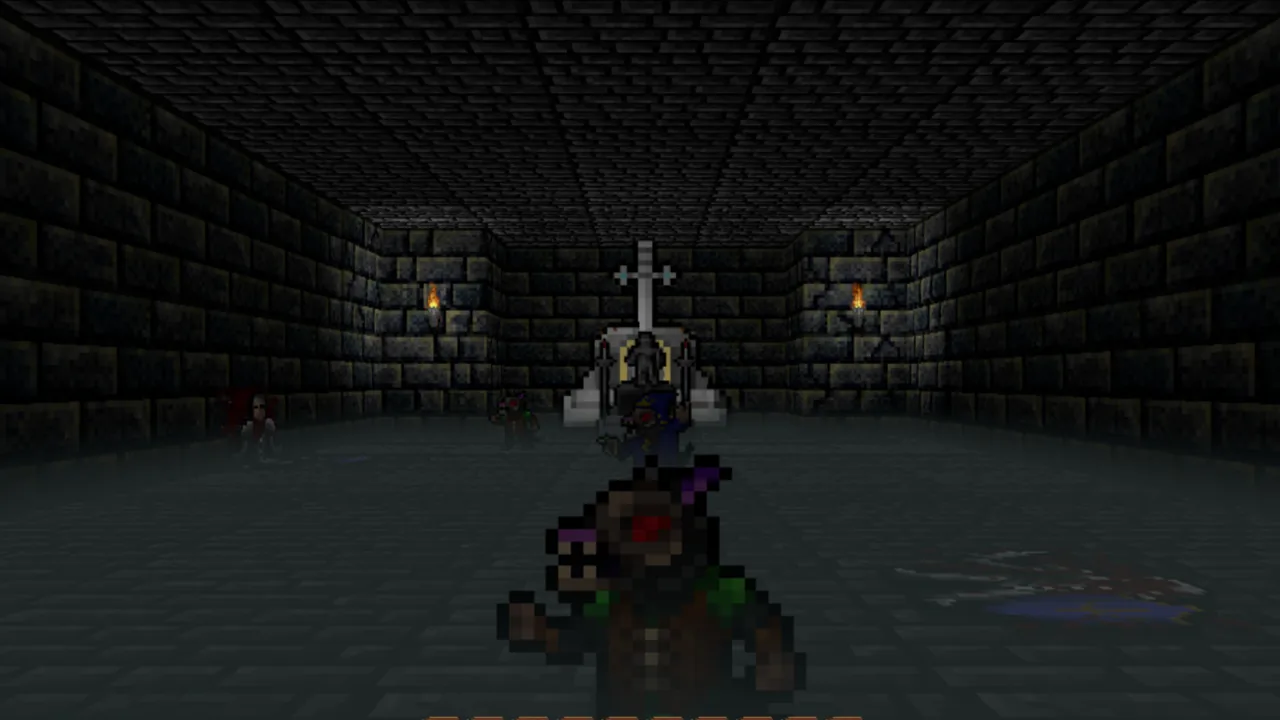
Facing down a goblin in a torchlit dungeon chamber, first-person grid-based combat in the Wizardry traditionImage: Bonedude Games Studios LLC via Steam -
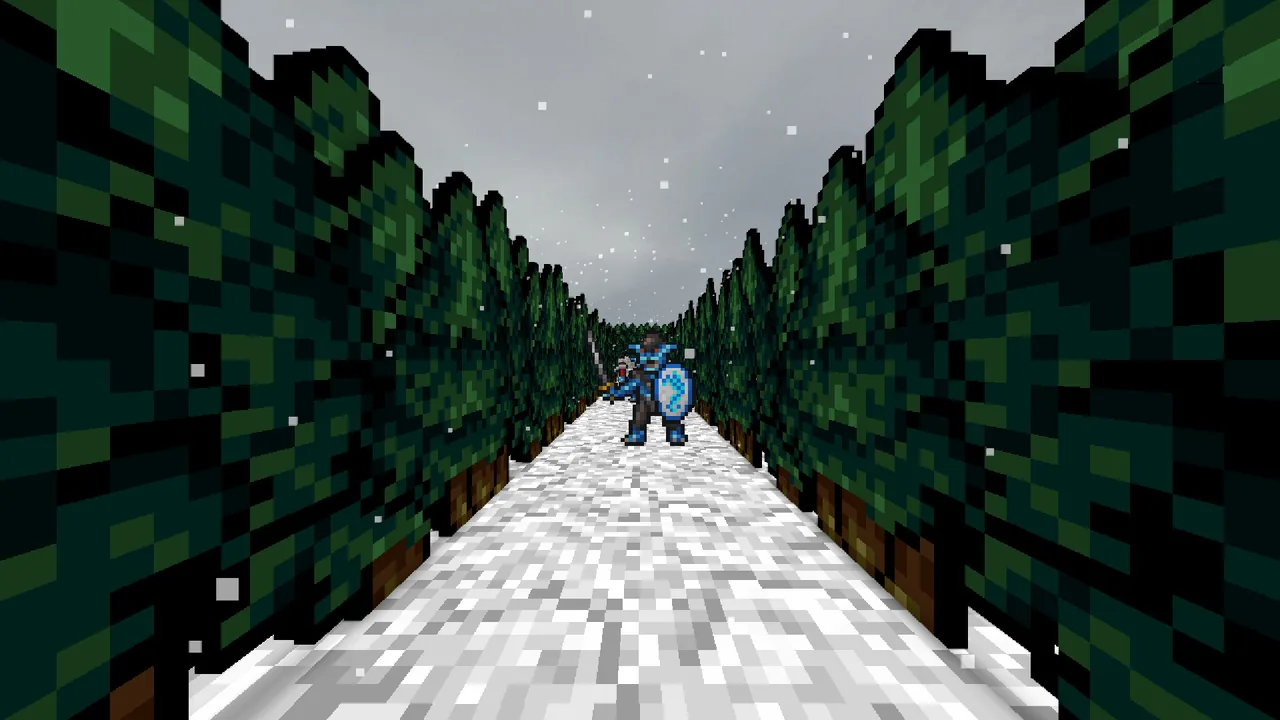
Trekking a snowbound forest path, one of the open-world's many overworld regions to exploreImage: Bonedude Games Studios LLC via Steam -
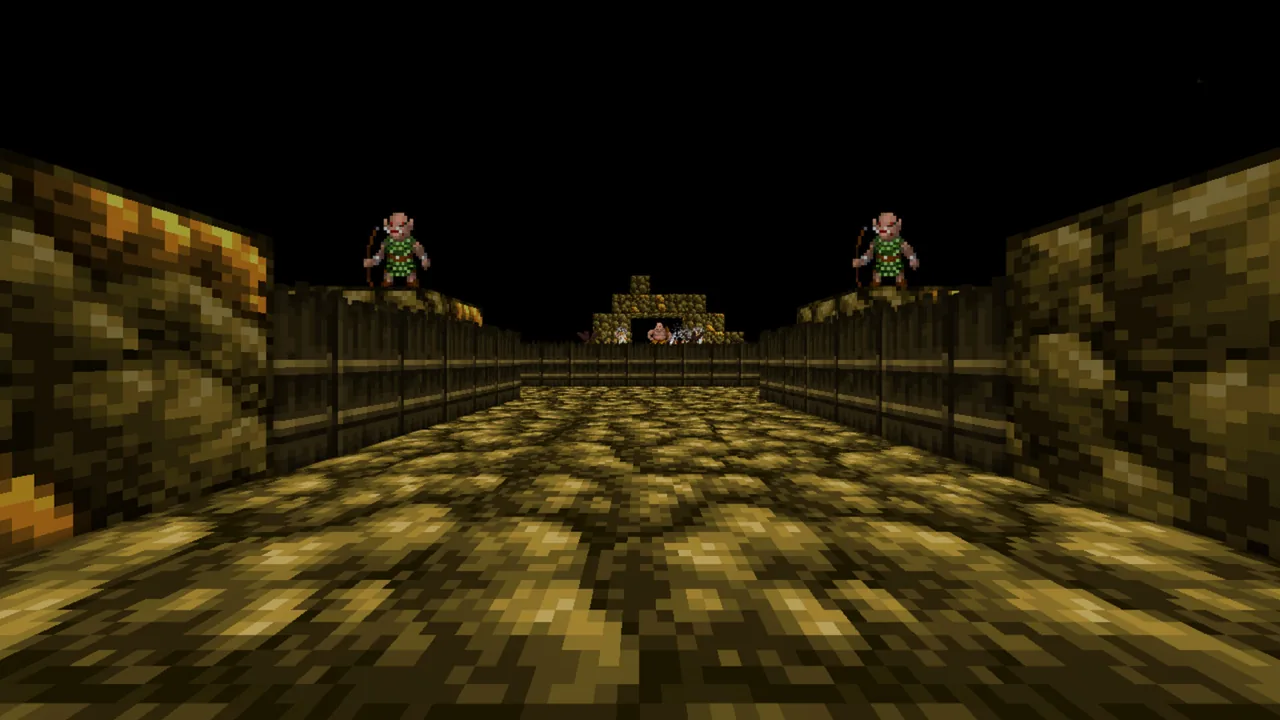
Goblin archers perched on the walls of a fenced night-time corridor, guarding the way aheadImage: Bonedude Games Studios LLC via Steam -

Category scores for Realms and Ruins: AbencorWanderer Game Reviews