Game review
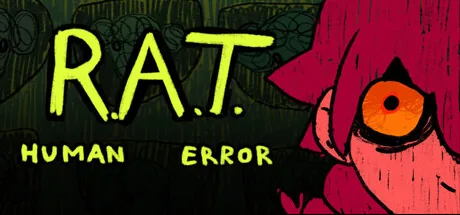
R.A.T.: Human Error – Episode One
6.8 / 10
- Developer
- CH3RZY
- Publisher
- CH3RZY
The short version
Biggest strengths
- Distinctive hand-drawn art direction and unsettling atmosphere carry real emotional weight
- Strong environmental storytelling rewards curious players who linger and read every note
- Free-to-play episode one delivers surprising production value for the price of nothing
Biggest weaknesses
- Vent-crawling maze sections drag on far too long and repeatedly stall the story's momentum
- No persistent map inside the vents makes backtracking disorienting rather than tense
- Puzzles are largely simple, offering little challenge beyond basic item-and-clue logic
6.8 / 10
Overview
R.A.T.: Human Error – Episode One is a free-to-play narrative adventure from solo developer CH3RZY, the opening chapter of what's clearly intended to become a longer episodic series. Players take on the role of Brie, a sick child confined to a hidden underground facility after an unspecified catastrophe has ravaged the surface world, with escape and reunion with a waiting mother as the only stated goal. The game leans on hand-drawn art, environmental storytelling, and an eerie cast of facility inhabitants to build tension, and largely succeeds at establishing a memorable, singular atmosphere within its short runtime. As a debut episode released entirely free, it punches well above its price point, though its signature exploration mechanic proves to be as much a liability as a strength.
Story and Setting
The premise unfolds after "the war ended in a blinding flash," leaving the earth hollowed out and forcing survivors underground, only for a mysterious sickness to spread through the shelters and warp both minds and bodies. Brie wakes in this facility not knowing why she's there, surrounded by strange figures who range from helpful to actively deceptive, with reviewers repeatedly drawing comparisons to the tone and visual language of Sally Face and Fran Bow. The writing favors mystery over exposition, doling out fragments of lore through overheard dialogue, hidden notes, and found objects rather than direct explanation, and several reviewers singled out an early conversation with a character named Obu as an unexpectedly poignant highlight. Reviewers also noted darker historical undertones woven into the sci-fi premise, drawing implicit parallels to real atrocities, which gives the otherwise whimsical, cartoon-styled world an uncomfortable edge that lingers past the credits. Episode One ends on a deliberately unresolved note, teasing a second chapter without offering any concrete answers about the facility, the sickness, or Brie's ultimate fate.
Gameplay and Mechanics
Moment-to-moment play splits between exploring the facility's inhabited rooms, talking to its odd cast, solving lightweight environmental puzzles, and crawling through a labyrinth of vents that connect each area. The vents are the game's most divisive design choice: intended as a way to physically embody the claustrophobic, maze-like nature of the underground setting, they instead became the single most common complaint across the review pool. Without a persistent map or clear landmarks, players described getting genuinely lost for extended stretches, with the pacing grinding to a halt precisely when the more engaging character and exploration content is paused. Several reviewers who otherwise loved the writing and art said the vent sections were long enough to make them stop playing before reaching the end, while others treated the disorientation as intentional atmosphere and pushed through to praise the payoff. The puzzles themselves outside the vents skew simple, generally amounting to finding an item and using it in an obvious location, which keeps the pace approachable for newcomers but offers little friction for players wanting a genuine challenge. A handful of reviewers noted minor bugs, including an out-of-bounds gap in one of the vent sections leading toward a character called the janitor, though these were described as isolated rather than game-breaking. For players who prefer to stream or share their playthrough, several reviewers recommended it specifically as a short, self-contained session well suited to an audience, citing its straightforward puzzle logic and steady stream of "silly moments" as good fits for a casual co-viewing pace.
Visual Style and Sound Design
The hand-drawn, cartoon-inflected art style is the game's clearest strength, rendering both the decaying facility and its inhabitants with a charm that undercuts the story's darker implications without ever feeling tonally mismatched. Character illustrations and dialogue portraits drew consistent praise for personality and expressiveness, and the color palette shifts effectively between warmly lit social spaces and the oppressive, dim vent network. Sound design leans minimal but purposeful, with reviewers describing the score as simplistic yet fitting, though several wished for greater musical variety across the game's several hours of content. The overall audiovisual package reads as remarkably polished for a free debut episode from a single developer, a point multiple reviewers made explicitly when comparing its presentation quality to the price of admission.
Progression and Replayability
As a single, self-contained episode rather than a full game, R.A.T. offers a linear playthrough of a few hours with light branching in dialogue and discoverable secrets rather than mechanical progression systems like leveling or gear. A hidden developer room and scattered optional lore rewards exploration for players willing to backtrack, though these extras function as flavor rather than altering the outcome. Because the story is explicitly building toward a second episode, the replay value of Episode One on its own is modest; its real function is as a proof of concept and a hook for the eventual continuation, and reviewer sentiment consistently framed their score as an investment in wanting to see where the series goes next rather than a verdict on a finished, standalone product.
Verdict
R.A.T.: Human Error – Episode One is a confident, visually distinctive first chapter that stumbles specifically where it tries hardest to be atmospheric, letting its vent-crawling centerpiece overstay its welcome and blunt the momentum of an otherwise well-told mystery. Its hand-drawn art, unsettling underground setting, and genuinely memorable supporting cast make it easy to recommend, especially given the price of free, but players should go in expecting a short, occasionally frustrating maze-heavy detour between the story's stronger beats. Worth playing for fans of narrative-driven horror-adventure in the vein of Sally Face, with the caveat that its true test, as a complete series rather than a promising opening episode, is still to come.
Pros and cons
Pros
- Distinctive hand-drawn art direction and unsettling atmosphere carry real emotional weight
- Strong environmental storytelling rewards curious players who linger and read every note
- Free-to-play episode one delivers surprising production value for the price of nothing
- Memorable, well-voiced side characters make the underground facility feel genuinely inhabited
Cons
- Vent-crawling maze sections drag on far too long and repeatedly stall the story's momentum
- No persistent map inside the vents makes backtracking disorienting rather than tense
- Puzzles are largely simple, offering little challenge beyond basic item-and-clue logic
- Episode One ends on a cliffhanger with no confirmed timeline for the next installment
Screenshots
-
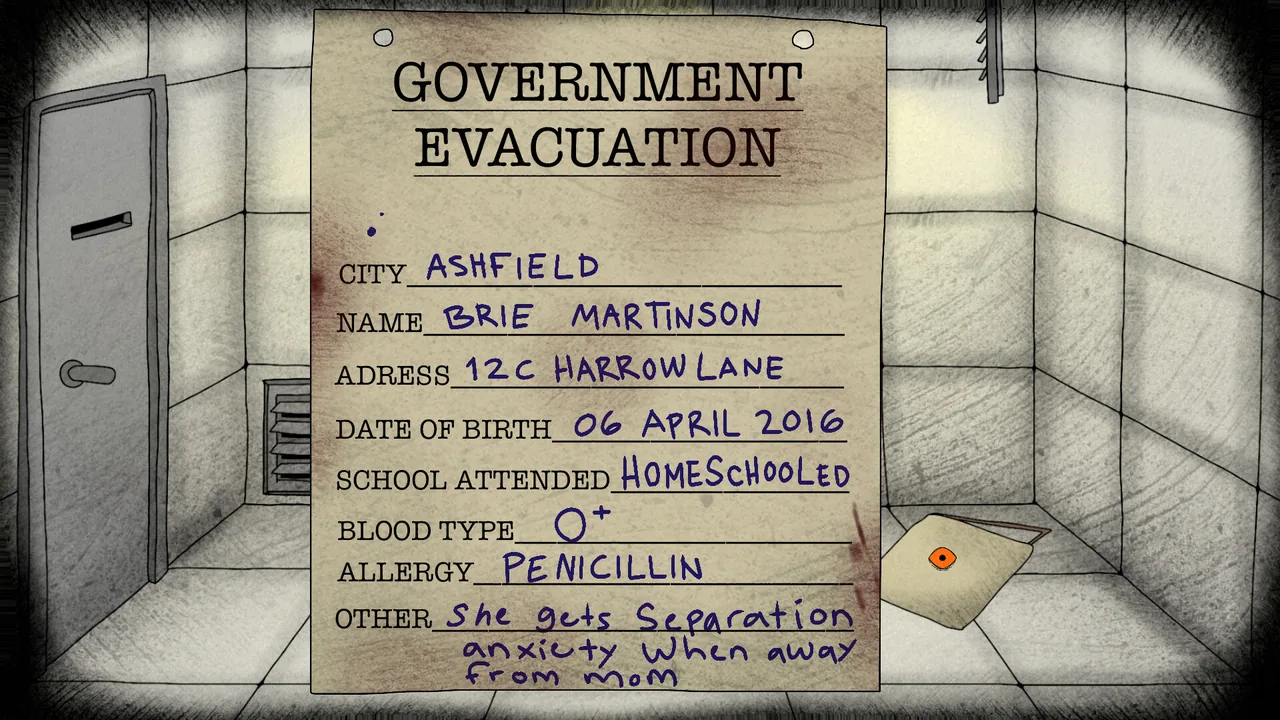
A found document reveals fragments of Brie's backstory through environmental storytellingImage: CH3RZY via Steam -
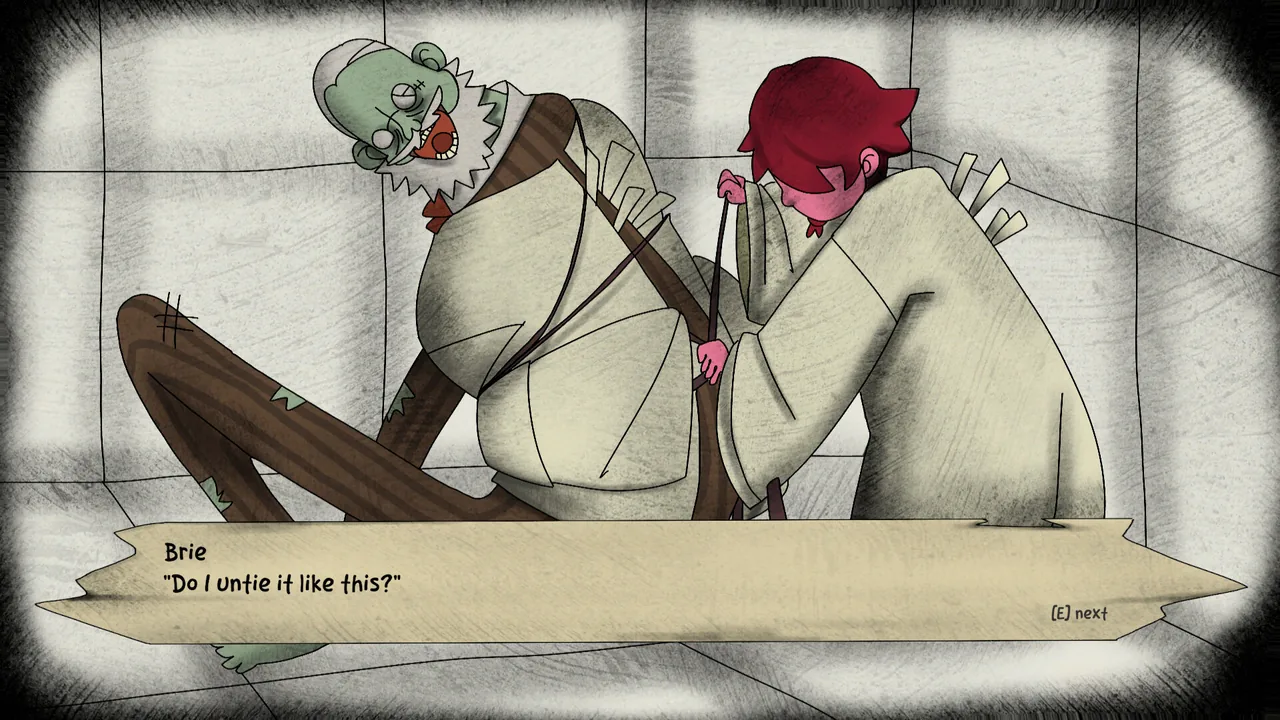
Interacting with one of the facility's strange, unsettling inhabitantsImage: CH3RZY via Steam -
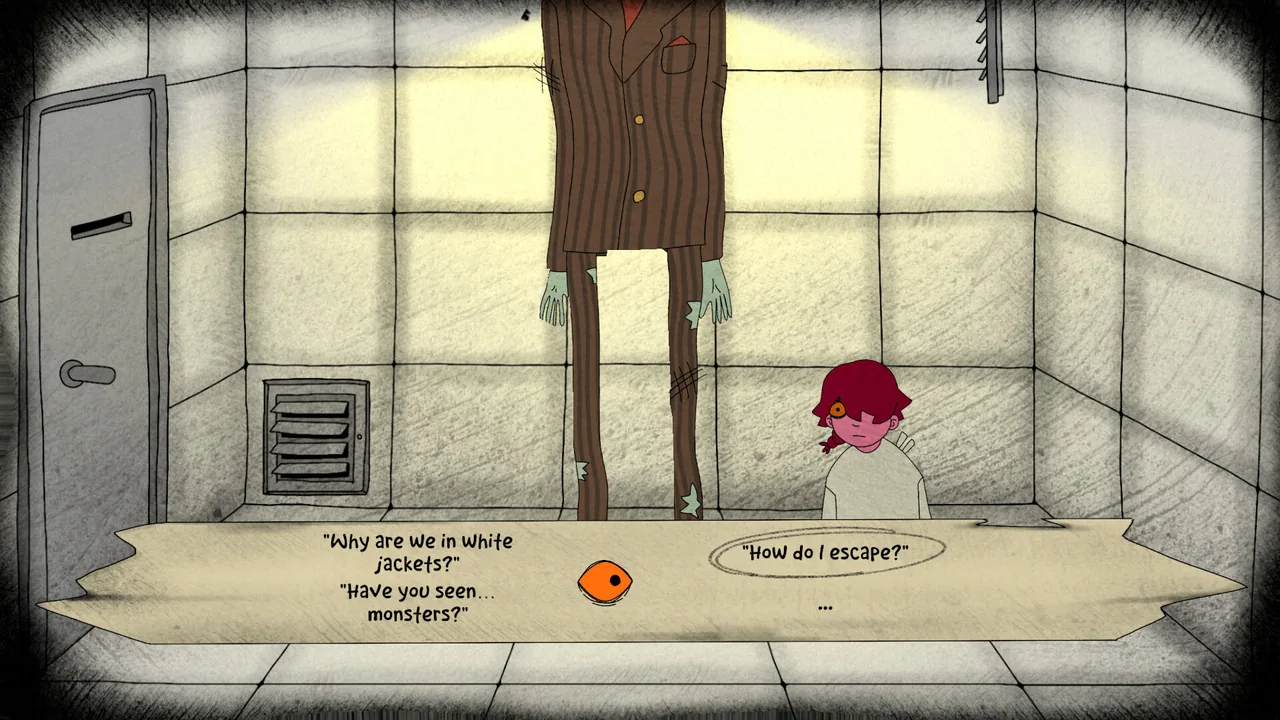
A branching dialogue exchange with one of the facility's ambiguous figuresImage: CH3RZY via Steam -
Technical specificationsWanderer Game Reviews