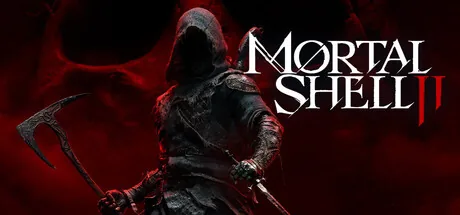
Game review
Mortal Shell II
6.3 / 10
- Developer
- Cold Symmetry
- Publisher
- Playstack
The short version
Biggest strengths
- A genuine, widely-agreed leap over the original Mortal Shell in combat, scope and ambition
- Removing the stamina bar and building combat around parries and 'harden' makes for fast, satisfying fights
- Eight distinct Shells work as class-swaps, and reviewers repeatedly praise the first ten to fifteen hours as some of the best in the genre this year
Biggest weaknesses
- Enemy variety is heavily front-loaded; the same handful of monsters get recycled with inflated stats for the back half
- Widely reported late-game balance problems: one-shot attacks, absurd tracking, and long runbacks after death
- Reallocating Shell points every time you switch classes discourages the build experimentation the system is meant to encourage
6.3 / 10
The Pitch
Mortal Shell II is Cold Symmetry's standalone sequel to their 2020 budget soulslike, and it swings hard for the fences: a fully open world, eight possessable warrior Shells that function as swappable classes, an overhauled weapon and tarstone system, and combat built around parries, ripostes and a "harden" defensive stance rather than a stamina meter. Publisher Playstack put it out on 20 August 2026 at a full NZ$79.95, a significant jump from the original's budget pricing, and its 9,500 English-language Steam reviews (7,861 positive) have settled at Very Positive. That headline number undersells how split the actual sentiment is, though: an unusually large share of these reviews describe loving the first half of the game and souring badly on the second.
A Real Step Up From the Original
Almost every review that also played the first Mortal Shell agrees on one thing: this is a dramatically better game. Reviewers who called the original "mediocre," "murky" or even "one of the worst souls-likes I played" describe being won over here, crediting sharper art direction, a much larger and more confident open world, and combat that finally has real weight and speed to it. The decision to strip out the stamina bar in favor of an unrestricted harden-and-parry system comes up constantly as the single best change, letting players move and counter as fast as the bosses can, which several reviewers single out as rare even among prestige soulslikes. Early hours draw comparisons to Dark Souls, Sekiro and Elden Ring without much hedging, and more than one reviewer with hundreds of hours in the genre calls this the best non-FromSoftware soulslike they've played.
Shells, Not Stats: The Build System
The eight Shells, each with their own passive kit and skill tree, are the game's headline hook, and reviewers do credit them with keeping runs feeling different, players describe running full playthroughs with Tiel, Eredrim, Proxima and others and coming away with distinct experiences each time, on top of a wide weapon and tarstone pool that lets the same Shell play several different ways. The friction shows up in the details: several reviewers specifically criticize how Shell points work, switching classes mid-run means pulling points back out of one Shell to reinvest in another rather than leveling every Shell independently, which more than one review describes as "tedious" busywork that actively discourages trying something new rather than encouraging it. It's a case of a genuinely interesting system undercut by its own economy.
A Second Half That Can't Keep Up
This is where the review set turns sharply, and the complaint shows up with striking consistency across dozens of otherwise very different reviews: the game's enemy roster is almost entirely front-loaded. Multiple reviewers independently estimate that somewhere between seventy and seventy-five percent of all enemy types appear within the first two or three zones, after which the late game leans on reused monsters with inflated health and damage rather than new threats. One long, detailed negative review traces this directly back to a difficulty spike that arrives without new mechanics to justify it, calling out enemy poise, tracking and one-shot potential that turns encounters into damage checks rather than skill checks. It's echoed by reviewers who otherwise rate the game highly: an 8-out-of-10 review still specifically wishes for "more enemy variety, more soundtrack variety and just better all around balancing," and even players who finished the game and enjoyed most of it describe the last stretch as feeling like "a different game entirely."
Bugs, Balance and a Punishing Final Stretch
Beyond pacing, a real cluster of reviews report bugs at launch: shell abilities that don't trigger correctly (one player's detailed list of ability bugs notes several were patched within the first week), inconsistent enemy hit detection that can eat a parry through no fault of the player, and a first-person horror sequence one reviewer flags as unexpectedly effective but technically shaky. One reviewer counted fifteen-plus crashes across twenty hours of play, and another flags a persistent camera issue where standing with your back to a wall leaves you unable to see anything. To its credit, the game does offer difficulty options beyond the default, an optional Slayer Seal that boosts damage and healing (at the cost of achievements) for players who want an easier ride, and a harder Night Mode unlocked later that adds extra lore, items and traders as a reward for taking it on, though neither option addresses the specific pacing and variety complaints above. The final boss draws the sharpest and most repeated criticism of anything in the review set, described variously as relying on a curse mechanic that's easy to miss entirely, as a worse version of Elden Ring's Elden Beast, and simply as one of the worst final encounters several long-time souls veterans say they've faced. Combined with long, punishing runbacks to some boss arenas after death, it's a genuinely different tone from the praise the early hours draw.
Verdict
Mortal Shell II is a real, credible step forward for Cold Symmetry, and for roughly its first half it earns every comparison to the genre's best. The stamina-free combat and Shell-swapping build system show real ambition and mostly deliver on it. But an unusually consistent chorus of reviews, across thousands of playtime hours, describes a back half that leans on recycled enemies, inflated numbers and a widely disliked final boss to manufacture difficulty rather than earn it, with a Shell-respec system that discourages the very experimentation the class system is built around. At full AAA price, it's hard to recommend without the caveat nearly every positive review already includes: expect the back half of the game to test your patience more than your skill, and don't be surprised if a few post-launch balance patches change this calculus before you get there.
Pros and cons
Pros
- A genuine, widely-agreed leap over the original Mortal Shell in combat, scope and ambition
- Removing the stamina bar and building combat around parries and 'harden' makes for fast, satisfying fights
- Eight distinct Shells work as class-swaps, and reviewers repeatedly praise the first ten to fifteen hours as some of the best in the genre this year
- Strong art direction and, for most players, surprisingly stable Unreal Engine 5.6 performance
Cons
- Enemy variety is heavily front-loaded; the same handful of monsters get recycled with inflated stats for the back half
- Widely reported late-game balance problems: one-shot attacks, absurd tracking, and long runbacks after death
- Reallocating Shell points every time you switch classes discourages the build experimentation the system is meant to encourage
- The final boss and last area draw some of the sharpest, most consistent criticism in the entire review set
Screenshots
-
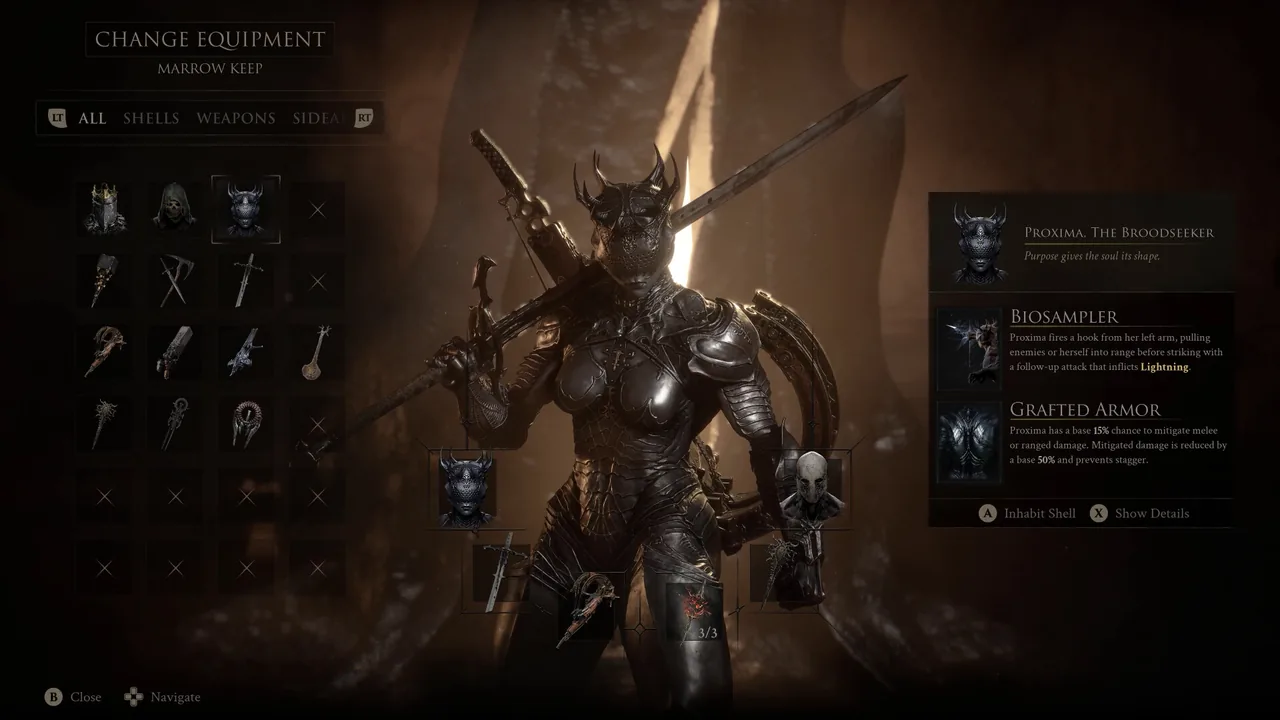
Swapping Shells at Marrow Keep, the game's class-change hubImage: Playstack via Steam -
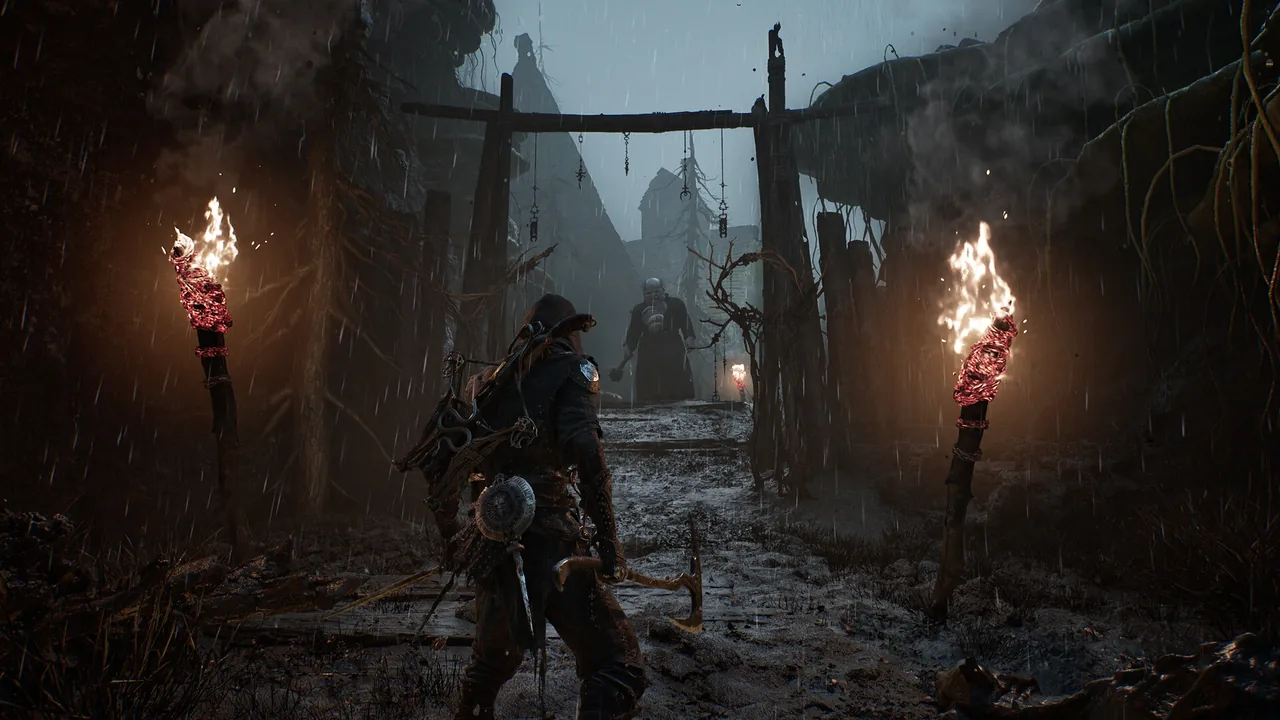
A rain-soaked settlement encounter, one of the game's more atmospheric open-world areasImage: Playstack via Steam -
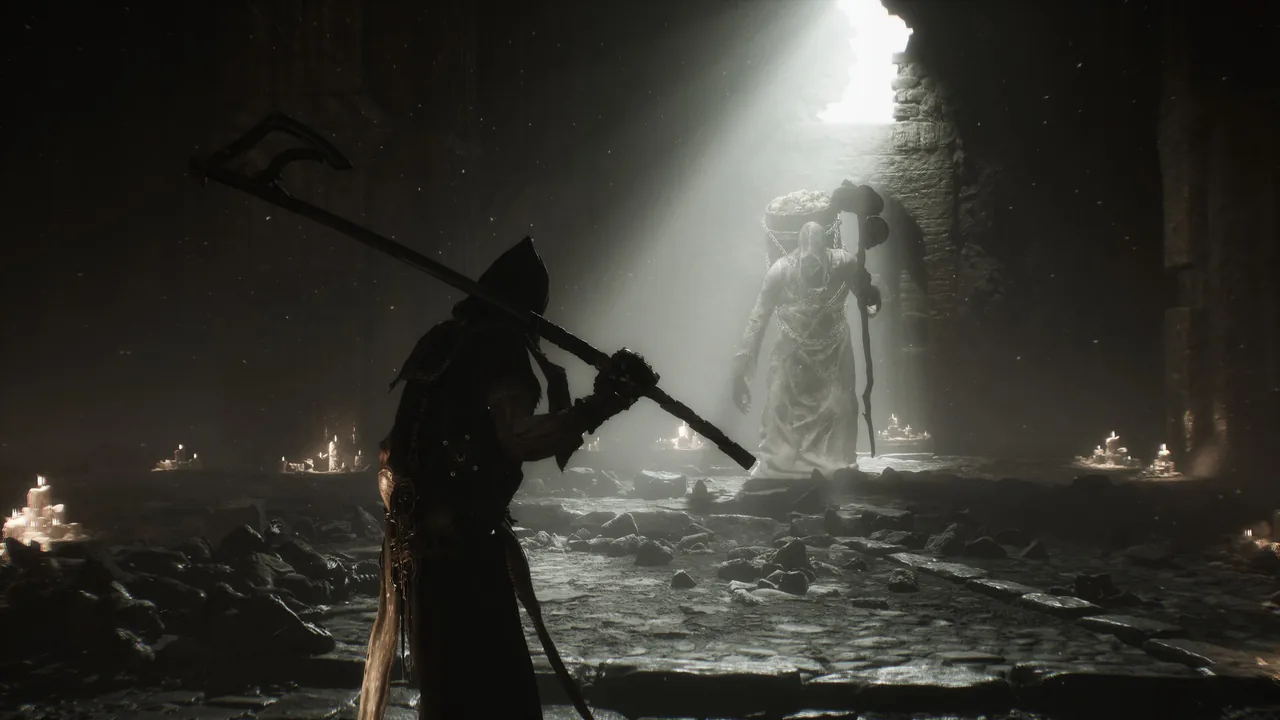
A shaft of light picks out a towering statue in one of the game's boss chambersImage: Playstack via Steam -
Category scores for Mortal Shell IIWanderer Game Reviews