
Game review
Melovar's Tale
6.4 / 10
- Developer
- Niad Chowdhury
- Publisher
- Niad C
The short version
Biggest strengths
- A genuinely large card and relic pool for a solo-developed release — 300+ cards and 125+ relics across five rarity tiers — that reviewers say delivers real variety and value for the asking price
- Praised as an approachable entry point into the deckbuilder genre, with one reviewer who had bounced off every other card game in the genre saying Melovar's Tale is the first one that finally clicked for them
- Dual meta-progression tracks (Universal and Hero Mastery) plus Ascension ranks give runs a sense of accumulating long-term purpose beyond any single attempt
Biggest weaknesses
- The review pool is extremely small — just five English-language reviews at the time of writing — making any verdict about the game's broader reception necessarily tentative
- At least one reviewer reports encountering game-stopping bugs, with the developer reportedly indicating a fix is coming, though at review time the issue was still unresolved for that player
- A favorable comparison to the deckbuilder Vault of the Void, made in one review and cited by another player as the reason they bought in, was directly disputed by that second player as not remotely accurate
6.4 / 10
Forging a deck in the world of Eodolas
Melovar's Tale drops players into Eodolas, a dark fantasy world consumed by shadow and flame, and asks them to survive it one procedurally generated run at a time by building a deck out of cards, relics, and status effects. It's a solo-developed roguelike deckbuilder pitched explicitly at fans of Slay the Spire and its imitators, built around six playable heroes, a card pool the developer lists at more than 300 entries, and 125-plus relics spread across five rarity tiers. As with most one-person projects in a genre this saturated, the honest starting question isn't whether Melovar's Tale is ambitious — its detailed feature list makes that clear — but whether it executes well enough to be worth a newcomer's time against genre giants with years of post-launch refinement behind them. With only five English-language Steam reviews on record so far, four of them positive, the early signs are cautiously encouraging.
A big card pool built around synergy
The core loop leans heavily on card synergy across attack, skill, and power archetypes, with the developer's own description promising interactions that can "leave you triumphant or at death's door." Reviewers who've spent real time with it back that up: one reviewer with over 2,600 minutes logged describes falling into the "one more run" cycle repeatedly, which is about as strong an endorsement of a deckbuilder's core hook as exists. Notably, that same reviewer says Melovar's Tale is the first deckbuilder that's ever actually clicked for them after bouncing off other entries in the genre for feeling too confusing right out of the gate — a useful signal that the game's onboarding, even if less polished than a genre leader's, is doing something right for newcomers specifically.
Relics, ascension, and a reason to keep coming back
Beyond the base card pool, Melovar's Tale leans on its relic system and meta progression to give runs a longer arc. Relics are described as reshaping strategy outright rather than simply buffing stats, and the game tracks two separate experience tracks — Universal and Hero Mastery — alongside Ascension ranks that raise the difficulty for players chasing a bigger challenge once the base game has been cleared. One reviewer frames the overall package plainly: "For a solo dev this is a great game and there is a lot of value," pointing specifically to the combined variety of cards, relics, potions, and perks as more content than they expected from a single-developer release at this price point.
Six heroes, multi-phase bosses, and where the comparisons get complicated
Each of the game's six heroes carries a distinct deck and set of special abilities, with cross-hero card synergies adding replay incentive to master more than one, on top of the game's branching, procedurally generated maps that promise secret events and escalating encounters at every crossroad. Boss encounters are built around multi-phase fights, some following learnable patterns and others described as demanding real-time adaptation. The developer's own feature list also points to more than 85 enemy types with distinct movesets and over 70 narrative story events woven into runs, alongside a status effect, keyword, and curse system meant to add tactical texture beyond simple card-power scaling, and a leaderboard for players curious how their runs stack up against others. One early reviewer went so far as to call the card gameplay "essentially a better Vault of the Void," a specific and fairly bold genre comparison that clearly caught at least one other player's attention — a second reviewer says that exact comparison is what convinced them to buy the game. That second reviewer, however, pushes back hard on the claim once they'd played it themselves, writing plainly that Melovar's Tale "is not remotely comparable to Vault of the Void" — a reminder that early reviews in a thin sample can pull in genuinely contradictory directions, and that genre comparisons from a single enthusiastic reviewer shouldn't be taken as settled fact.
Rough edges of an early, small-scale release
The most concrete complaint on record concerns stability: one reviewer specifically reports game-stopping bugs, noting there's an indication from the developer that a fix is coming, though the issue remained unresolved for them as of their review. That same reviewer's broader skepticism about the Vault of the Void comparison suggests some tempering of expectations is warranted around just how refined the current build is. More structurally, Melovar's Tale is entering one of the most crowded genres on Steam with a tiny existing review base and, by extension, limited visibility — reviewers describing it as a "hidden gem" is a compliment, but it also underlines how much work remains for a solo developer to get the game in front of the deckbuilder audience it's clearly built for.
Verdict
Melovar's Tale is a genuinely feature-rich roguelike deckbuilder for a solo-developed release, with a card and relic pool large enough to support real synergy hunting and a meta-progression system that gives repeat runs a sense of purpose. Its extremely small review base means any verdict here comes with real uncertainty attached, and the reported game-stopping bugs plus a disputed "better than Vault of the Void" comparison suggest a game still finding its footing rather than a fully polished contender. For deckbuilder fans specifically looking for an approachable, actively updated newcomer to the genre — and willing to accept some early rough edges along the way — Melovar's Tale is worth a look, even if it's too early to call it a must-play.
Pros and cons
Pros
- A genuinely large card and relic pool for a solo-developed release — 300+ cards and 125+ relics across five rarity tiers — that reviewers say delivers real variety and value for the asking price
- Praised as an approachable entry point into the deckbuilder genre, with one reviewer who had bounced off every other card game in the genre saying Melovar's Tale is the first one that finally clicked for them
- Dual meta-progression tracks (Universal and Hero Mastery) plus Ascension ranks give runs a sense of accumulating long-term purpose beyond any single attempt
- An active solo developer reviewers credit directly, with one urging them to \"keep the updates coming\" and another calling the game a \"hidden gem\" worth discovering despite its tiny player base so far
Cons
- The review pool is extremely small — just five English-language reviews at the time of writing — making any verdict about the game's broader reception necessarily tentative
- At least one reviewer reports encountering game-stopping bugs, with the developer reportedly indicating a fix is coming, though at review time the issue was still unresolved for that player
- A favorable comparison to the deckbuilder Vault of the Void, made in one review and cited by another player as the reason they bought in, was directly disputed by that second player as not remotely accurate
- As a 2D card-based roguelike releasing into an extremely crowded genre already dominated by established names, Melovar's Tale doesn't yet have the reputation or visibility to easily stand out on its own
Screenshots
-
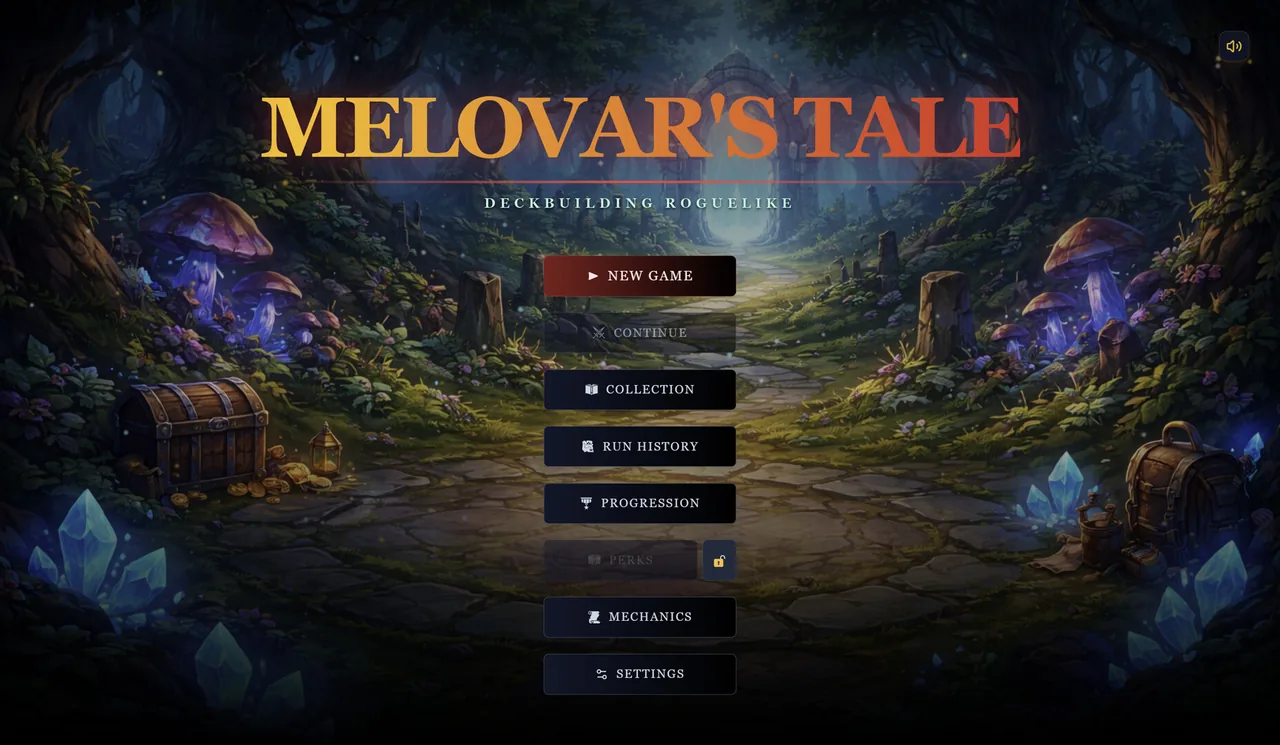
The main menu sets the dark fantasy tone before a single card is drawnImage: Niad Chowdhury via Steam -

Six heroes with distinct signature abilities headline the champion-select screenImage: Niad Chowdhury via Steam -
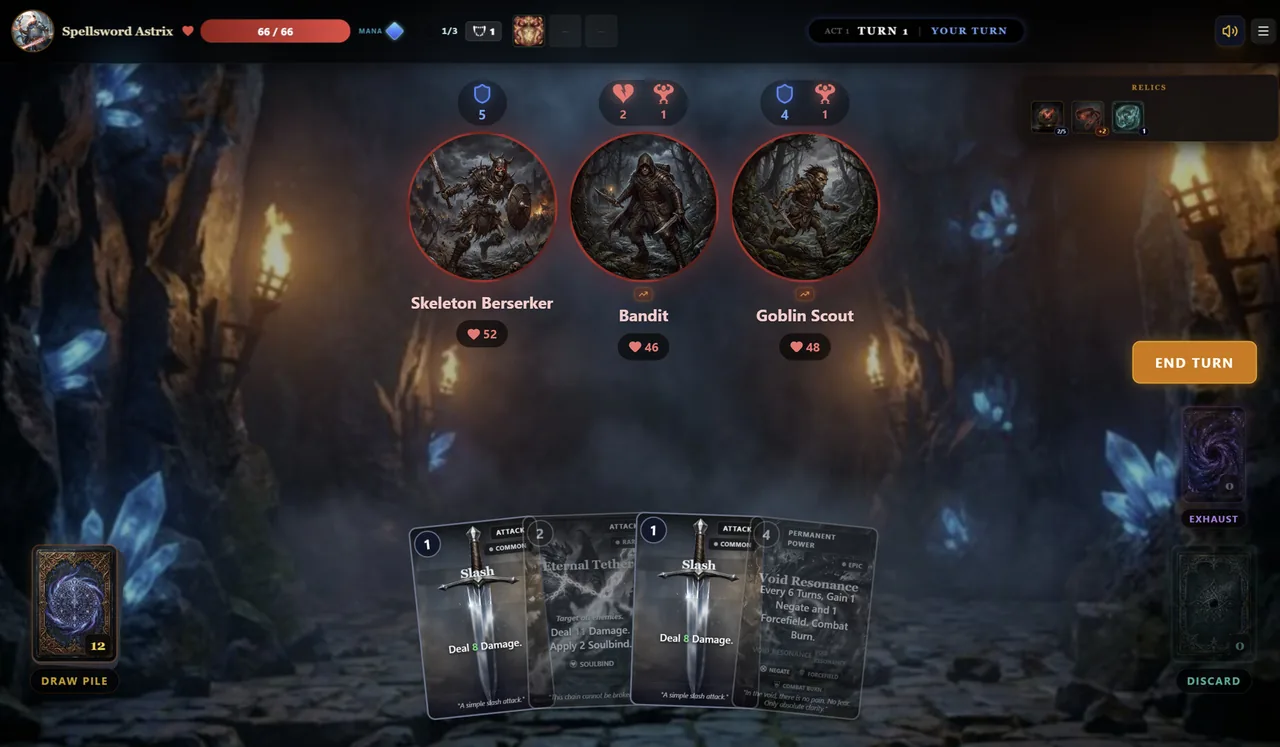
Spellsword Astrix squares off against three enemies with a hand full of attack and power cardsImage: Niad Chowdhury via Steam -

Category scores for Melovar's TaleWanderer Game Reviews