Game review
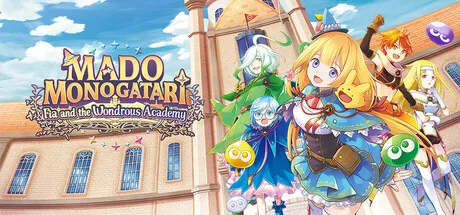
MADO MONOGATARI: Fia and the Wondrous Academy
5.6 / 10
- Developer
- Idea Factory, Compile Heart, STING
- Publisher
- Idea Factory International
The short version
Biggest strengths
- A genuinely charming, comedic cast of academy classmates that multiple reviewers say carries the game even when its systems don't — one reviewer states plainly that the kids 'hard carry this game'
- A meaningful piece of RPG history returning after a decade-plus silence: MADO MONOGATARI is the original dungeon-crawler series that Puyo Puyo spun off from, and this revival visibly leans into that lineage
- A relaxed, cozy academy hub layered around the dungeon crawling — cooking, farming, fishing, mini-games, and interactive school-ground objects that reviewers enjoyed poking around in between missions
Biggest weaknesses
- The core battle system is repeatedly described as simplistic, hit-or-miss, and grind-heavy, with one blunt review calling it 'atrocious' and comparing the combat unfavorably to its most direct predecessor, Waku Waku Puyo Puyo Dungeon
- A heavy dialogue-to-gameplay ratio, especially early on — one reviewer spent most of their first hour reading and in a short tutorial dungeon, and says the balance doesn't improve much from there
- Filler side content that asks players to replay the same handful of dungeons multiple times to satisfy 'mailbox' quests, which several reviewers single out as the low point of the design
5.6 / 10
The series Puyo Puyo left behind
MADO MONOGATARI: Fia and the Wondrous Academy is a strange kind of comeback. The original MADO MONOGATARI games were first-person dungeon crawlers built for the MSX and PC-98 back in the 1980s and '90s — obscure to most Western players, but historically significant as the series that spun off the internationally beloved puzzle franchise Puyo Puyo. This new entry, a collaboration between Idea Factory, Compile Heart, and STING (with Sega and D4 Enterprise involved behind the scenes as rights holders), doesn't try to resurrect that first-person format directly. Instead it positions itself as a spiritual successor to the more recent Waku Waku Puyo Dungeon and Curse of the Curry God, following a young aspiring mage named Fia as she talks, bumbles, and fights her way through the Ancient Magic Academy. It's less a hardcore dungeon crawler revival and more a cozy school-life RPG with dungeon crawling bolted onto its hub — and reviewers are split on whether that's the right call.
Academy life is doing the heavy lifting
Where the game earns its warmest praise is in its cast and its school-hub structure. Fia's classmates — including a swordsman named Will among several others — form a genuinely likable ensemble, and multiple reviewers describe the slice-of-life writing and comedic tone as the thing that kept them playing well past the point the combat stopped impressing them. One reviewer says outright that the characters "hard carry this game," and several others specifically praise the localization quality and the expressive, chibi-styled character art. Outside of dungeons, the Academy grounds function as a proper hub: players can fish, farm ingredients, cook curry for in-dungeon buffs, interact with a Bulletin Board of unlockable mini-games, and even poke around the school environment for optional interactions and easter eggs. It's the kind of low-stakes, cozy structure that several reviewers compare favorably to Atelier-style loops, and it's clearly where the development team's affection for the material shows through most.
Dungeon crawling that wears thin
The dungeon crawling itself is the more contested half of the experience. Runs take Fia and her party through randomly generated floors filled with traps, magical monsters, and callbacks to the franchise's Puyo Puyo lineage — reviewers specifically note encountering Puyo enemies and a Skeleton T among the roster. Combat blends real-time positioning with turn-based structure, built around collecting Elemental Orbs to charge up Great Magic Artes, and a Grimoire that tracks and unlocks new spells through Learning Points earned from assignments and quests. On paper that's a reasonable RPG progression loop, but in practice a large share of reviewers describe the combat as simplistic and prone to feeling repetitive well before the story wraps — one reviewer says they hit a wall of boredom around 12 hours in before rediscovering the game through build experimentation, while a more critical review calls the whole system an "unplayable" mess unless played with a controller, and unfavorably compares it to the more polished dungeon design of its direct predecessor, Waku Waku Puyo Puyo Dungeon.
Pacing, price, and a lingering bug
Beyond the combat itself, the most consistent structural complaint is pacing: several reviewers flag a heavy dialogue-to-gameplay ratio, particularly in the opening hours, where lengthy conversations and cutscenes repeatedly interrupt short bursts of actual dungeon crawling. Side content compounds this — multiple reviewers call out "mailbox" quests that require revisiting the same dungeons several times over, turning what should be optional content into a grind. At its full NZ$56.99 asking price (currently discounted 35% to NZ$37.04), more than one reviewer suggests the game is easier to recommend on sale than at launch pricing, especially for anyone who isn't already invested in the franchise's history. There's also a specific, reproducible technical issue worth flagging: one reviewer documents a screen-tearing bug tied to a missing vsync toggle that appeared after a post-launch patch and was confirmed independently on a second PC, with no fix or settings workaround available at the time of review.
A divisive homage, not a clean restoration
It's also worth noting a recurring, more pointed criticism from longtime fans of the wider Puyo Puyo universe: several reviewers observe that Fia and her classmates map closely onto established Puyo Puyo characters — new designs standing in for Arle, Klug, Lemres, Rulue, and others — without those characters actually appearing. One reviewer frames this bluntly as feeling like the game "bastardized" the original cast rather than earning its connection to them honestly. Other reviewers, by contrast, are simply happy to see any new material in this corner of the franchise reach the West at all, treating the homage as affectionate rather than hollow. That divide — between players who wanted a proper Madou Monogatari sequel and those happy to meet the game as its own cozy, comedic thing — shapes almost every review of substance.
Verdict
MADO MONOGATARI: Fia and the Wondrous Academy is an earnest, likable school-life RPG wrapped around dungeon crawling that never quite matches the charm of its cast or the weight of its history. Fia's story, her classmates, and the Academy's cozy day-to-day activities are consistently the highlight, but the actual crawling — repetitive combat, grindy side quests, a heavy dialogue-to-gameplay ratio, and at least one unresolved technical bug — keeps pulling the experience back down. Fans of Compile Heart's other cozy RPGs, or anyone curious about the obscure series that quietly gave the world Puyo Puyo, will likely find enough here to enjoy, particularly at a discount; players looking for a dungeon crawler that holds its own on mechanics alone should look elsewhere.
Pros and cons
Pros
- A genuinely charming, comedic cast of academy classmates that multiple reviewers say carries the game even when its systems don't — one reviewer states plainly that the kids 'hard carry this game'
- A meaningful piece of RPG history returning after a decade-plus silence: MADO MONOGATARI is the original dungeon-crawler series that Puyo Puyo spun off from, and this revival visibly leans into that lineage
- A relaxed, cozy academy hub layered around the dungeon crawling — cooking, farming, fishing, mini-games, and interactive school-ground objects that reviewers enjoyed poking around in between missions
- Enough combat build variety (status effects, elemental Magic Artes, Great Magic Artes) to stay engaging if you experiment, with at least one reviewer reporting nearly 40 hours of enjoyment once they moved past a repetitive early stretch
Cons
- The core battle system is repeatedly described as simplistic, hit-or-miss, and grind-heavy, with one blunt review calling it 'atrocious' and comparing the combat unfavorably to its most direct predecessor, Waku Waku Puyo Puyo Dungeon
- A heavy dialogue-to-gameplay ratio, especially early on — one reviewer spent most of their first hour reading and in a short tutorial dungeon, and says the balance doesn't improve much from there
- Filler side content that asks players to replay the same handful of dungeons multiple times to satisfy 'mailbox' quests, which several reviewers single out as the low point of the design
- At least one confirmed, unresolved bug — screen tearing tied to a missing vsync option, introduced after launch and reproduced on two separate PCs by one reviewer — alongside scattered reports of inconsistent artwork and missing quality-of-life features
Screenshots
-
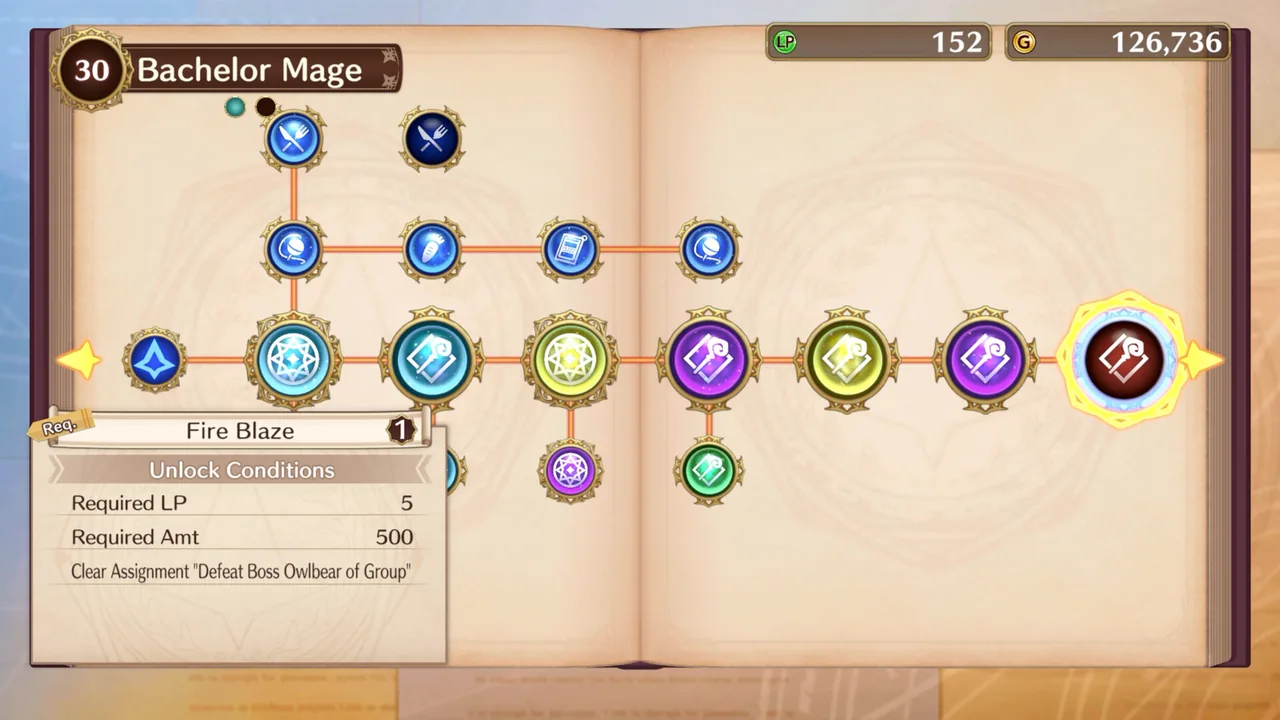
The Grimoire tracks and unlocks Fia's Magic Artes as she earns Learning PointsImage: Idea Factory, Compile Heart, STING via Steam -
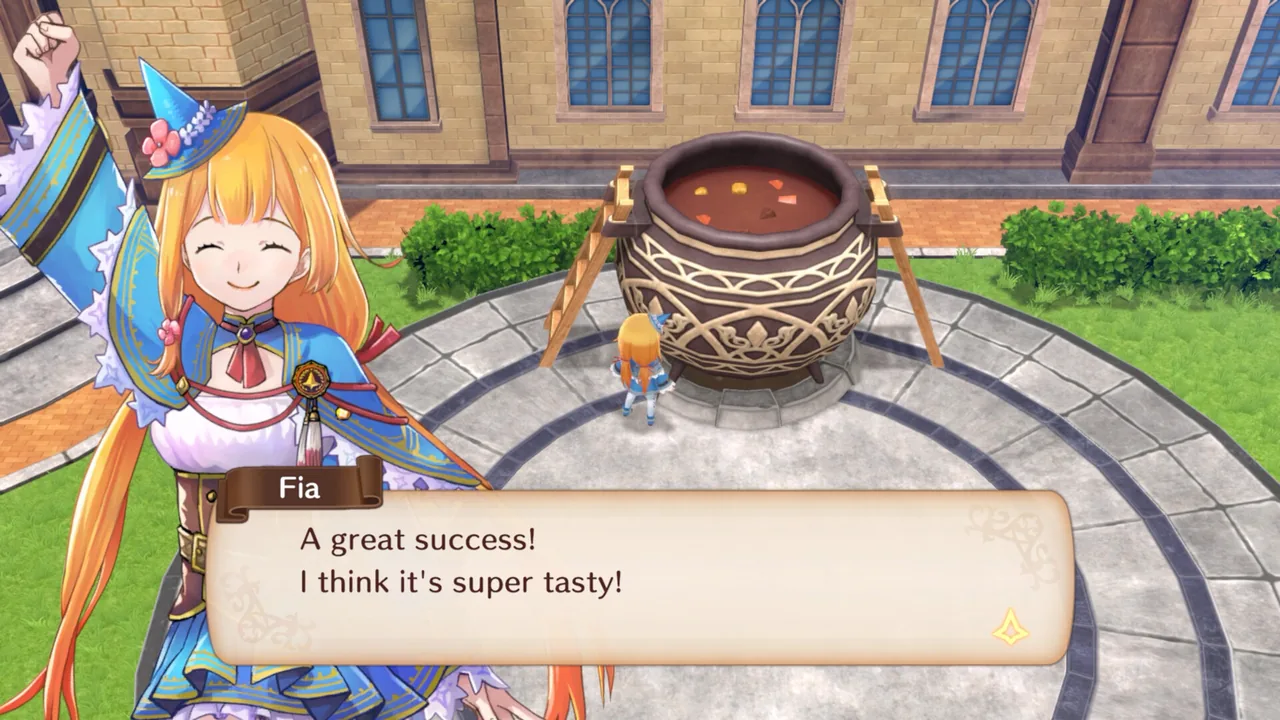
Cooking curry on the school grounds provides buffs for the next dungeon runImage: Idea Factory, Compile Heart, STING via Steam -
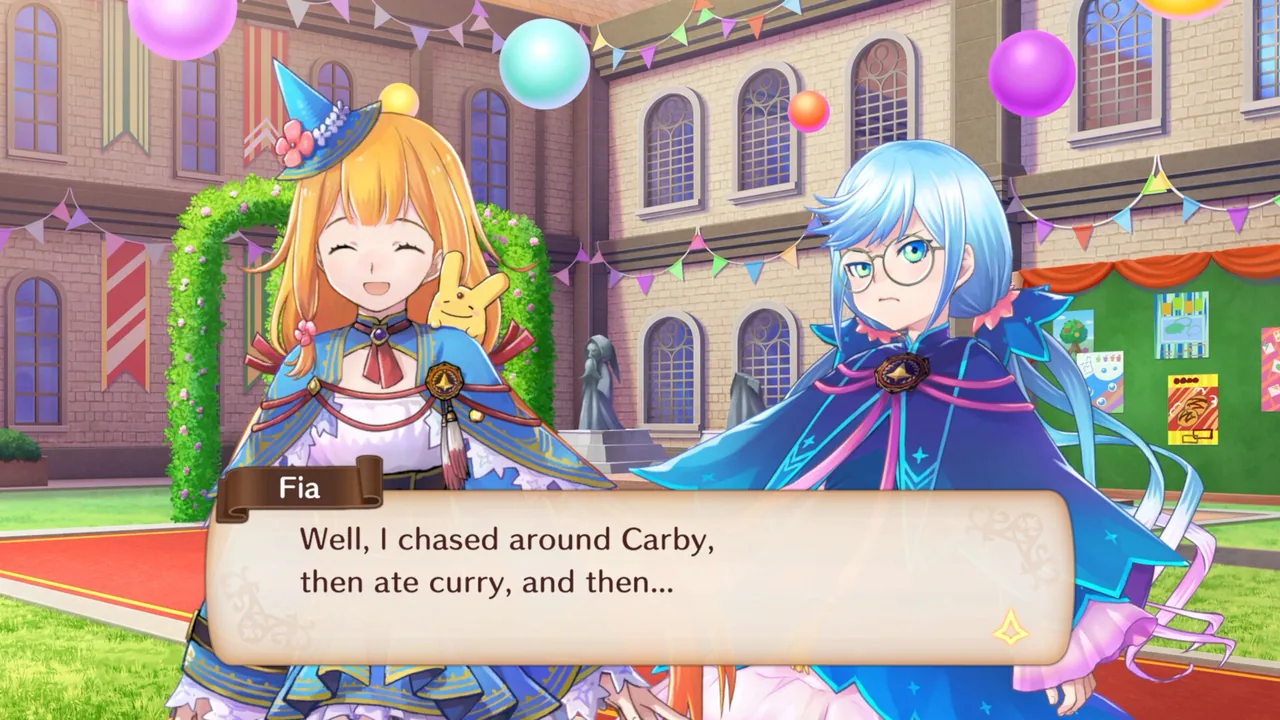
Slice-of-life dialogue scenes with classmates punctuate academy life between dungeon runsImage: Idea Factory, Compile Heart, STING via Steam -
Category scores for MADO MONOGATARI: Fia and the Wondrous AcademyWanderer Game Reviews