
Game review
Journey to the Void
6.8 / 10
- Developer
- RuneHeads
- Publisher
- RuneHeads, Anotherindie
The short version
Biggest strengths
- A genuinely fresh twist on the roguelike deckbuilder formula: enemies surround you and attack from specific directions, forcing cards to be played tactically by position rather than just power
- Deep, replayable structure — 8 elemental biomes, 25 arenas, 120+ enemies, 10 bosses, and 300+ cards, items, and weapons across three separate deck types
- A light RPG stat-building layer atop the deckbuilding, letting each run's hero lean toward physical damage, elemental power, energy generation, health, or defense
Biggest weaknesses
- Deck construction is criticized by at least one detailed reviewer for structurally favoring thin decks, since your strongest cards exhaust and can't be recycled, unlike basic attacks
- More than one reviewer flags the asking price as too steep for what's currently on offer, with one calling it 'double what it should be'
- A fatigue system that makes replaying the same region harder doesn't give players enough incentive to actually revisit regions, per at least one reviewer
6.8 / 10
Cards on every side of you
Journey to the Void is a roguelite strategy deckbuilder that hangs its whole identity on one central twist: combat happens on a grid, with your hero standing at the center while enemies close in from multiple directions at once. Rather than simply managing a hand against a single target, players have to read which directions threats are coming from and play cards accordingly, which reviewers consistently describe as a genuine departure from the genre's usual formula. One reviewer sums up the disconnect between the game's cute, colorful presentation and its actual difficulty bluntly: "don't be fooled by Journey to the Void's seemingly cute appearance... this is a hardcore, extremely tactical game in which every single mistake can lead to your demise." That tension between welcoming art direction and unforgiving mechanics runs through almost every positive review in the pool.
A run structure built for repeat visits
Structurally, Journey to the Void borrows the branching node-map format popularized by Slay the Spire — paths leading toward a stage boss, with battles, shops, and story events scattered along the way — but layers it inside a broader world made up of eight distinct elemental biomes and 25 arenas to explore. The numbers back up the replayability claims reviewers make: over 300 cards, items, and weapons to discover, more than 120 enemy types, 10 bosses, and over 100 branching interaction events that can permanently affect both the current run and future ones. Reviewers with a collector's streak specifically call out the appeal of chasing every enemy, card, and item as if filling out a collection, and the elemental regions are singled out repeatedly for offering genuinely different challenges and permanently unlockable cards rather than reskinned variations of the same content.
Three decks, nine elements, and a light RPG layer
Where Journey to the Void diverges further from a pure card battler is in its character-building layer. Rather than one deck, players draw from three separate pools — Standard, Special, and Resource — while mixing in nine distinct elemental types, and a new hero is chosen at the start of every run, each with traits that can help or hinder depending on the build. Essence earned through combat and successful encounters feeds a leveling system that lets players lean their hero toward physical damage, elemental power, energy generation, health, or defense, which one detailed reviewer calls "a lite RPG development feature" that adds a real dimension beyond deck construction alone. It's simple compared to a dedicated RPG's stat systems, but reviewers consistently credit it with giving runs a stronger sense of build identity than most comparable deckbuilders manage. A practical quality-of-life touch several reviewers call out favorably is the ability to save and quit at any point mid-run, which one reviewer specifically contrasts with other card battlers that force a session to be finished in one sitting. For players who exhaust the main campaign, there's also a post-story "infinite" mode to keep testing builds against, though at least one long-time player notes they hadn't gotten around to trying it yet even after beating the game's final boss.
Where the strategy layer strains
The most substantive criticism in the review pool comes from a reviewer who dug deep into the deckbuilding math: the directional card system, they argue, ends up being a weaker substitute for the more intricate card interactions found in typical roguelike deckbuilders, and the game structurally rewards thinning your deck down to a small core, since your strongest cards exhaust permanently and can't be recycled the way basic attacks can. That same reviewer and another both note that a fatigue system meant to add challenge to repeat runs through the same region mostly succeeds in discouraging players from revisiting it at all, rather than creating a meaningful risk-reward loop. A second critical review describes the core mechanic wearing thin after the first battle or two, turning repetitive well before a full run is complete — a sharp contrast to the reviewers who describe the opposite experience twenty, fifty, or even well over a hundred hours in. A few of the game's biggest fans still voice their own wishlist items alongside the praise: one wishes for the option to start a region with a personal prebuilt deck to give each hero a stronger sense of identity from the first turn, while another hopes for more individual character development and a wider variety of weapons than the current roster offers, noting that the developers have been actively iterating on the game since launch.
Price, translation, and rough edges
Value is the other recurring sticking point. At a full asking price north of twenty dollars, more than one reviewer says the game doesn't yet justify the cost, with one flatly stating it "costs double what it should," while others say they'd recommend it enthusiastically at a discount but hesitate to endorse it at full price. Presentation is generally well liked — reviewers repeatedly praise the minimalist but effective visuals and sound design — but the English localization is singled out as occasionally "wacky," and at least one reviewer reports the developer not responding to a forum question about avatars, a small but noted communication gap for a still-growing indie release.
Verdict
Journey to the Void earns its recommendation on the strength of a genuinely original hook: directional, grid-based card combat that forces players to think spatially in a genre that rarely asks for it, wrapped in a generous amount of content across eight biomes and hundreds of cards. The RPG-lite hero-building layer gives runs a satisfying sense of identity, and the branching, consequence-driven event system rewards the kind of long-term investment its most enthusiastic reviewers describe. Where it stumbles is in the fine print: a deckbuilding meta that one sharp-eyed reviewer argues undercuts its own strategic depth, a fatigue system that discourages the replay variety the game otherwise encourages, and a price tag several reviewers feel outpaces what's currently on offer. Deckbuilder fans looking for something that breaks from the genre's well-worn patterns should take a close look — ideally when it's on sale.
Pros and cons
Pros
- A genuinely fresh twist on the roguelike deckbuilder formula: enemies surround you and attack from specific directions, forcing cards to be played tactically by position rather than just power
- Deep, replayable structure — 8 elemental biomes, 25 arenas, 120+ enemies, 10 bosses, and 300+ cards, items, and weapons across three separate deck types
- A light RPG stat-building layer atop the deckbuilding, letting each run's hero lean toward physical damage, elemental power, energy generation, health, or defense
- Slay the Spire-style branching node maps with over 100 meaningful choice-driven events that carry consequences into later runs, praised by multiple reviewers as genuinely rewarding to master
Cons
- Deck construction is criticized by at least one detailed reviewer for structurally favoring thin decks, since your strongest cards exhaust and can't be recycled, unlike basic attacks
- More than one reviewer flags the asking price as too steep for what's currently on offer, with one calling it 'double what it should be'
- A fatigue system that makes replaying the same region harder doesn't give players enough incentive to actually revisit regions, per at least one reviewer
- The English translation is described by one reviewer as sometimes wacky, and the developer reportedly did not respond to at least one player's forum question
Screenshots
-
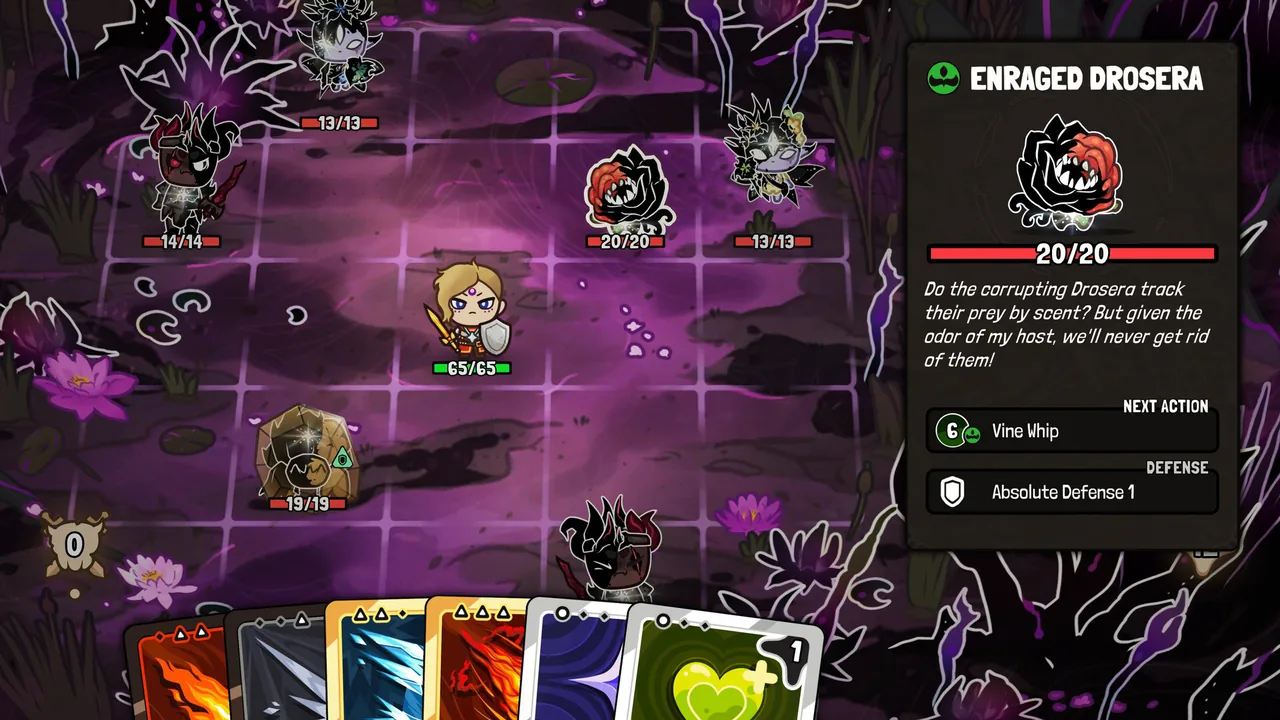
Directional grid combat, with enemy positions and an enemy info panel visible on the rightImage: RuneHeads via Steam -
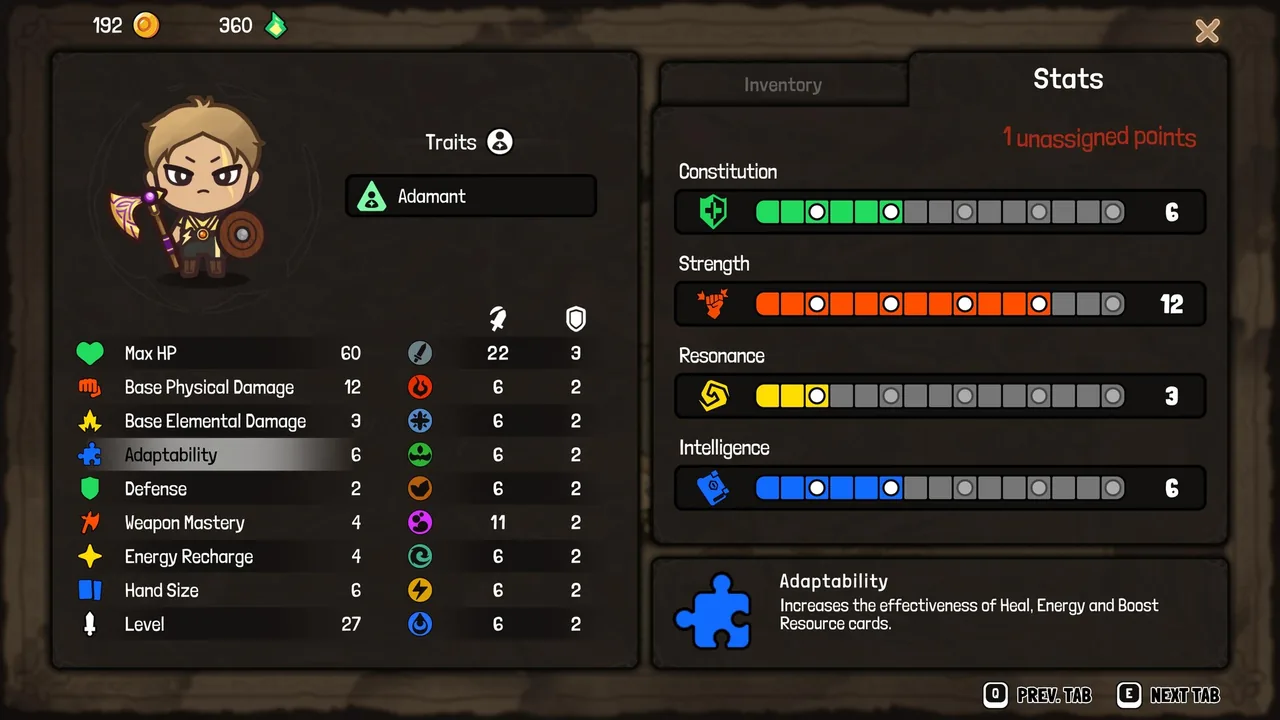
The hero stats screen, where essence points are assigned across four core attributesImage: RuneHeads via Steam -
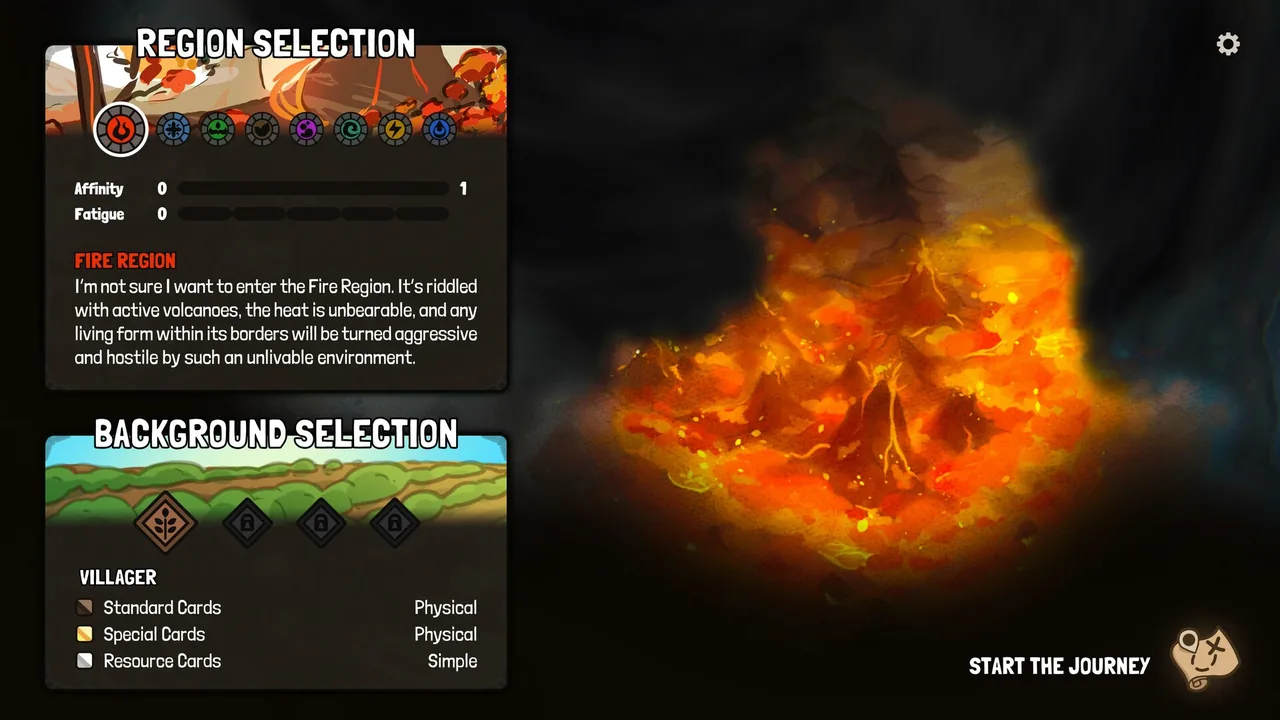
Choosing a starting region and background before a new run beginsImage: RuneHeads via Steam -

Category scores for Journey to the VoidWanderer Game Reviews