Game review
Funeral Flowers Lament: Helena
5.9 / 10
- Developer
- Kiseki Kobo Games
- Publisher
- Kiseki Kobo Games
The short version
Biggest strengths
- A clean, well-organized interface with tooltips throughout and growth-rate visualization via numerical values and radar charts
- Generous quality-of-life features — 1.5x EXP gain, full recovery on level-up, an undo-action retry option, and customizable enemy difficulty on replays
- A small, deliberately limited roster (13-15 characters) keeps every unit feeling important across a 30-chapter, 20-30 hour campaign
Biggest weaknesses
- That same weapon system draws sharp balance criticism — making every weapon type effectively ranged or throwable reportedly makes archers close to useless and undermines classic tanking/chokepoint strategies
- Multiple reviewers report damage and accuracy feel inconsistent or unbalanced, with magic and enemy damage output singled out as excessive
- The story and writing are consistently described as merely serviceable — comparable to genre classics but without a standout hook of their own
5.9 / 10
The Pitch
Funeral Flowers Lament: Helena wears its influences openly: it's a small-squad tactical RPG built in the mold of Super Famicom-era Fire Emblem — specifically Genealogy of the Holy War and Thracia 776, names its own reviewers reach for unprompted. You play as Helena, daughter of a territorial lord, commanding a deliberately small roster of 13 to 15 units across a 30-chapter, 20 to 30-hour campaign that branches based on choices made partway through, in a kingdom destabilized by the return of an old, half-forgotten calamity. It's explicitly the first half of a two-part story — a companion volume, "Nashard," following a different protagonist in the same world is planned separately — but this entry is designed to stand as a complete, self-contained story on its own.
The mechanical hook is what Kiseki Kobo Games calls the "Reverse Weapon Triangle": a system layering multi-range weapons (melee options that can strike at range 1-2, bows and magic reaching further) on top of the genre's familiar rock-paper-scissors weapon matchups, intended to keep battles fast-paced and decisions relevant from the very first turn of every map. Steam's reviews are genuinely split on whether that idea works as intended — a small English sample (3 of 6 positive) that nonetheless produced some unusually long, detailed, deeply-invested write-ups from players who clearly know the genre this game is drawing from.
A Familiar Formula, Executed With Real Care in Places
The strongest praise for Funeral Flowers Lament: Helena is aimed squarely at its presentation and quality-of-life design, not its combat balance. One reviewer who logged over 150 hours clearing both of the game's endings and every achievement specifically calls out the interface as "very clean," with tooltips throughout the menus and map screen making every option legible without hunting through submenus. Growth is tracked with both raw numbers and radar charts, a small but appreciated touch for players who like to plan builds ahead of time, and the convenience features read like a checklist aimed directly at genre veterans who've been burned by older Fire Emblem games' harsher edges: 1.5x EXP gain to keep pacing brisk, full HP/resource recovery on level-up so a good level doesn't accidentally leave a unit vulnerable, and a proper undo-action option for walking back misclicks rather than reloading a save.
The decision to cap the roster at 13-15 characters draws approval too, for a reason genre fans will recognize immediately: it keeps every recruited unit relevant across the full 30-chapter runtime rather than diluting investment across a roster too large to actually use. One reviewer still in the early chapters describes the difficulty as "fairly low-normal" for a veteran player, framing that as a deliberate, welcome choice rather than a flaw — a game they can enjoy relaxed rather than one demanding constant, careful optimization.
The Weapon System Is Also the Biggest Complaint
The same Reverse Weapon Triangle system that's meant to be the game's signature idea is also the target of its sharpest criticism. Because nearly every weapon type can effectively strike at range — including axes and other traditionally melee-only options being throwable — multiple reviewers report that classic tactical positioning simply stops working the way genre veterans expect. One reviewer describes trying to use a tank unit to block a bridge chokepoint, a staple Fire Emblem-style tactic, only to have an enemy axe thrown clean over the frontline from behind it. Archers specifically come in for criticism as being rendered "practically useless" once nearly everything else can outrange or match them, undermining a class the genre traditionally treats as a core tactical tool.
Beyond the weapon system itself, reviewers flag broader balance concerns: damage output described as inconsistent, magic called "broken" by one player, and enemy accuracy and damage both criticized as disproportionate to the tools the player is given to counter them, particularly on maps described as "oversaturated" with enemy units relative to what the early-game roster can handle. The writing and plot, meanwhile, draw a consistent but unenthusiastic verdict — "okay but nothing gamebreaking," on par with the SNES Fire Emblem entries it's inspired by, without a distinct hook of its own to set it apart.
Smaller Frictions Worth Knowing About
A handful of smaller complaints round out the criticism, the kind that don't sink a tactical RPG on their own but add up for players already on the fence. The game reportedly lacks a borderless or maximized windowed display option, a basic convenience many players expect by default in 2026. Cutscenes can be accidentally skipped with no confirmation prompt, an easy way to lose story context on a misclick. And at least one reviewer notes that unit skills lack in-game descriptions, forcing players to infer what an ability does from context or trial and error rather than reading a tooltip — a notable gap given how much other praise is directed specifically at the game's otherwise thorough interface tooltips.
Verdict
Funeral Flowers Lament: Helena is a tactical RPG that clearly understands what made its SNES-era Fire Emblem inspirations work — a manageable roster, generous quality-of-life conveniences, and a clean, legible interface — but its own signature mechanical twist, the Reverse Weapon Triangle, is also its most contested element, with genre veterans divided on whether letting nearly every weapon strike at range enriches or undermines the tactical decision-making the genre is built around. The writing won't win anyone over on its own merits, and rough edges around balance, window options, and skill clarity are real, if not fatal, frictions. This is a reasonable pick for Fire Emblem-style tactics fans specifically curious about a different take on weapon triangles and comfortable with a lower-difficulty, quality-of-life-forward experience — go in expecting an interesting experiment rather than a refined classic.
Pros and cons
Pros
- A clean, well-organized interface with tooltips throughout and growth-rate visualization via numerical values and radar charts
- Generous quality-of-life features — 1.5x EXP gain, full recovery on level-up, an undo-action retry option, and customizable enemy difficulty on replays
- A small, deliberately limited roster (13-15 characters) keeps every unit feeling important across a 30-chapter, 20-30 hour campaign
- The Reverse Weapon Triangle and multi-range weapon system offer a genuinely different tactical texture from standard Fire Emblem-style formulas, when it works
Cons
- That same weapon system draws sharp balance criticism — making every weapon type effectively ranged or throwable reportedly makes archers close to useless and undermines classic tanking/chokepoint strategies
- Multiple reviewers report damage and accuracy feel inconsistent or unbalanced, with magic and enemy damage output singled out as excessive
- The story and writing are consistently described as merely serviceable — comparable to genre classics but without a standout hook of their own
- Missing basic conveniences: no borderless/maximized window option, no confirmation prompt before skipping cutscenes, and no in-game skill descriptions for units
Screenshots
-
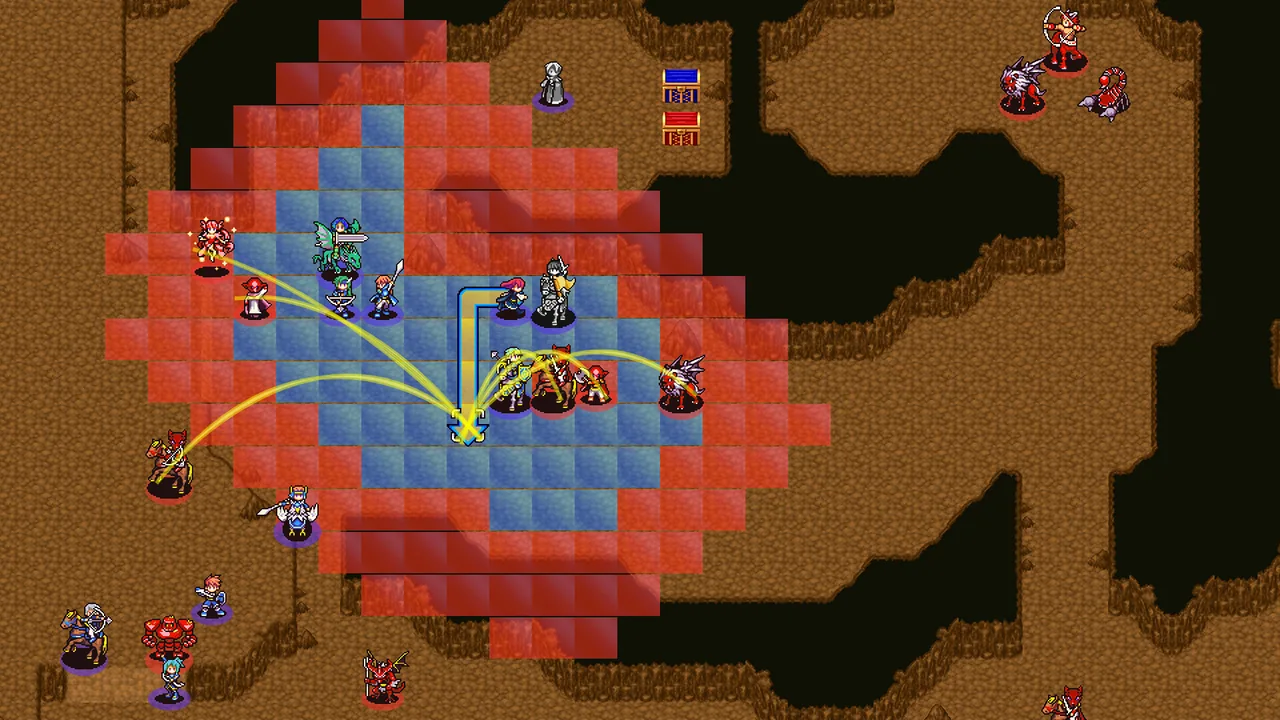
A squad skirmish plays out across a cave map, with movement and threat ranges shown as colored tilesImage: Kiseki Kobo Games via Steam -
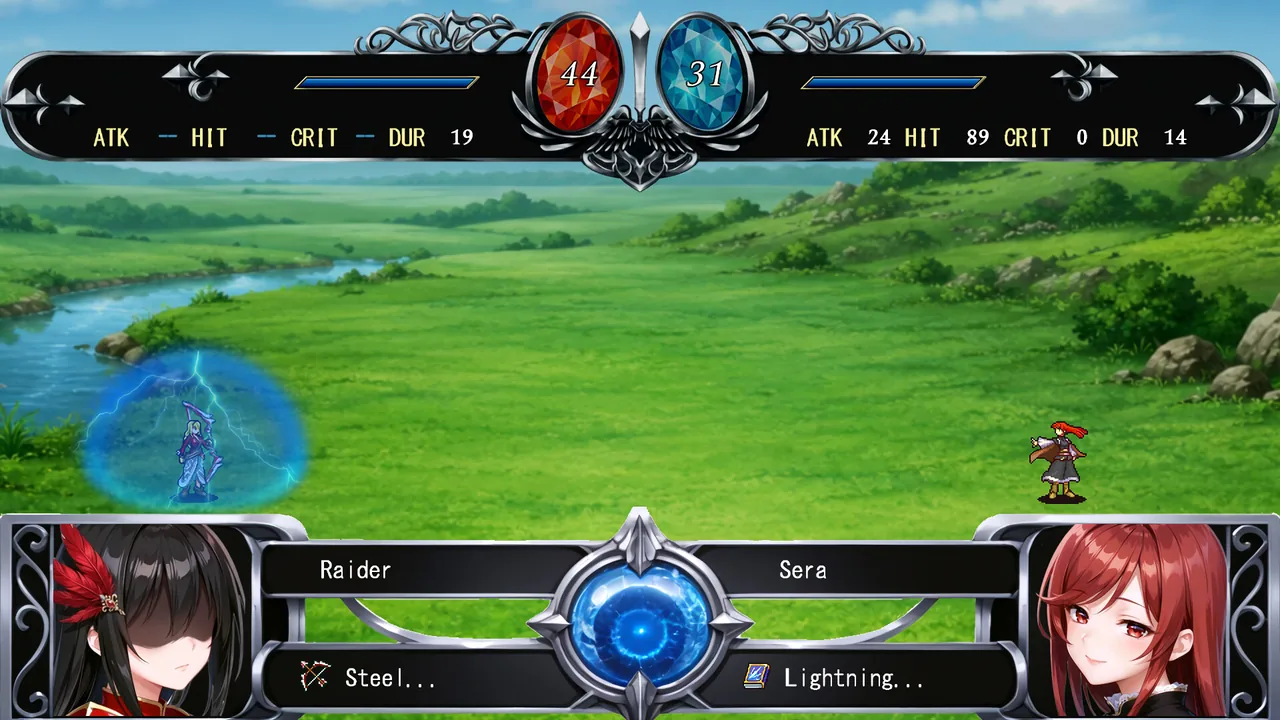
Combat scenes show detailed weapon stats for both units before the exchange resolvesImage: Kiseki Kobo Games via Steam -
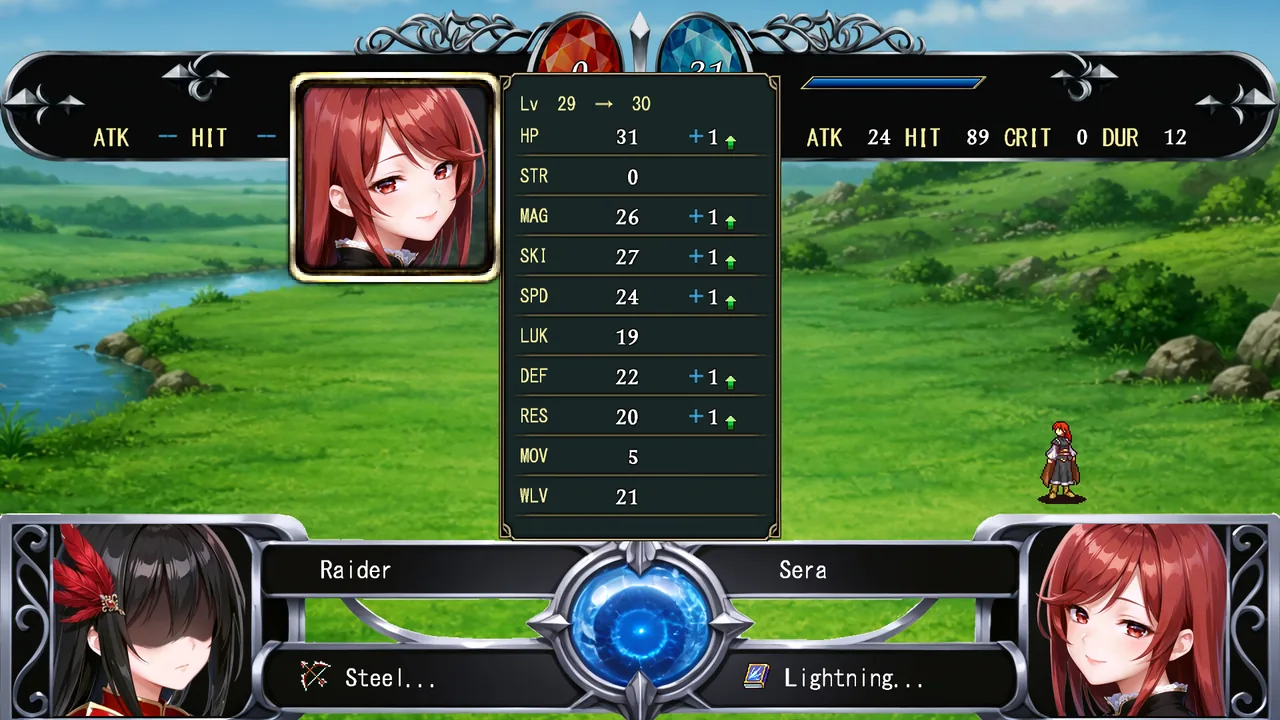
Leveling up presents a full breakdown of each stat gain, one of several clean interface touches reviewers praisedImage: Kiseki Kobo Games via Steam -
Category scores for Funeral Flowers Lament: HelenaWanderer Game Reviews