Game review
Echoes of Myth
7 / 10
- Developer
- Shifting Reality Interactive
- Publisher
- Shifting Reality Interactive
The short version
Biggest strengths
- Deliberate, clearly telegraphed souls-lite combat that reviewers say rewards mastery of positioning, dodges, and parries rather than reflexes alone
- A remarkably polished solo-developer effort — multiple reviewers highlight snappy controls, a clear UI, and near-zero bugs or jank at launch
- Genuinely varied buildcraft through weapons, spells, talents, Divine Relics, and Infusions, with several reviewers comparing the loop favorably to Hades and Diablo III
Biggest weaknesses
- Enemy health becomes noticeably spongey from the second area onward, and the final area and boss draw specific complaints about unfair hazard density paired with limited, cooldown-gated dodging
- Procedural generation repeats room layouts quickly according to at least one reviewer, and build/weapon variety is described by more than one player as thinner than it first appears
- One detailed critical review found the 'methodical' combat tedious rather than tense in practice, and considered run-to-run build diversity poor after several hours
7 / 10
An unbound spirit in a shattered world
Echoes of Myth opens on a familiar kind of ruin: the gods have gone silent, their world has fractured into drifting realms, and you're cast as an unbound spirit possessing mortal vessels on a cyclical push toward the world's core. It's a roguelite framing device built to justify death as progress rather than failure — each run ends, but Titan essence collected along the way funds permanent upgrades back at a central Sanctuary, so even a short, botched attempt leaves something behind. Built and published by solo developer Shifting Reality Interactive, Echoes of Myth wears its influences openly — reviewers repeatedly invoke Dark Souls, Hades, and Diablo III in the same breath — but the specific way it fuses souls-lite combat discipline with roguelite build variety is what most reviewers end up recommending it for.
Combat that asks you to read the room
The fighting itself is deliberately unhurried. Enemy attacks are clearly telegraphed, and the game leans on souls-like fundamentals — positioning, dodges, parries, and stagger management — rather than fast, reactive button-mashing. Reviewers describe the approach as rewarding patience and study: one player, writing after the demo and full release, calls the controls "outstanding" and praises how spell combos chain into bosses; another compares the loop to Diablo III's "smooth hack-and-slash action" layered over an "addictive incremental difficulty." Health and healing are kept intentionally scarce, which several reviewers say raises the stakes of every encounter without feeling arbitrary, since damage is almost always avoidable if you read the telegraphs correctly. It's a combat system built around mastery over time — several reviewers flag a genuinely steep opening learning curve, but describe the payoff, once a build and a rhythm click, as the game's strongest hook.
Relics, Infusions, and Forks of Fate
Buildcraft is where Echoes of Myth spends most of its design energy. Each run starts with randomized weapon and spell options, then layers in talents (ranging from Common to rare Legendary), Divine Relics that immediately reshape a build's direction, and Infusions that let players respec abilities into specialized tools — a mana-restoring engine, a critical-strike trigger, and similar variations. Twice per run, "Forks of Fate" force a binary trade-off between raw power and calculated risk, adding a structural decision point reviewers say keeps runs from blurring together. Multiple reviewers highlight the sheer amount of build variety on offer — one describes a "good merchant and character customization" system discovered only after several hours, calling it a pleasant surprise on top of the combat. For players who like theorycrafting between attempts, this is consistently cited as the game's most replayable layer, alongside the Sanctuary's permanent, run-independent upgrades.
Where the shine wears off
Not every review is glowing, and the criticism that does surface is specific rather than vague. Several reviewers say enemy health balloons noticeably from the game's second area onward, and single out the final area and its boss for stacking too many unavoidable-feeling hazards against a dodge that's limited by a recharge timer. Procedural generation draws a more structural complaint — one reviewer says room layouts start repeating too quickly to sustain long-term variety, and pairs that with a broader sense that weapon and spell pools are thinner than the build system initially suggests. The most detailed critical review in the set goes further, arguing the "methodical" combat philosophy tips into genuine tedium in practice — describing runs spent waiting out enemy attack windows or circling for a cooldown to refresh — and reporting that build diversity felt poor across roughly six hours of play, with the same few weapons and skills surfacing repeatedly. A smaller but recurring quality-of-life gripe: the world map only lets players navigate to the immediately adjacent node rather than planning several steps ahead, a limitation more than one reviewer calls an odd omission.
A tight, largely bug-free solo effort
What stands out across nearly the entire review set, positive and negative alike, is how few technical complaints Echoes of Myth draws for a solo-developed game. One reviewer who tracked over fifty hours across alpha and beta testing says they remain hooked heading into the full release, and another flags "curiously little jank" and zero encountered bugs. A separate reviewer credits the game's mechanical polish specifically to its solo origins, praising snappy controls, a clear UI, and a tightly scoped design vision that "doesn't waste your time [on] extraneous bits" — while still noting the visual style itself is a matter of taste rather than a technical shortfall. Several reviewers also flag that the game is clearly built with a gamepad in mind, with keyboard-and-mouse movement described as comparatively clunky, and one recommends Steam Deck players pair it with lossless scaling for a smoother experience.
Verdict
Echoes of Myth is a confident, mechanically tight roguelite ARPG that earns its Dark Souls, Hades, and Diablo III comparisons more often than it falls short of them, especially impressive given its solo-developer origins. The buildcraft is deep enough to reward experimentation, the combat rewards patience over reflexes, and the permanent Sanctuary progression makes failure feel purposeful rather than wasted. It loses some ground in its back half, where enemy sponginess, repeating room layouts, and thinner-than-expected build variety catch up with a handful of reviewers, and it's clearly happiest played with a controller. For fans of methodical, build-driven roguelites willing to push past a steep opening stretch, it's a well-supported and largely bug-free recommendation.
Pros and cons
Pros
- Deliberate, clearly telegraphed souls-lite combat that reviewers say rewards mastery of positioning, dodges, and parries rather than reflexes alone
- A remarkably polished solo-developer effort — multiple reviewers highlight snappy controls, a clear UI, and near-zero bugs or jank at launch
- Genuinely varied buildcraft through weapons, spells, talents, Divine Relics, and Infusions, with several reviewers comparing the loop favorably to Hades and Diablo III
- A rewarding permanent-progression layer (the Sanctuary) that makes even short, unsuccessful runs feel like they moved the player forward
Cons
- Enemy health becomes noticeably spongey from the second area onward, and the final area and boss draw specific complaints about unfair hazard density paired with limited, cooldown-gated dodging
- Procedural generation repeats room layouts quickly according to at least one reviewer, and build/weapon variety is described by more than one player as thinner than it first appears
- One detailed critical review found the 'methodical' combat tedious rather than tense in practice, and considered run-to-run build diversity poor after several hours
- A couple of rough quality-of-life edges, including an inability to navigate the world map beyond the immediately next node, and keyboard movement described as clunky without a gamepad
Screenshots
-
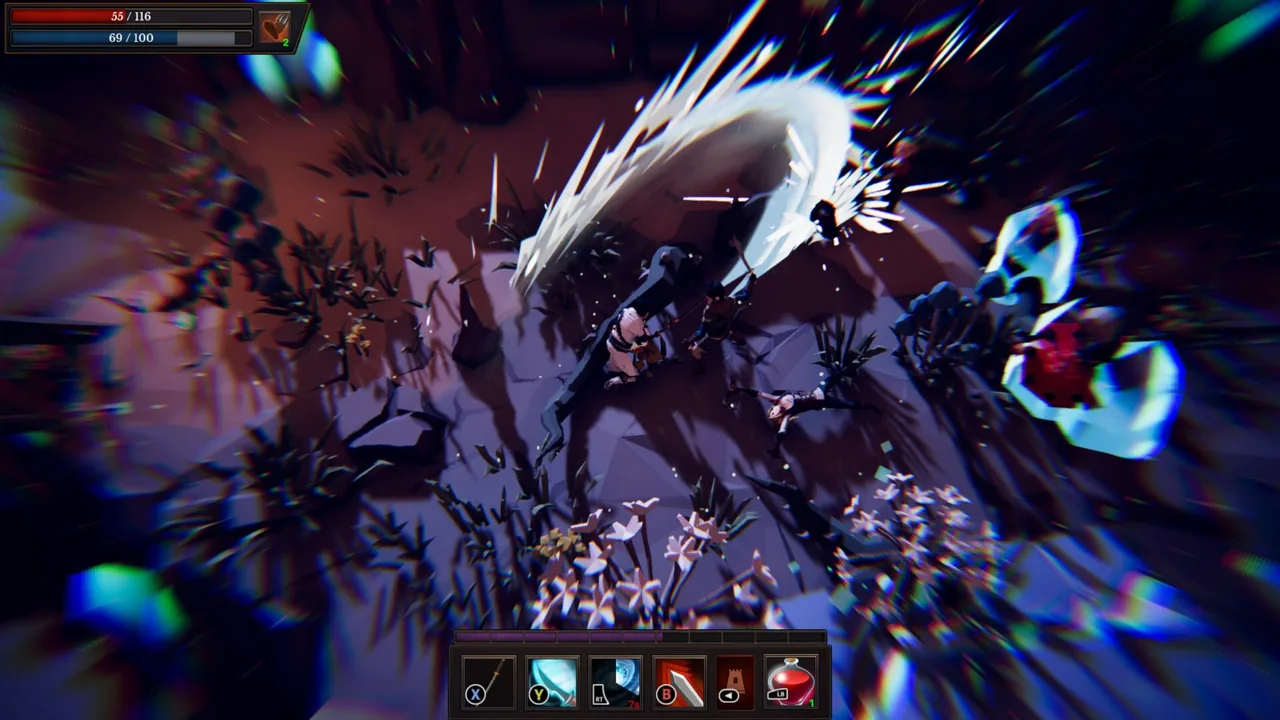
A telegraphed sword strike lands mid-combo in one of the shattered realmsImage: Shifting Reality Interactive via Steam -
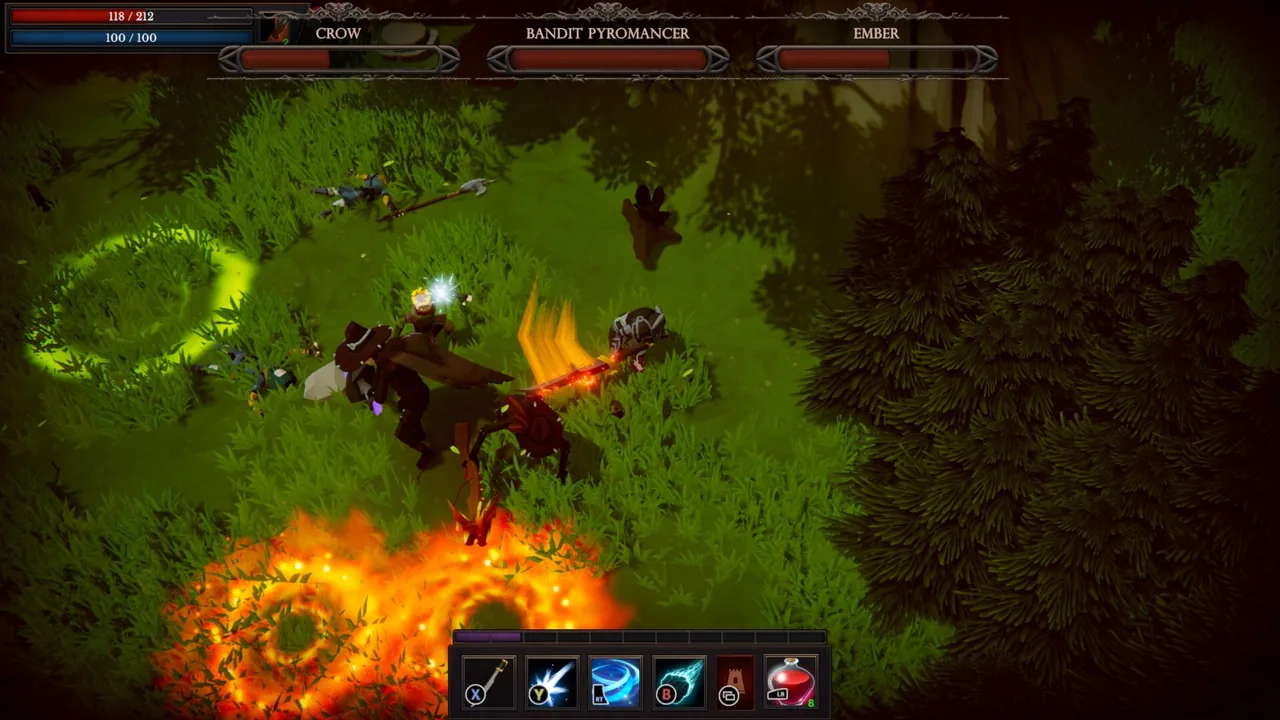
Named enemies like the Bandit Pyromancer bring their own telegraphed attacks and health barsImage: Shifting Reality Interactive via Steam -
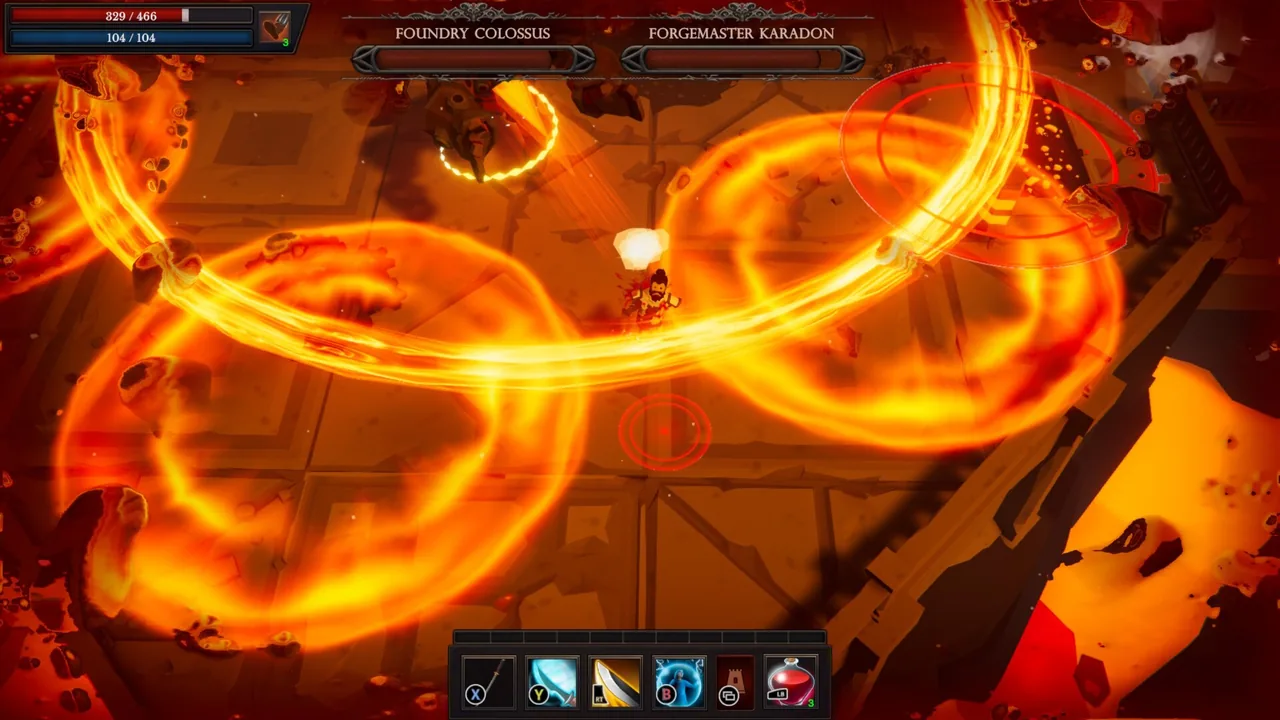
The Foundry Colossus boss fight layers overlapping fire hazards that demand precise dodgingImage: Shifting Reality Interactive via Steam -

Category scores for Echoes of MythWanderer Game Reviews