Game review
Disciples: Domination
5 / 10
- Developer
- Artefacts Studio
- Publisher
- Kalypso Media
The short version
Biggest strengths
- Tactical, hex-grid turn-based combat that even many disappointed reviewers describe as genuinely fun and the game's strongest holdover from Disciples: Liberation
- A lengthy, lore-rich single campaign (roughly 35-50 hours for a full clear per several reviewers) set in the established Nevendaar world, with strong sound design and music praised across both positive and negative reviews
- Fans of Liberation's King's-Bounty-adjacent structure who go in with tempered expectations report a solid, if familiar, continuation with new companions, a new Mountain Clans faction, and an improved UI
Biggest weaknesses
- Widespread, detailed criticism that Domination reuses a large share of Liberation's assets and voicelines (including undead units referencing a character killed in the first game), with a noticeably smaller companion and unit roster overall
- No auto-resolve or auto-battle option for low-stakes fights, which multiple reviewers say turns routine mop-up encounters against already-trivial enemies into dreaded busywork
- Protagonist Avyanna's writing and voice direction is one of the most consistently criticized elements, with many longtime series fans describing her as reading younger and less commanding than in Liberation, alongside a much-flattened moral-choice system
5 / 10
Fifteen years after Liberation, a crumbling throne
Disciples: Domination picks up fifteen years after the events of Disciples: Liberation, returning players to Queen Avyanna's rule over a Nevendaar that's beginning to crack under its own weight. Paralyzed by doubt and haunted by the very power that once let her defy the gods, Avyanna watches allies disappear as an unknown force spreads strife and madness through her kingdom. It's a premise with genuine dramatic potential — a former godslayer now struggling to hold together the fragile peace she won — and the dark fantasy setting, steeped in two and a half decades of Disciples lore, gives the story real atmosphere to draw on. Whether that potential lands, though, is exactly where the game's reception splits hardest.
Turn-based tactics that mostly still work
Mechanically, Domination keeps Liberation's King's-Bounty-style structure: explore Nevendaar in real time from your capital at Yllian, recruit and upgrade units across five distinct factions, and resolve encounters in grid-based turn-based battles governed by unit synergies, faction abilities, and a system of strengths and weaknesses. Even many of the game's harshest critics single out the combat itself as the one part that holds up — one reviewer who otherwise found the game hollow called the battle mechanics "enjoyable with a good variety of abilities and skills to choose from," and several longtime series veterans specifically praise how satisfying spells and abilities feel to use, right down to sound design as small as a horse's gallop. The trouble isn't the combat system in isolation so much as how often you're made to engage with it: without an auto-resolve or auto-battle option, reviewers repeatedly describe being forced into full manual fights against trivially weak enemies just to clear a mine or sawmill, turning what should be a formality into a genuine source of fatigue.
A sequel accused of running on borrowed parts
The single most repeated complaint across negative reviews is that Domination leans too heavily on Liberation's existing assets rather than building meaningfully new ones. Multiple reviewers point out that returning units — which make up the majority of the roster — reuse their old voicelines wholesale, producing jarring moments like undead units still referencing a character killed off in the previous game's intro. The companion count and overall faction roster are both reported as noticeably smaller than in Liberation, and the new "Domination mode" (functionally a New Game Plus) draws direct, unfavorable comparisons to Liberation's equivalent system for offering less new content on replay. Progression itself has shifted too: rather than leveling and carefully protecting individual units the way older Disciples entries required, Domination lets you simply buy back lost units outright, while a "leadership" cap restricts which unit tiers you can field at all — one reviewer notes that top-tier units stay locked out until roughly twenty hours in, well past the point where their absence is felt. Several reviewers go further, characterizing the whole release as feeling closer to a large paid expansion than a standalone $67.99 sequel — sentiment echoed even by some positive reviewers, who recommend picking it up only once it's discounted.
Avyanna's voice, and a flattened moral compass
Where Liberation let players steer Avyanna down distinct Angel, Demon, or Nephilim paths, with her dialogue and voice performance shifting to match, Domination's version of the character draws sustained criticism for feeling far more fixed and, in the words of several longtime fans, noticeably younger and less commanding — "a whiny teenager" is a phrase more than one reviewer reaches for independently. The reputation system meant to replace that branching structure is described by several players as transactional rather than meaningful: spend accumulated resources on throne decisions, watch faction approval climb, with little of the context-sensitive weight that made Liberation's choices feel consequential. Not every reviewer agrees the writing is a failure — one calls it "within the top 25% or so of games that get released these days" and pushes back on what they see as impatience with a sequel that isn't a carbon copy of the older, more gothic Disciples II — but the volume and specificity of the criticism from self-identified franchise veterans is hard to wave away.
Rough edges beyond the writing
Beyond narrative complaints, a meaningful slice of the review base reports technical problems serious enough to affect recommendability on their own: dialogue sequences that lock up and require force-quitting, turns that freeze at the end of a combat round, and crashes reported specifically in late-game fights. Control quality takes its own hits, particularly on gamepad — one reviewer notes that a quicksave shortcut freely available on controller in Liberation was removed entirely in Domination, forcing a menu detour every time, while another flags an awkward hold-to-confirm input scheme for ending turns and upgrading gear. None of these issues appear universal — several long-playtime reviewers report finishing 35-to-50-hour campaigns without hitting a single bug — but their recurrence across independent reviews suggests real inconsistency in build stability rather than isolated bad luck.
Verdict
Disciples: Domination is a competent but visibly compromised sequel: its hex-grid tactical combat, faction variety, and rich Nevendaar lore still have real pull for genre fans, and reviewers who go in expecting more Liberation rather than a bold reinvention generally come away satisfied. But the Mixed reception is earned rather than a case of unfair backlash — reused assets and voicelines, a shrunken roster, a widely-criticized rewrite of its own protagonist, no way to skip trivial fights, and a spread of reported crashes and freezes all stack up against a premium $67.99 asking price. Existing Liberation fans with patience for its flaws, and newcomers drawn purely to King's-Bounty-style tactics, are the clearest audience; everyone else should wait for a deep discount before taking the throne.
Pros and cons
Pros
- Tactical, hex-grid turn-based combat that even many disappointed reviewers describe as genuinely fun and the game's strongest holdover from Disciples: Liberation
- A lengthy, lore-rich single campaign (roughly 35-50 hours for a full clear per several reviewers) set in the established Nevendaar world, with strong sound design and music praised across both positive and negative reviews
- Fans of Liberation's King's-Bounty-adjacent structure who go in with tempered expectations report a solid, if familiar, continuation with new companions, a new Mountain Clans faction, and an improved UI
- Combat depth from unit synergies, faction abilities, and a strengths/weaknesses system gives engaged players real tactical decisions to make, not just number-crunching
Cons
- Widespread, detailed criticism that Domination reuses a large share of Liberation's assets and voicelines (including undead units referencing a character killed in the first game), with a noticeably smaller companion and unit roster overall
- No auto-resolve or auto-battle option for low-stakes fights, which multiple reviewers say turns routine mop-up encounters against already-trivial enemies into dreaded busywork
- Protagonist Avyanna's writing and voice direction is one of the most consistently criticized elements, with many longtime series fans describing her as reading younger and less commanding than in Liberation, alongside a much-flattened moral-choice system
- Multiple reports of late-game crashes, frozen turns, and stuck dialogue sequences, plus console-centric control quirks like a quicksave shortcut removed from gamepad play
Screenshots
-
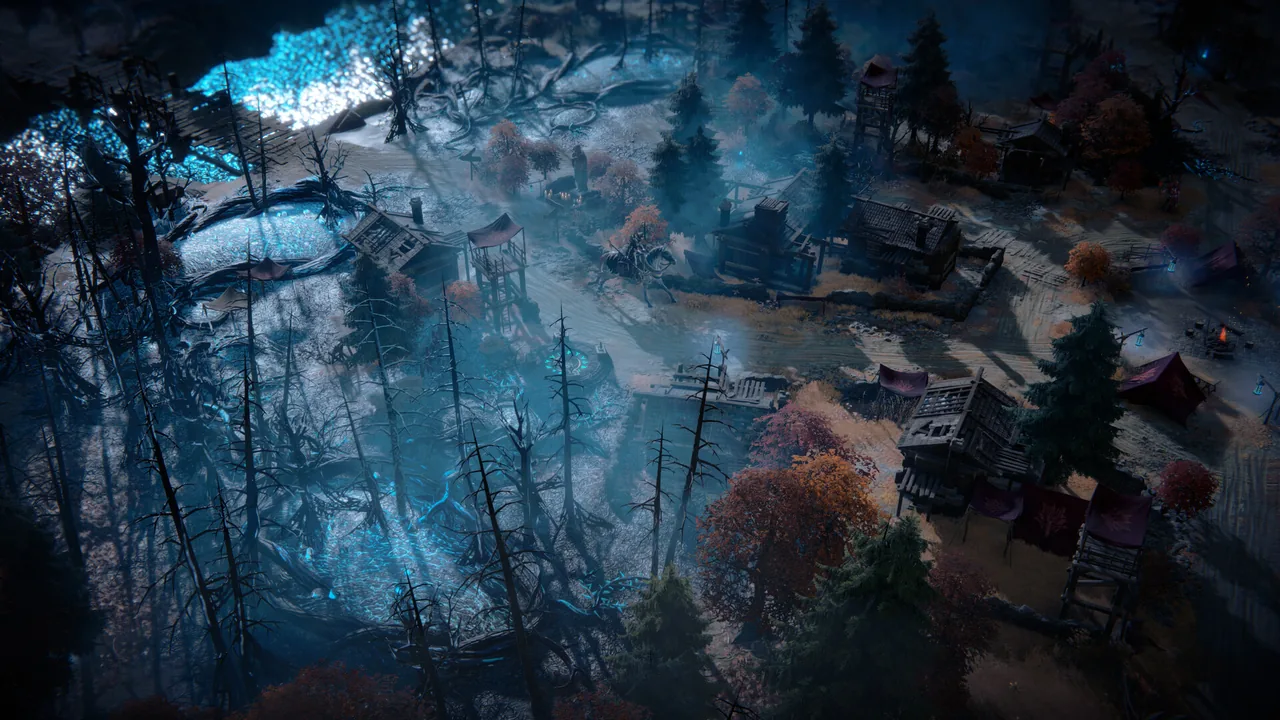
Exploring one of Nevendaar's haunted, fog-shrouded settlementsImage: Artefacts Studio via Steam -
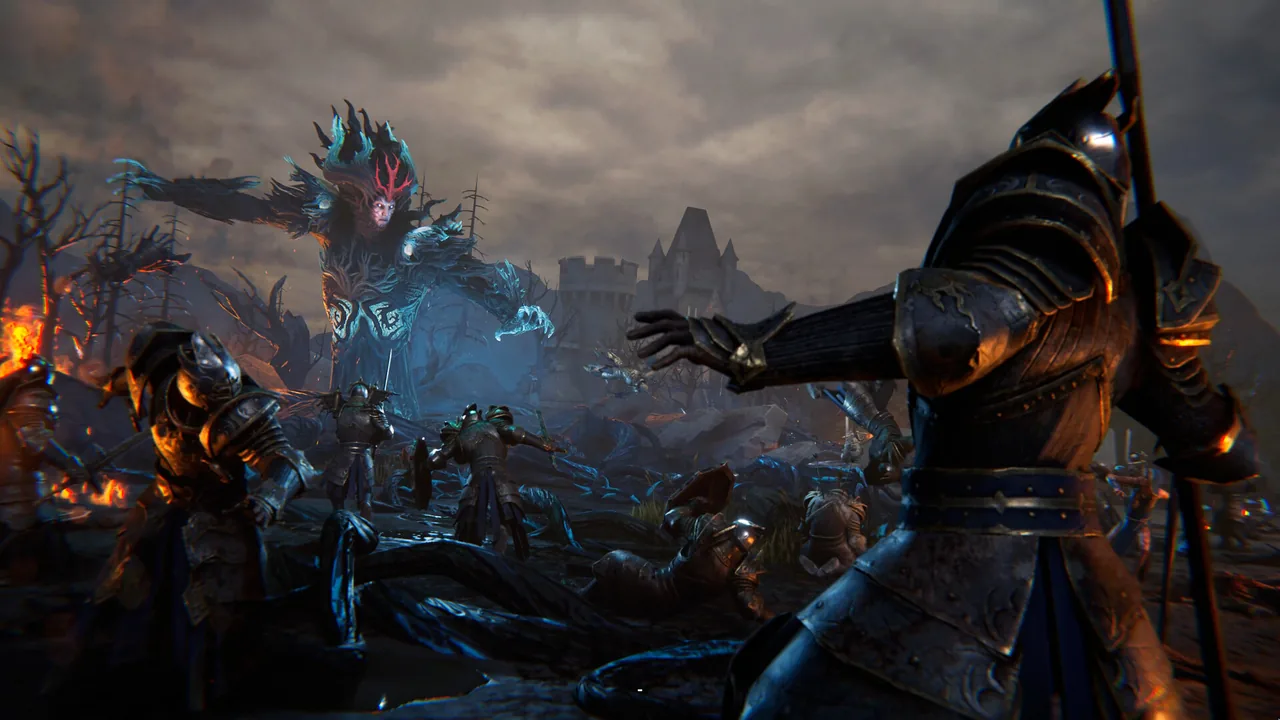
A story cutscene depicting one of Nevendaar's supernatural threatsImage: Artefacts Studio via Steam -
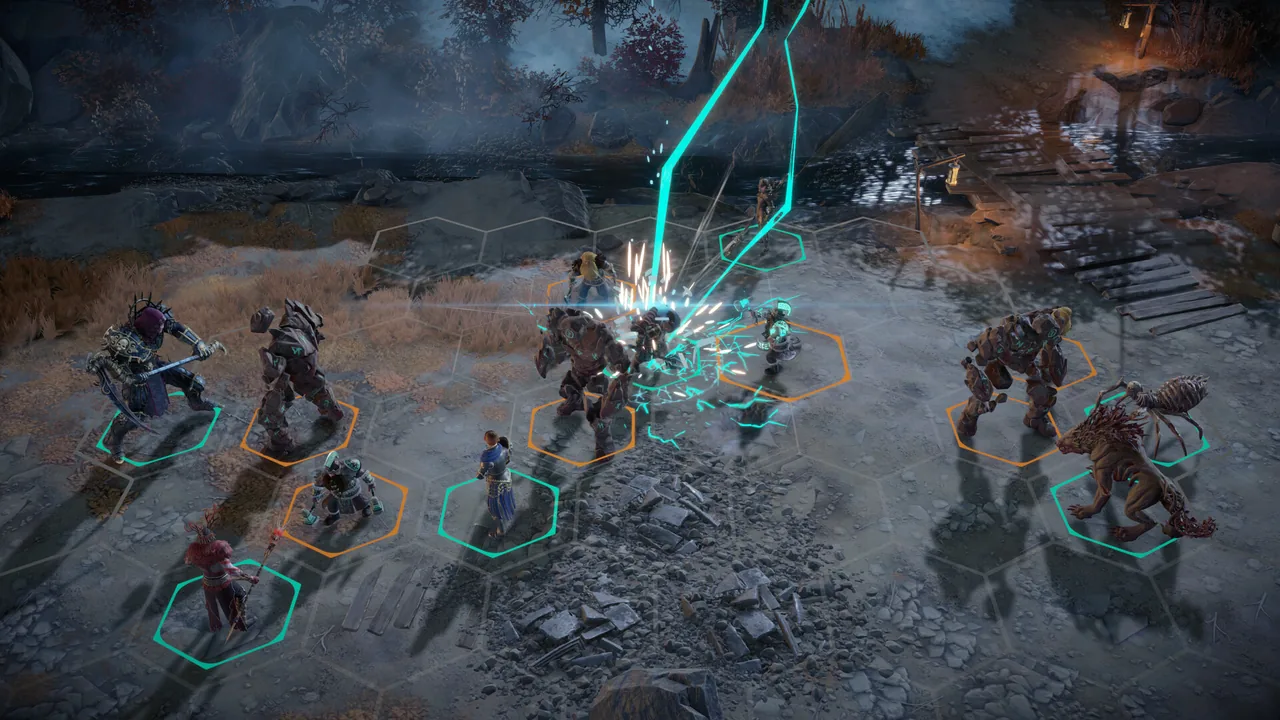
Hex-grid tactical combat, with orange and teal markers denoting opposing sidesImage: Artefacts Studio via Steam -

Category scores for Disciples: DominationWanderer Game Reviews