Game review
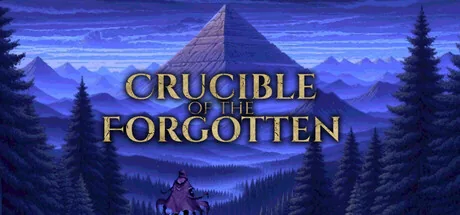
Crucible of the Forgotten
7 / 10
- Developer
- Dominic Bolin
- Publisher
- Dominic Bolin
The short version
Biggest strengths
- Exceptionally deep, interlocking build-crafting system that reviewers compared favorably to Path of Achra and Tales of Maj'Eyal
- Genuinely working multiplayer co-op that holds up under the same build complexity as solo play
- High, fair difficulty that rewards actually understanding the systems rather than stumbling into a winning build
Biggest weaknesses
- Rough, unpolished UI that hides key information like debuff details and hidden boss damage-reduction mechanics
- Visual presentation is plain, with reviewers openly calling the graphics 'fugly' and early biomes visually repetitive
- Heavy reliance on RNG can force restarted runs when the right build pieces don't appear early enough
7 / 10
Overview
Crucible of the Forgotten is an Early Access horde-survival roguelite from solo developer Dominic Bolin, entering Steam in January 2026 with a pitch built entirely around depth of build crafting rather than genre novelty. On the surface it's a familiar bullet-heaven loop: survive escalating waves across a run, level up, pick perks, repeat. Underneath, reviewers describe something considerably denser, a spell-aspect and talent system with enough interacting layers that veteran players kept reaching for comparisons to roguelike deckbuilders and classic ARPGs rather than genre-mate Vampire Survivors alone. The response has been overwhelmingly positive, sitting at a perfect approval rate across a substantial pool of English reviews, with the recurring theme being that the mechanical depth more than compensates for a rough, distinctly Early Access presentation.
Story and Setting
There's little narrative scaffolding here beyond the implied premise of a forgotten crucible testing a character's power through successive trials; this is a systems-first game, and reviewers treated it as such, with essentially none of the review pool discussing plot or characters at any length. What thin worldbuilding exists is delivered through stage themes and enemy design rather than dialogue or cutscenes, and the near-total absence of story framing didn't register as a complaint in the reviews surveyed, suggesting the audience this game is courting isn't looking for narrative investment in the first place.
Gameplay and Mechanics
The core loop pushes players through a sequence of increasingly hostile stages, fighting off hordes while assembling a build out of spells, items, upgrades, and talents that reviewers repeatedly stressed genuinely interact with one another rather than simply stacking numbers. One player who logged over 50 hours described spells with modifiers on their modifiers, each choice branching into meaningfully different playstyles, while another compared the systemic density directly to niche buildcrafting favorites like Path of Achra and Tales of Maj'Eyal. That depth comes paired with real difficulty: multiple reviewers noted runs can be lost to a single bad decision, whether a poorly chosen event outcome or misreading which stage hazards demand which kind of build, and more than one review explicitly praised the game for refusing to let a lucky early build carry a player through the whole run. Co-op multiplayer drew particular praise for actually working as advertised, supporting the same build complexity as solo play, though several reviewers warned it scales meaningfully harder than solo, with one noting a two-player run that failed to down the final boss despite outperforming a successful solo attempt on raw damage. The UI came in for consistent criticism as the loop's weakest link: reviewers asked for clearer debuff explanations, an in-game codex instead of constant menu-diving, and better visibility into hidden systems like a boss damage-reduction mechanic that scales against the player's own damage output without being explained anywhere in-game. On the accessibility side, the game already ships with adjustable difficulty, camera comfort settings, adjustable text size, and a keyboard-only control option alongside full controller support, a broader baseline than many Early Access titles bother with this early.
Visual Style and Sound Design
Presentation is the area where Crucible of the Forgotten draws the most consistent pushback, with reviewers bluntly describing the graphics as "fugly" or "basic looking" and calling out the first several biomes for looking too similar to one another, all dark forest variations without much visual distinction. Notably, none of this seemed to meaningfully dent the overall reception; reviewers who complained about the art in one breath were often still recommending the game in the next, treating the visuals as a secondary concern next to the strength of the systems underneath. No reviewer in the pool surveyed flagged serious audio issues, and level transitions came up as a minor complaint for feeling repetitive rather than the moment-to-moment sound design itself.
Progression and Replayability
Progression centers on character builds rather than persistent meta-unlocks between runs, with reviewers highlighting the ability to save a character's build after death specifically to study what worked at their highest-level attempts. Replayability is the standout strength here: with dozens of spells, each carrying multiple perk branches and dimensional modifiers, reviewers reported runs that felt genuinely different from one another, and playtimes in the surveyed pool ranged from a handful of hours up to well over 500 hours logged, with several players independently projecting hundreds more ahead of them. The tradeoff is a real dependence on random item and event drops, and a few reviewers described frustrating stretches where an unlucky early run made reaching a viable build all but impossible, forcing a restart rather than a recoverable comeback. Steam Achievements and Cloud save support are already in place too, giving long-haul players concrete goals to chase alongside the build-crafting itself.
Verdict
Crucible of the Forgotten is a strong early showing for a systems-driven horde-survival roguelite, one whose build-crafting depth and genuinely functional co-op have already won over a dedicated audience despite plain visuals and an interface that still needs real work. It won't appeal to players looking for narrative hooks or genre polish this early in its Early Access run, and the RNG-driven difficulty spikes will frustrate anyone hoping for consistent, repeatable progress, but for players who want to spend dozens of hours theorizing about spell synergies, this is already one of the more ambitious entries the genre has produced. Worth watching closely as its lone developer continues building it out, and worth budgeting for both co-op partners and repeated restarted runs before the game's asking price fully pays off.
Pros and cons
Pros
- Exceptionally deep, interlocking build-crafting system that reviewers compared favorably to Path of Achra and Tales of Maj'Eyal
- Genuinely working multiplayer co-op that holds up under the same build complexity as solo play
- High, fair difficulty that rewards actually understanding the systems rather than stumbling into a winning build
- Strong post-launch trajectory with an actively developing solo creator reviewers want to see succeed
Cons
- Rough, unpolished UI that hides key information like debuff details and hidden boss damage-reduction mechanics
- Visual presentation is plain, with reviewers openly calling the graphics 'fugly' and early biomes visually repetitive
- Heavy reliance on RNG can force restarted runs when the right build pieces don't appear early enough
- Early Access rough edges, including same-y level transitions and enemies that can outpace readability
Screenshots
-
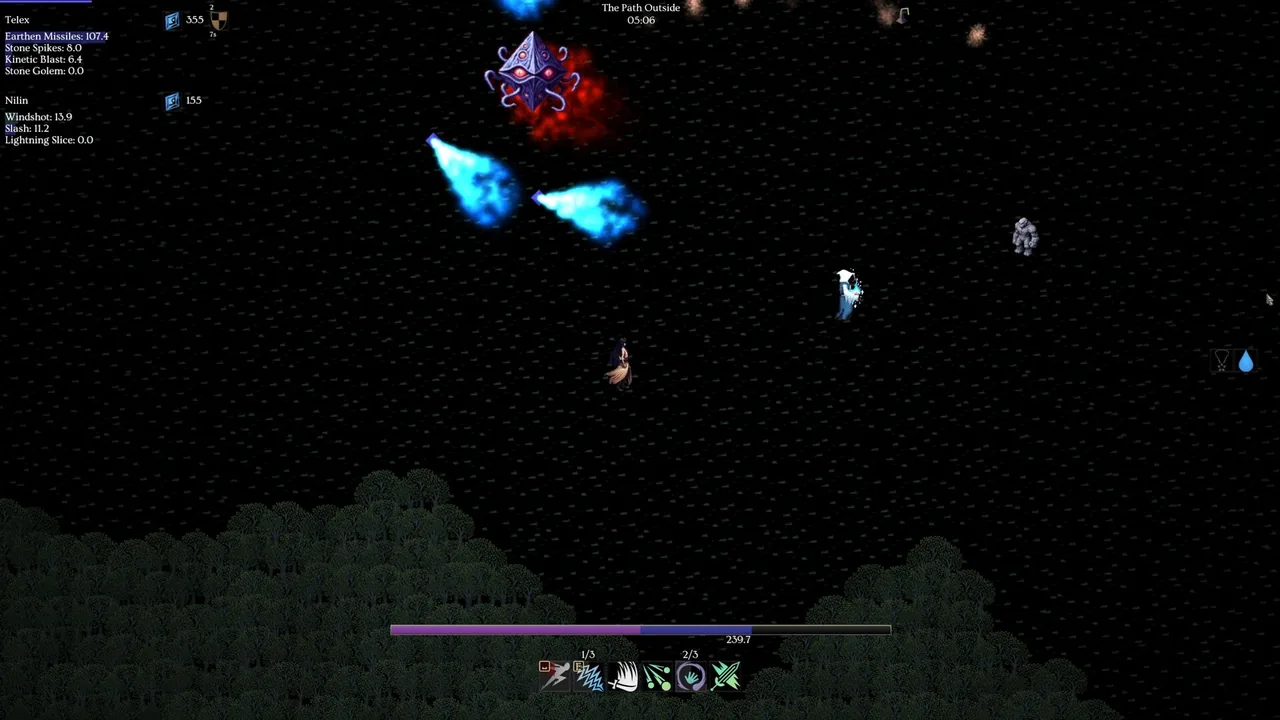
Combat plays out on stark, mostly-black arenas where enemy and spell readability matter more than visual flourishImage: Dominic Bolin via Steam -
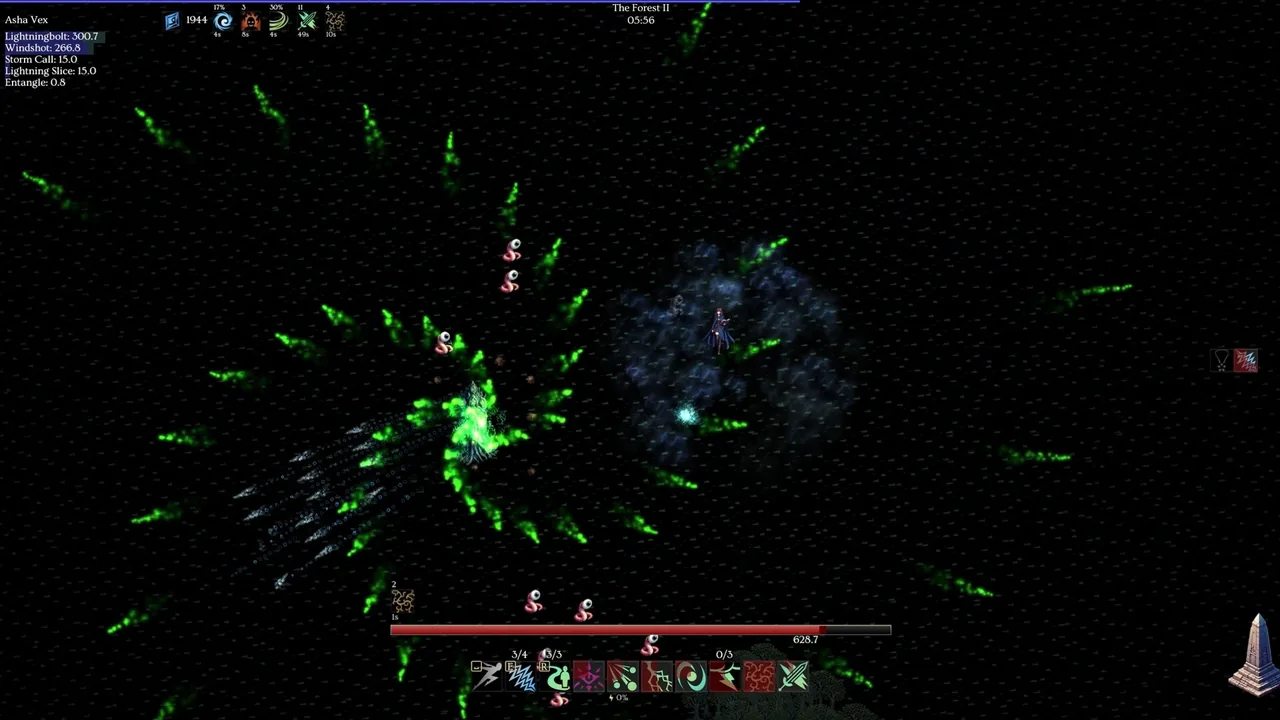
Late-run builds fill the screen with layered spell effects as multiple aspects trigger at onceImage: Dominic Bolin via Steam -
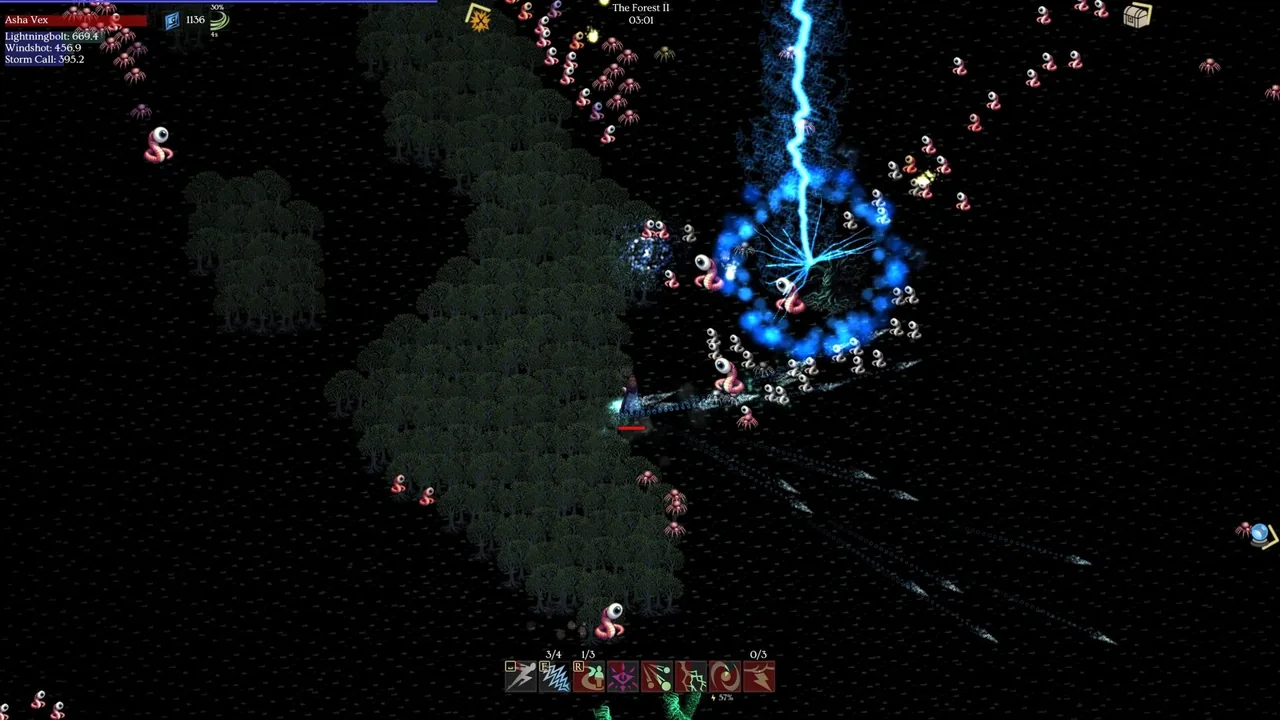
Horde density ramps up sharply in later stages, testing whether a build's damage output can keep paceImage: Dominic Bolin via Steam -
Technical specificationsWanderer Game Reviews