Game review
Cralon
4.9 / 10
- Developer
- Pithead Studio
- Publisher
- Assemble Entertainment
The short version
Biggest strengths
- A genuinely strong sense of atmosphere and claustrophobic dread as you descend through the abandoned mine shaft, repeatedly compared by reviewers to Ultima Underworld, Arx Fatalis, and the developers' own earlier work on the Gothic and Elex series
- Full voice acting and environmental storytelling — scattered notes, lore, and optional quests — that many reviewers say carried them through the game's rougher mechanical edges
- Exploration is genuinely rewarding, with hidden secrets, treasure maps, and an interconnected dungeon layout that several reviewers praised for respecting the player's time rather than padding with filler fetch quests
Biggest weaknesses
- Combat is widely described as clunky and shallow, with enemies that glide rather than animate properly, and several reviewers noting that most fights can be trivially cheesed once you learn a single exploit
- RPG progression is thin: your character's core stat growth is largely limited to health, and one reviewer flatly states there's little reason to seek out gear because so little of it exists to find
- The interface reads as unfinished — reviewers describe placeholder-looking crafting and inventory menus, a default system font, and tutorial tooltips that overlap and become unreadable
4.9 / 10
Down the shaft
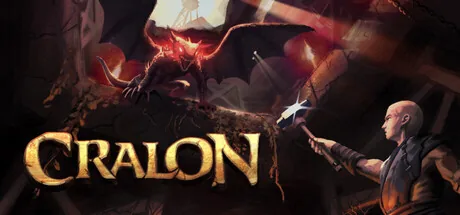
Cralon casts you as a demon hunter who, mid-pursuit of a powerful quarry, tumbles into an abandoned mine shaft and has to fight and craft your way back to the surface. It's the debut release from Pithead Studio, a two-person team founded by former Piranha Bytes developers, and that pedigree is legible in almost every screenshot: dim underground caverns, grim atmosphere, and a first-person perspective that leans hard into old-school immersive-sim influences rather than modern RPG conventions. The premise is simple and the scope is small — this is explicitly a compact, personal project rather than an attempt at a sprawling open world — but the ambition of chasing that specific Gothic-adjacent, Ultima Underworld-style feeling on a two-person budget is exactly what makes the finished game as divisive as it is. A number of reviewers note they'd already played a public demo well before launch, and several returning players say the finished build shows real, specific improvement over that demo in voice narration and weapon handling — a sign the small team kept iterating right up to release even if some rough edges never fully got sanded down.
Exploration and atmosphere are where it earns its keep
The strongest thread running through nearly every review, positive or negative, is that Cralon's sense of place genuinely works. The mine shaft is rendered with a level of environmental detail and lighting that several reviewers single out specifically, and the game rewards curiosity: treasure maps, hidden alcoves, scattered notes that piece together the shaft's backstory, and side content that doesn't feel like busywork. One reviewer specifically praises the game for avoiding "collect 47 boar toenails" quest design in favor of actual discovery-driven exploration. Full voice acting is a real highlight too — uncommon for a project this size — and multiple reviewers credit the voice work with making the characters land emotionally even when the surrounding systems don't fully support them. This is a game that clearly knows what feeling it wants to evoke, and in its quieter exploration moments, it delivers that feeling convincingly.
Combat and progression don't back it up
Where Cralon consistently loses its footing is in the systems meant to give that exploration weight. Combat is described across a wide swath of reviews as stiff and underdeveloped — enemies "glide" backward instead of playing proper attack or retreat animations, hits feel "impactless," and more than one reviewer reports finding an exploit that lets them beat the final boss without taking damage. The RPG progression underneath it is similarly thin: one reviewer notes bluntly that health is essentially the only stat you meaningfully grow, and that gear is rare enough to make itemization feel almost pointless. That's a significant gap for a game explicitly marketed as blending RPG and immersive-sim elements — the exploration layer is doing most of the work that a deeper combat and progression loop would normally share. The game does layer in a difficulty-driven risk/reward system worth mentioning: on the harder settings, going without armor means an instant death from most hits, while armor only buys survival against physical attacks and still leaves you vulnerable to being instantly killed by magic, and a fear-management mechanic further complicates fights — reviewers who engaged with this system report it adds real tension, but several others say it's undercut by how easily specific encounters can be cheesed once you find the right exploit.
Rough, unfinished-feeling presentation
Beyond combat, the presentation itself draws consistent criticism. Reviewers repeatedly describe the crafting and inventory interface as "placeholdery," comparing it unfavorably to default asset-store templates, with a generic system font and tooltips that in some cases overlap other UI elements badly enough to become unreadable. Options are sparse too — no rebindable keybindings and limited graphics settings are called out directly, and frame rates for several reviewers struggle to clear 60fps even on solid mid-range hardware, with one reviewer reporting a hard cap regardless of settings adjusted. Steam achievements are also reported as broken by at least one player. None of this is fatal on its own, but stacked together it reinforces the sense — voiced by several reviewers independently — that the game needed more time in the oven before its final release.
A divisive reception, and a divisive launch
It's worth being direct about how split the reception actually is. A meaningful minority of reviewers are sharply critical, with one describing the developers' public response to criticism as dismissive of paying customers, and another calling the game less polished than a third-semester university project. But the larger share of reviewers land somewhere between "rough but charming" and genuinely fond, repeatedly using the word "eurojank" affectionately to describe a game that feels handmade rather than focus-tested into blandness. Several reviewers explicitly frame their purchase as support for a small, sincere team taking a real swing rather than an unqualified recommendation on mechanical merits alone — a framing that's fair, but one prospective buyers should weigh with open eyes rather than assume from the strength of its atmosphere alone.
Verdict
Cralon is a rough, clearly under-resourced first outing that nonetheless captures a specific, atmospheric first-person dungeon-crawling feeling that few other current releases are even attempting. Its exploration, voice work, and environmental storytelling are genuinely good — good enough to carry a meaningful number of reviewers through combat that most agree is underbaked, an interface that reads as unfinished, and progression systems with barely any depth to them. If you're specifically drawn to old-school immersive sims and are willing to forgive stiff combat and a placeholder-grade UI in exchange for real atmosphere and a personal touch, there's something worth experiencing here. If you're expecting a polished RPG experience for its asking price, the gap between Cralon's ambitions and its execution will likely be the first thing you notice.
Pros and cons
Pros
- A genuinely strong sense of atmosphere and claustrophobic dread as you descend through the abandoned mine shaft, repeatedly compared by reviewers to Ultima Underworld, Arx Fatalis, and the developers' own earlier work on the Gothic and Elex series
- Full voice acting and environmental storytelling — scattered notes, lore, and optional quests — that many reviewers say carried them through the game's rougher mechanical edges
- Exploration is genuinely rewarding, with hidden secrets, treasure maps, and an interconnected dungeon layout that several reviewers praised for respecting the player's time rather than padding with filler fetch quests
- A distinctive, personal touch from its two-person developer team, who wove real photographs of mining sites and small in-joke references into the world — reviewers describe it as having real character even when the execution falters
Cons
- Combat is widely described as clunky and shallow, with enemies that glide rather than animate properly, and several reviewers noting that most fights can be trivially cheesed once you learn a single exploit
- RPG progression is thin: your character's core stat growth is largely limited to health, and one reviewer flatly states there's little reason to seek out gear because so little of it exists to find
- The interface reads as unfinished — reviewers describe placeholder-looking crafting and inventory menus, a default system font, and tutorial tooltips that overlap and become unreadable
- Performance and options are limited: no rebindable keybindings, sparse graphics settings, frame rates that struggle to clear 60fps even on capable hardware, and multiple reports of broken Steam achievements
Screenshots
-
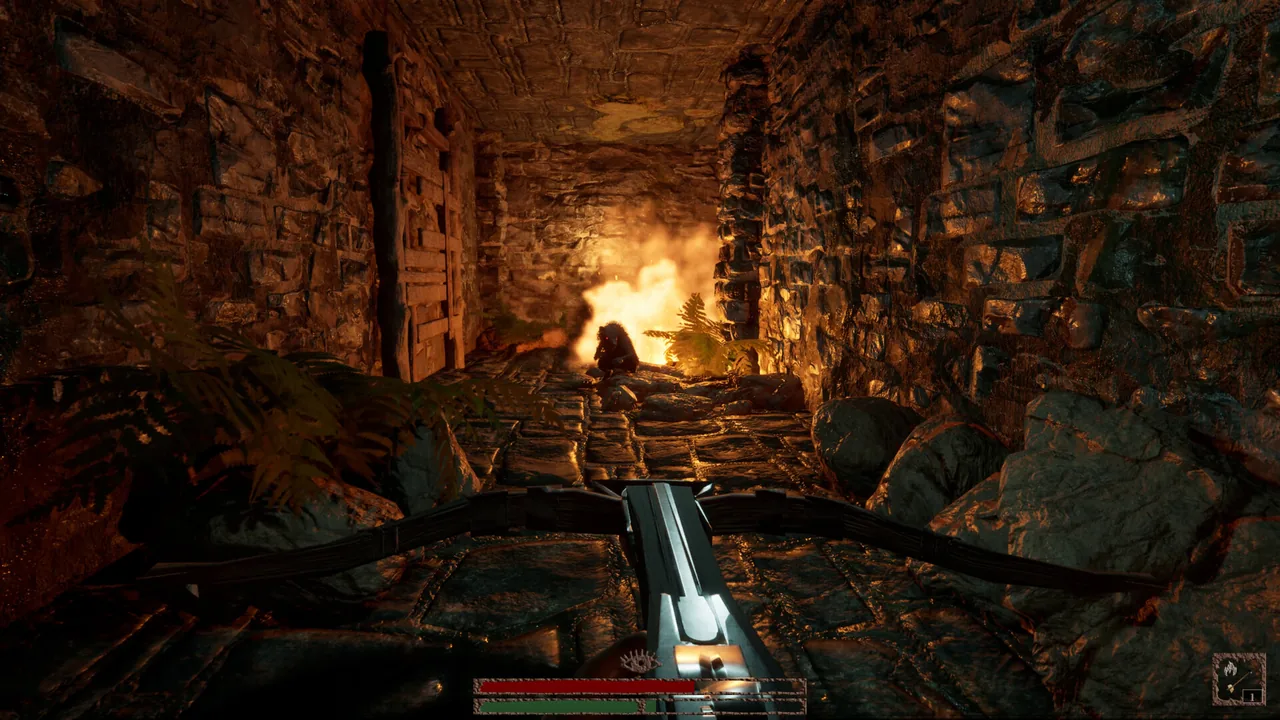
Combat plays out from a first-person perspective in the shaft's dim, firelit passagesImage: Pithead Studio via Steam -
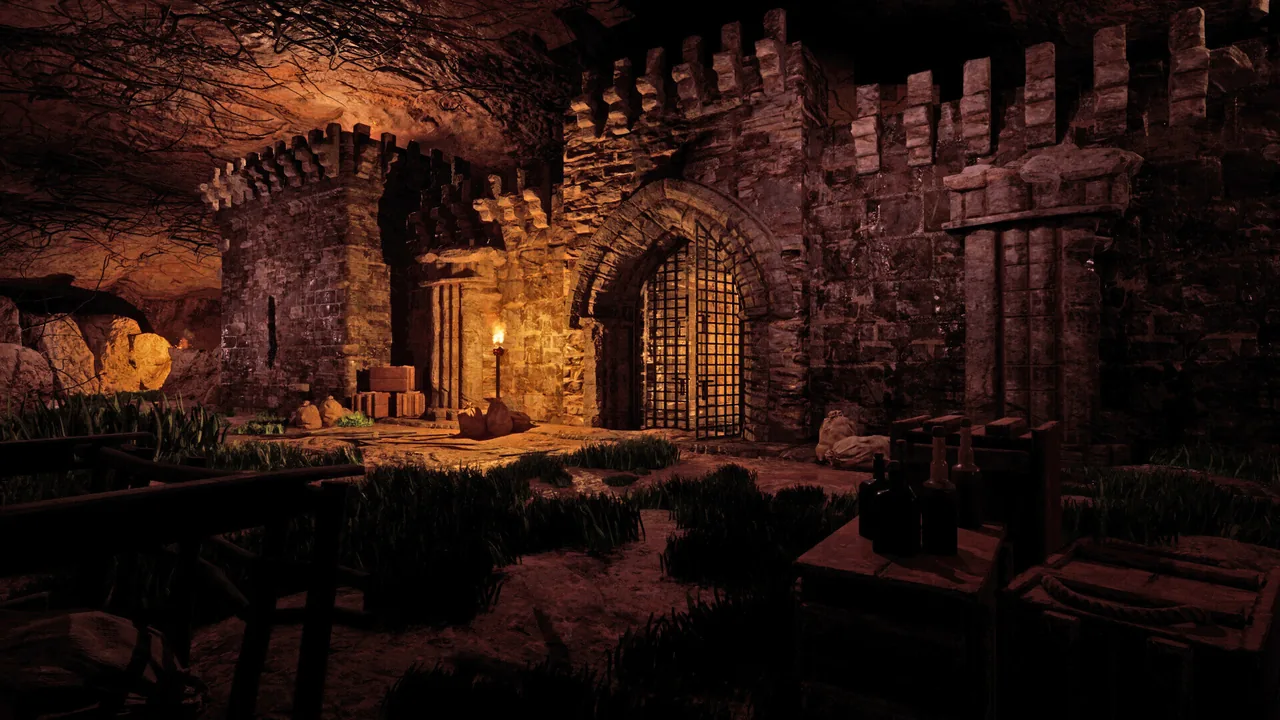
Constructed stonework and fortifications appear deep within the natural cave systemsImage: Pithead Studio via Steam -
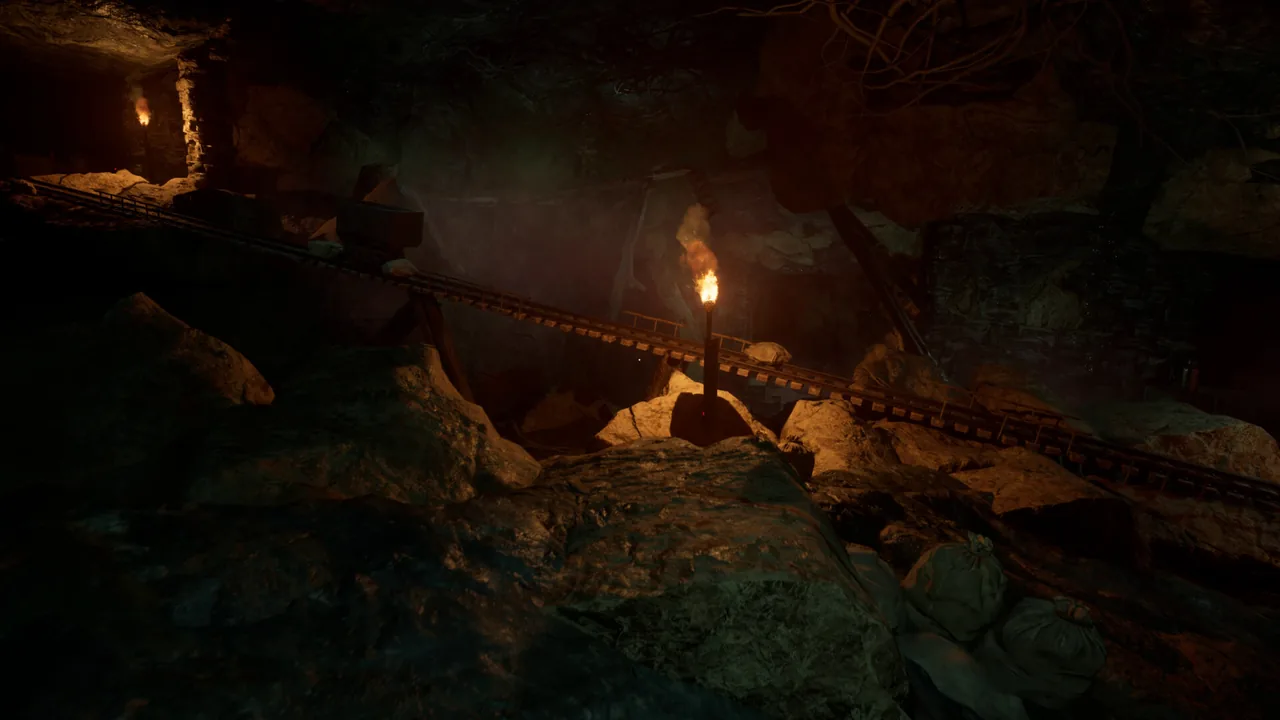
Old mining infrastructure winds through the shaft's atmospheric, claustrophobic depthsImage: Pithead Studio via Steam -
Category scores for CralonWanderer Game Reviews