Game review
Cartapli: Fold Quest
6.9 / 10
- Developer
- ManduPod
- Publisher
- Jungle Game Lab
The short version
Biggest strengths
- A genuinely novel core mechanic — physically folding a piece of paper to reposition your character and reroute enemies into each other — that reviewers repeatedly say they've never seen attempted before in any roguelike
- Free with absolutely no microtransactions, ads, or paywalled content, with several reviewers explicitly noting the absence of any monetization pressure whatsoever
- A charming, hand-drawn, papercraft-styled art direction wrapped around a warm framing story about a grandfather's tale, with cute character and enemy designs praised across nearly every review
Biggest weaknesses
- Extremely short for what's presented as a complete release — most reviewers finish everything in one to two hours, and a large number explicitly describe it as feeling like a tech demo, proof of concept, or student project rather than a finished game
- Very limited content variety at launch: only two playable characters, two acts, and two bosses, with numerous reviewers asking for more classes, enemy types, stages, and an endless mode that doesn't yet exist
- The core folding interaction requires holding down the mouse button to drag, which at least one reviewer flagged as physically painful for players with RSI, with no alternative click-to-toggle control scheme offered
6.9 / 10
Folding your way through a roguelike
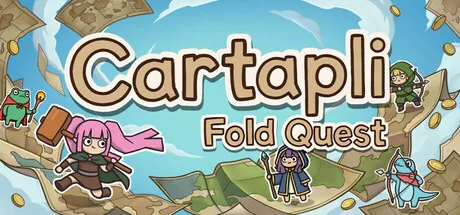
Cartapli: Fold Quest is a free turn-based roguelike built around a single, genuinely unusual idea: the battlefield is a sheet of paper, and your primary tool isn't a sword or a spell but your own hands folding that paper to shift the positions of everyone standing on it. Developed by ManduPod and published by Jungle Game Lab, the game frames itself as a papercraft adventure into a grandfather's story, with a soft, hand-drawn aesthetic that leans into the origami conceit rather than treating it as a gimmick layered on top of conventional combat. Reviewers consistently single this mechanic out as the reason to play — one describes it as "the part that sold me," and another flatly states "I would never in a million years think to combine a roguelike with origami." That's a rare thing for a small free release to earn: near-universal agreement that its central idea is not just functional but actually inventive.
The mechanic that carries the whole game
Mechanically, each encounter plays out on a shrinking sheet of "paper" that represents your remaining health — every hit you take costs a fold, and the battlefield literally gets smaller as the fight wears on. Folding the paper drags your character and enemies along creases, letting you line up multiple foes for an area attack, yank a dangerous unit out of range, or deliberately walk enemies into each other's attacks without swinging a weapon yourself. It's an elegant reframing of positional tactics that several reviewers say clicked immediately despite being unlike anything they'd played before, and the game backs it with a real build layer: victories reward a mix of Pebbles and Skills that combine into distinct playstyles, from wide area-of-effect sweeps to single-target burst builds. One reviewer describes ending a run with "12 attack damage and a range that covered half the screen" purely from stacking synergistic upgrades — the kind of build-crafting payoff that roguelike fans specifically look for. The system isn't flawless; multiple reviewers note that some Pebble interactions aren't clearly explained, and enemy pathing through folded sections occasionally behaves inconsistently, but the foundational idea holds up under real scrutiny rather than just sounding clever on paper.
A demo-sized helping of a bigger idea
The single most consistent criticism, appearing in an overwhelming share of reviews regardless of overall sentiment, is that Cartapli: Fold Quest is simply too short to function as anything other than a proof of concept. Most players clear the entire game — two playable characters, two acts, two bosses — in one to two hours, and the phrase "tech demo" or "student project" comes up again and again as the honest way to describe what's on offer. One reviewer calls it "more of a well made tech demo than a full game," while another, playing as of a May 2026 patch, still described the content as "somewhat limited (demo-like if you want a comparison)." This isn't really a complaint about quality — the overwhelming majority of the same reviewers say they'd happily pay money for an expanded version — but it does mean prospective players should walk in expecting a tightly scoped sampler rather than a complete campaign, and that the current 100% completion time for most players sits well under the length of a single movie.
Rough edges around accessibility and clarity
Beyond its brevity, a handful of specific, recurring complaints keep this from being a flawless small release. The core folding gesture requires holding down the mouse button while dragging, which one reviewer flagged as genuinely painful for players managing RSI, with no alternate control scheme (click-to-toggle, controller support, or otherwise) offered as a workaround. The language-selection toggle is buried without any visual indicator, leading multiple separate reviewers to independently post the exact same tip about where to find it. Steam achievement tracking is reported as unreliable by at least one player, and the shop and reward systems could use more transparency — several reviewers ask for clearer indicators of enemy attack ranges, explosion radii, and which Pebble effects stack versus which don't. None of these are severe, but they're the kind of small, fixable friction points that a slightly longer development cycle would likely have caught.
An honest, unusually transparent AI disclosure
Worth noting on its own: several reviews reference an "ambiguous AI statement" from the developer regarding assisted content creation, and at least one review states directly that "this game uses AI to assist with content creation." Reactions to this are mixed but notably not hostile — one reviewer who otherwise loved the game says they wouldn't want to pay for a product that used AI-generated art or code without clearer disclosure, while others who mention it treat it as a minor aside rather than a dealbreaker. It's a genuinely small, free, largely solo/small-team project, and reviewers seem to be extending it good faith on that basis; it's included here only because it's something prospective players raised themselves and may want to weigh going in, not because it noticeably affected the quality of what's on screen.
Verdict
Cartapli: Fold Quest is a small, free game built around one exceptional idea, executed with more polish and tactical depth than its brief runtime might suggest. The paper-folding mechanic is the rare "we've never seen this before" hook that actually earns its reputation in play, and the combination of build variety, positional puzzle-solving, and a warm, papercraft art style makes the hour or two it takes to finish feel genuinely worthwhile rather than like a rushed prototype. Where it falls short is scope: two characters, two acts, and a handful of rough interface edges leave it feeling closer to an extremely promising demo than a fully realized game, and the near-universal chorus of "I'd pay for more of this" in its own review section says as much about its limits as its strengths. As a free download, there's essentially no reason not to try it — just go in expecting a tightly focused taste of a bigger idea rather than a complete roguelike campaign.
Pros and cons
Pros
- A genuinely novel core mechanic — physically folding a piece of paper to reposition your character and reroute enemies into each other — that reviewers repeatedly say they've never seen attempted before in any roguelike
- Free with absolutely no microtransactions, ads, or paywalled content, with several reviewers explicitly noting the absence of any monetization pressure whatsoever
- A charming, hand-drawn, papercraft-styled art direction wrapped around a warm framing story about a grandfather's tale, with cute character and enemy designs praised across nearly every review
- Meaningful tactical depth for a short game: build variety through combinable Pebbles and Skills, positioning puzzles around fold direction, and a difficulty curve several reviewers found genuinely challenging around its bosses
Cons
- Extremely short for what's presented as a complete release — most reviewers finish everything in one to two hours, and a large number explicitly describe it as feeling like a tech demo, proof of concept, or student project rather than a finished game
- Very limited content variety at launch: only two playable characters, two acts, and two bosses, with numerous reviewers asking for more classes, enemy types, stages, and an endless mode that doesn't yet exist
- The core folding interaction requires holding down the mouse button to drag, which at least one reviewer flagged as physically painful for players with RSI, with no alternative click-to-toggle control scheme offered
- Rough edges around clarity and stability: an unlabeled language-switch button several reviewers had to hunt for, inconsistent enemy pathing through folded terrain, some pebble/synergy interactions left unexplained, and reports of broken Steam achievements
Screenshots
-
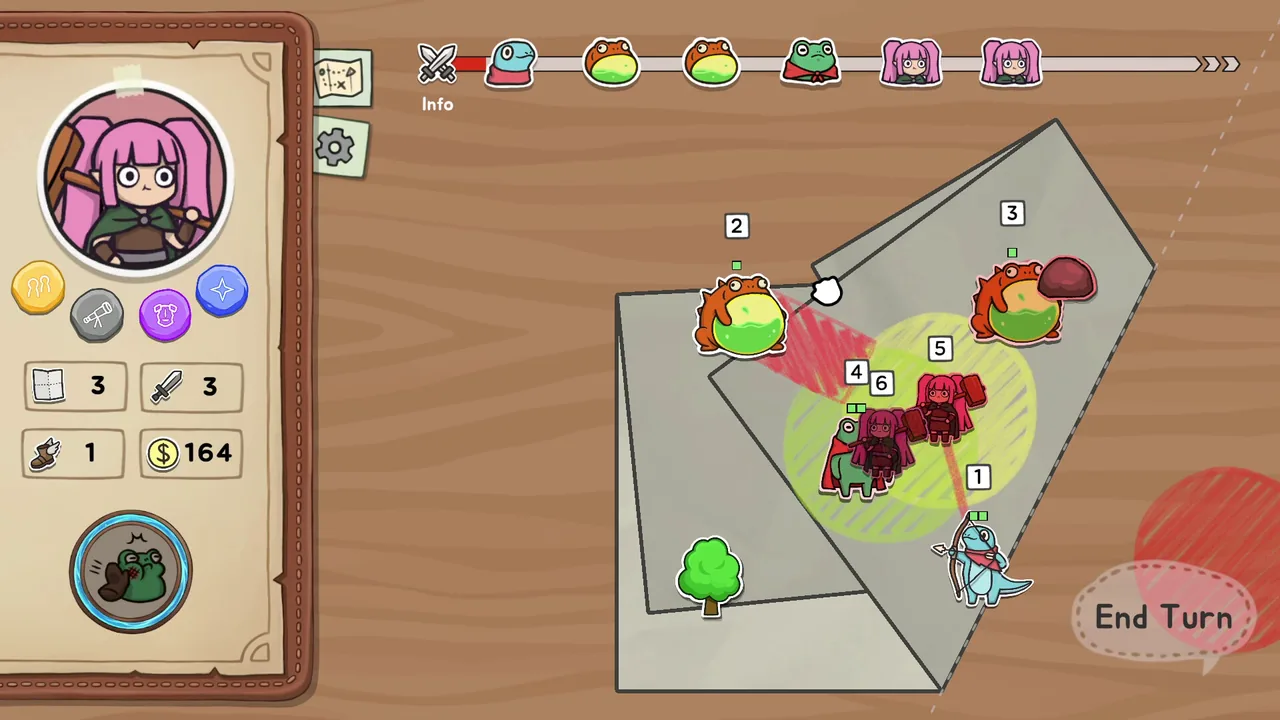
Combat plays out on a foldable sheet of paper, with creases repositioning units on both sidesImage: ManduPod via Steam -
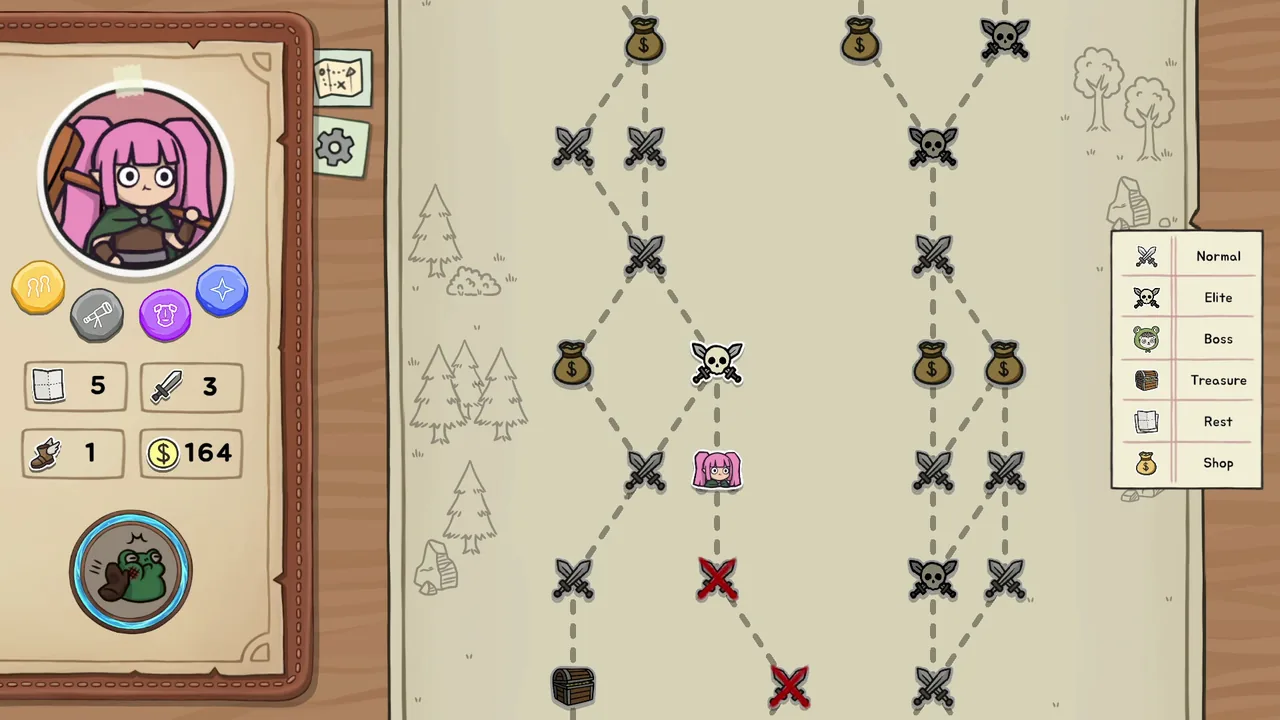
Runs unfold along a branching path of battles, treasure, rest stops, and shopsImage: ManduPod via Steam -
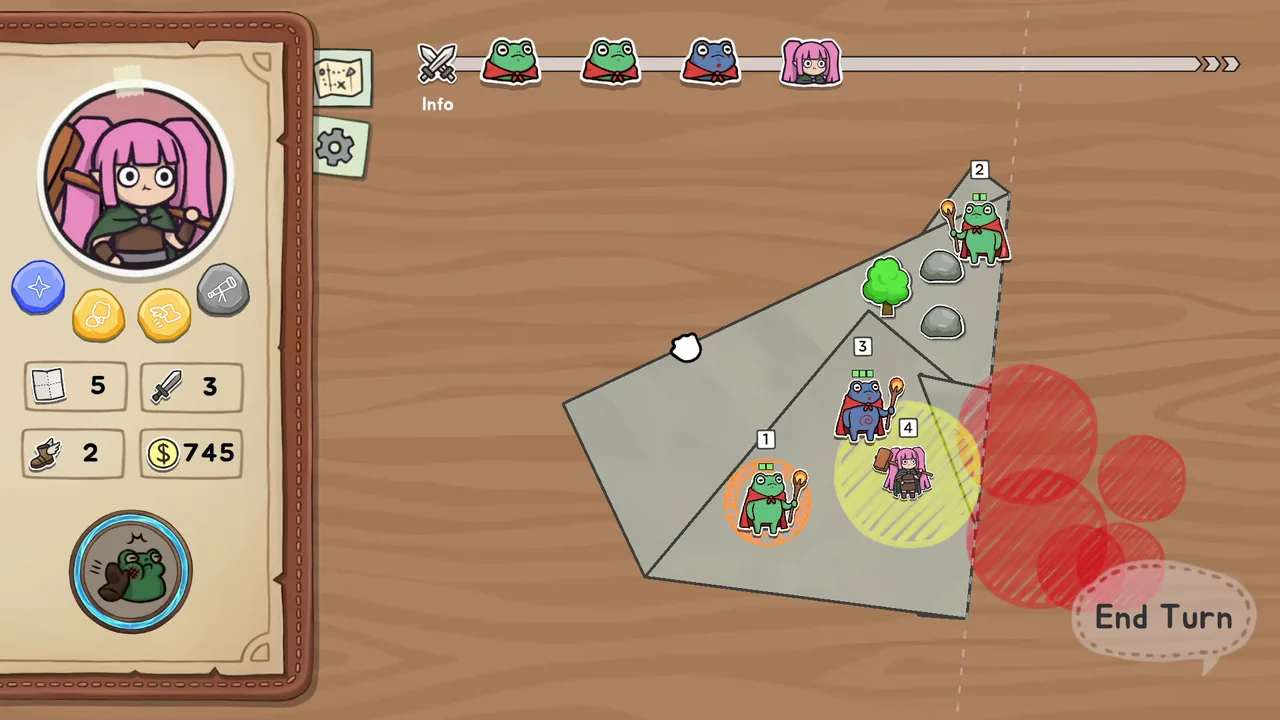
Later folds compress the battlefield further, forcing tighter tactical positioningImage: ManduPod via Steam -
Category scores for Cartapli: Fold QuestWanderer Game Reviews