
Game review
Bail Force: Cyberpunk Bounty Hunters
6.4 / 10
- Developer
- SeblaccSoft
- Publisher
- YSY Softworks
The short version
Biggest strengths
- A genuinely distinctive Adaptive Combat System where enemies read and counter the player's preferred fighting style run to run
- Choosing between lethal takedowns and arresting bounties gives runs real strategic and narrative weight, unlocking different endings
- Two playable characters, Angel and Lea, each with distinct motivations and enough add-on variety to noticeably change how a build plays
Biggest weaknesses
- Movement and platforming were repeatedly described as floaty or 'slippery,' with characters feeling weightless despite the game's fast pace
- The core loop runs out of enemy and challenge variety faster than reviewers wanted, especially across repeated runs
- A cluttered or hard-to-read HUD makes tracking your own HP unexpectedly difficult mid-fight
6.4 / 10
Overview
Bail Force: Cyberpunk Bounty Hunters is a 2D pixel-art action roguelite from developer SeblaccSoft, published by YSY Softworks and released in January 2026. Set in the war-ravaged New Rise City, it casts players as one of two bounty hunters tracking down criminals and combat drones through procedurally generated urban hunts, with a headline Adaptive Combat System that has enemies learning and countering the player's habits over the course of a run. Reception across its small but engaged English review pool landed as broadly Positive, with reviewers consistently praising the game's concept, art direction, and central hook while flagging enough rough edges around movement feel and content variety to temper their enthusiasm.
Story and Setting
Players choose between two playable bounty hunters: Angel, a traumatized student seeking revenge with a homemade exoskeleton, and Lea, a professional hunter with nanite implants honoring a promise to a fallen friend. Both characters hunt criminals and rogue combat units through the fractured, dystopian streets of New Rise City, a setting reviewers described as delivering a strong, clearly defined cyberpunk identity even within a fairly compact indie budget. One review specifically praised the seriousness with which the story was handled relative to the genre norm, calling out the writing and character motivations as a cut above what similarly scaled action roguelites usually bother with. The choice between killing bounties outright or arresting them for a bigger payday and a shifted ending gives the framing device actual mechanical teeth rather than functioning as pure flavor text, letting players lean into Angel's vengeful edge or Lea's more merciful, professional restraint as they see fit.
Gameplay and Mechanics
The centerpiece is the Adaptive Combat System, which has enemies analyzing whether a player favors melee or ranged attacks and adjusting subsequent waves to counter that preference, layered on top of procedurally generated stages so no two hunts play out identically. Reviewers who engaged with this system for longer stretches praised how it kept encounters from settling into a single dominant strategy, and the add-on upgrade system, mixing active dash- and jump-triggered abilities with passive damage and defensive effects, gave several reviewers real enthusiasm for chasing synergistic, occasionally overpowered builds, with one reviewer joking that their own run's add-on pool felt almost too generous once the right combination clicked into place. Another reviewer likened the die-and-retry structure to Edge of Tomorrow, respawning after every death to try a new weapon or strategy against the same boss until the encounter finally clicked. That said, a recurring and pointed criticism across the review pool was how the movement itself feels: multiple reviewers described the characters as slippery or lacking a sense of weight despite the game's fast pace, undercutting the tactile satisfaction combat is clearly aiming for, and one player specifically flagged the inability to redirect aim while going prone as a basic design gap that actively hampers combat options. Several reviewers who put meaningful hours in also noted the challenge and enemy variety thins out faster than they'd like across repeated runs, with the core loop feeling repetitive well before a full clear. On the interface side, more than one reviewer complained that the HUD makes tracking your own health bar unexpectedly difficult mid-fight, a real problem in a game built around punishing, fast-reacting combat.
Visual Style and Sound Design
The retro-arcade pixel art drew consistent, specific praise, with reviewers calling out the nostalgic look and unique cyberpunk aesthetic as standout strengths even among players otherwise lukewarm on the mechanics. The soundtrack came in for similar compliments, more than one reviewer singled out the lobby and combat music as genuinely enjoyable, though the same reviewers flagged inconsistent audio mixing during actual gameplay, with sound effects occasionally clashing with or drowning out the music in ways that undercut an otherwise strong sonic identity. The overall presentation was frequently described as punching above the game's budget, giving New Rise City a distinct visual voice even where the underlying systems still need refinement. Bail Force also ships with full controller support, including DualShock and DualSense-specific input, and Steam Cloud saves, both welcome conveniences for a game this focused on quick, repeated runs.
Progression and Replayability
Runs are structured around roguelite meta-progression, with add-ons, upgrades, and the lethal-versus-arrest choice all feeding into replay incentive across repeated hunts. The two-character structure adds a light but real layer of build variety on top of the randomized add-on pool, and the promise of multiple endings tied to how a player chooses to handle bounties gives completionists a concrete reason to run the game more than once. Several reviewers explicitly framed their playtime as ongoing, describing runs as consistently punishing enough that progress feels earned rather than handed out, even as the same reviewers acknowledged that enemy and encounter variety currently caps out well before the difficulty curve does, a tension the developer will need to address as the game receives further updates.
Verdict
Bail Force: Cyberpunk Bounty Hunters is a distinctive, well-realized cyberpunk roguelite let down by movement that doesn't yet match the ambition of its adaptive combat and add-on systems. Its central hooks, enemies that learn your habits, and a lethal-versus-mercy choice with real mechanical consequences, are strong enough to justify a look from roguelite fans willing to tolerate some floatiness and a currently thin content ceiling. Best approached as a promising work in progress with a genuinely clever core idea rather than a fully polished package, and worth revisiting as the developer works through the movement feel and content variety issues its small but engaged review base has already flagged clearly.
Pros and cons
Pros
- A genuinely distinctive Adaptive Combat System where enemies read and counter the player's preferred fighting style run to run
- Choosing between lethal takedowns and arresting bounties gives runs real strategic and narrative weight, unlocking different endings
- Two playable characters, Angel and Lea, each with distinct motivations and enough add-on variety to noticeably change how a build plays
- A punchy, retro-arcade pixel-art aesthetic and cyberpunk soundtrack that multiple reviewers singled out as a highlight
Cons
- Movement and platforming were repeatedly described as floaty or 'slippery,' with characters feeling weightless despite the game's fast pace
- The core loop runs out of enemy and challenge variety faster than reviewers wanted, especially across repeated runs
- A cluttered or hard-to-read HUD makes tracking your own HP unexpectedly difficult mid-fight
- Assorted early rough edges including inconsistent sound mixing, a missing ability to redirect aim while prone, and occasional unresponsive hit feedback
Screenshots
-
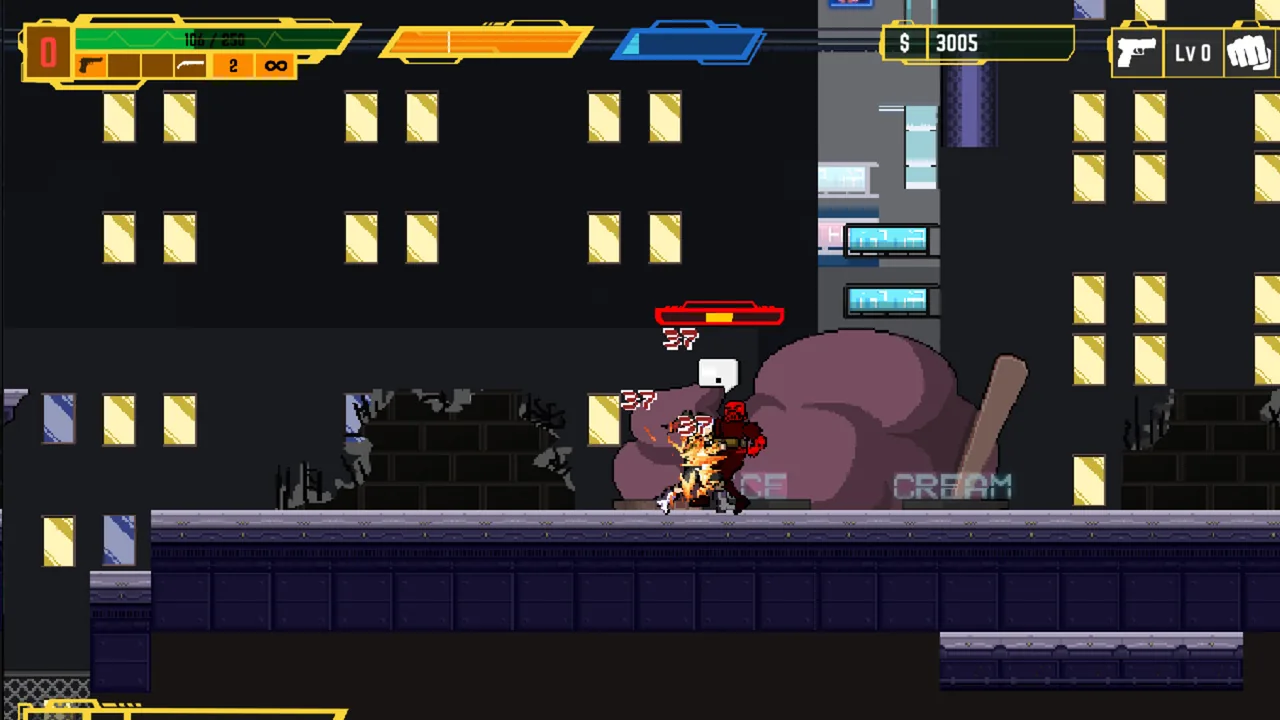
Fast side-scrolling combat pits players against a range of drones and criminal enemies across New Rise CityImage: SeblaccSoft via Steam -
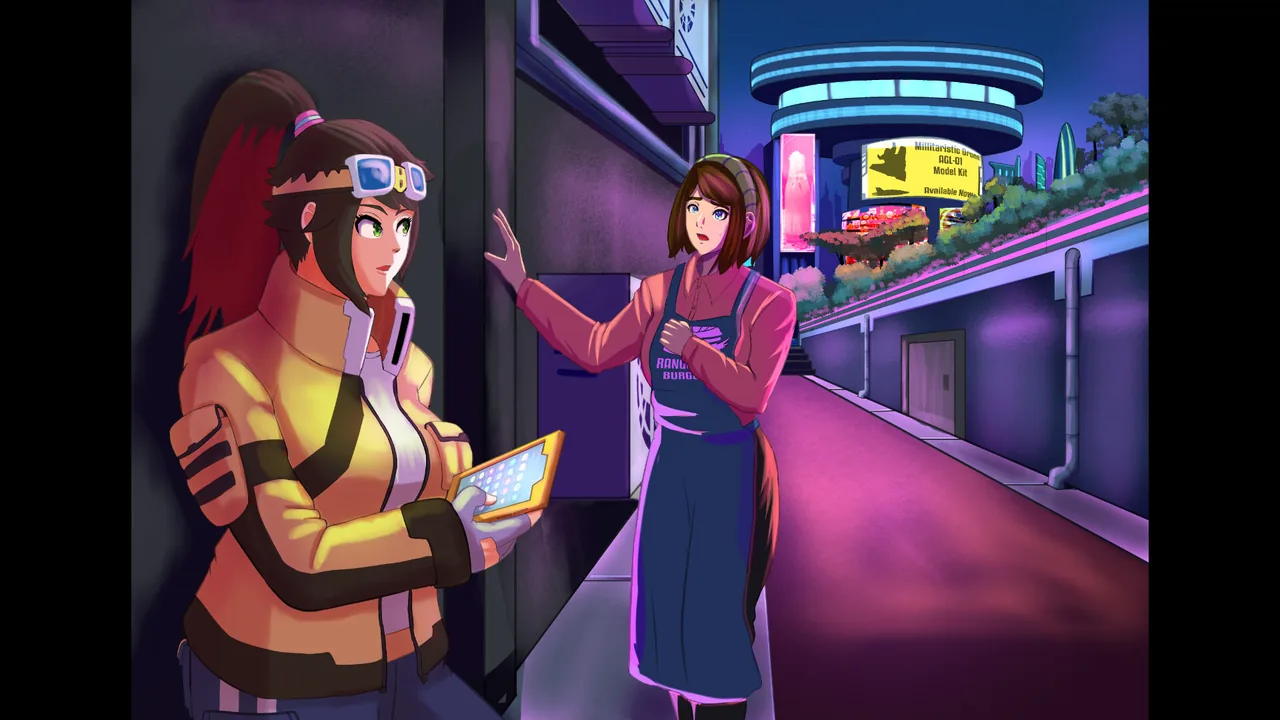
Story sequences flesh out New Rise City and its cast between huntsImage: SeblaccSoft via Steam -
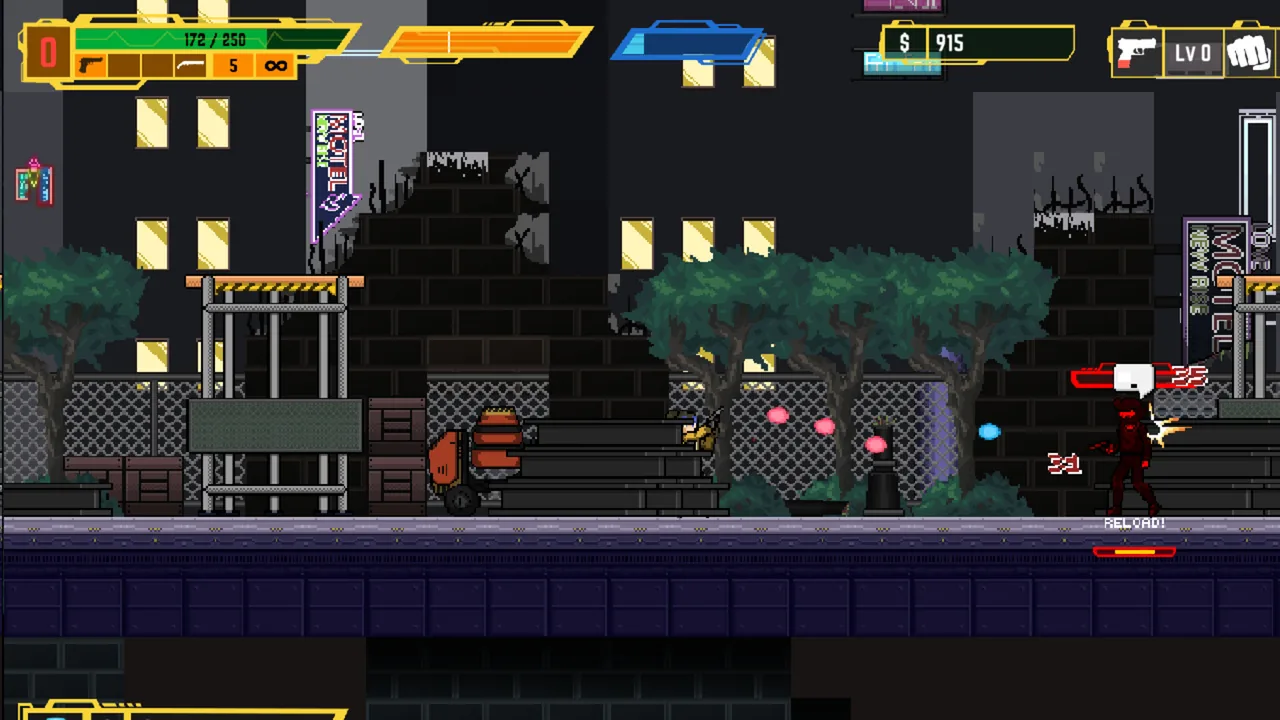
Procedurally generated city hunts change layout and enemy composition from run to runImage: SeblaccSoft via Steam -

Technical specificationsWanderer Game Reviews