Game review
Tulip Season
6.8 / 10
- Developer
- Poppy Labs
- Publisher
- Poppy Labs
The short version
Biggest strengths
- A genuinely cozy, low-pressure incremental loop that reviewers describe as satisfying rather than grindy
- Tulip breeding and cross-pollination gives real depth to what could have been a one-note number-go-up game
- Villager NPCs with small recurring requests and personal stories add warmth without demanding much time investment
Biggest weaknesses
- An 18-review sample, entirely positive and mostly written in a sentence or two, leaves little room to independently verify claims about long-term depth
- No reviewer describes what happens deep into the late game, so how well the progression tree holds up past the first few hours is genuinely unclear
- A solo-developer project with no track record of post-launch support to point to, unlike more established cozy-idle studios
6.8 / 10
A solo developer's love letter to a very specific kind of calm
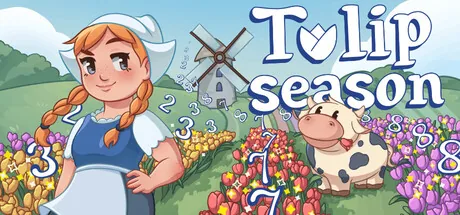
Tulip Season opens with an unusually direct pitch straight from its developer: "Hi, I'm Tatiana, a solo developer behind Tulip Season. This game blends my favorite genres: farming sim and incremental games." That's the whole premise, delivered without pretense, and the review pool suggests it lands exactly as intended. This is a game about making a number called "Beauty" go up by growing, arranging, and cross-breeding tulips, built to work equally well whether you're actively planning field patterns or letting it tick along in the background while doing something else.
It's worth being upfront about the source material here: Tulip Season has only 18 English-language Steam reviews at time of writing, every one of them positive, and most of them are short — a sentence or two of genuine enthusiasm rather than the kind of long, structured breakdown that makes cross-checking specific claims easy. That's a real limitation for any review trying to say something substantive about a game's long-term depth, and it colors how confidently the claims below should be read. What follows leans on what's actually there in the review pool, read carefully, rather than extrapolating beyond it.
Beauty as the whole game, and it mostly works
The central mechanic is refreshingly legible: plant tulip bulbs, water them, arrange them into patterns, and every in-game day your field gets scored for beauty. Score enough and you level up, unlocking new tulip types, tools, and field upgrades along a gradually-complicating progression tree. Multiple reviewers specifically call out the tech-tree unlock pacing as a highlight — "really satisfying to unlock," one writes, while another describes the mechanics as "easy to understand, yet the game is deep enough to keep you busy." That combination, an approachable surface with real mechanical depth underneath, is the single most consistent thread running through the whole review pool, and it's the strongest evidence that the design is doing what it set out to do.
The breeding and cross-pollination system in particular draws out some of the more detailed praise in an otherwise brief review pool. Reviewers describe combining tulip colors to discover new blends and rare "double blooms," and more than one specifically frames this as the system that turns Tulip Season from a simple number-go-up toy into something with actual planning depth — deciding which flowers to cross, and where to place them for maximum field-pattern scoring, gives the incremental loop a spatial-puzzle layer that plain resource-clicker games usually lack.
Neighbors who feel like more than a to-do list
Villager NPCs stop by the farm with small requests and their own stories, and completing their favors nets decoration rewards alongside the beauty score itself. This is a well-worn cozy-game structure, but reviewers consistently describe it as executed with real warmth rather than as filler busywork — several specifically mention enjoying the villager stories and small interactive touches, like being able to name the resident dog or having to periodically chase a wandering cow off the field. None of this is mechanically deep, and no reviewer claims it is; it reads as pure atmosphere-building, and on the evidence of the review pool it succeeds at that modest goal.
One recurring comparison point is Stardew Valley, specifically its farming-and-relationships loop compressed into an incremental structure — one reviewer calls it "incremental Stardew Valley-like set in a beautiful countryside," which is a useful shorthand for what Tulip Season is reaching for, even if the actual scope here is considerably smaller and more focused than a full life-sim.
Idle by design, not as an afterthought
A meaningful design decision worth calling out on its own is that Tulip Season was built from the start to support both active and idle play equally, rather than bolting an offline-progress calculator onto a game meant to be played hands-on. Reviewers describe checking in to plan a specific flower arrangement in one session, then letting the field grow untouched for hours or days and coming back to a meaningfully advanced farm. One reviewer frames this dual-mode design almost as an escape valve, describing the game as "the perfect escape from LLM agents and tokens to little farm and tulips" — an unusually specific endorsement that speaks to the kind of unhurried headspace the game is explicitly built to offer. For a genre that often treats idle mechanics as a monetization lever rather than a genuine design choice, that even-handedness between active and passive play is a small but real point in the game's favor.
A short, honest silence on the things that matter for buying decisions
What's notably absent from this review pool is almost as informative as what's present. There's no discussion at all of technical performance, positive or negative — no bug reports, no crash complaints, but also no explicit confirmation of smooth performance across different systems, which is unusual for a review pool of this size regardless of genre. Similarly, nobody describes what the game looks like deep into a long-term save: every review reflects relatively modest playtime, and the game's own progression-tree framing (gradual complexity, step-by-step unlocks) makes it genuinely unclear whether the loop that's so praised in the early hours sustains itself once most of the tulip types and upgrades are unlocked. That's not a criticism of the game itself so much as an honest gap in what the current evidence can support.
At NZ$9.59, reviewers who do comment on value describe it as a fair, even generous asking price for what's delivered, and the near-uniform enthusiasm (100% positive, however small the sample) suggests Poppy Labs has found a real audience for this specific kind of gentle, plant-based incremental design, even if the long-term staying power hasn't yet been tested by a large enough player base to say for certain.
Verdict
Tulip Season is a well-crafted, sincerely made cozy incremental with a legible core loop, a breeding system that gives it real mechanical depth, and villager writing that punches above its modest scope. The catch is a review pool too thin and too short to confidently vouch for its staying power past the first few sessions — this reads as a genuinely lovely thing to try at a low price, with the caveat that nobody, including this review, can yet speak confidently to how it holds up over dozens of hours.
Pros and cons
Pros
- A genuinely cozy, low-pressure incremental loop that reviewers describe as satisfying rather than grindy
- Tulip breeding and cross-pollination gives real depth to what could have been a one-note number-go-up game
- Villager NPCs with small recurring requests and personal stories add warmth without demanding much time investment
- Built from the ground up to work equally well as an active planning game or a hands-off idle experience
Cons
- An 18-review sample, entirely positive and mostly written in a sentence or two, leaves little room to independently verify claims about long-term depth
- No reviewer describes what happens deep into the late game, so how well the progression tree holds up past the first few hours is genuinely unclear
- A solo-developer project with no track record of post-launch support to point to, unlike more established cozy-idle studios
- Very little discussion of performance or technical stability either way, positive or negative — an unusual silence for a review pool this size
Screenshots
-
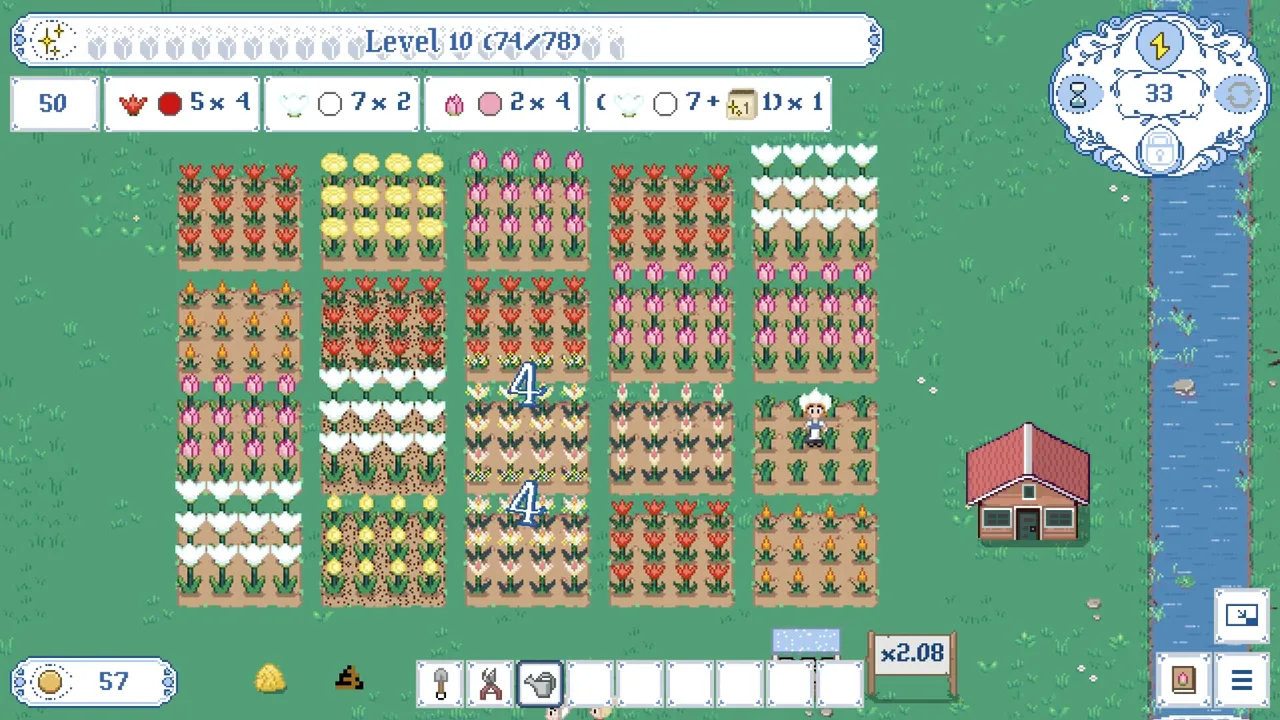
The main field view, with rows planted and scored for beauty each in-game dayImage: Poppy Labs via Steam -
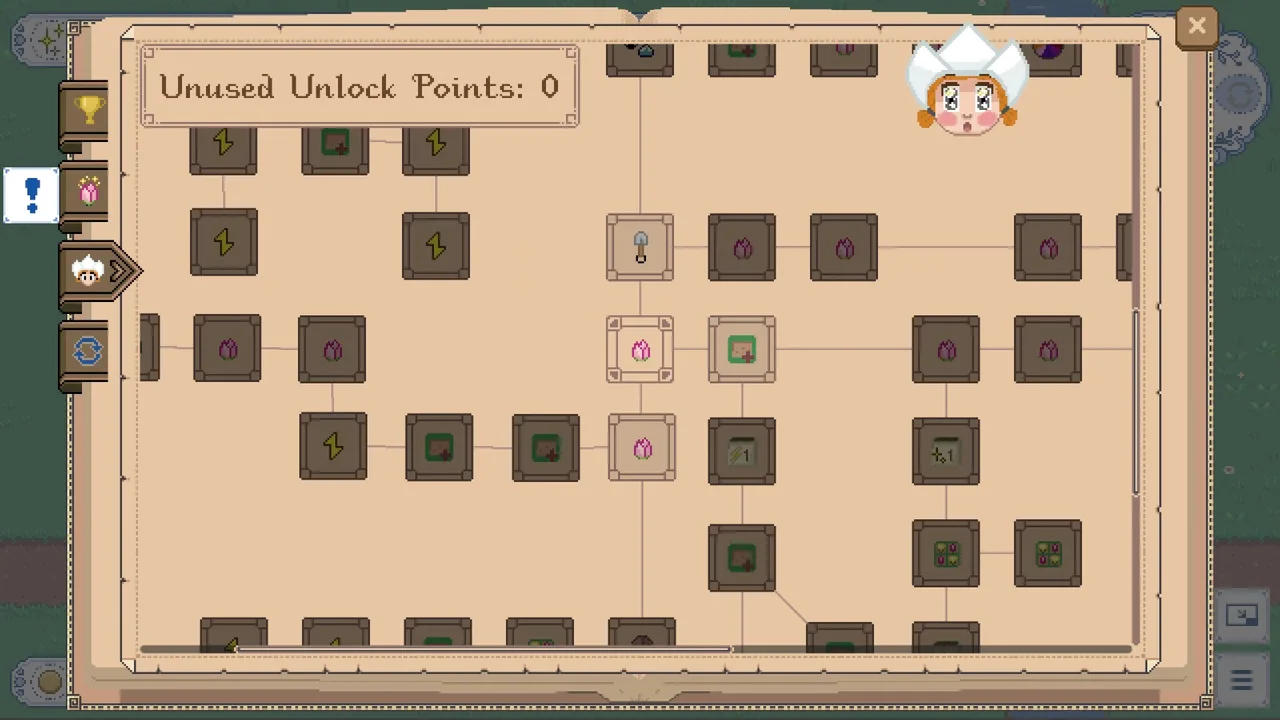
The gradually-complicating progression tree that unlocks new tools and tulip typesImage: Poppy Labs via Steam -
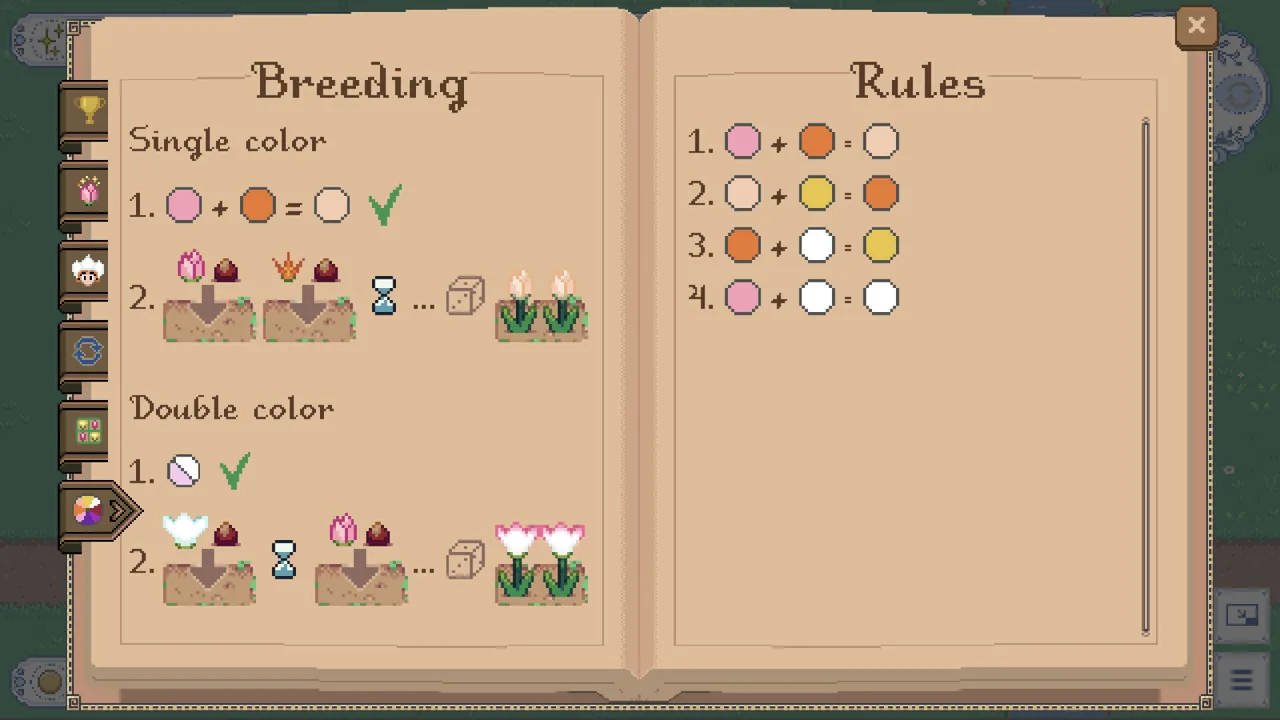
The breeding guide, showing how cross-pollinating colors produces new tulip blendsImage: Poppy Labs via Steam -

Category scores for Tulip SeasonWanderer Game Reviews