Game review
LarsGadiel
6.2 / 10
- Developer
- Diabolical Mind
- Publisher
- Diabolical Mind
The short version
Biggest strengths
- Authentic NES-era chiptune soundtrack and retro pixel art that reviewers consistently single out as a highlight
- Tight, rewarding exploration loop for most of its runtime, with backtracking that earns cleared shortcuts rather than punishing them
- Genuinely novel origin story — a prequel built from a Xenon Valkyrie NES prototype that never shipped, now finally released
Biggest weaknesses
- A late-game difficulty spike into instant-death spike traps and double-jump precision sections frustrates a large share of reviewers
- No map markers and a map that only shows the current zone make backtracking more disorienting than it needs to be
- Sparse save points (1-2 per zone) turn mistakes into long, repetitive runs back to the site of failure
6.2 / 10
A prequel to a game that never existed on shelves
LarsGadiel has one of the stranger origin stories to land on Steam this year: it's pitched as the prequel to Xenon Valkyrie, a game "originally created for Nintendo's 8-bit console that was never released." Rather than an emulator curiosity or a fan translation, this is a full commercial Metroidvania built from that unreleased NES-era design, ported and expanded for modern displays with a new HUD, an enhanced map, and an exclusive teleport system layered on top of the original retro map and level design. It's an unusual premise for a 2026 indie release, and it mostly earns the novelty rather than just trading on nostalgia branding.
The chiptune soundtrack, running on the original NES 8-bit sound chip, is the single most consistently praised element across the review pool — several players single out specific tracks, and one reviewer explicitly cites the music during the game's death-counter transition screen as a standout moment, which is a strange but genuine compliment for a mechanic most games treat as a footnote. The retro CRT visual mode and faithful NES color palette back up the audio, giving the whole package a coherence that pure nostalgia-bait games often lack.
Exploration that rewards patience, until it doesn't
For most of its length, LarsGadiel plays the Metroidvania game well: a labyrinthine map that loops back on itself, new traversal tools that reopen previously blocked paths, and a genuine sense of critical mass once enough of the map opens up that backtracking turns from a chore into a victory lap. Reviewers draw comparisons to Cave Story, Momodora, and Transiruby, and those comparisons feel earned rather than aspirational — this is a game that knows the genre's rhythms and executes them competently across a bite-sized two-to-three-session runtime.
Where it comes apart for a meaningful chunk of the review pool is the final stretch. Multiple reviewers independently flag the same problem: a steep difficulty spike involving instant-death spike traps and precision double-jump platforming that shows up late and disrupts the pacing established earlier in the run. One reviewer who otherwise recommends the game calls this stretch "obnoxious," and another notes the game does eventually hand you tools to bypass the worst of the instant-kill traps — but only after a stretch that's already tested patience. It's a common enough Metroidvania pitfall (punishing the player right as the map opens up and momentum should be building), but it's notable how many separate reviewers hit the exact same wall independently, which suggests a pacing issue rather than a handful of skill-mismatched players.
Navigation friction that outlasts the difficulty spike
A more structural complaint runs through the review pool alongside the difficulty spike: the map only shows the zone you're currently in, with no way to see the whole layout except when using the teleport system, and there are no in-map markers to note where you've been or what's left unexplored. Combined with sparse save points, generally one or two per zone, this turns mistakes late in a run into long treks back through cleared territory rather than quick retries. One detailed negative review lays out the friction clearly: a character that doesn't automatically dismount from ladders at the top (forcing an extra jump input players don't expect), enemies that can hit you the instant you enter a new room before there's any chance to react, and — in one specific account — the game failing to register a completed save state after the final boss, forcing a replay to re-confirm an achievement. These aren't universal experiences, but they're specific enough, and recur often enough across independent reviewers, to read as real rough edges rather than isolated bad luck.
To the developer's credit, several reviewers explicitly mention active patching, with one directly referencing a dev response addressing complaints about the double-jump precision segments. That kind of visible, responsive post-launch support is exactly what a genre this unforgiving needs, and it's worth factoring into how much weight to put on the late-game complaints — some of what reviewers describe may already be smoothed out by the time new players pick it up.
Weapon leveling adds a thin but welcome RPG layer
The store page calls out "added RPG elements like weapon leveling" as a specific enhancement over the original unreleased NES design, and it's a modest but effective addition rather than a bolted-on gimmick. It gives exploration a second currency of reward beyond map progress and traversal upgrades — clearing an optional side-area or tough enemy encounter feeds directly into making your existing kit hit harder, rather than only unlocking cosmetic variety. No reviewer treats it as a deep system, and it isn't one; but as a way of making combat encounters feel like they matter cumulatively, rather than resetting to the same baseline difficulty throughout, it does real work in a genre where combat can otherwise feel secondary to platforming and navigation.
Built for handheld play
Multiple reviewers specifically praise Steam Deck performance, describing the game as running well "without needing to fiddle with anything" and confirming no issues across a full playthrough on Deck OLED hardware. That's a meaningful detail for a Metroidvania with this much backtracking and precision platforming — a genre that tends to live or die on handheld by how comfortable its control scheme feels away from a keyboard and mouse. The developer's dedicated Deck display mode and confirmed controller support (Xbox 360, Xbox One, PS4, and PS5 pads) back this up as a genuine design priority rather than an afterthought checkbox.
Verdict
LarsGadiel is a well-crafted, unusually-sourced Metroidvania that nails its retro presentation and delivers a satisfying exploration loop for most of its length, undercut by a rough final stretch and some real navigation friction that a proper full-map overlay would go a long way toward fixing. At NZ$15.75 for a two-to-three-session experience with genuine replay value for genre fans, it's a fair, if imperfect, pickup — especially for players already fond of Cave Story-style Metroidvanias who don't mind the occasional instant-death trap testing their patience near the end.
Pros and cons
Pros
- Authentic NES-era chiptune soundtrack and retro pixel art that reviewers consistently single out as a highlight
- Tight, rewarding exploration loop for most of its runtime, with backtracking that earns cleared shortcuts rather than punishing them
- Genuinely novel origin story — a prequel built from a Xenon Valkyrie NES prototype that never shipped, now finally released
- Full Steam Deck compatibility with a dedicated display mode, confirmed trouble-free by multiple players
Cons
- A late-game difficulty spike into instant-death spike traps and double-jump precision sections frustrates a large share of reviewers
- No map markers and a map that only shows the current zone make backtracking more disorienting than it needs to be
- Sparse save points (1-2 per zone) turn mistakes into long, repetitive runs back to the site of failure
- Small but real bug reports, including a ladder-dismount quirk and one account of the finished game not saving its completed state
Screenshots
-
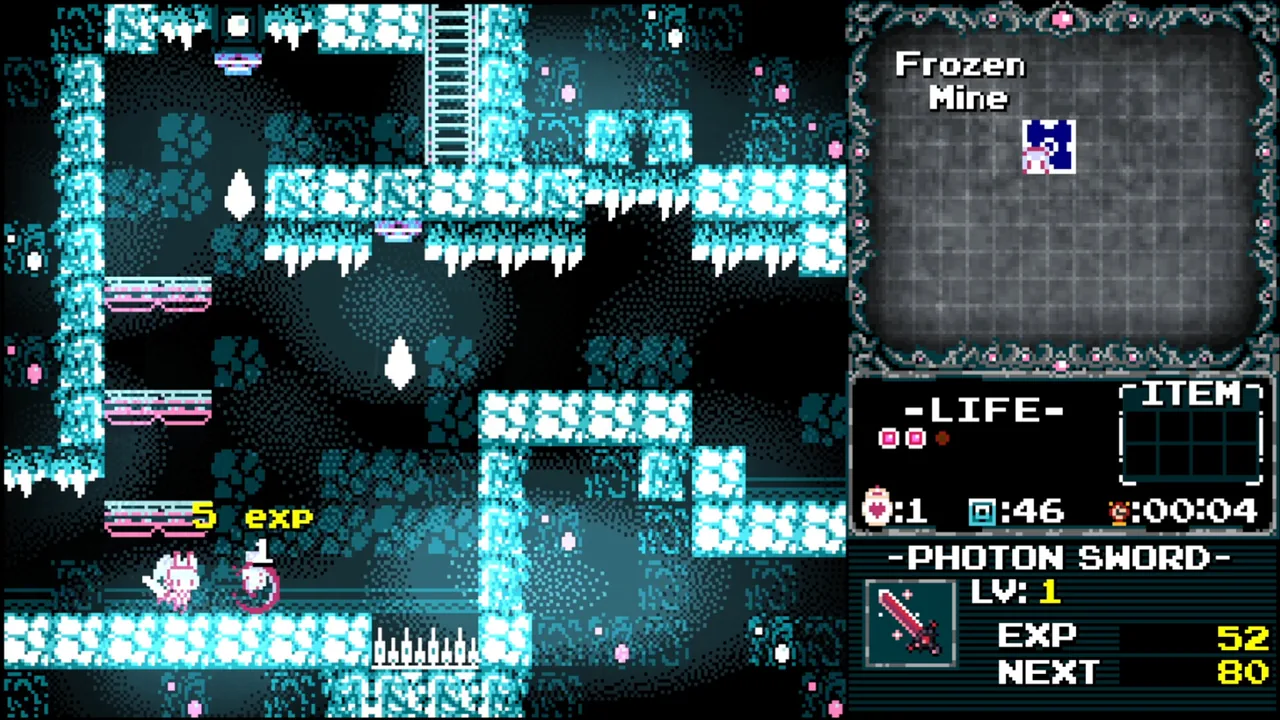
The Frozen Mine, one of the game's ice-themed zones, with the current-zone-only map panel visible top-rightImage: Diabolical Mind via Steam -
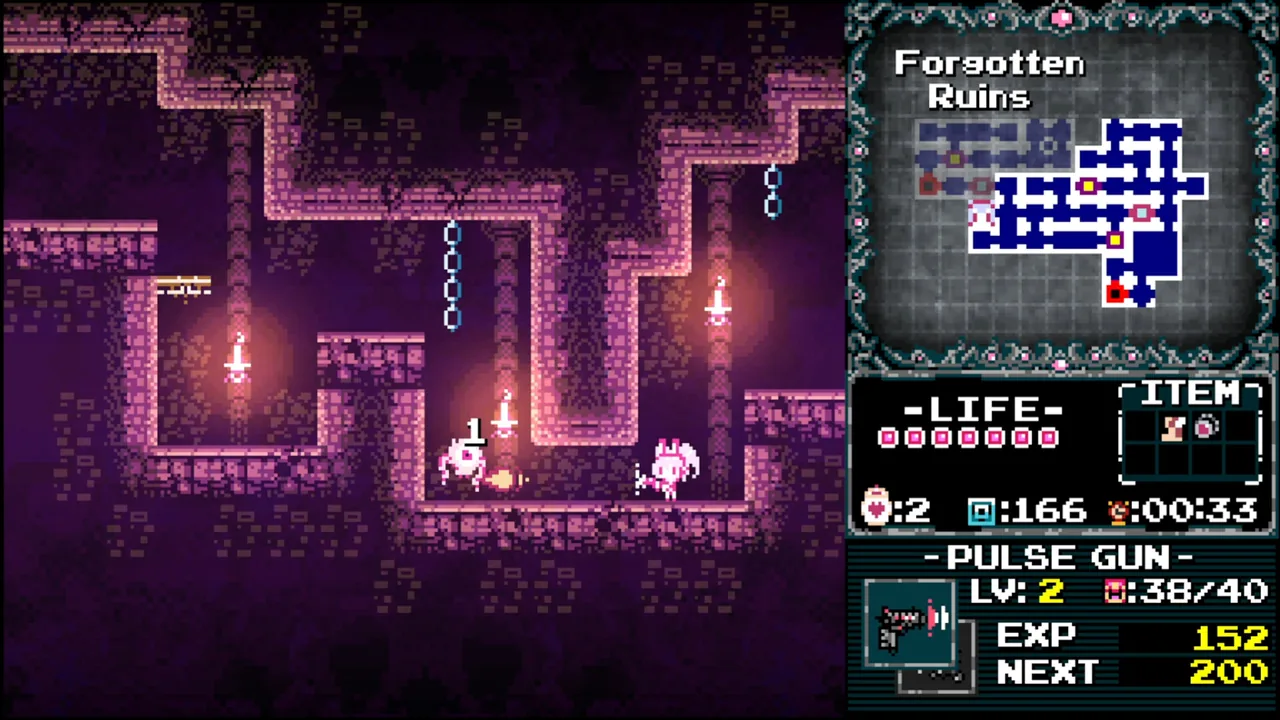
The Forgotten Ruins, with the Pulse Gun's weapon-leveling progress shown bottom-rightImage: Diabolical Mind via Steam -
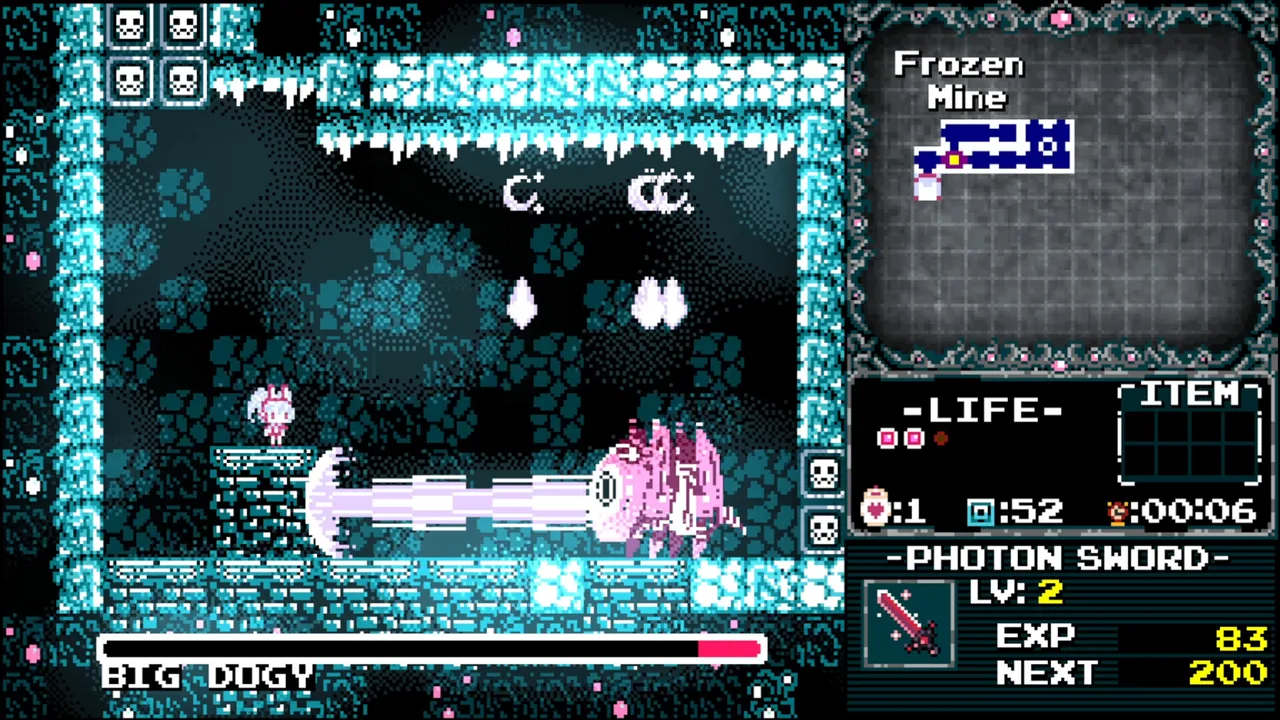
A boss encounter against Big Dogy in the Frozen MineImage: Diabolical Mind via Steam -
Category scores for LarsGadielWanderer Game Reviews